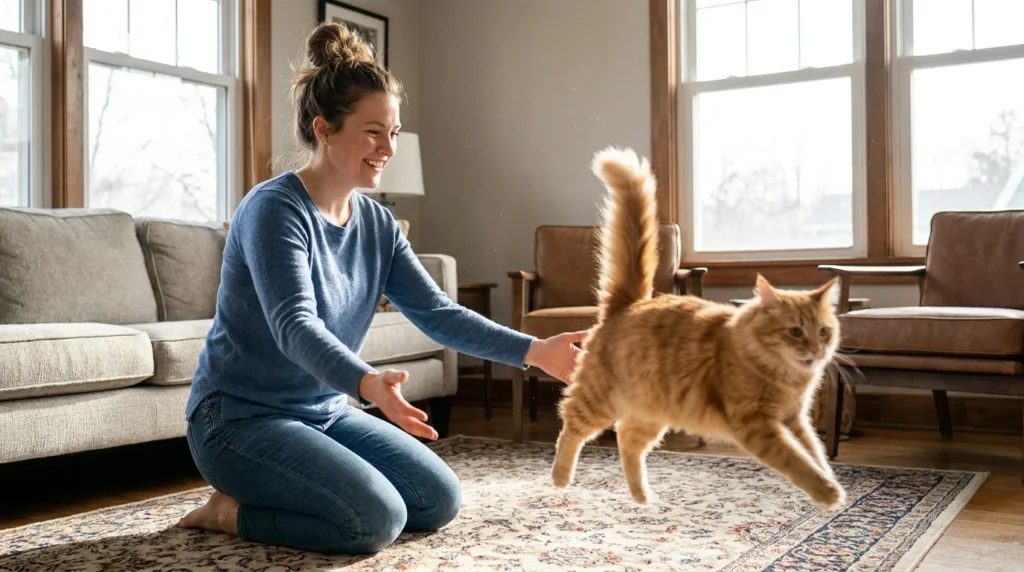
Quick Summary: Select a distinct auditory cue, immediately pair it with a genuinely irresistible high-value reward, and systematically expand distance across your home. Unlike dogs that often work for social approval, cats respond to clear classical conditioning and transactional rewards. With just 3 to 5 minutes of daily practice, most indoor cats master a dependable recall within two to three weeks.
There is a widespread, persistent myth that cats cannot be trained. While it is true that you cannot train a cat using the same social-pleasing motivations as a Golden Retriever, feline brains are extraordinarily capable of rapid operant conditioning. A cat that reliably comes when called isn’t just performing a delightful party trick—a solid recall is a vital safety skill in an emergency, during veterinary departures, or if your indoor cat accidentally slips through an open patio door.
In a landmark 2013 study conducted at the University of Tokyo, researchers demonstrated that domestic cats easily distinguish their owner’s vocal tones from strangers. However, cats frequently chose not to respond when there was no perceived benefit in doing so. Recall training simply closes that gap by ensuring that answering your call is always the most rewarding event of their day.
Step 1: Select the ideal auditory cue
Never rely on your cat’s everyday name as your primary recall command. Because you use their name casually throughout the day in different contexts—praising them, scolding them, or chatting on the phone—the name loses its urgency and value. Instead, select a distinct, unambiguous cue:
- A sharp, double whistle
- A distinct word spoken with bright, high-pitch inflection (e.g., “Here!”, “Snack!”, or “Quick!”)
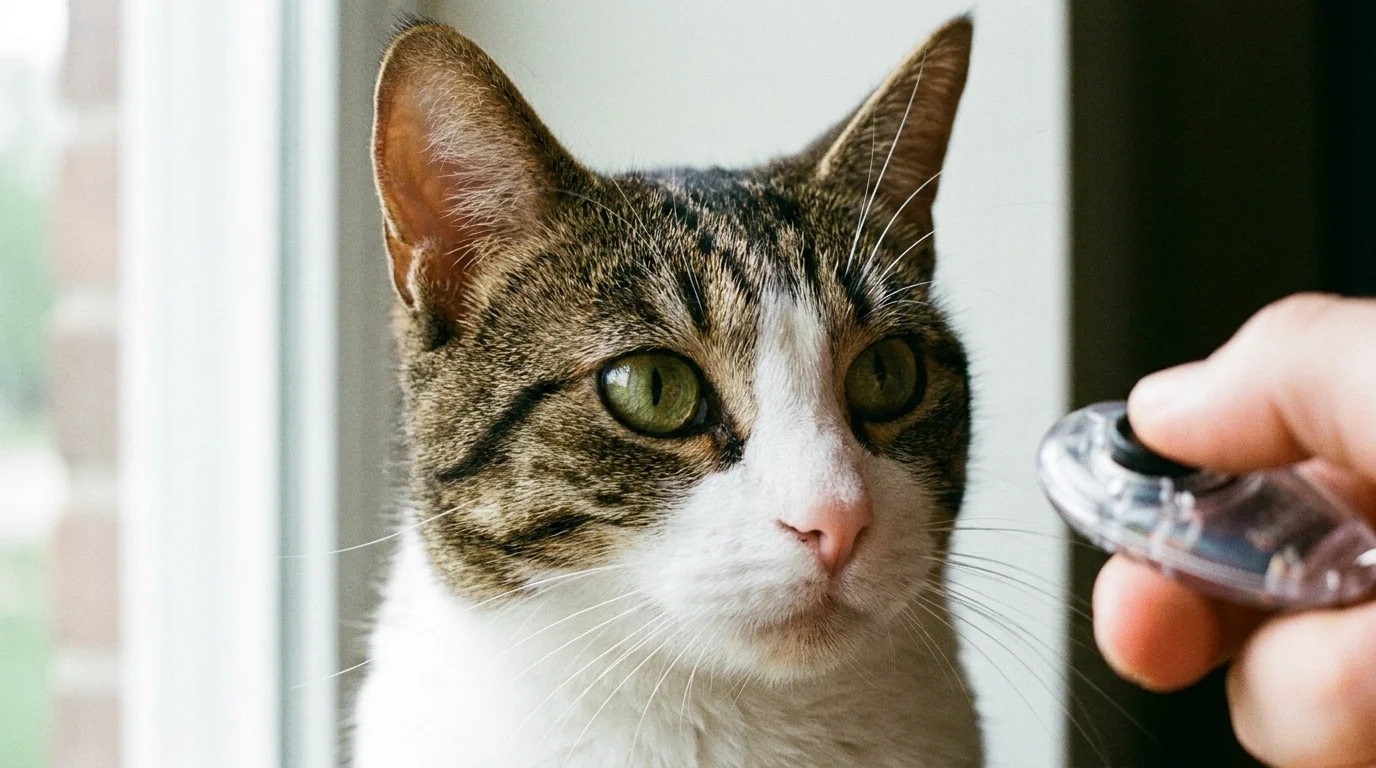
- A mechanical clicker or training tone
- The distinct shaking of a specific treat container
Step 2: “Charging” the cue (building the neurological association)
Before demanding that your cat walk across the room, you must build an airtight mental association between the auditory cue and an extraordinary reward:
1. Sit beside your cat in a quiet room when they are alert (ideally right before a scheduled mealtime).
2. Sound your cue clearly once in an upbeat, cheerful tone.
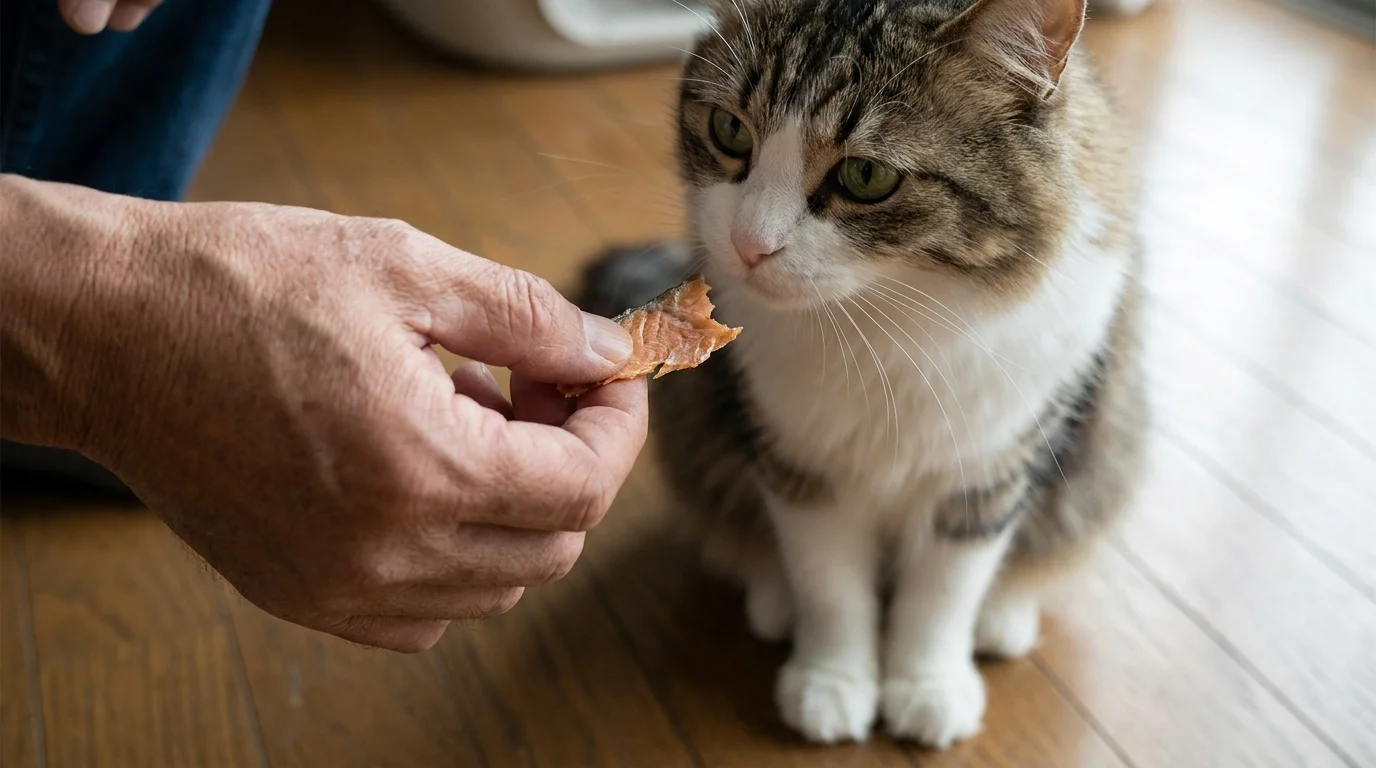
3. Within 0.5 to 1 second, deliver a pea-sized piece of high-value food (freeze-dried chicken, tuna flake, or a lick of Churu puree).
4. Repeat this sequence 5 to 8 times per session, 2 times per day for two days.
You are not asking for movement yet. By session three, you will observe your cat’s ears perk and pupils dilate in eager anticipation the microsecond they hear the cue sound.
Step 3: Introducing physical distance
Once the cue is charged, systematically increase the physical challenge:
- Phase A (1–3 feet away): Wait until your cat looks in your direction from a short distance. Issue the cue. When they take even a single step toward you, mark with praise (“Yes!”) and reward instantly when their paws arrive at your feet.
- Phase B (Across the same room): Step 10 to 15 feet away into the opposite corner of the room. Issue the cue. Reward generously with jackpot treats upon completion.
- Phase C (Between adjacent rooms): Stand just out of sight around a doorway or hallway. Sound the cue. Your cat must now navigate around a blind corner to locate you.
Step 4: Real-world distractions and emergency reliability
To ensure your recall holds up in unexpected scenarios, test it against competing environmental stimuli:
| Distraction Level | Scenario | Training Tactic | Reward Value Required |
|---|---|---|---|
| Low Distraction | Quiet bedroom, cat resting calmly. | Standard verbal cue from 5 feet away. | Standard crunchy treat. |
| Medium Distraction | Cat looking out window or playing casually. | Cue called from another room or top of stairs. | Freeze-dried meat or tuna. |
| High Distraction | Dinner prep, doorbell rings, or hallway noises. | Cue called while moving in opposite direction. | Jackpot wet food spoon or pureed squeeze treat. |
The cardinal rules of recall training
- Never “poison” the recall cue: Never call your cat to you and then administer ear drops, clip their claws, shove them into a travel carrier, or scold them. If an unpleasant procedure is required, walk up to your cat quietly without calling them. The recall cue must remain 100% positive forever.
- Keep practice bursts under 3 minutes: Cats lose focus quickly. Ending a training session while your cat is still enthusiastically engaged leaves them eager for the next session.
- Practice on a semi-empty stomach: Schedule training sessions 30 minutes prior to their normal breakfast or dinner time when appetite and cognitive motivation peak.
Frequently Asked Questions
How long does it take for an adult cat to master recall?
Most cats grasp the core connection within 3 to 5 days and achieve high reliability across the house within 2 to 3 weeks of short daily sessions. Senior cats and shy rescues may take slightly longer, but the principle remains identical.
What if my cat comes running for the treat bag sound but ignores my verbal cue?
This simply means the crinkle of the plastic pouch has been accidentally conditioned more strongly than your voice. Return to Step 2: say your verbal cue before touching the treat container so your word becomes the true predictive signal.
Can training help resolve other indoor behavior issues like scratching furniture?
Absolutely. Positive reinforcement redirecting is the most effective approach for scratching issues. Check out our detailed guide on how to teach a cat to use a scratching post.
Related reading and authoritative sources
Expand your feline training toolkit with our complementary behavior resources:
- How to teach a cat to use a scratching post
- How to stop a cat from jumping on the kitchen counter
- How to get a scared cat to trust you (step-by-step)
Authoritative Behavioral Training Citations: