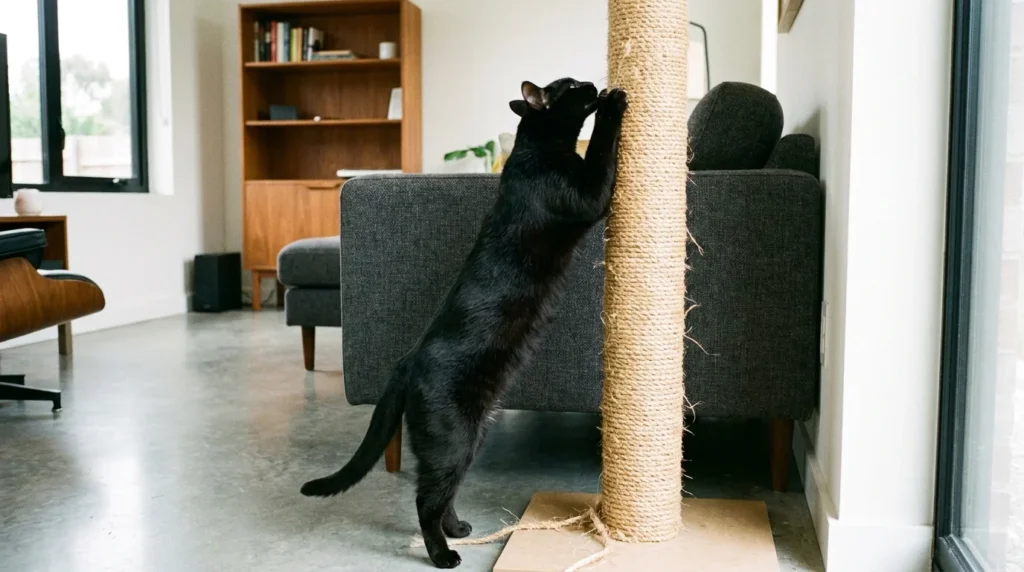
Quick Summary: Scratching is an essential biological necessity, not destructive misbehavior. Cats scratch to shed outer claw husks, stretch shoulder ligaments, and mark visual and scent territory. To protect your furniture, match the material texture and orientation your cat craves, position sturdy posts directly in front of target furniture, and reward voluntary engagement with catnip and treats.
Few sounds send a shiver down a cat owner’s spine quite like the rhythmic tearing of fabric on the arm of an expensive sofa. It is easy to view scratching as spiteful or unruly destruction, but feline biology dictates otherwise. Scratching is an instinctual necessity wired deeply into every domestic cat’s nervous system.
Attempting to stop a cat from scratching entirely is biologically impossible and emotionally cruel. Instead, successful guardians focus on redirected training: making designated scratching posts exponentially more accessible, rewarding, and satisfying than your living room upholstery.
Why cats must scratch: The three core reasons
To redirect the behavior, you must understand what your cat accomplishes when they dig in their claws:
- Claw hygiene and sheath shedding: Unlike human fingernails, feline claws grow in concentric layers. Scratching against fibrous textures sloughs off the dull, dead outer husk, revealing the sharp, healthy claw underneath.
- Full-body muscular conditioning: When a cat sinks their claws into a vertical surface and leans their full body weight back, they execute a deep musculoskeletal stretch that exercises the spine, shoulders, and forelegs.
- Dual territorial scent marking: Interdigital scent glands located between feline paw pads deposit pheromones during scratching. The visible claw shredding serves as a permanent territorial billboard, while the invisible scent communicates reassurance to the cat.
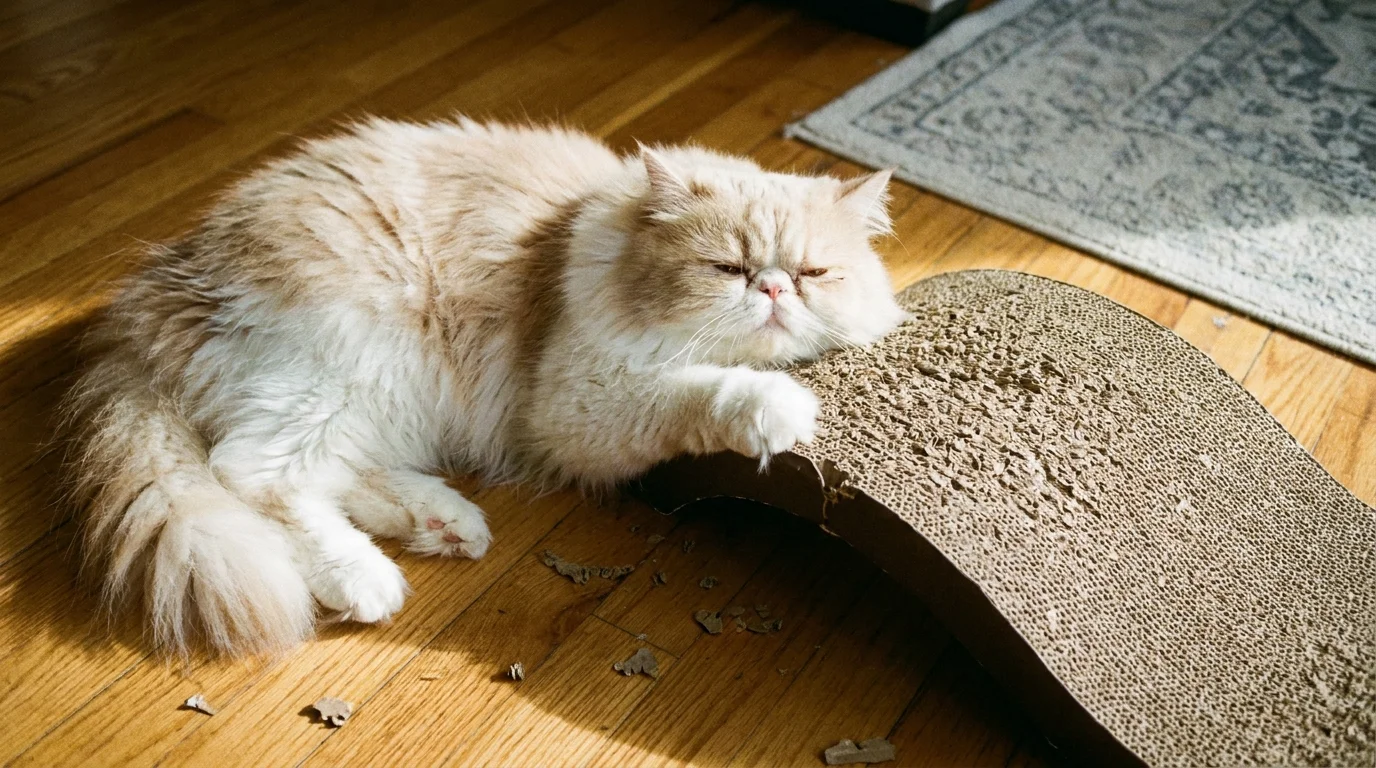
Selecting the right scratcher: Texture and orientation
Many cat owners buy a flimsy carpeted post, place it in a back corner, and wonder why their cat ignores it in favor of the couch. Scratchers must meet stringent feline criteria: Start by deciding between a vertical vs horizontal cat scratcher.
| Scratcher Feature | What Cats Prefer | Common Design Flaws to Avoid |
|---|---|---|
| Material Texture | Woven sisal fabric, tight fibrous sisal rope, corrugated cardboard. | Looped carpet (claws snag painfully and it teaches cats that rugs are okay to scratch). |
| Orientation | Varies by cat: some are vertical tree stretchers; others prefer horizontal floor pads. | Offering only one angle without observing whether your cat scratches carpets or couch arms. |
| Height & Stability | At least 30 to 36 inches tall; weighted heavy base that never wobbles or tips. | Lightweight posts that wobble or fall over when scratched, creating permanent post phobia. |
Strategic placement: Where to position scratching posts
Because scratching is fundamentally about communication and marking territory, a post hidden away in a dark laundry room will almost certainly be ignored:
- Directly in front of the target furniture: If your cat is currently shredding the left arm of your sofa, place a tall, sturdy sisal post directly flush against that exact spot. Block their access to the fabric while presenting the superior alternative.
- Near waking and sleeping zones: Cats universally stretch and scratch within minutes of waking from a nap. Placing a horizontal cardboard wedge near their favorite cat bed captures that biological reflex.
- High-traffic communal intersections: Entrances to the living room or hallway intersections are prominent territorial hubs where cats feel the strongest instinct to broadcast their scent.
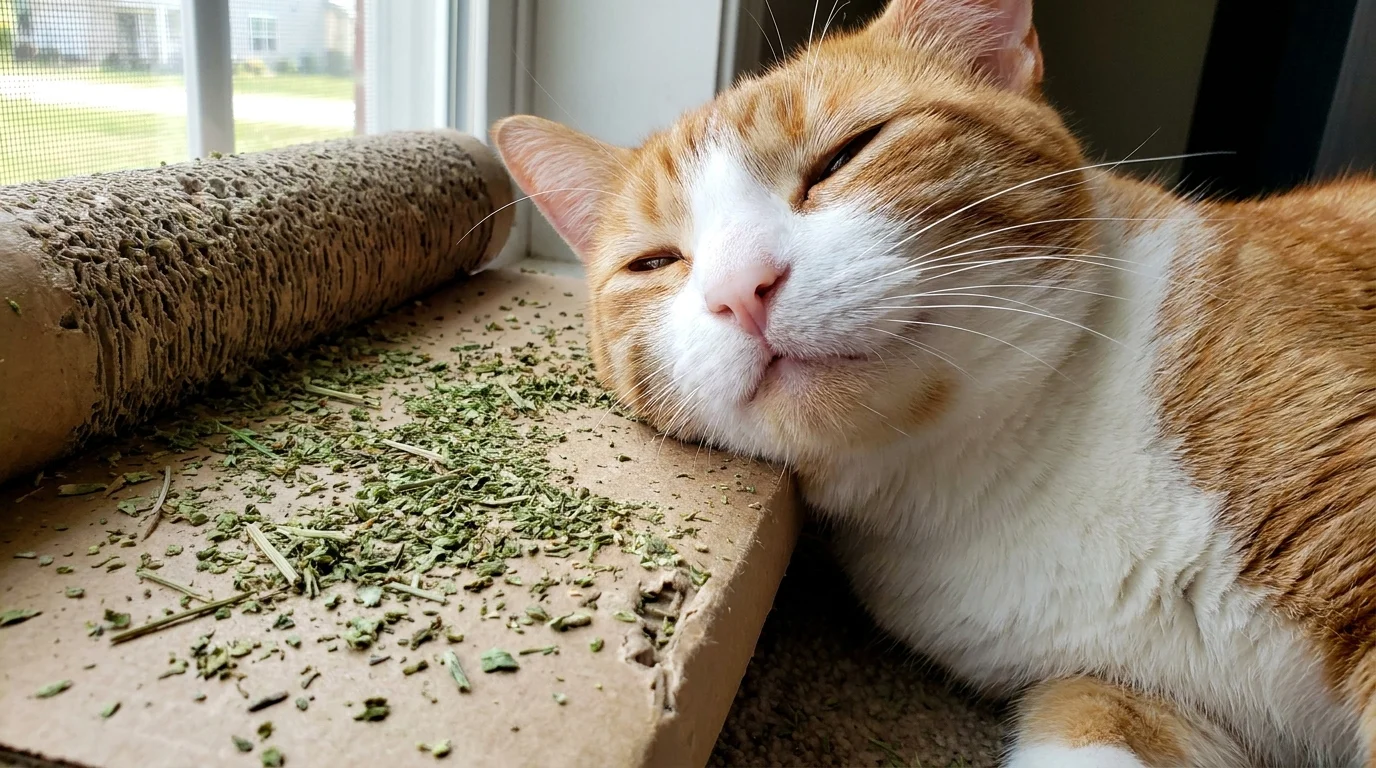
Step-by-step training and positive redirection
Encouraging voluntary usage is far more effective than force:
1. Never force their paws onto the post: Grabbing your cat’s legs and manually dragging their claws down the post creates an immediate negative stress association. Let all discoveries be voluntary.
2. Infuse with organic catnip or silvervine: Rub fresh dried catnip leaves or spray liquid catnip into the grooves of the sisal or cardboard to spark immediate curious sniffing and cheek-rubbing.
3. Use wand toys as a kinetic bridge: Dangle a feather wand toy directly up the face of the post. As your cat leaps to swat the lure, their claws will naturally sink into the sisal, demonstrating how satisfying the grip feels.
4. Protect the furniture temporarily: Apply clear double-sided sticky training tape (like Sticky Paws) or smooth furniture guards across couch corners. Cats dislike sticky or smooth textures and will immediately pivot to the adjacent sisal post.
5. Reward instantly: Whenever you see your cat scratching the approved post, immediately deliver calm verbal praise and a favorite crunchy treat.
Frequently Asked Questions
Why does my cat ignore the scratching post completely?
The two most common reasons are post instability (it wobbles when scratched) or inappropriate location (it is placed too far from their social territory). Try a sturdy 32-inch sisal post right beside their favorite resting area.
Does regular nail trimming stop cats from scratching furniture?
Trimming the sharp curved tips every two to three weeks minimizes fabric damage, but it does not eliminate the innate urge to stretch muscles and deposit paw scents. A scratching post remains mandatory.
Should I spray my cat with water when they scratch the couch?
No. Spray bottles do not teach cats to stop scratching; they only teach cats to fear you or scratch when you leave the room. Use passive deterrents like double-sided tape and rewarding posts instead.
Related reading and authoritative sources
Explore our companion guides for managing unwanted indoor behaviors:
- How to stop a cat from jumping on the kitchen counter
- How to train a cat to come when called
- How to get a scared cat to trust you (step-by-step)
- Vertical vs Horizontal Cat Scratcher: Which Does Your Cat Need?
Authoritative Behavioral Resources: