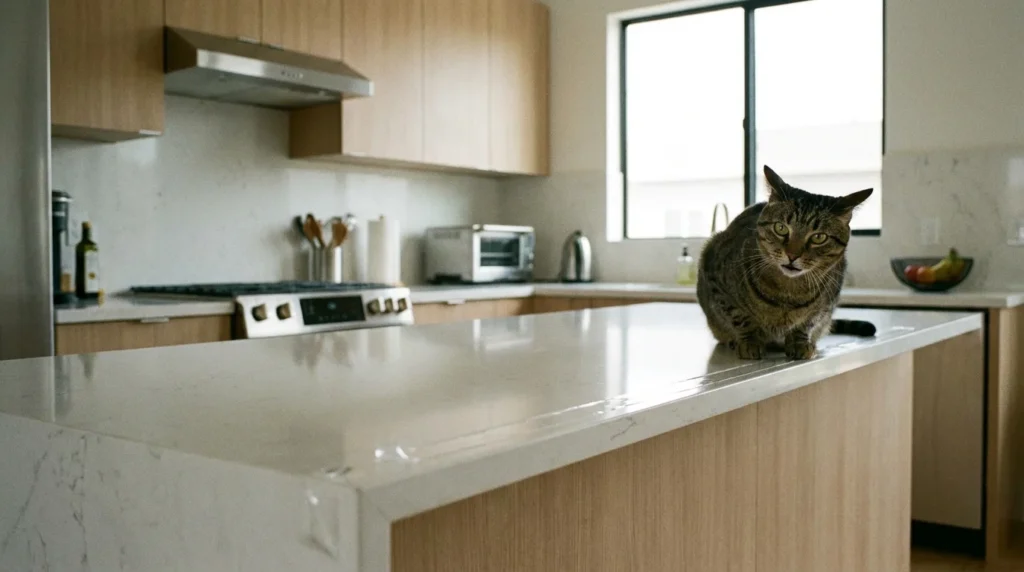
Quick Summary: Cats leap onto kitchen counters driven by instinct: elevated vantage points, irresistible food scents, running tap water, and natural curiosity. Shouting, clapping, or using water squirt bottles damages feline trust without eliminating the behavior. Instead, combine environmental passive deterrents with a superior, elevated perch placed directly beside the kitchen.
You turn your back for five seconds while chopping chicken or brewing morning coffee, and suddenly your feline friend is perched right beside the cutting board, inspecting your ingredients with unblinking scrutiny. “Counter surfing” is one of the most frustrating and common behavioral complaints among indoor cat guardians, posing both hygiene concerns and physical hazards like hot stove burners or sharp kitchen knives.
To permanently solve the problem, you must recognize that your cat is not defying household rules out of rebellion. In the feline worldview, flat, elevated horizontal surfaces are prime architectural real estate that provide panoramic security and hunting opportunities.
The 4 instinctual reasons cats love kitchen counters
Before modifying the environment, identify what rewards your cat is extracting from their vertical leaps:
- Natural vertical vantage points: In the wild, cats monitor territory and avoid ground predators from elevated tree limbs. Counters provide the identical psychological comfort: a 360-degree high-angle view of the busiest room in the house.
- Intense olfactory rewards: Kitchen counters are flavor central. Tiny microscopic meat particles, leftover grease, warm butter dishes, and intriguing smells continuously reward a curious nose.
- Running water fascination: Many domestic cats have an instinctual preference for moving water over stagnant bowl water. An interactive, dripping kitchen faucet is irresistible entertainment.
- Owner companionship and social curiosity: If you spend significant time cooking, washing dishes, or chatting in the kitchen, your cat simply desires to participate at eye level rather than looking up from the floor.
Why direct punishment always backfires
When you discover your cat on the granite and yell, clap loudly, or pull out a water spray bottle, what does your cat actually learn? Behavioral research proves that cats do not connect your anger to the counter surface itself. Instead, they associate the frightening hostility with you.
The result is a cat that simply waits until you leave the room or fall asleep before jumping right back onto the counter. Furthermore, physically shoving or knocking an startled cat off a slick countertop risks severe ligament sprains, fractured bones, or burns if they land on an active burner.
The passive deterrent strategy (teaching the counter to correct itself)
Passive deterrents work because the inanimate surface itself becomes temporarily unappealing, completely independent of your presence:
| Passive Method | How It Operates | Feline Impact |
|---|---|---|
| Aluminum Foil Sheets | Lay strips of lightweight aluminum foil along counter edges. | Cats dislike the sudden crinkling sound and slippery metallic feel underfoot. |
| Double-Sided Sticky Tape | Apply Sticky Paws or double-sided carpet tape along edge perimeters. | Paw pads have intense tactile sensitivity; sticky residue feels unnatural and unpleasant. |
| Unbalanced Baking Sheets | Place lightweight cookie sheets slightly overlapping the counter edge. | When a cat leaps up, the sheet shifts with a harmless metallic rattle, triggering an immediate abort. |
| Automated Motion Air Cans | Position a motion-sensor compressed air canister (like PetSafe SSSCAT). | Delivers a harmless, odorless hiss of air when triggered, creating a consistent boundary. |
Eliminating kitchen rewards
Deterrents will fail if the counter remains an all-you-can-eat buffet. Implement strict kitchen hygiene rules:
- Wipe counters clean immediately: Use an enzymatic or citrus-based cleaner. Citrus scents (lemon, orange, grapefruit) are natural feline olfactory repellents.
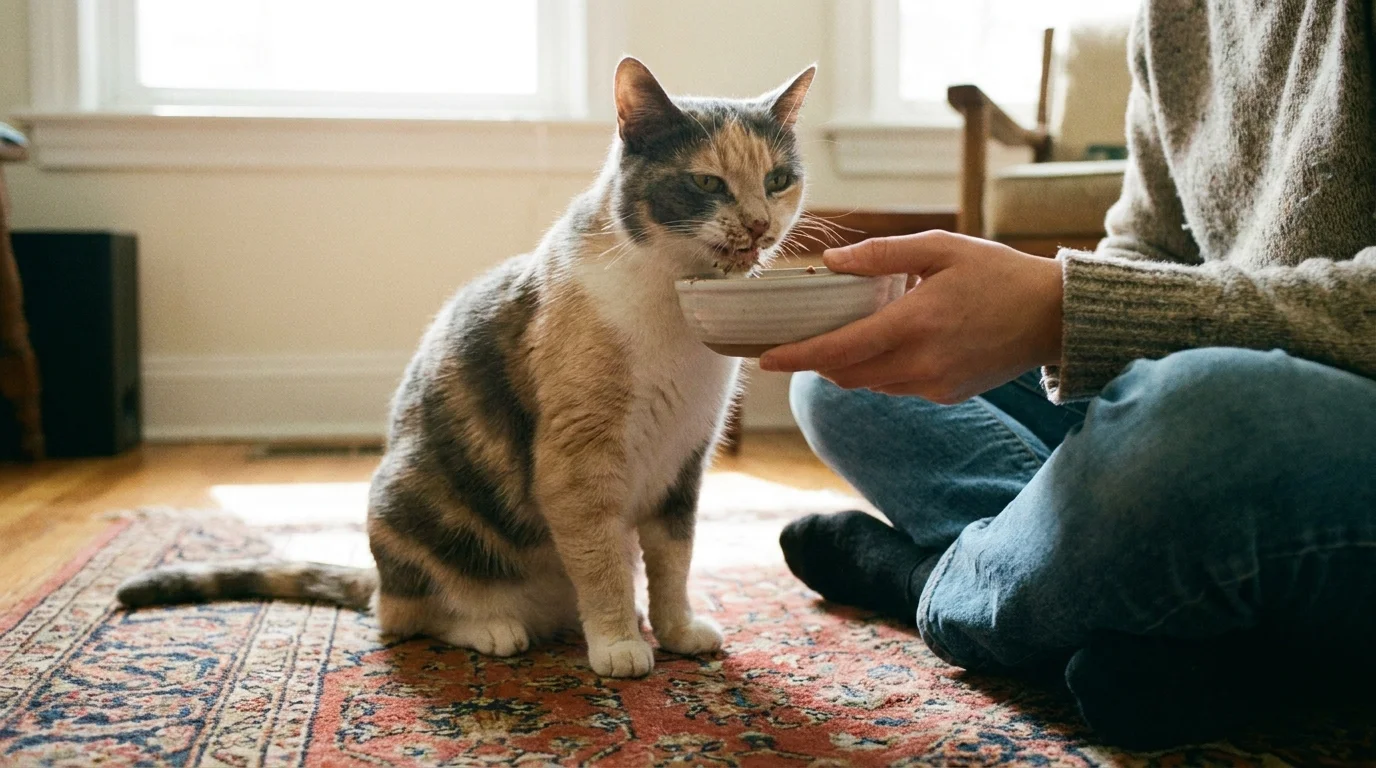
- Never prep cat food on countertops: If you open wet food cans on the island, your cat naturally deduces that the island is the origin of feasts. Prep all cat food at a low table or directly near their feeding station.
- Provide a dedicated pet water fountain: If running taps are the lure, install a stainless steel or ceramic circulating fountain on the floor elsewhere in your home.
The crucial step: Provide the “approved yes”
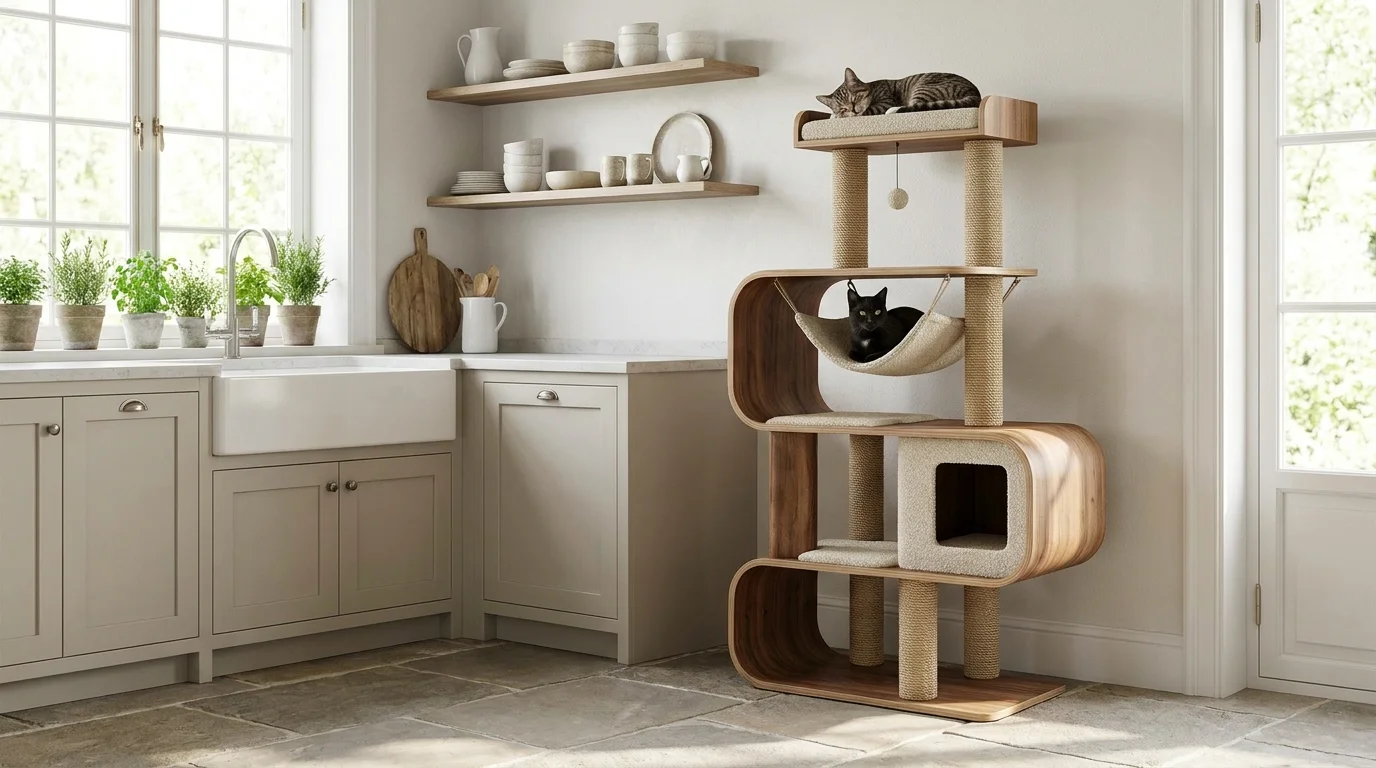
You cannot simply tell an agile indoor animal “no”; you must provide a clearly defined, superior “yes.” Position a sturdy, high-tier cat tree or a wide barstool in the corner of your kitchen, positioned just 3 to 4 feet away from the food preparation area.
When you start preparing dinner, place a few crunchy treats or a dab of lickable puree on this approved perch. Praise your cat lavishly whenever they sit on the stool. Soon, your cat will happily monitor all kitchen operations from their comfortable VIP throne without stepping foot near your cutting board.
Frequently Asked Questions
Is it ever safe or acceptable to allow cats on kitchen counters?
From a feline perspective it is harmless, but from a human food safety perspective it presents genuine risks. Cats walk in litter boxes where microscopic fecal bacteria, Toxoplasma oocysts, and litter dust adhere to paws. Thorough antibacterial sanitization before food prep is mandatory if counters are shared.
How long do I need to keep foil or tape on my counters?
Typically two to four weeks. Once the association shifts and your cat adopts the adjacent cat stool or tree as their default vantage perch, you can gradually remove the tape and foil without recurrence.
Can general boredom increase counter jumping?
Yes. Under-stimulated cats seek excitement wherever motion and novelty occur. Increasing structured wand-toy playtime and offering scratching lounges helps deplete excess energy. See our guide on how to teach a cat to use a scratching post.
Related reading and authoritative sources
Enhance your home environment with our expert behavior and training guides:
- How to teach a cat to use a scratching post
- How to train a cat to come when called
- Why does my cat attack my feet? Causes and redirection
Authoritative Behavioral Reference Links: