By Emma Hartley | Reviewed by IndoorCatWell Editorial Team | Last updated September 2026
This article provides practical, veterinary-supported cat care guidance. If you buy through our links, we may earn an affiliate commission at no extra cost to you. Read our full Affiliate Disclosure.
A litter box that looks spotless to human eyes can still completely fail your cat’s sensory standards. With roughly 200 million olfactory receptors compared to our 5 million, felines detect chemical perfumes, micro-scratched plastic odors, and subtle textural changes that humans cannot perceive. When a cat boycotts a freshly scooped pan, the problem is rarely cleanliness—it is sensory or environmental aversion.
⚡ Quick Diagnostic Checklist
- Aged Plastic: Plastic pans absorb microscopic uric acid crystals after 1 to 2 years that no scrub can eliminate.
- Synthetic Perfumes: Floral or citrus “odor-eliminating” litters irritate sensitive nasal membranes.
- Liners Snagging Claws: Plastic liner bags catch claws during digging, causing startling discomfort.
- Hooded Traps: Covered boxes concentrate ammoniacal fumes and block escape visibility.
- Environmental Ambush: Sudden appliance cycles (furnace, washer) or another cat cornering the entry.
Why “Clean” Doesn’t Always Mean Clean Enough to a Cat
Standard polypropylene litter boxes are porous. Every time your cat digs, sharp claws etch microscopic fissures into the floor and sidewalls. Over time, uric acid and bacteria lodge deep within these crevices. Even when you dump the substrate and soak the pan in soapy water, the lingering territorial scent signals to your cat that the box is contaminated.
8 Hidden Causes of Litter Box Avoidance
- Artificial litter fragrances: Scented litters are marketed to human noses, not feline wellness. Scents like lavender, cedar, or citrus can be actively repellent to felines.
- Aged or degraded box plastic: If your litter pan is older than two years, replace it with a new smooth pan or non-porous stainless steel.
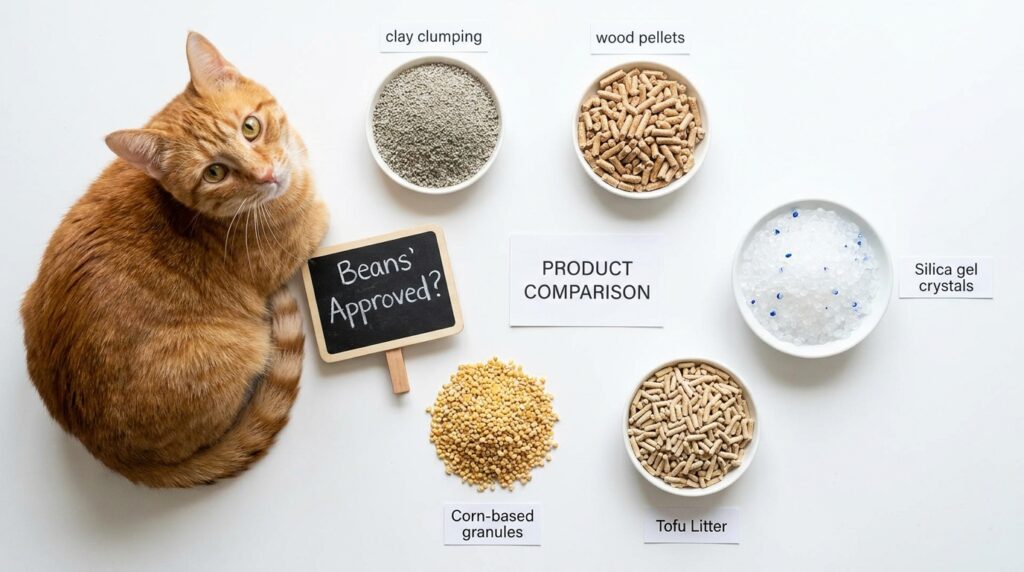
- Abrupt substrate texture shifts: Swapping from fine clumping clay to hard pellets or sharp crystal beads feels unnatural on sensitive paw pads. Follow our gradual litter transition schedule.
- Hooded box claustrophobia: Enclosed or top-entry boxes trap rising dust and odor like a port-a-potty, while leaving the cat unable to watch for approaching threats.
- Claw-snagging plastic liners: While liners make cleanup easy for owners, felines hate having their claws tangled in perforated plastic sheets.
- Litter depth issues: Pouring 4 or 5 inches of litter creates an unstable, sinking quicksand feeling. Most cats prefer an even 2 to 3 inches.
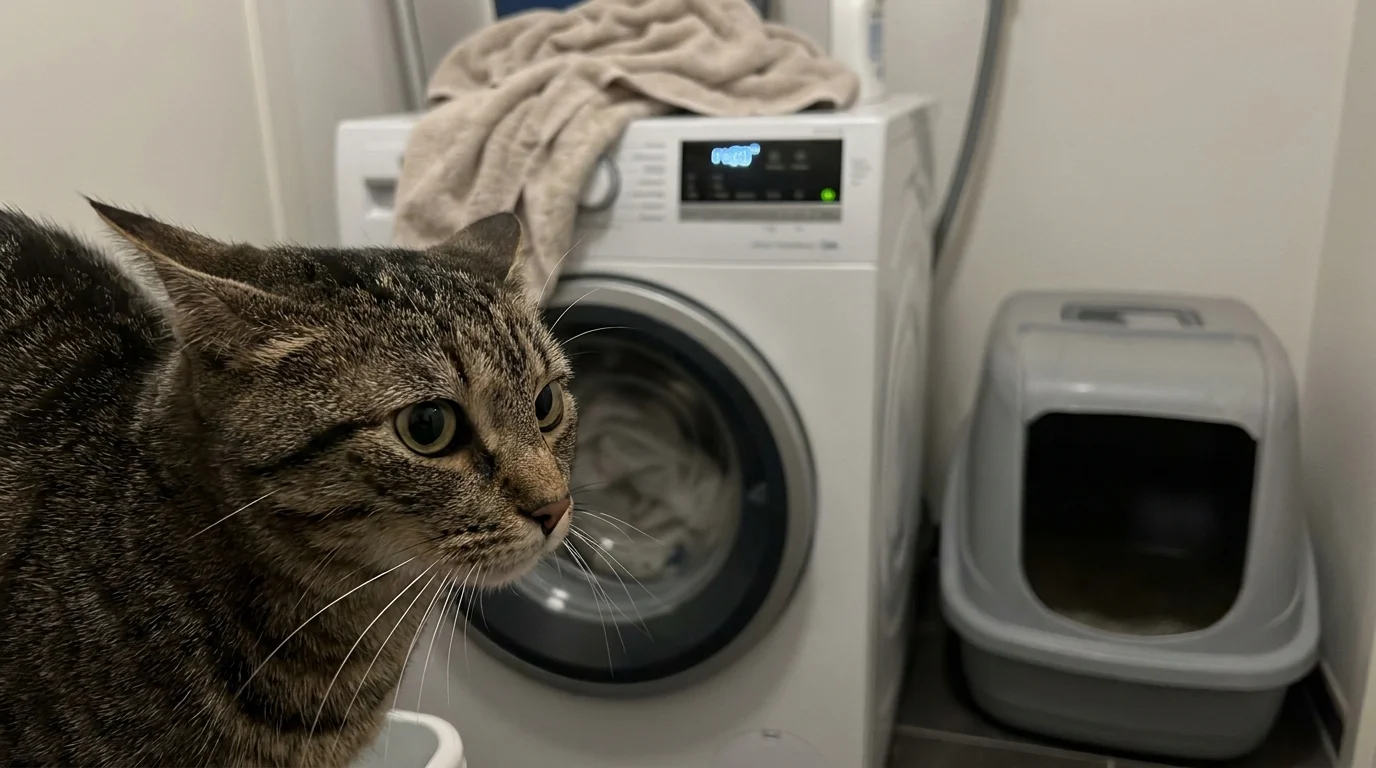
- Noisy or trapped locations: Placing the box beside a buzzing furnace, spin-cycle washer, or at the end of a narrow dead-end hallway invites ambush anxiety.
- Multi-cat box deficit: In multi-pet homes, the universal golden rule is one box per cat, plus one extra. See our complete breakdown on how many litter boxes you need.
Ruling Out Urgent Medical Conditions First
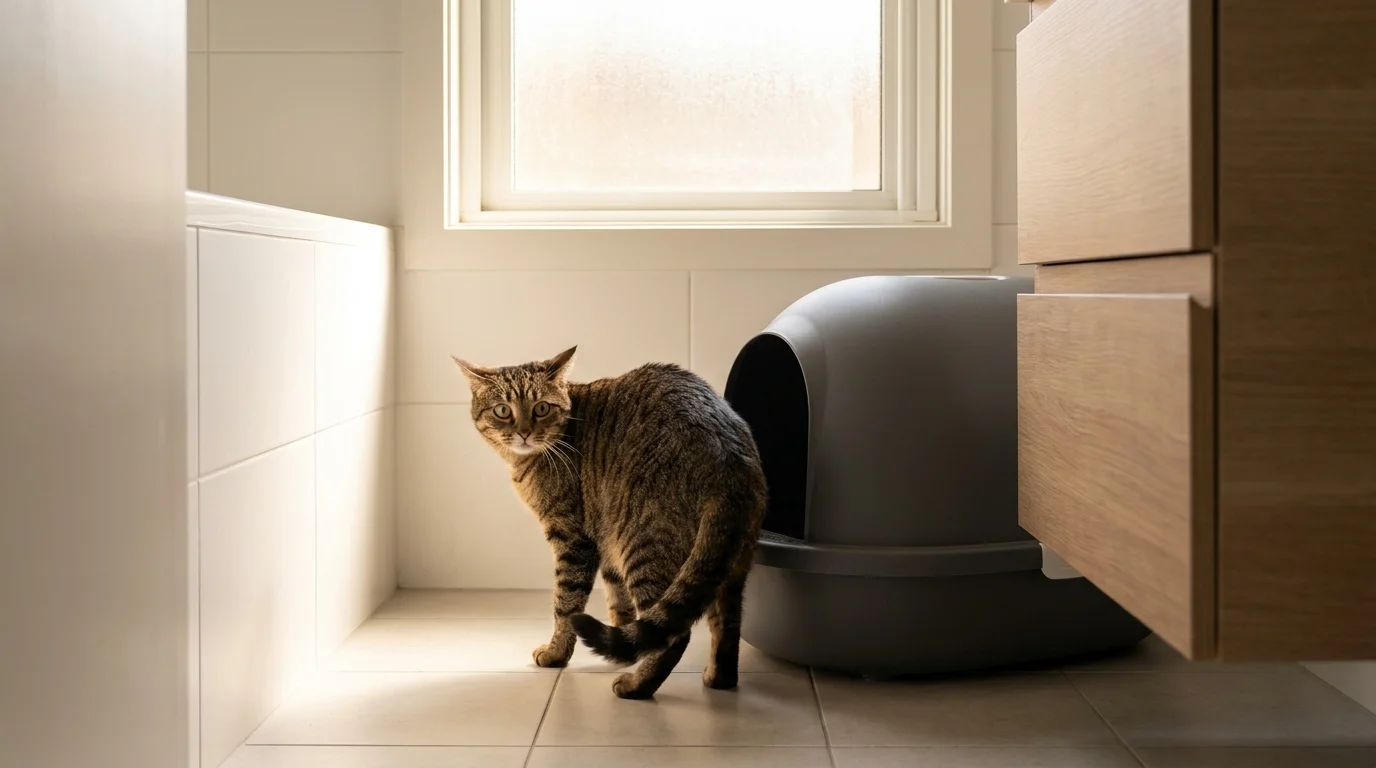
If your cat suddenly avoids the litter box, the very first step must always be veterinary screening. Feline lower urinary tract disease (FLUTD), bladder stones, kidney disease, diabetes, and feline idiopathic cystitis (FIC) cause painful urination.
Urgent Warning: If a male cat strains repeatedly without passing urine, cries out, or constantly licks his genitals, seek emergency veterinary care immediately. Urethral blockage is life-threatening within 24 to 48 hours.
When urination hurts, a cat associates the burning sensation directly with the box itself, concluding that the pan caused the pain. For deeper medical context, read our article on why cats suddenly stop using the litter box.
Step-by-Step Troubleshooting: Finding the Real Culprit
- Swap out old plastic: Purchase a brand-new, open-topped, large plastic storage tote or stainless steel pan.
- Revert to unscented clumping clay: Switch back to an unscented, fine-grained formula. Add herbal feline litter attractant if hesitation persists.
- Remove all liners and hoods: Take the hood off completely to provide a panoramic 360-degree security view.
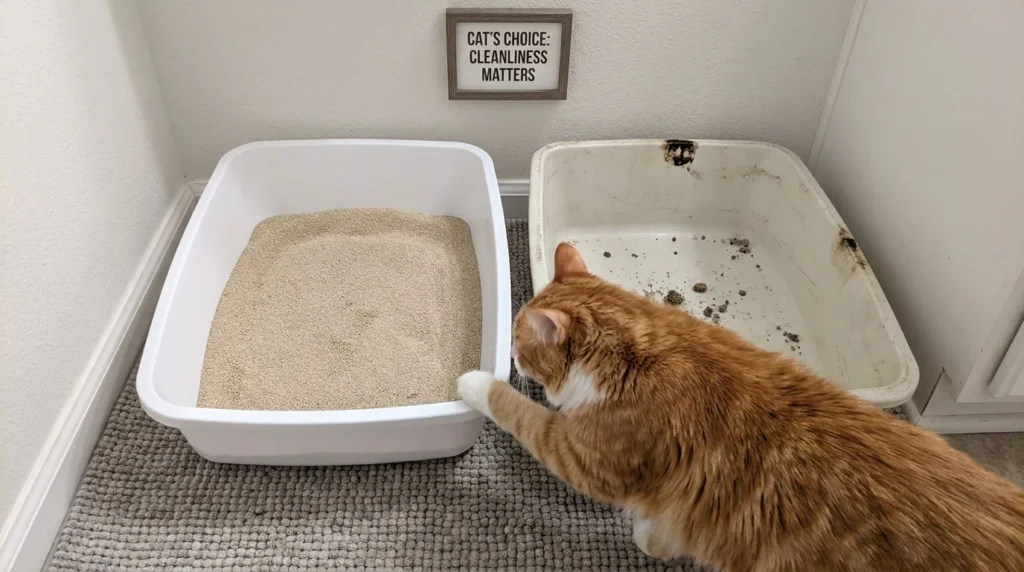
- Deploy the “cafeteria test”: Place two identical open boxes side-by-side with different litters or depths to see which your cat naturally selects.
- Relocate to a calm sanctuary: Move one box out of laundry areas into a peaceful spare bedroom or quiet alcove.
Frequently Asked Questions
I scoop every single day. Why does my cat still avoid the litter box?
Daily scooping clears solid waste, but it cannot fix absorbed urine odor embedded in old plastic, irritating perfumes, or fear from a startling event that happened near the box.
Should I replace my plastic litter box even if it still looks clean?
Yes. Plastic is porous and holds onto ammoniacal bacteria over years of scratching. Replacing plastic boxes every 12 to 24 months—or switching to stainless steel—resolves many phantom avoidance issues.
My cat avoids one specific box but uses another fine. What does that mean?
This confirms the issue is localized to that specific box model, age, substrate, or room location rather than a general cleanliness or medical concern. Compare the differences between the two boxes to pinpoint the trigger.