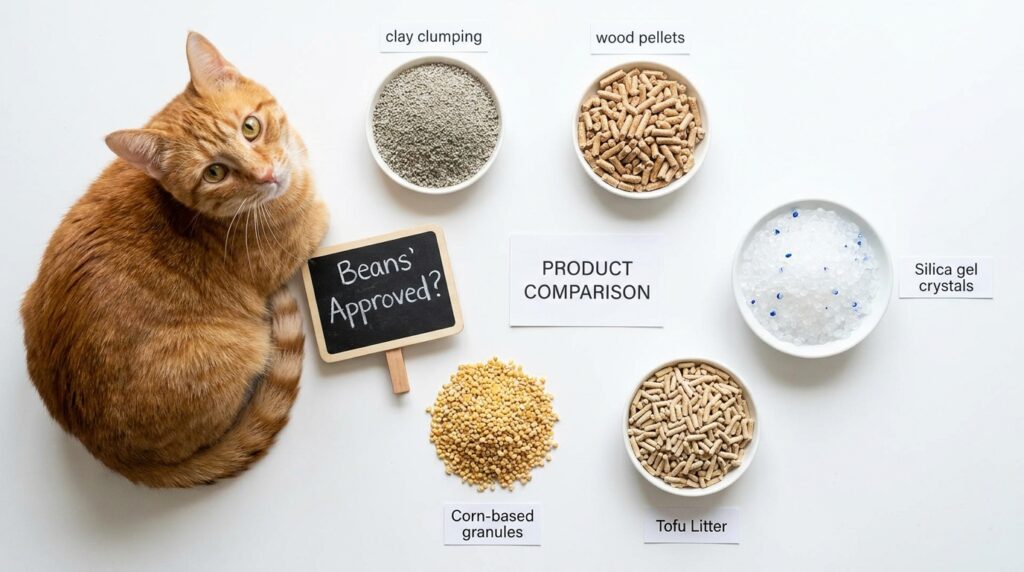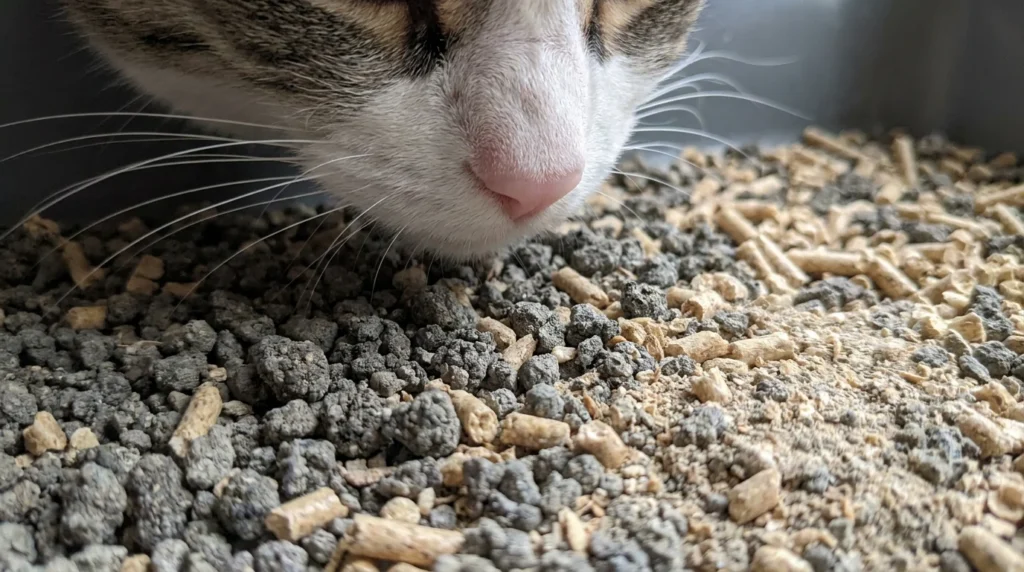
By Emma Hartley | Reviewed by IndoorCatWell Editorial Team | Last updated September 2026
This article provides practical, veterinary-supported cat care guidance. If you buy through our links, we may earn an affiliate commission at no extra cost to you. Read our full Affiliate Disclosure.
Switching cat litter brands or substrate types requires blending the new formula into the old over 7 to 10 days rather than dumping the box clean and swapping overnight. Cats rely heavily on paw tactile feel and familiar scent to recognize their box as safe, and a sudden texture change is one of the most common causes of house-soiling accidents.
⚡ Quick Summary: Switching Cat Litter Successfully
Use the gradual 7 to 10-day mixing schedule (25% new, 50%, 75%, 100%) or deploy the gentler “two-box method” side-by-side. Keep the box shape, room location, and scoop schedule identical to avoid stacking multiple stressors on your feline.
If your cat is already showing hesitation, check our troubleshooting guide on why cats suddenly stop using the litter box before attempting to switch brands.
Why Cats Resist a New Litter Substrate
Litter is not merely an absorbent material to a feline—it is an integral sensory anchor of their core territory. Domestic cats possess highly sensitive digital paw pads packed with nerve receptors. A shift from a soft, sandy bentonite clay to coarse pellets, sharp silica crystals, or scented pine can feel abrasive or unsettling underfoot.
Furthermore, heavy artificial perfumes mask your cat’s natural pheromones. If the box no longer smells familiar or safe, cats instinctively look for quiet carpet corners or laundry piles. For substrate differences, read our breakdown on clumping vs. non-clumping cat litter.
The 7 to 10-Day Gradual Mixing Schedule
Feline behaviorists at Cat Behavior Associates recommend a proportional transition that allows paw pads to acclimate gradually:
| Transition Phase | New Litter Ratio | Original Familiar Litter |
|---|---|---|
| Days 1 to 2 | 25% | 75% |
| Days 3 to 4 | 50% | 50% |
| Days 5 to 6 | 75% | 25% |
| Days 7 to 10+ | 100% | 0% |
Crucial Technique: Always stir and mix the two litters completely throughout the depth of the pan. If you merely layer the new litter on top, your cat will refuse to step on it or will dig through it frantically. Maintain the standard 2 to 3-inch depth outlined in our litter depth guide.
The “Two-Box Parallel Method” for Drastic Changes
If you are transitioning between radically dissimilar substrates (such as moving from clay to wood pellets, wheat, or crystal silica), mixing them together often creates a messy paste that fails to clump. In these situations, the parallel two-box technique highlighted by Litter-Robot transition tips is significantly more effective:
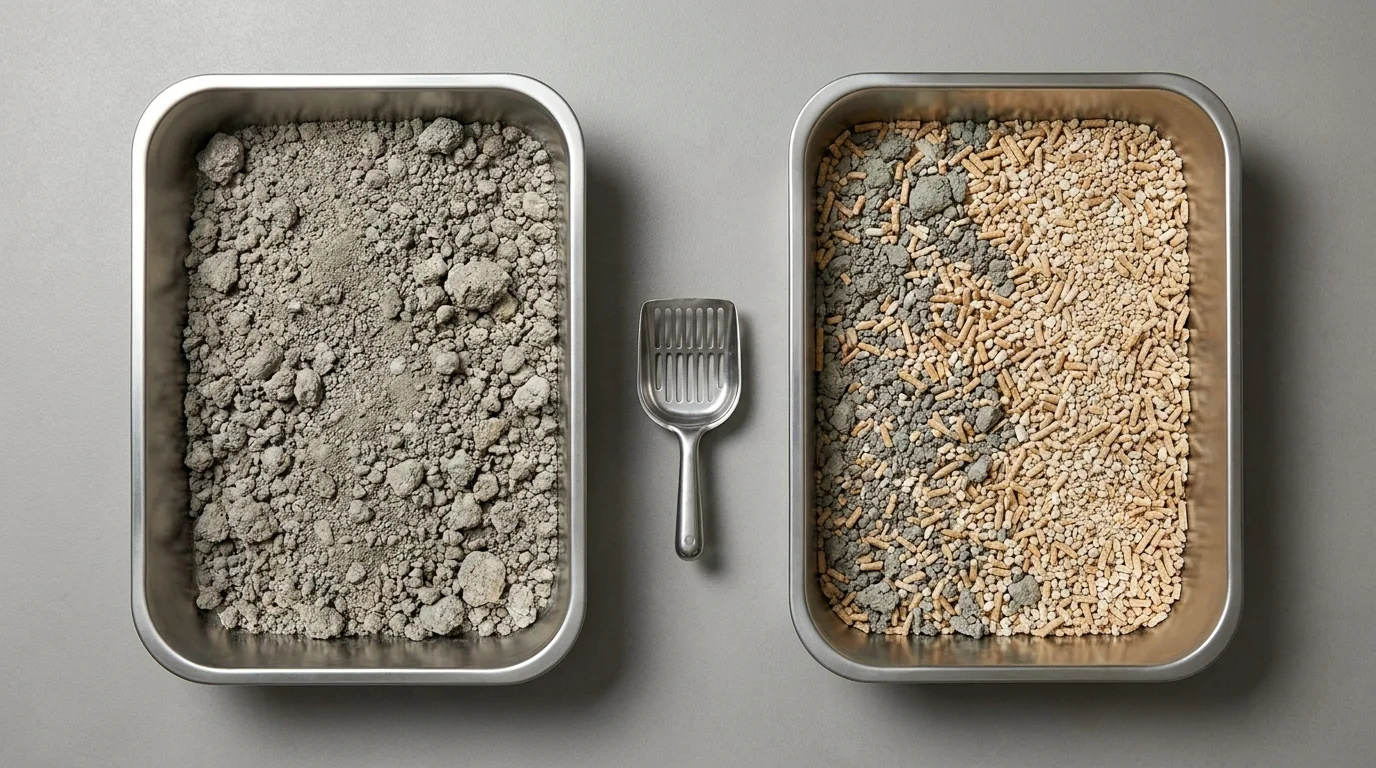
- Step 1: Keep your cat’s original box exactly as it is, filled with their familiar formula.
- Step 2: Set up a second, identical open box filled with 100% of the new litter, placed 2 to 3 feet away from the original.
- Step 3: Allow your cat to inspect both options over 7 to 14 days without interference. Curiosity naturally draws cats to investigate the new texture.
- Step 4: Once your cat begins reliably eliminating in the new box, stop topping up the old box. After your cat exclusively uses the new substrate for 5 consecutive days, remove the original pan.
4 Golden Rules During the Transition Period
- 1. Keep Everything Else Identical: Do not change the litter box model, do not relocate the box to another room, and do not alter your feeding schedule while switching litters. Stacking environmental changes overwhelms cats.
- 2. Scoop Double the Usual Frequency: A spotlessly clean box gives hesitant cats one less reason to balk. Scoop morning and evening.
- 3. Match Grain Size When Possible: When switching brands, pick a granule size similar to what your cat already accepts (e.g. fine sand to fine sand).
- 4. Act Completely Normal: Avoid hovering over the box or staring while your cat eliminates. Felines feel vulnerable during elimination and will retreat if they feel watched.
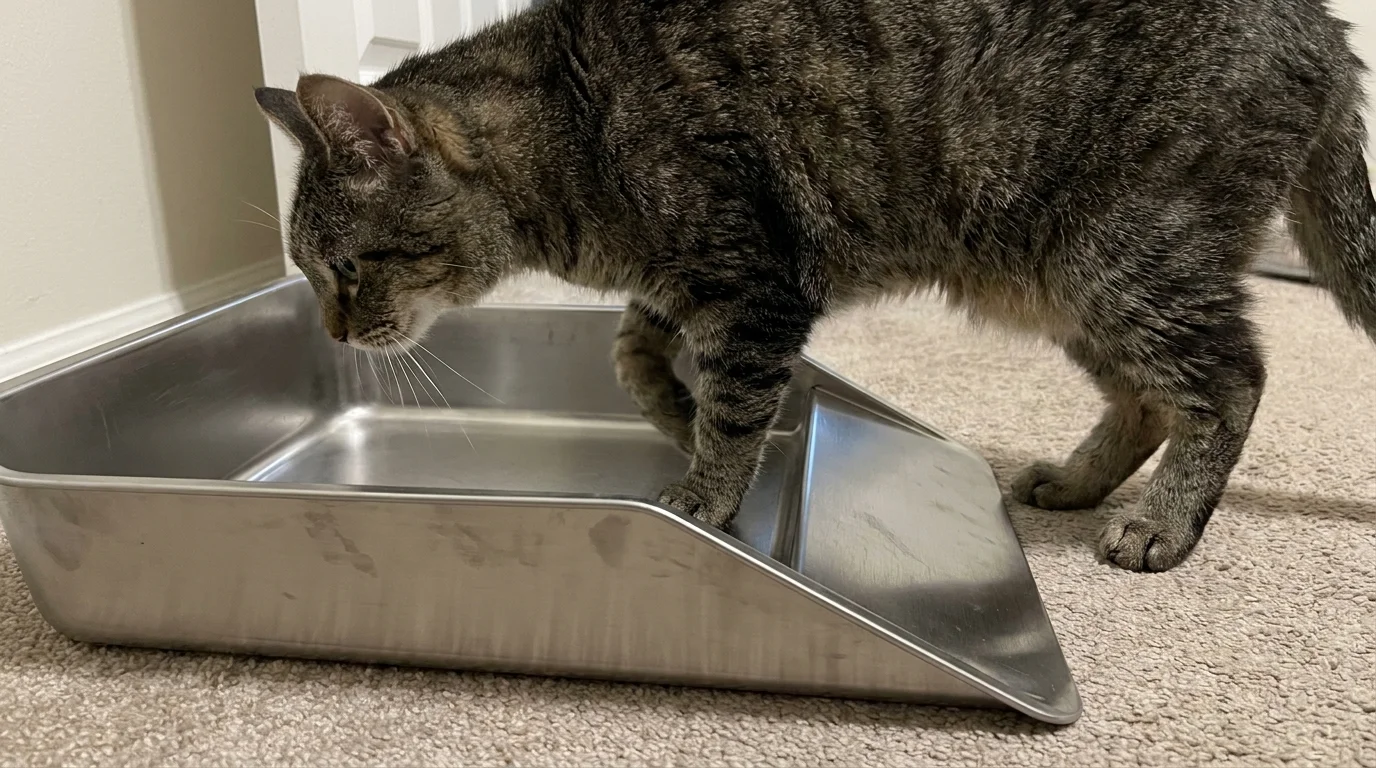
What to Do If Your Cat Completely Refuses
According to Neakasa pet care research, if your cat begins hesitating or has an accident on the carpet, immediately step back to the previous successful ratio (such as dropping from 50% back to 25% new litter). You can also sprinkle a herbal feline litter attractant (like Dr. Elsey’s Ultra Litter Attractant) to draw them back to the pan.
Frequently Asked Questions
How long does it usually take for a cat to accept a new litter?
Most healthy adult cats adapt comfortably within 7 to 14 days when using the gradual mixing schedule. Sensitive felines, rescues, or seniors with arthritis may need 3 to 4 weeks of patient blending.
Can I switch litters abruptly if my cat is already refusing their current box?
If your cat is already completely boycotting their current litter, an abrupt switch to an unscented, fine-grained clumping clay pan or adding a parallel box with a different texture is worth trying immediately, as the current substrate has already failed.
Is it bad to switch cat litter brands frequently?
Yes. Habitual switching creates chronic territorial insecurity and increases the risk of stress-induced cystitis. Once you find a low-dust, unscented formula your cat uses happily, stick with it consistently.
Authoritative Sources & Further Reading
- Litter-Robot: How to Switch Cat Litter – New Litter Transition Tips
- Cat Behavior Associates: How to Change Brands of Litter
- Neakasa Pet Care: Is It Bad to Change Cat Litter Brands?
🐾 Explore More Cat Litter Care Guides
Keep your cat’s facilities clean, comfortable, and stress-free: