By Emma Hartley | Reviewed by IndoorCatWell Editorial Team | Last updated September 2026
This article provides practical, veterinary-supported cat care guidance. If you buy through our links, we may earn an affiliate commission at no extra cost to you. Read our full Affiliate Disclosure.
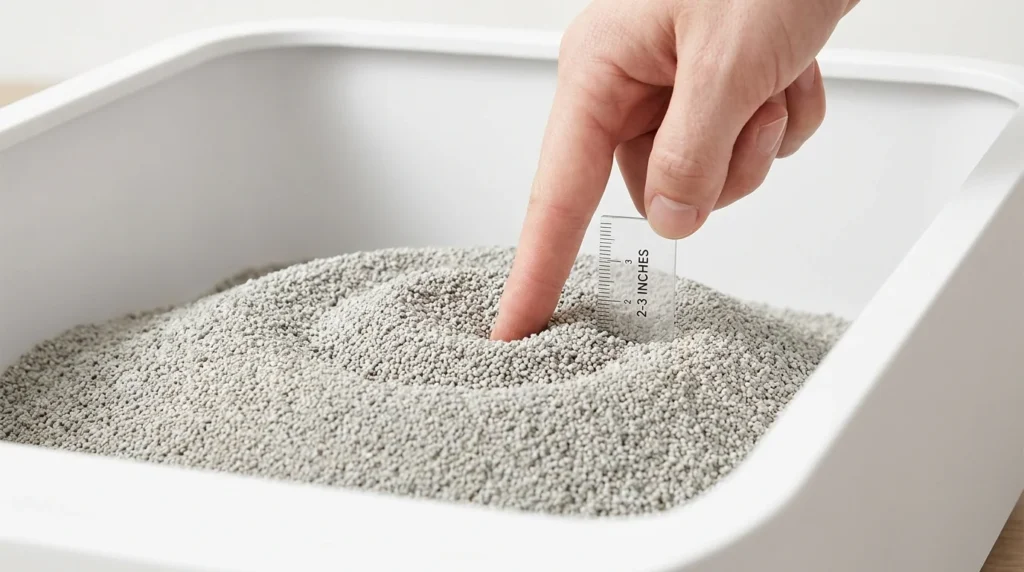
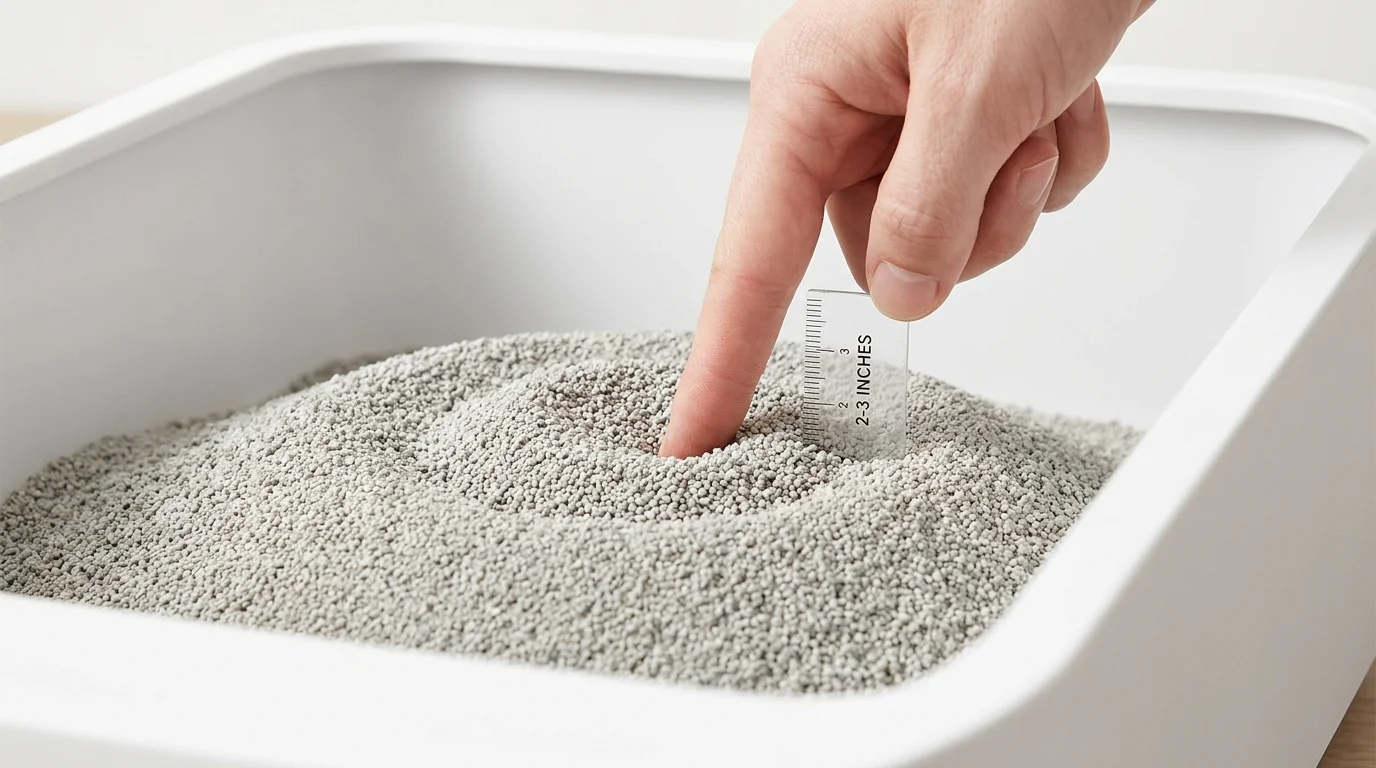
For the vast majority of adult domestic cats using standard clumping clay litter, maintaining a depth of approximately 2 to 3 inches (5 to 7.5 cm) is the sweet spot. Kittens and arthritic seniors who crave firmer footing do best with a shallower layer around 1 to 1.5 inches, while enthusiastic diggers may prefer up to 4 inches.
⚡ Quick Summary: Ideal Cat Litter Depth
Aim for 2 to 3 inches of fine clumping clay. Use the simple “second knuckle test”: push your clean finger into the substrate—if you hit bare plastic before your second knuckle, add more litter. Keeping depth dialed in prevents muddy pan scraping, reduces dust tracking, and stops litter box avoidance.
Finding the optimal depth for your household depends on your litter type and your cat’s biomechanics. If your cat is experiencing elimination challenges, explore our guide on why cats pee in the box but poop outside it.
Why Substrate Depth Matters More Than You Think
Substrate calibration directly affects feline bathroom psychology and hygiene:
- If the Litter Is Too Shallow (< 2 Inches): Urine strikes the bare bottom of the plastic pan before bentonite clay can absorb and clump the liquid. This produces a flat, sticky, cement-like sludge that glues itself to the plastic, cracks your scoop, and traps permanent ammonia odor.
- If the Litter Is Too Deep (> 4 Inches): The surface behaves like desert quicksand. Cats dislike an unsteady, shifting footing beneath their paws. Deep litter triggers intense digging that hurls dirty granules outside the box and can cause anxious or arthritic cats to seek firm carpet instead.
Recommended Depths by Source and Litter Substrate
Veterinary guidelines and feline behavior literature provide nuanced recommendations based on litter composition:
| Litter Type / Life Stage | Optimal Depth | Key Clinical Rationale |
|---|---|---|
| Fine Clumping Clay (Standard) | 2 to 3 inches | Allows tight spherical clumps without touching pan base |
| AAFP / ISFM House-Soiling Guidelines | At least 1¼ inches (~3 cm) | Minimum depth required for natural paw raking |
| International Cat Care (iCatCare) | 1 to 2 inches | Favors stability for sandy clumping substrates |
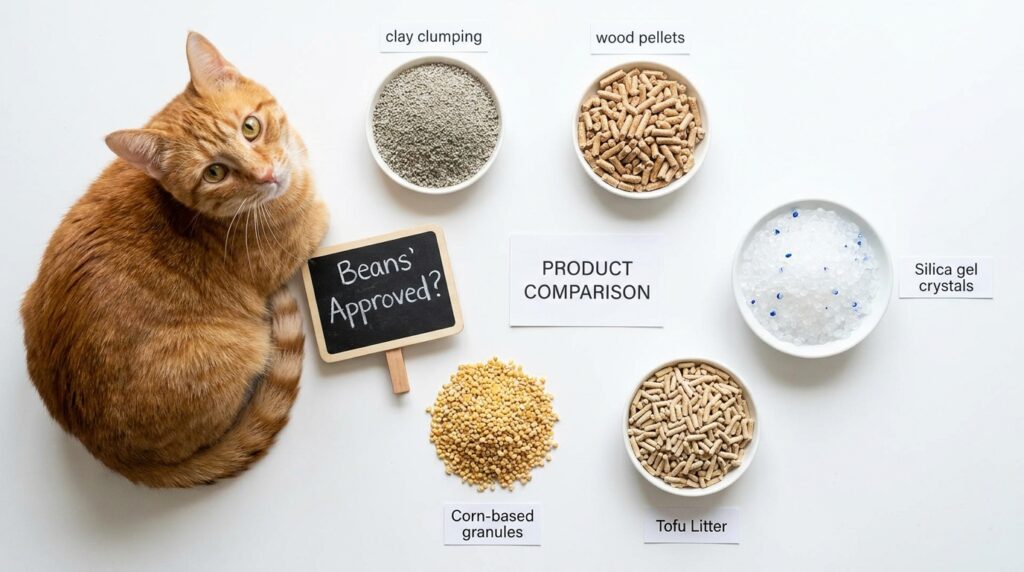
| Non-Clumping / Pellet Litter | 2 to 3 inches | Maximizes liquid absorption through sawdust or paper pellets |
| Kittens & Mobility-Impaired Seniors | 1 to 1.5 inches | Provides firm paw purchase and prevents painful joint strain |
| Enthusiastic Natural Diggers | 3.5 to 4 inches | Satisfies strong burying instinct in high-sided pans |
Clinical veterinary welfare bodies (such as the AAFP and International Cat Care) often advocate slightly shallower ranges (1 to 2 inches) because firm footing prevents aversion. Consumer product manufacturers often recommend 3 inches to prevent pan adherence. Compare formulations in our guide on clumping vs. non-clumping cat litter.
The 5-Second Knuckle Test
You don’t need a ruler to calibrate your box. Every time you finish scooping, perform this quick check:
- Place a clean index finger straight down into the center of the litter until your fingertip touches the plastic bottom.
- If the litter level sits below your second knuckle, the layer is under 2 inches and needs topping off.
- If the litter reaches your base knuckle or palm, it is too deep (over 3.5 inches) and should be leveled out.
Signs Your Litter Depth Needs Adjusting
| Warning Signs It’s Too Shallow | Warning Signs It’s Too Deep |
|---|---|
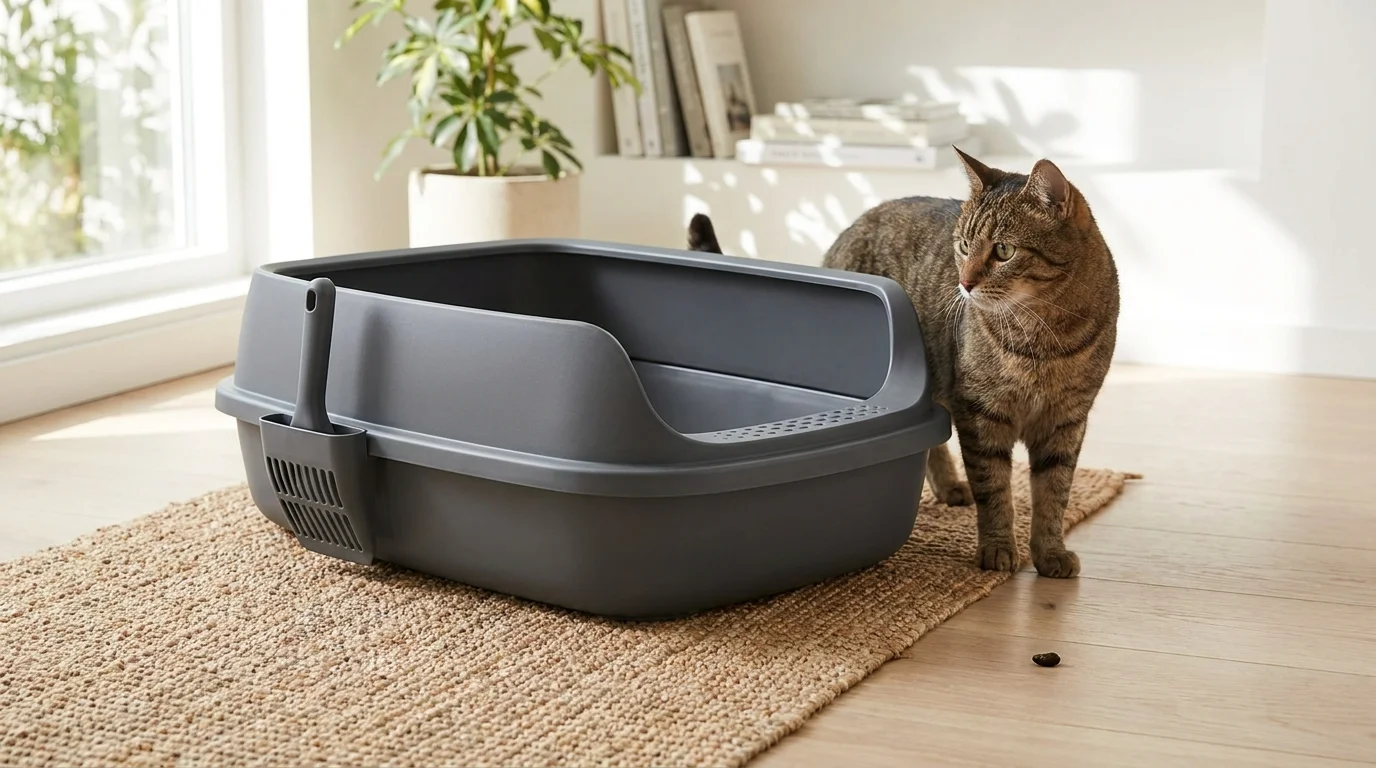
| Urine clumps stick like cement to the floor of the pan | Paws sink deeply; cat wobbles when crouching |
| Strong persistent odor develops within 24 hours of scooping | Litter granules scatter extensively across outer rugs |
| Cat scratches walls or rim frantically trying to find substrate | Kittens or senior cats hesitate or refuse to step in |
Customizing Depth for Specific Feline Needs
- Kittens: Keep depth around 1 to 1.5 inches in a low-rimmed pan. Tiny kitten limbs lack the stability to wade through deep clay.
- Seniors with Arthritis: Provide a shallow, firm 1.5-inch layer. Maintain a gentle entry ramp to ease mobility. Check our litter box size guide for spacious dimensions.
- Passionate Diggers: If your cat spends three minutes excavating caves before eliminating, supply 3.5 to 4 inches, paired with high-sided or seamless stainless-steel boxes to contain scatter.
- Multi-Cat Homes: Maintain consistent depth across every box in the house so one box doesn’t get overloaded while others remain ignored. Check our review of the best cat litters for odor control.
Frequently Asked Questions
Does litter depth affect tracking outside the box?
Yes, dramatically. Deep litter (> 3.5 inches) encourages vigorous burrowing, which throws clay over the edges. Very shallow litter leaves paws moist with urine, creating sticky tracks. Maintaining 2 to 3 inches plus a honeycomb trapping mat minimizes scatter.
How often should I top off vs. completely replace the litter?
Top off with a cup or two of fresh litter every 2 to 3 days to replenish volume lost from scooping. Perform a complete dump, wash, and refill with fresh substrate every 2 to 4 weeks for clumping clay (or weekly for non-clumping clay).
My cat avoided the box after I poured in more litter. What happened?
Cats are ultra-sensitive to sensory tactile shifts. Doubling the litter depth suddenly can make the ground feel unstable or trap stronger dust scents. Scoop out the excess back down to 2 inches, then increase by half an inch weekly if needed.
Authoritative Sources & Further Reading
- Catcredo: Practical Guide to Ideal Cat Litter Depth
- The Refined Feline: How Much Litter to Put in a Cat Litter Box
- Meowant: Ideal Cat Litter Depth for Cleaner Box Habits
🐾 Explore More Litter Box Care Guides
Keep your litter box clean, fresh, and appealing to your feline: