By Emma Hartley | Reviewed by IndoorCatWell Editorial Team | Last updated September 2026
This article provides practical, veterinary-supported pet food safety guidance. If you buy through our links, we may earn an affiliate commission at no extra cost to you. Read our full Affiliate Disclosure.
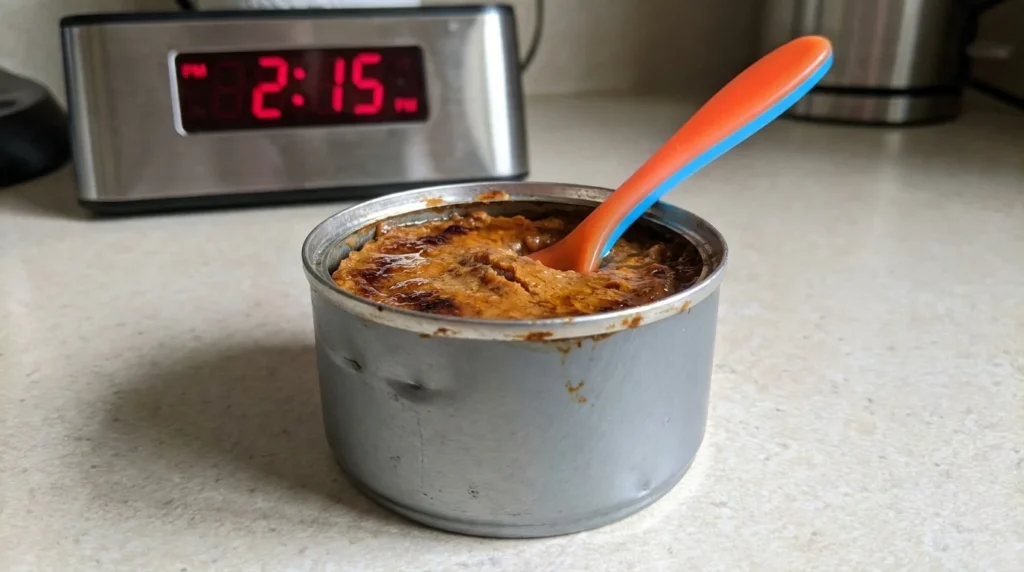
Most veterinarians and food-safety specialists agree that wet cat food should not sit out at room temperature for more than 1 to 2 hours. In warm environments above 85°F (29°C), that window shrinks to less than 60 minutes. Once opened, refrigerate uneaten portions in an airtight container and use them within 3 to 5 days.
⚡ Quick Summary: Wet Food Safety Limits
Discard any canned food left exposed for more than 2 hours (or 1 hour in hot summer weather). Never leave wet food out overnight. Seal opened leftovers immediately in the fridge with silicone lids, and discard refrigerated portions after 5 days. When in doubt, throw it out!
Unlike dry kibble, which contains preservative systems and moisture levels under 10%, canned cat food is roughly 75% to 82% water. The moment an airtight seal is popped, moisture, protein, and ambient warmth create an ideal microbial breeding ground for bacterial pathogens.
Why Wet Food Spoils So Rapidly
Canned and pouch cat foods undergo commercial retort sterilization to ensure a long shelf life while sealed. However, exposure to oxygen and room air introduces ambient spores and bacteria like Salmonella, Listeria monocytogenes, and Clostridium perfringens. Between 40°F and 140°F (the FDA “Danger Zone”), bacterial populations can double every 20 minutes.
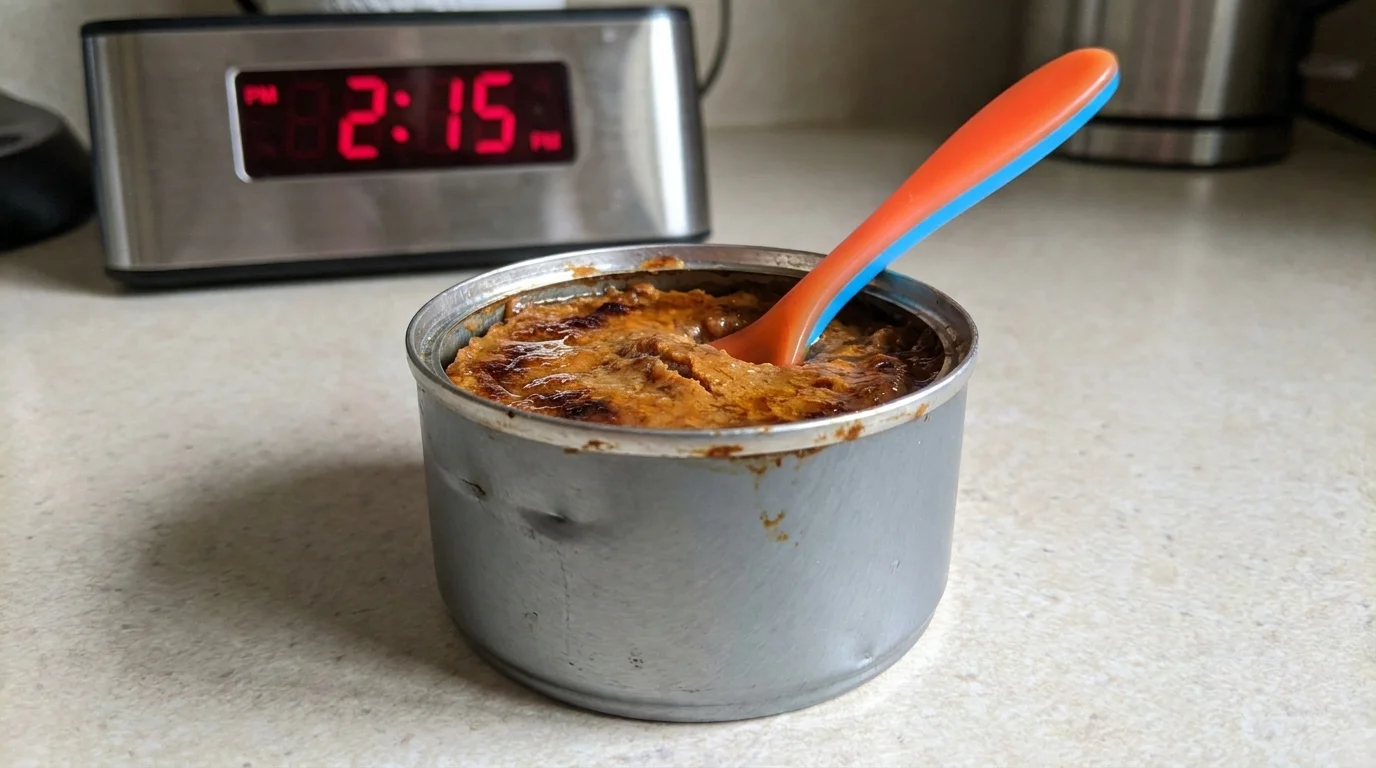
Furthermore, fats within the meat oxidize quickly, causing wet chunks to develop a crusty, leathery texture and rancid odor that felines intuitively reject. If you are preparing to be away from home during meal hours, review our safety guide on how long you can leave an indoor cat alone.
The Safe Time Limits: Strict vs. Lenient Standards
Veterinary guidance and academic food safety centers evaluate time limits under two main benchmarks:
| Environmental Condition | Safe Window (Conservative) | Upper Outer Limit |
|---|---|---|
| Cool / Air-Conditioned (65°F–72°F) | 1 to 2 hours | Up to 3 hours maximum |
| Warm Room (73°F–84°F) | 1 hour | 2 hours maximum |
| Hot Weather / Direct Sun (85°F+) | 30 to 45 minutes | 1 hour maximum |
| Refrigerated (under 40°F / 4°C) | 3 days | 5 days maximum |
A food-safety specialist at Kansas State University’s Olathe campus emphasizes that two hours is the outer threshold for any high-protein cooked meat sitting at room temperature. Clinical veterinary hospitals, including Plano Animal Hospital, urge pet owners to follow the conservative 1 to 2-hour window. As veterinary emergency clinicians frequently remind clients: when in doubt, throw it out.
How to Store Leftover Canned Cat Food Safely
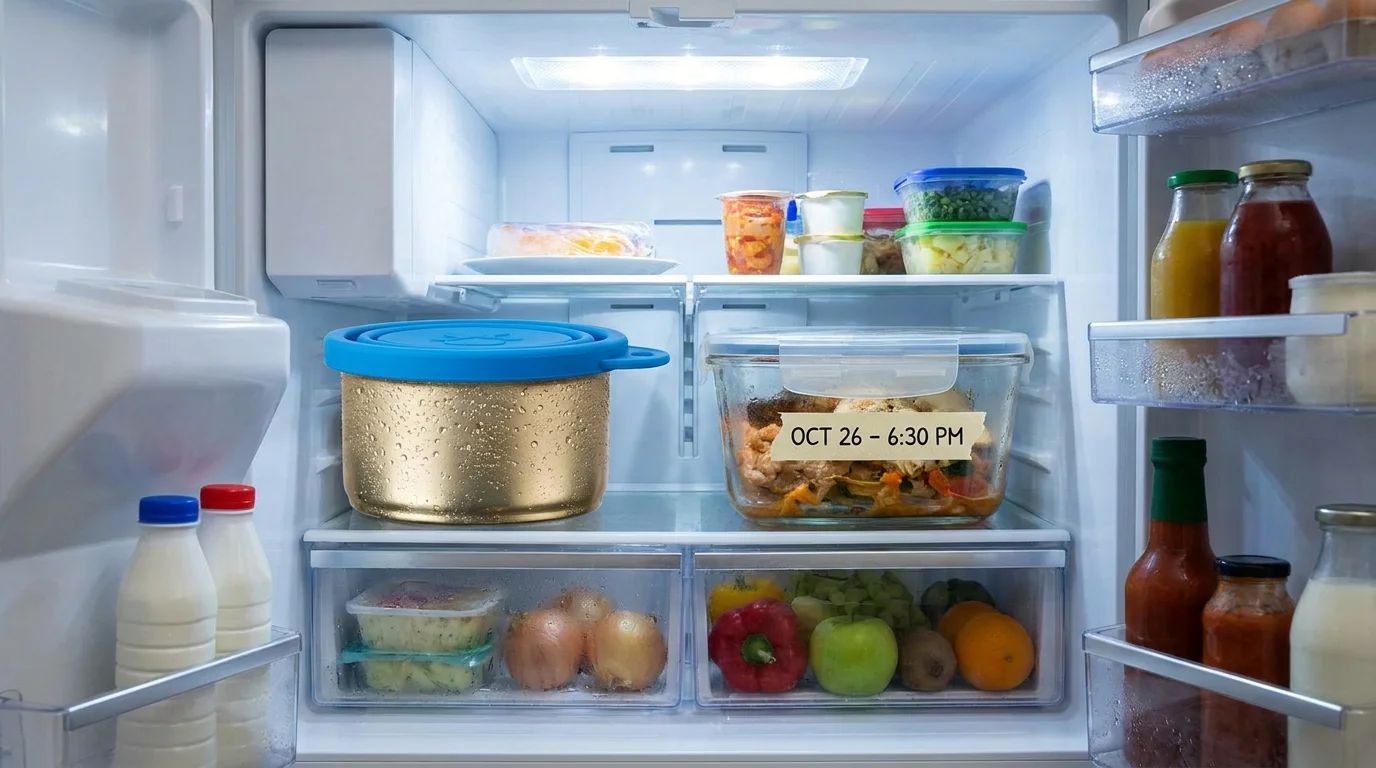
- Refrigerate Immediately: If your cat finishes eating after 20 minutes and leaves half the portion behind, pack it away into the refrigerator immediately rather than letting it sit out.
- Seal With Airtight Silicone Lids: Press-fit silicone pet can lids prevent odors from circulating into human food and stop moisture from evaporating. Alternatively, transfer the food into a glass snap-lock container.
- Write the Opening Date on the Can: Use a dry-erase marker on the lid to record the date opened. Discard any contents not consumed within 3 to 5 days.
- Never Re-Refrigerate Spoiled Food: If food has been sitting out in a warm dish for 3 or 4 hours, putting it back in the fridge will not kill existing bacterial toxins. Throw it in the trash.
How to Serve Chilled Leftovers to Picky Cats
Cats possess ancestral instincts that favor food near live body temperature (~100°F / 38°C). Chilled pâté straight from a 38°F refrigerator deadens aromatic scent molecules and feels stiff and unappetizing. Many cats will sniff cold food and walk away in disgust. If your cat tends to lick only the sauce, read our deep dive into why cats only eat the gravy from wet food.
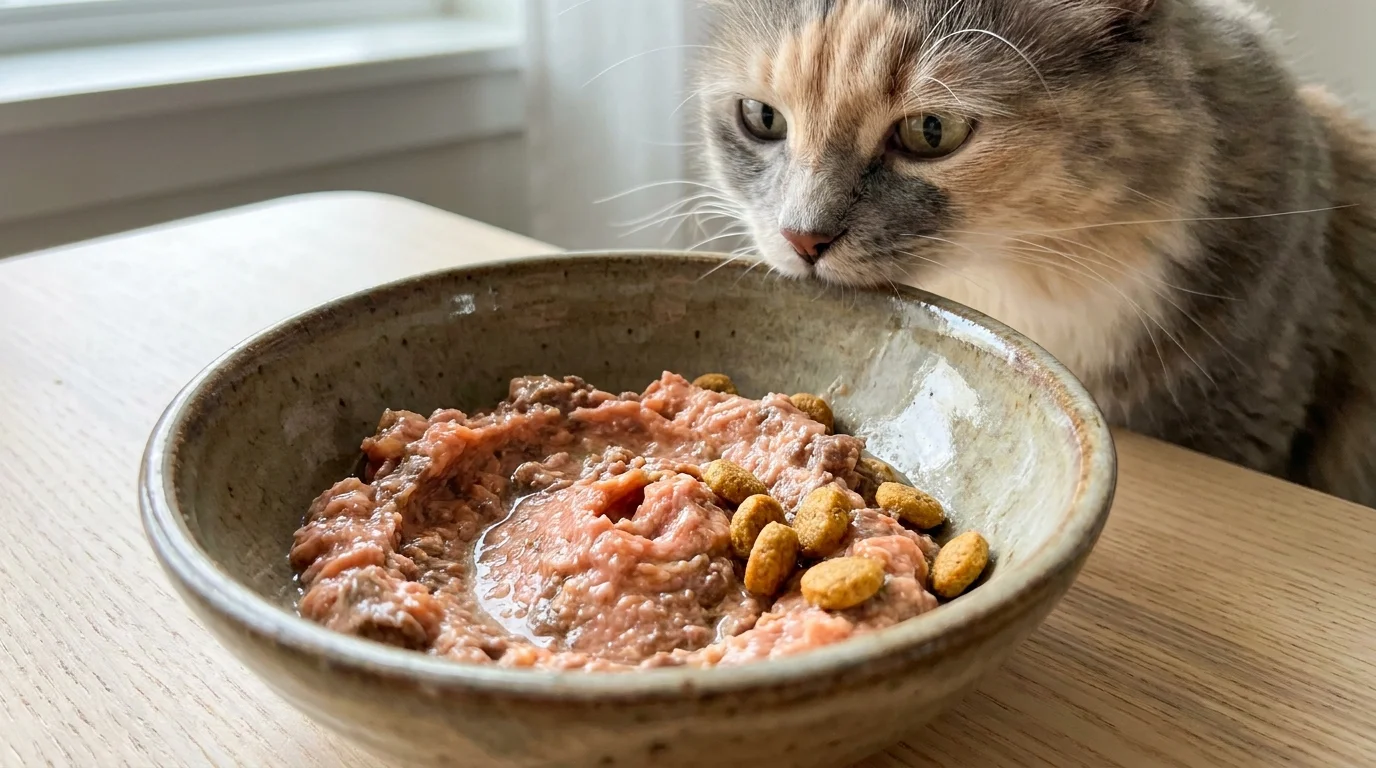
To reheat safely: stir in a tablespoon of warm (not boiling) water, or place the portion in a ceramic dish and microwave for 4 to 6 seconds. Stir thoroughly and test the warmth on your inner wrist to ensure there are no localized hot spots that could scald your cat’s tongue.
Frequently Asked Questions
Can I leave wet food out overnight for my cat?
No. Eight hours at room temperature is far beyond any safe bacterial threshold. If your cat requires overnight meals, use an ice-pack automated feeder with a timed lid or transition to a timed dry kibble dispenser.
Does mixing wet food with dry food extend how long it can sit out?
No. The moisture from the wet food softens and saturates the dry kibble, accelerating mold and bacterial multiplication across the entire dish. Mixed meals must be discarded within the same 1 to 2-hour window.
How can I tell if wet food has gone bad?
Look for sour or metallic odors, discoloration, a crusty or dried-out surface, or visible mold fuzz. If your cat usually loves the recipe but sniffs and immediately recoils, trust their acute sense of smell and discard the bowl.
Authoritative Sources & Further Reading
- Whisker: How Long Can Cat Food Sit Out?
- Adopt a Pet: How Long Can Wet Cat Food Sit Out?
- Plano Animal Hospital: Feline Food Safety Time Limits
🐾 Explore More Cat Feeding & Care Guides
Keep your cat’s meals nutritious, safe, and delicious: