By Emma Hartley | Reviewed by IndoorCatWell Editorial Team | Last updated September 2026
This article provides practical, veterinary-supported feline dietary guidance. If you buy through our links, we may earn an affiliate commission at no extra cost to you. Read our full Affiliate Disclosure.
Switching a cat from dry kibble to wet canned food requires a gradual 7 to 10-day transition, moving away from all-day free-feeding first. While some felines take to canned food instantly, others are deeply resistant to new aromas and mouthfeels. Patience is critical, because starving a resistant cat is medically dangerous.
⚡ Quick Summary: Dry to Wet Food Transition
Establish scheduled meal times (leaving dishes down for only 20 to 30 minutes), then blend wet food in 25% increments every 2 to 3 days. Warm refrigerated food slightly to unlock aroma, and never allow a resistant cat to go without calories for more than 24 hours.
Wet food delivers immense biological benefits for indoor cats: it supplies 70% to 80% moisture to safeguard delicate kidneys and urinary tracts, lowers carbohydrate intake, and mirrors ancestral prey. Learn how wet food boosts daily moisture in our cat hydration guide.
Talk to Your Veterinarian First
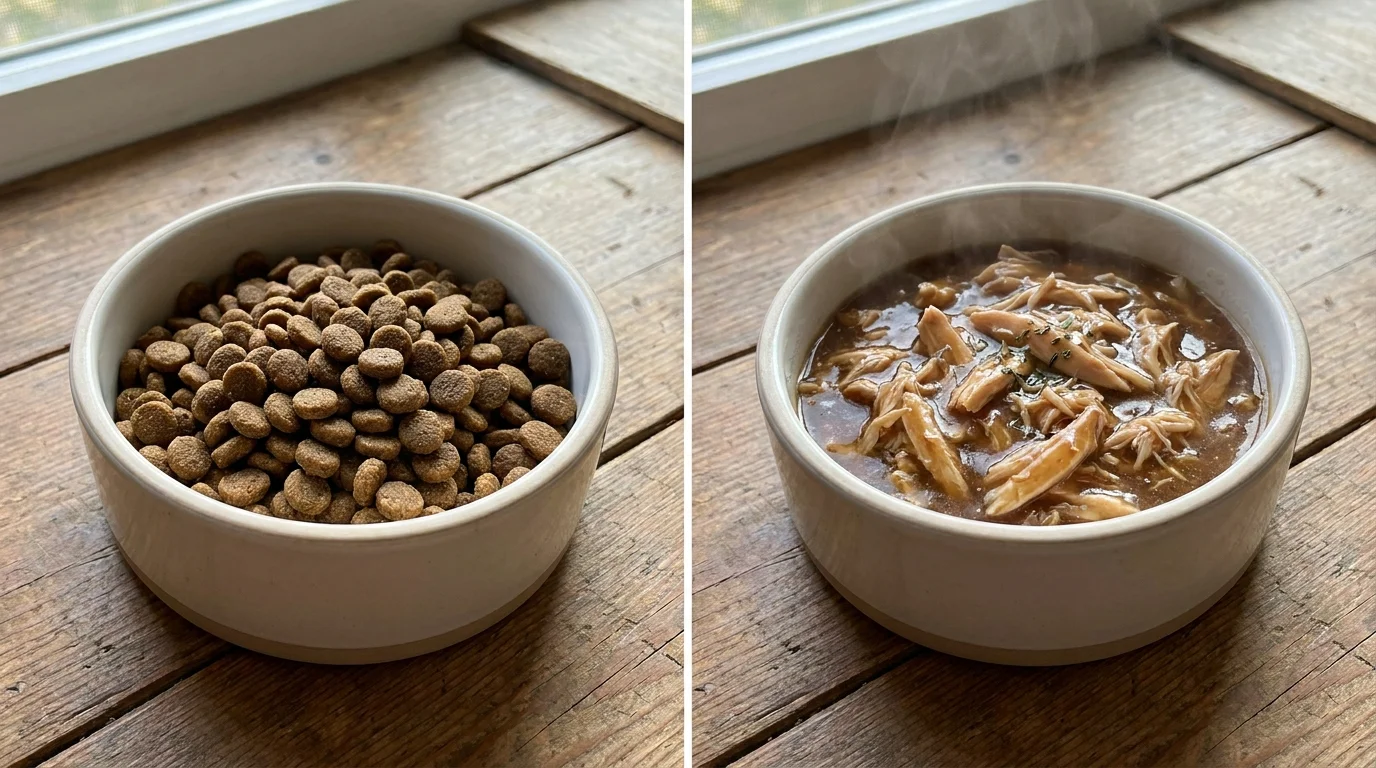
Guidance from PetMD on switching cat food is unequivocal: consult your veterinarian prior to altering diets. Wet food is far less calorically dense per ounce than dry kibble due to high water volume. A proper transition plan ensures your cat consumes enough daily calories and protein to match their life stage and metabolic needs without sudden weight gain or dangerous weight loss.
Step 1: Move to Scheduled Meals Before Introducing Cans
If you currently leave a bowl filled with dry kibble out 24/7 for grazing, you must tackle this first. A cat that can nibble small snacks all day long is never hungry enough to overcome the natural neophobia (fear of new foods) that makes unfamiliar wet textures intimidating.
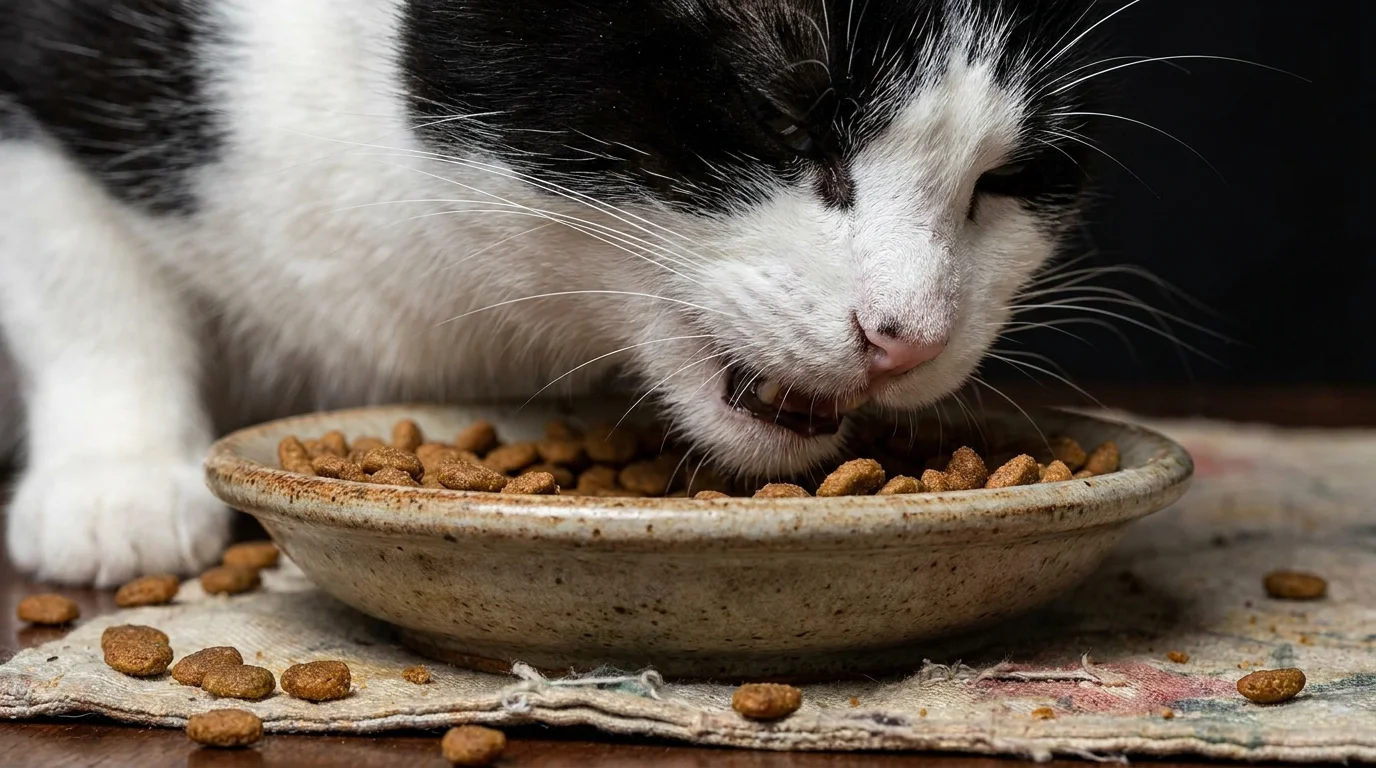
Set 3 or 4 fixed meal times throughout the day, following an established adult cat feeding schedule. Leave the bowl down for exactly 20 to 30 minutes, then pick up whatever is unfinished. Within a week, your cat will understand that food is served during discrete events, building the healthy appetite required to investigate canned food.
Step 2: Introduce Wet Food Gradually (7 to 10-Day Plan)
Abrupt diet switches irritate the feline gastrointestinal microbiome. Follow this graduated timeline from PetSmart’s safe transition guide:
| Transition Phase | Wet Food Ratio | Dry Kibble Ratio |
|---|---|---|
| Days 1 to 2 | 25% | 75% |
| Days 3 to 4 | 50% | 50% |
| Days 5 to 6 | 75% | 25% |
| Days 7 to 10+ | 100% | 0% (or small dry treat topper) |
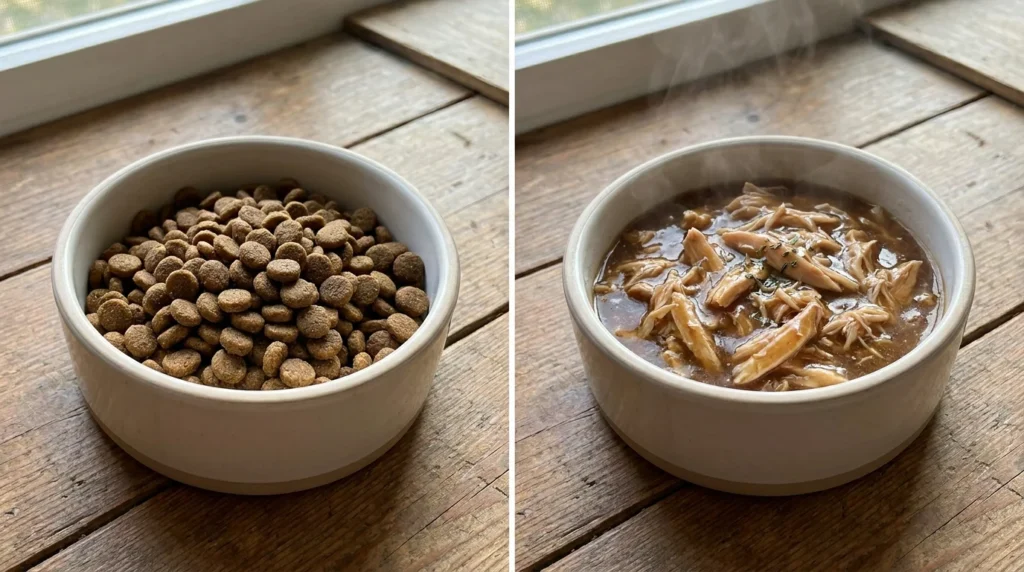
Depending on your cat’s personality, you can stir the portions together or place them side-by-side on the same dish. Lightly crushing a few familiar dry kibbles and sprinkling them across the top of the wet food creates an enticing aromatic bridge.
Step 3: Monitor Stools and Digestive Tolerance
A slight softening of the stool during the first 48 to 72 hours of a diet transition is a common reaction to increased moisture. However, profuse watery diarrhea or vomiting that persists past 24 hours means the switch is progressing too fast. Step back to the previous ratio for 3 days before advancing again. For cats prone to gastrointestinal flare-ups, consult our guide to cat foods for sensitive stomachs.

What to Do If Your Cat Completely Refuses Wet Food
- Experiment With Texture Varieties: Cats have distinct tactile preferences. If your cat turns their nose up at loaf-style pâté, test minced, shredded, flakes, or morsels in gravy. If they lick only liquid, read our advice on why cats only eat gravy from wet food.
- Warm the Food to Body Temperature: Cold food straight from the refrigerator lacks odor and feels unappealing. Add a splash of warm water or microwave for 4 to 6 seconds to bring the meal to mouse-body temperature (~100°F / 38°C).
- Do Not Immediately Cave In: If your cat glares at the bowl and walks away, do not instantly offer a full bowl of dry treats. Let the wet food stay out for its safe window (see how long wet cat food can sit out) before clearing it.
- Extend the Timeline: There is no deadline. Spending three or four weeks on the transition is completely acceptable for elderly cats or stubborn eaters.
Unlike dogs, cats deprived of food for more than 24 to 48 hours rapidly mobilize peripheral body fat to the liver. This can trigger hepatic lipidosis (fatty liver disease), an acute, life-threatening metabolic emergency requiring intensive hospitalization. If your cat refuses all wet food for 24 hours, offer their familiar dry kibble and consult your veterinarian.
Frequently Asked Questions
How long should the entire food switch take?
A standard transition takes 7 to 10 days for receptive adult cats. Senior cats with long-established habits or felines with sensitive stomachs may require two to three weeks of gradual micro-increases.
Can I mix wet and dry food long-term instead of switching 100%?
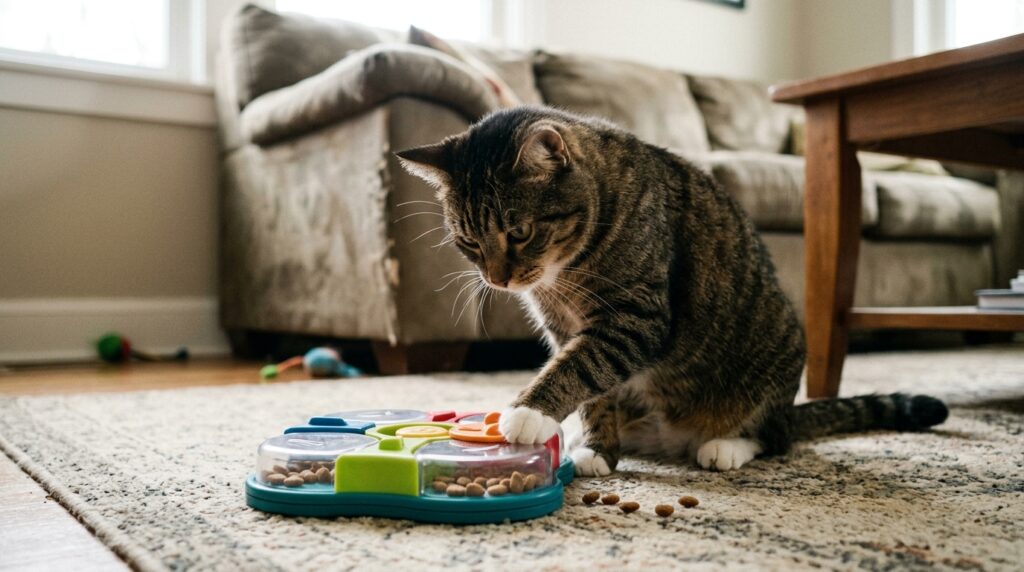
Yes. Many feline clinicians advocate a mixed-feeding strategy. Canned meals supply critical hydration and protein, while dry kibble can be used in daytime puzzle feeders or timed dispensers to keep meals engaging.
My cat developed diarrhea after starting wet food. What should I do?
Pause the transition and revert to the previous ratio of dry food until bowel movements normalize. Adding a vet-approved feline probiotic can help stabilize the intestinal microflora before attempting a slower transition.
Authoritative Sources & Further Reading
- PetMD: How To Switch Cat Food Safely
- PetSmart Learning Center: How to Safely Transition Your Cat to a New Food
- Cat Behavior Associates: Transitioning Your Cat From Dry Food to Wet Food
🐾 Explore More Feline Nutrition & Care Guides
Support your indoor cat’s digestive wellness and lifelong vitality: