By Emma Hartley | Reviewed by IndoorCatWell Editorial Team | Last updated August 2026
Before you change a single thing about what your cat eats, it’s worth answering a more basic question first: is this actually a sensitive stomach, or something that needs a vet before it needs a new bag of food? Vomiting and diarrhea have a wide range of causes, and switching foods repeatedly without identifying the root issue can waste valuable time on a cat that needs clinical care.
Quick Answer: What Is the Best Food for a Sensitive-Stomach Cat?
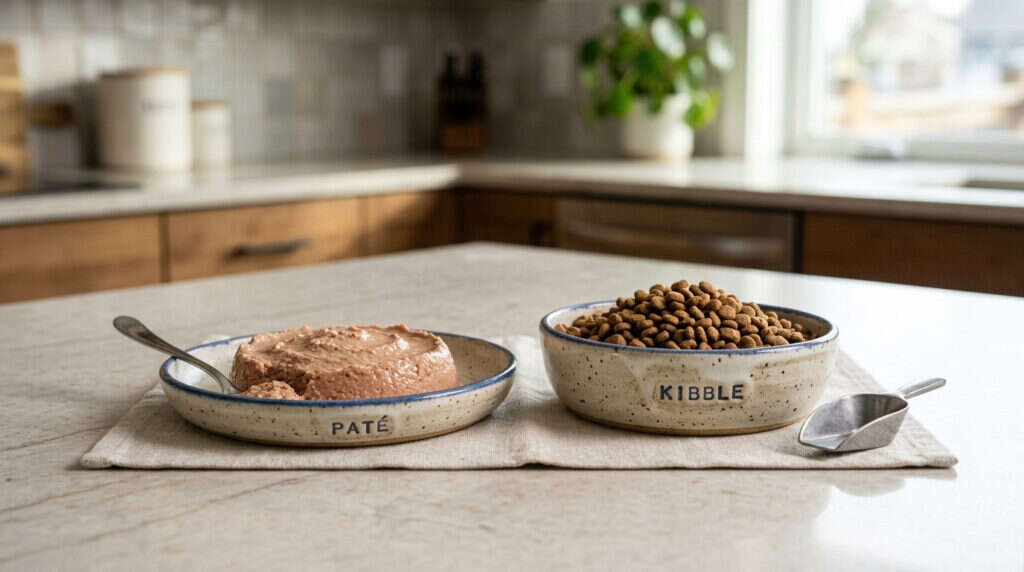
For a cat with a mild, diet-related sensitivity, look for formulas with a short, named single-protein ingredient list, moderate fat, added prebiotic fiber (like FOS or chicory root), and no artificial fillers. Hill’s Science Diet Adult Sensitive Stomach & Skin and Purina ONE +Plus Sensitive Skin and Stomach are two widely vet-recommended dry foods; for wet food, smooth sensitive-stomach pâtés provide gentle digestibility and vital hydration. Persistent symptoms warrant veterinary screening.
First, Is Your Cat's Stomach Actually 'Sensitive'?
“Sensitive stomach” should describe a cat with occasional, mild digestive upset that improves with a gentler diet — not a cat with recurring vomiting, chronic diarrhea, progressive weight loss, or blood in the litter box.
- Sensitive Stomach: Mild, non-immune digestive fatigue, often improving on easily digestible, moderate-fat recipes.
- Food Intolerance: Adverse reaction to a specific ingredient (e.g., lactose or beef) that is non-allergic.
- Food Allergy: An immune-mediated response, typically presenting as severe skin itching, facial scratching, and ear infections alongside GI signs.
For more clinical details on feline digestive health, consult the Cornell Feline Health Center Guide on Feline Gastrointestinal Disorders.
When Vomiting or Diarrhea Requires a Veterinarian
Do not attempt a home food swap if you notice any of the following red flags:
- Vomiting more than twice in 24 hours, or vomiting that continues over multiple days
- Diarrhea lasting more than 48 hours
- Visible blood or black tarry residue in vomit or stool
- Noticeable, unexplained weight loss
- Lethargy, fever, or signs of dehydration (sunken eyes, tacky gums)

What Makes Cat Food Easier to Digest?
- Highly Digestible Named Protein: Real deboned chicken, turkey, or salmon rather than unspecified generic meals. Check our Cat Food Ingredients Guide.
- Controlled Fat Levels: Excessive fat slows gastric emptying and can trigger digestive distress in sensitive cats.
- Prebiotic & Soluble Fiber: Beet pulp, pumpkin, and FOS nourish beneficial gut microbiome bacteria.
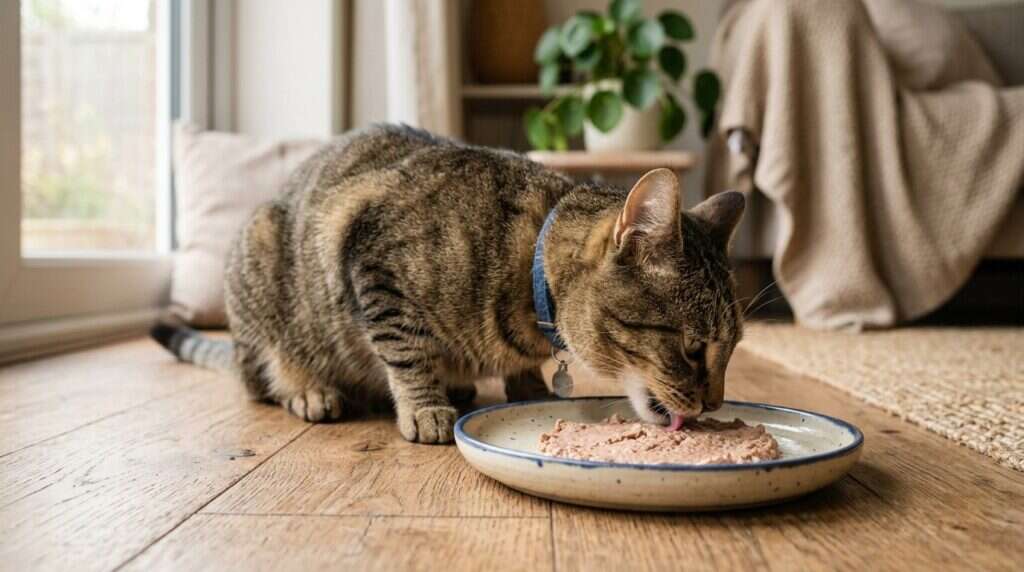
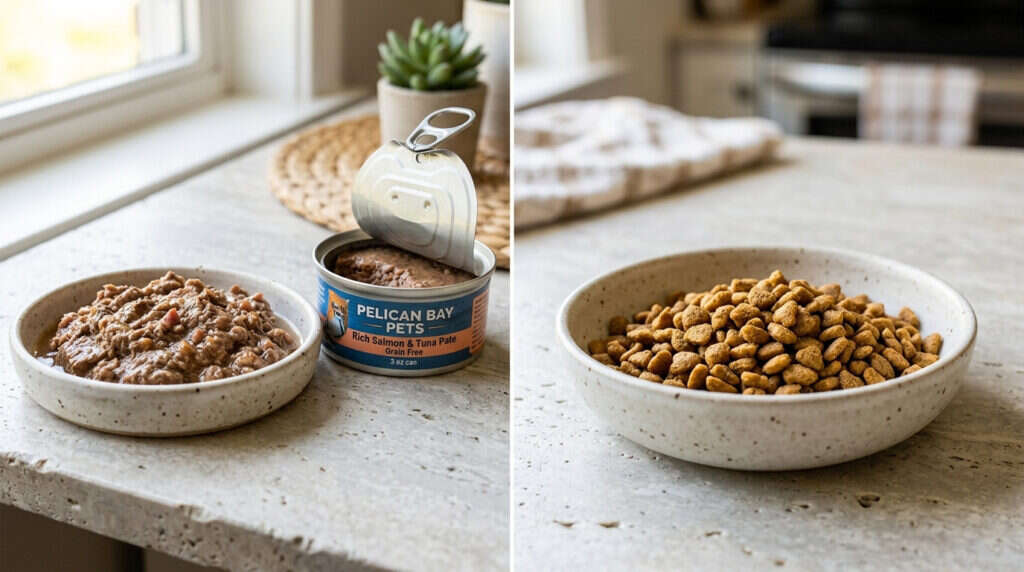
- High Moisture Content: Soft canned pâté is gentler on gastrointestinal mucosa.
- Strict AAFCO Nutritional Adequacy: Ensuring the recipe meets Complete and Balanced Standards.
Best Cat Foods for Sensitive Stomachs (Comparison)
| Food Line | Best For | Format | Key Benefits |
|---|---|---|---|
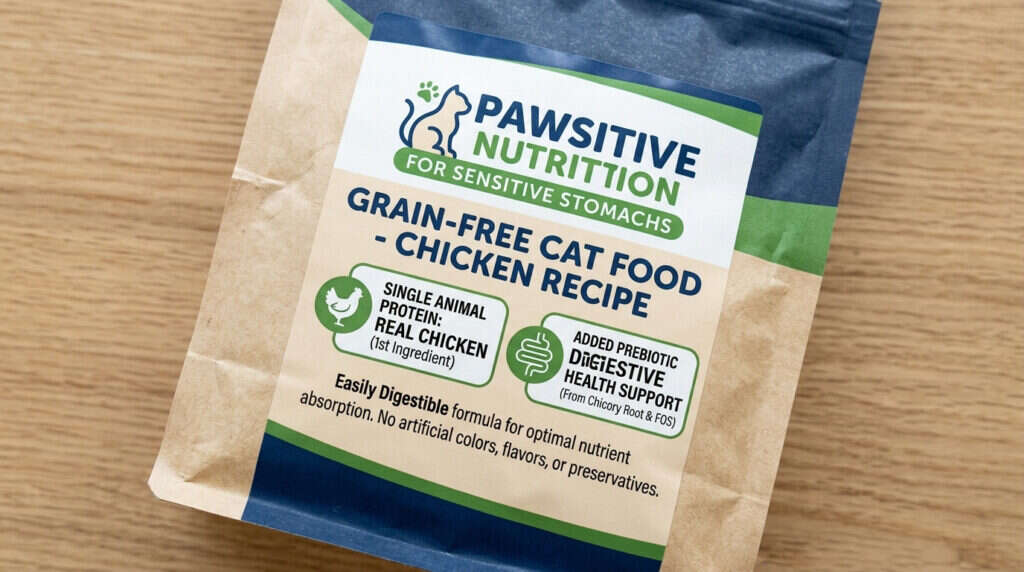
| Hill’s Science Diet Sensitive Stomach | Overall digestion & skin | Dry / Wet | Prebiotic FOS fiber, clinically tested, highly digestible |
| Purina ONE +Plus Sensitive Stomach | Everyday budget digestion | Dry | Real turkey #1 ingredient, prebiotic fiber support |
| Instinct Limited Ingredient Diet (Duck) | Single novel protein | Wet / Dry | Single cage-free duck protein, no chicken, grain-free |
| Purina Pro Plan Sensitive Skin & Stomach | Pâté moisture lovers | Wet (Pâté) | Gentle lamb or duck, omega-6 fatty acids for skin |
Limited-Ingredient & Novel-Protein Diets
Limited-Ingredient Diets (LID): Strip recipes down to a single protein and a minimal carbohydrate source, isolating potential allergens. Excellent when switching from standard poultry diets.
Novel-Protein Diets: Use protein sources your cat has never consumed before (duck, venison, rabbit, quail). Because the feline immune system has never encountered the antigen, it is far less likely to trigger inflammatory reactions. If considering raw alternatives, explore our guide on Raw Diets for Indoor Cats.
7-Day Food Transition Plan
Switching foods abruptly triggers secondary digestive upset. Follow this measured transition protocol:
| Transition Days | Old Food Ratio | New Food Ratio |
|---|---|---|
| Days 1–2 | 75% | 25% |
| Days 3–4 | 50% | 50% |
| Days 5–6 | 25% | 75% |
| Day 7+ | 0% | 100% |
If loose stool appears at any stage, hold at that ratio for 3 additional days before increasing the new food proportion. Review our core nutritional framework in the Complete Cat Nutrition Guide.
Sensitive Stomach FAQ
What is the number one cause of cat vomiting?
Is grain-free food better for a sensitive stomach?
How long does it take a sensitive stomach food to work?
Can I mix wet and dry sensitive stomach food?
Should I try a home remedy before switching foods?
🐾 Explore Tested Cat Food Reviews & Recommendations
Browse our hands-on reviews of veterinary-formulated sensitive stomach cat foods, limited-ingredient diets, and slow-feeder bowls.