By Emma Hartley | Reviewed by IndoorCatWell Editorial Team | Last updated August 2026
Most cat nutrition guides read like a biology lecture: here’s protein, here’s taurine, good luck. That’s not enough if you’re standing in the pet food aisle trying to figure out what to actually buy. This guide is built as a practical decision tool, not just an abstract reference — by the end, you’ll know how to evaluate any bag or can of cat food in front of you and build a feeding plan that fits your cat’s age, weight, and lifestyle.
The Short Answer: What Does a Healthy Cat Diet Need?
A cat’s diet must be built around high-quality animal protein, contain essential taurine, deliver adequate animal fats for fatty acids, and be labeled complete and balanced for your cat’s specific life stage. Everything else — wet vs. dry, brand, price point — is secondary.
| Nutrient | Why Cats Need It | Main Dietary Sources |
|---|---|---|
| Protein | Builds and repairs muscle, tissues, and enzymes; primary metabolic energy driver. | Meat, poultry, fish, eggs |
| Taurine | Essential for myocardial heart health, retinal vision, and reproductive function. | Animal muscle tissue, fortified commercial diets |
| Fat | Concentrated energy source, fat-soluble vitamins (A, D, E, K), and arachidonic acid. | Poultry fat, animal tallow, fish oil |
| Vitamins | Cellular metabolism, immune response, and neurological support. | Pre-formed vitamin A from liver, fortified complete diets |
| Minerals | Bone structure, fluid balance, nerve signaling (tight calcium-to-phosphorus ratio). | Balanced commercial cat food formulas |
| Water | Cellular hydration, kidney filtration, and lower urinary tract health. | Drinking water, pet fountains, canned wet food (70–80% moisture) |
Why Cats Have Different Nutritional Needs From Humans and Dogs
Cats are obligate carnivores. Dogs can thrive on an omnivorous diet with meaningful plant content; humans thrive on one. Cats cannot. Over millennia of strict predatory evolution, felines lost the ability to synthesize several essential amino acids and fatty acids from plant matter.
As detailed in the Cornell Feline Health Center Feline Nutrition Guidelines, a cat’s liver constantly burns protein for gluconeogenesis (glucose production), even when dietary protein is low. This creates a high fixed baseline protein requirement and means grain or legume-heavy formulas are biologically mismatched to feline metabolic pathways.
The 6 Essential Nutritional Components Cats Need
1. Protein and Essential Amino Acids
Feline metabolism is wired to derive daily energy directly from amino acids. Beyond total crude protein, specific individual amino acids are non-negotiable:
- Arginine: Essential for the urea cycle. A single meal completely lacking arginine can lead to severe ammonia toxicity in cats.
- Methionine & Cysteine: Sulfur-containing amino acids needed for muscle synthesis, fur structure, and taurine regulation.
2. Taurine (Critical Feline Amino Acid)
Taurine deficiency causes dilated cardiomyopathy (heart failure) and irreversible central retinal degeneration (blindness). Because cats cannot synthesize sufficient taurine internally and cooking degrades it, reputable commercial formulas strictly supplement it.
3. Fats and Essential Fatty Acids
Fats deliver dense calories and carry fat-soluble vitamins (A, D, E, K). Cats specifically require arachidonic acid, an omega-6 fatty acid found exclusively in animal fats that felines cannot produce from plant linoleic acid.
4. Vitamins (Pre-Formed Nutrients)
Unlike humans or dogs, cats cannot convert plant-based beta-carotene into active Vitamin A; they require pre-formed Vitamin A from animal liver or fortified diets. They also require direct dietary niacin, as they cannot convert tryptophan into niacin.
5. Minerals and Calcium-to-Phosphorus Balance
A strictly balanced calcium-to-phosphorus ratio (typically 1.1:1 to 1.4:1) is critical for bone density and kidney protection. All-meat home diets are naturally dangerous because pure muscle meat is heavily loaded with phosphorus and deficient in calcium.
6. Water and Hydration
Cats evolved from arid desert ancestors and exhibit a naturally low thirst drive. While wild prey provides 70% moisture, dry kibble delivers only 10%. Maintaining dietary hydration is essential for kidney filtration and preventing bladder crystals. Read our complete Cat Hydration Guide for healthy intake targets.
What Does 'Complete and Balanced' Cat Food Actually Mean?
“Complete and balanced” is a legally regulated nutritional claim governed by the Association of American Feed Control Officials (AAFCO). It ensures the food provides every required nutrient in correct physiological proportions for a specific life stage.
Food manufacturers verify adequacy through two distinct methods:
- Nutrient Formulation Profiles: The recipe is analyzed in a laboratory to confirm it meets AAFCO nutrient minimums on paper.
- AAFCO Feeding Trials (The Gold Standard): The formula is fed to real cats over several months under controlled veterinary blood testing to prove bioavailability and safety.
Always inspect the back of the packaging for the exact AAFCO statement. If this sentence is missing, the product is an intermittent treat or topper, not a primary daily diet. For a deeper breakdown, read What Complete and Balanced Cat Food Means.
How to Read a Cat Food Label
Pet food marketing can be misleading. Here is how to evaluate the four key panels on any package:
- Ingredients List: Ingredients are listed by weight prior to processing. Look for named animal proteins (e.g., deboned chicken, salmon) in the first two spots, rather than generic terms. Learn what to look for in our Cat Food Ingredients Guide.
- Guaranteed Analysis: Lists minimum percentages for crude protein and fat, and maximum percentages for fiber and moisture. Comparing wet and dry foods requires converting these numbers to a Dry Matter Basis. Check our step-by-step tutorial on How to Read a Cat Food Label.
- Calorie Density (Kcal/Cup or Kcal/Can): The exact metric required to portion your cat’s meals accurately.
- Life-Stage Designation: Formulated for Growth (kittens), Adult Maintenance, or All Life Stages.

Wet vs Dry Cat Food: Which Is Better?
Neither format wins outright — both have distinct biological and practical advantages:
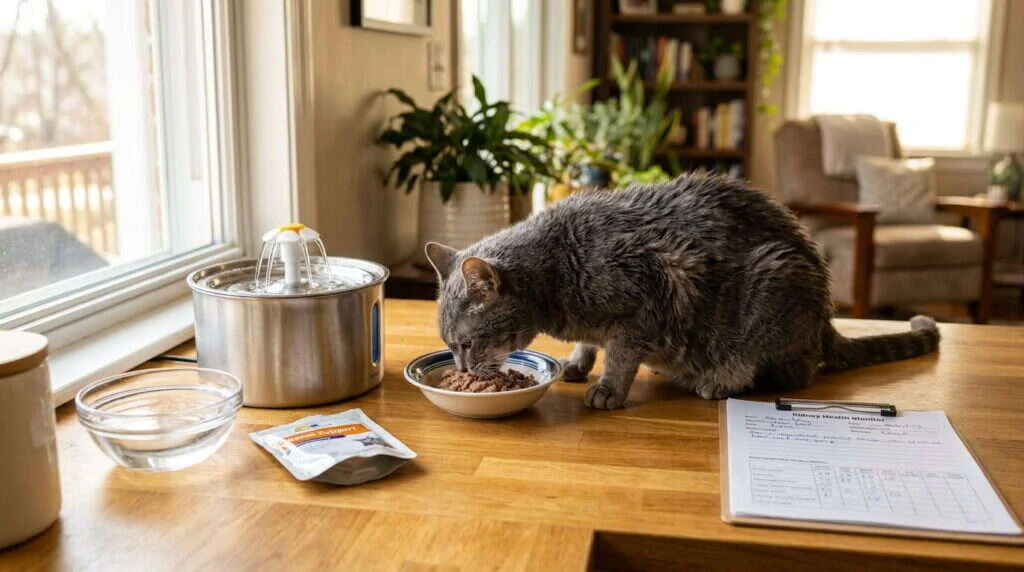
- Canned Wet Food (75–82% Moisture): Exceptional for urinary tract flushing, kidney support, and natural portion control. Ideal for cats prone to crystals, idiopathic cystitis, or chronic low water intake.
- Dry Kibble (8–10% Moisture): High calorie density, cost-effective, easily stored, and ideal for interactive enrichment games or automatic feeders.
- The Mixed Feeding Strategy: Combining daily canned wet meals with portioned dry kibble in puzzle feeders provides high hydration alongside cognitive stimulation. Discover top-rated formulas in our review of the Best Cat Food for Indoor Cats.

How Much Should a Cat Eat? (Calorie Math)
Portions depend on ideal target weight, activity, and neuter status — not vague feeding charts on the bag. Spayed and neutered cats have lower basal metabolic rates.
As a general baseline, a healthy 10-pound (4.5 kg) indoor adult cat requires roughly 200 to 250 calories per day. Calculate exact daily calorie targets using our comprehensive guide on How Much to Feed an Indoor Cat: Calorie Guide by Weight.
Cat Nutrition by Life Stage
Kittens (0–12 Months)
Growing kittens require significantly elevated protein, fat, and calories per pound of body weight to support rapid skeletal and muscle development. They also need concentrated DHA for neurological and retinal growth. Feed 3–4 meals daily using a designated growth formula. Read our full Kitten Nutrition & Feeding Schedule.
Adult Cats (1–7 Years)
Focus shifts to weight management, lean muscle maintenance, and consistent hydration. Feed measured portions divided into two scheduled meals per day.
Senior Cats (7+ Years)
Aging cats often experience decreased protein digestive efficiency and muscle wasting (sarcopenia), while others develop chronic renal or dental changes. Highly digestible proteins and controlled phosphorus become essential. Review our guide on Senior Cat Nutrition: What to Change After Age 10.

Indoor Cat Nutrition: Weight & Enrichment
Indoor-only cats burn significantly fewer calories than outdoor felines, making portion control vital to avoid feline obesity, diabetes, and joint strain:
- Portion by Calories: Measure food using a digital gram scale or accurate measuring cup based on kcal content.
- Scheduled Meals vs. Free-Feeding: Free-feeding dry kibble all day is the leading driver of weight gain. Schedule 2 to 3 distinct meals.
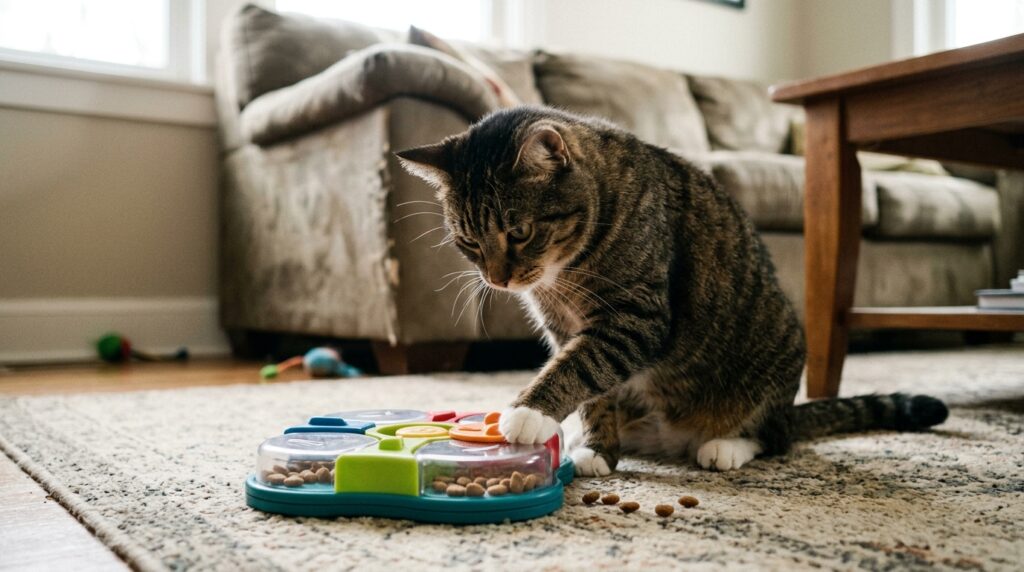
- Use Interactive Puzzle Feeders: Forcing your cat to forage and hunt for kibble slows digestion and burns mental energy.
- Monitor Body Condition Score (BCS): You should easily feel your cat’s ribs with gentle pressure under a thin layer of fat.

Raw Diets, Homemade Food & Supplements
Raw Diets
While raw feeding offers high moisture and minimal processing, it carries meaningful pathogen risks (Salmonella, Listeria) and formulation challenges. If considering raw, use commercially pasteurized complete frozen diets rather than unsupplemented grocery meats.
Homemade Cat Food
Formulating balanced homemade cat food is extraordinarily difficult due to tight feline tolerances for taurine, calcium-to-phosphorus ratios, and trace minerals. Only feed homemade recipes developed directly by a board-certified veterinary nutritionist (DACVN).
Do Cats Need Supplements?
A healthy cat eating a complete and balanced commercial diet does not require routine vitamin supplements; excess fat-soluble vitamins (A and D) can cause organ toxicity. Supplements should only be added for specific veterinary indications (e.g., omega-3 fish oils for kidney or joint support).
Common Cat Nutrition Mistakes to Avoid
- Free-feeding dry food all day: Leads to passive grazing and progressive feline obesity.
- Assuming ‘grain-free’ means low-carb: Many grain-free recipes substitute grains with calorie-dense peas, lentils, or potatoes.
- Switching diets abruptly: Rapid food transitions trigger diarrhea and vomiting; always transition over 7–10 days.
- Feeding dog food to cats: Dog food lacks the mandatory taurine, arachidonic acid, and protein density required by felines.
- Overfeeding treats: Treats should constitute less than 10% of total daily calorie intake.
How to Build a Healthy Daily Feeding Routine
- Confirm AAFCO Complete & Balanced Status: Check the label for your cat’s specific life stage.
- Determine Daily Caloric Needs: Calculate baseline calories based on target weight and neuter status.
- Split into Scheduled Meals: Feed at least 2 structured meals daily (or use puzzle feeders).
- Incorporate Daily Moisture: Feed canned wet food or provide clean pet water fountains.
- Reassess Body Condition Monthly: Weigh your cat monthly and adjust portion sizes as metabolism shifts.
Frequently Asked Questions
How much protein does an adult cat need?
Do cats need carbohydrates?
Is grain-free cat food better for cats?
How can I tell if a cat food is nutritionally complete?
Can I feed my cat a vegetarian or vegan diet?
How often should I change my cat's food?
🐾 Explore Tested Cat Food & Nutrition Reviews
Explore our real-world, hands-on tests of premium wet foods, dry kibbles, puzzle feeders, and automatic portion-control bowls for indoor cats.