By Emma Hartley | Reviewed by IndoorCatWell Editorial Team | Last updated August 2026
This article provides clinical and practical guidance based on veterinary sources. It is not a substitute for a veterinary diagnosis. If you purchase through our links, we may earn an affiliate commission at no extra cost to you. Read our full Affiliate Disclosure.
A noticeable, sustained jump in how much your cat drinks, especially in a cat past middle age, is often the first visible sign of an underlying medical condition. Chronic kidney disease (CKD), diabetes mellitus, and hyperthyroidism explain the large majority of cases. Vets define polydipsia when water intake exceeds 100 ml per kilogram of body weight per day (roughly double normal baseline). If increased thirst has lasted more than 2 to 3 days—especially alongside weight loss, appetite shifts, or unusually large litter box clumps—schedule a veterinary visit with bloodwork rather than waiting.
- Key Takeaways
- At a Glance: Is This Actually Polydipsia?
- What Counts as “Drinking Too Much” (The Real Threshold)
- How to Actually Measure It at Home
- The 3 Most Common Medical Causes
- Less Common but Important Causes
- Does Age Change the Likely Cause?
- Non-Medical Reasons Your Cat Might Drink More
- When to Call the Vet — and What They’ll Test
- Frequently Asked Questions
Key Takeaways
- The clinical cutoff is concrete: Water intake above 100 ml/kg/day is the veterinary definition of polydipsia — not a vague “seems thirstier” impression.
- Three conditions cause most cases: Chronic kidney disease, diabetes mellitus, and hyperthyroidism account for the majority of polydipsia in cats, especially cats over age 7.
- Increased thirst often shows up before other symptoms: It is frequently the first visible sign owners notice, ahead of noticeable weight loss or appetite changes.
- You can measure this at home before calling the vet: A simple 24-hour water measurement gives your vet a real number instead of “it seems like more.”
- Age changes the likely cause: True polydipsia is rare and more concerning in young cats; it is common and still serious in cats over 10.
- Wet-food-fed cats barely drink from the bowl: If your cat is on a wet diet, watch litter box output and behavior around water sources, not just the bowl level.
At a Glance: Is This Actually Polydipsia?
| Question | Quick Answer |
|---|---|
| What’s the clinical threshold for polydipsia? | More than 100 ml of water per kg of body weight per day — roughly double the normal 50–60 ml/kg baseline. |
| What are the 3 most common causes in cats? | Chronic kidney disease, diabetes mellitus, and hyperthyroidism, in roughly that order of frequency. |
| How long should I watch before calling the vet? | A pattern lasting more than 2–3 days is worth a call. Don’t wait for severe weight loss or vomiting to show up first. |
| Can I measure this myself? | Yes — a 24-hour water measurement (bowl-fill or bowl-weight method) gives a real number to bring to the vet. |
| Is this urgent or can it wait for a routine visit? | Urgent if paired with vomiting, lethargy, or collapse. Otherwise, book within the week — don’t let it drift into “next time we’re due for a checkup.” |
What Counts as "Drinking Too Much" (The Real Threshold)
Veterinary sources are consistent on this number: polydipsia is defined clinically in the Merck Veterinary Manual as water consumption exceeding 100 ml per kilogram of body weight per day. For a 4.5 kg (10 lb) cat, that is roughly 450 ml — nearly two full cups — well above the 225–270 ml a healthy cat that size typically consumes from all sources combined.
This threshold matters because “my cat seems thirstier” is subjective and easy to second-guess. A hard number gives you something concrete to check against, and it’s the exact metric your vet will use to decide whether further diagnostic screening is warranted.
One caveat worth understanding: day-to-day water intake naturally varies, especially with room temperature, play activity, and diet. A single thirsty day after a warm afternoon isn’t polydipsia. A sustained pattern over several consecutive days is what matters.
How to Actually Measure It at Home
Guessing wastes everyone’s time, including your vet’s. Here is the straightforward measurement protocol vets recommend for evaluating water consumption at home:
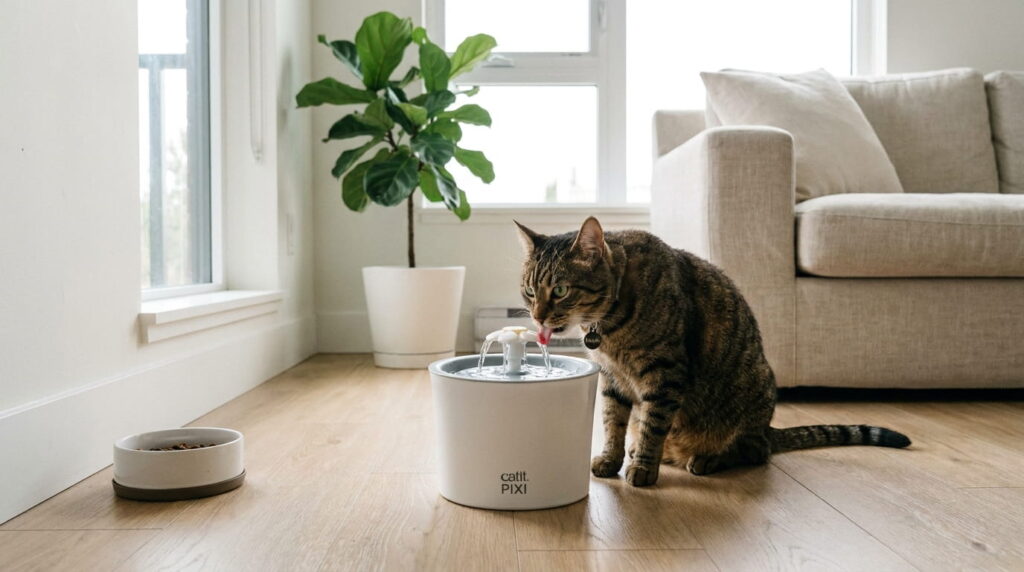
- Use one measured water source: If you have multiple bowls or a pet fountain, consolidate to one single bowl for the test period, or measure all of them and add the totals together.
- Fill to a measured volume: Use a marked measuring cup or kitchen scale (1 gram of water equals exactly 1 milliliter). Record the starting amount in ml.
- Eliminate other water access: Keep bathroom doors shut, ensure toilet lids are down, and turn off dripping sink faucets for 24 hours.
- Measure remaining water 24 hours later: Subtract the remaining water from your starting volume. The difference represents your cat’s total 24-hour water intake (indoor evaporation over a single day is negligible).
- Calculate ml/kg/day: Divide the total ml consumed by your cat’s body weight in kilograms. Compare your result against the 100 ml/kg threshold.
- Repeat for 2–3 days: Day-to-day variation is normal, but a consistent average above the 100 ml/kg mark confirms genuine polydipsia.
The 3 Most Common Medical Causes
Three primary conditions account for the vast majority of polydipsia cases in cats, and they frequently overlap in older felines:
1. Chronic Kidney Disease (CKD)
As functional nephrons decline with age, the kidneys lose their ability to concentrate urine. The body compensates by producing larger volumes of dilute urine (polyuria), which directly drives increased thirst (polydipsia) to prevent dehydration. CKD is one of the most common diagnoses in senior cats, and increased thirst is often the very first visible sign, frequently appearing months before bloodwork shows severe uremic changes. Explore our comprehensive Feline Kidney Disease Diet Guide for detailed nutritional management.
2. Diabetes Mellitus
When blood glucose rises above the renal threshold, excess glucose spills into the urine and osmotically pulls water out with it. This causes frequent urination and secondary compensatory thirst. Diabetic cats often show ravenous appetite alongside progressive weight loss — a combination worth noting specifically for your vet. Read more on feline endocrine management from the Cornell Feline Health Center Feline Diabetes Guide.
3. Hyperthyroidism
An overactive thyroid gland secretes excessive thyroid hormones (T3 and T4), dramatically accelerating metabolic rate. This speeds up blood flow through the kidneys and increases body temperature, resulting in pronounced thirst, increased appetite, behavioral agitation, and weight loss. It is the most common endocrine disorder in middle-aged and older cats.
Because these three conditions can coexist in the same cat, a complete veterinary workup — rather than owner guesswork — is the necessary next step.
Less Common but Important Causes
- Liver Disease: Impairs the liver’s ability to metabolize waste products and regulate fluid balance, often accompanied by jaundice, lethargy, or nausea.
- Hypercalcemia (High Blood Calcium): High serum calcium inhibits the action of antidiuretic hormone (ADH) on renal collecting ducts, causing excess water loss.
- Pyometra: A life-threatening uterine infection in unspayed female cats; bacterial endotoxins impair urine concentration, causing acute polydipsia. This is an immediate emergency.
- Medication Side Effects: Corticosteroids (such as prednisolone), diuretics, and some anticonvulsant drugs increase thirst as a known pharmacological effect.
- Urinary Tract Infections / Pyelonephritis: Bacterial infections that ascend into the renal pelvis impair kidney concentrating ability (see our guide to Indoor Cat Urinary Problems).
- Diabetes Insipidus: A rare condition (central or nephrogenic) affecting ADH production or kidney receptor response.
- Psychogenic (Primary) Polydipsia: Excessive water intake driven by behavioral or compulsive factors. This is strictly a diagnosis of exclusion after all organic causes have been ruled out.
Does Age Change the Likely Cause?
Age provides critical diagnostic context for your veterinarian:
- Young Cats (1–6 Years): True polydipsia is uncommon in young cats. When present, it requires prompt investigation for congenital conditions like Polycystic Kidney Disease (PKD, more common in Persians), juvenile-onset diabetes, or renal dysplasia. Burmese cats also carry a recognized genetic predisposition to diabetes.
- Middle-Aged Cats (7–10 Years): The transition window where chronic kidney disease, hyperthyroidism, and diabetes begin showing their earliest clinical manifestations.
- Senior Cats (10+ Years): The vast majority of polydipsia cases occur in this bracket. CKD, hyperthyroidism, and diabetes account for most presentations. If your senior cat shows increased thirst, schedule bloodwork without delay. Review our Senior Cat Nutrition Guide for supporting aging cats.
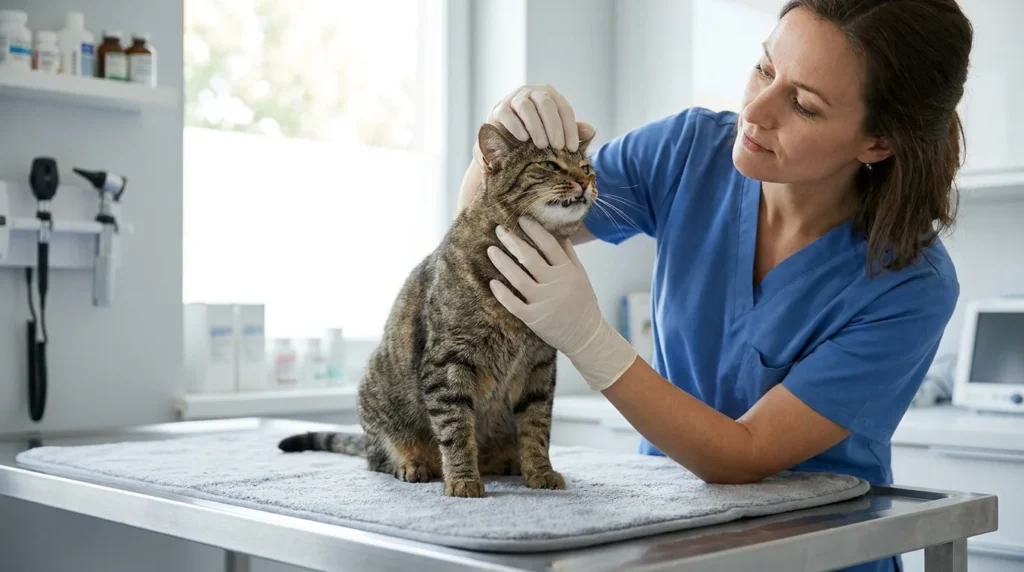
Non-Medical Reasons Your Cat Might Drink More
Not every increase in water consumption signals disease. Several benign environmental factors can temporarily elevate thirst:
- Hot Ambient Temperatures: Warm summer weather increases fluid loss via grooming and respiratory panting.
- Diet Transition from Wet to Dry Food: Switching from 80% moisture canned food to 10% moisture kibble forces your cat to drink significantly more from the bowl to compensate.
- Increased Play and Activity: High-energy playtime temporarily increases fluid expenditure.
- Post-GI Fluid Replacement: Recovering from an episode of mild vomiting or diarrhea naturally triggers increased drinking to replace fluid loss.
The Distinguishing Factor: Benign causes are transient and linked to an obvious environmental shift. A sustained increase lasting more than 2–3 days without an obvious trigger warrants veterinary evaluation.
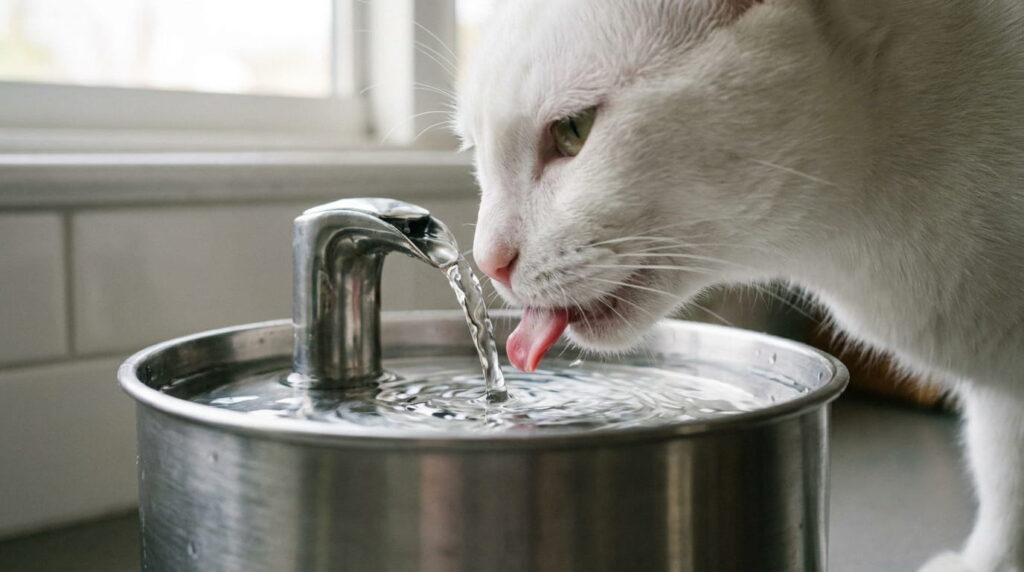
When to Call the Vet — and What They'll Test
Call Promptly (Within the Week) If: Increased drinking has persisted for more than 2 to 3 days, especially in a cat over age 7, with no recent diet or weather change.
Treat as an Immediate Emergency If: Increased thirst is accompanied by vomiting, severe lethargy, complete loss of appetite, pale gums, or collapse. These combinations can signal diabetic ketoacidosis, acute renal failure, or pyometra.
Standard Diagnostic Tests Your Vet Will Run:
- Complete Blood Count (CBC) & Serum Chemistry Panel: Evaluates kidney biomarkers (BUN, Creatinine, SDMA), blood glucose, liver enzymes, and electrolytes.
- Urinalysis with Urine Specific Gravity (USG): Determines how effectively the kidneys concentrate urine and checks for glucose, ketones, and protein.
- Total T4 Blood Test: Screens for feline hyperthyroidism.
- Blood Pressure Measurement: Screens for secondary hypertension linked to CKD and hyperthyroidism.
For more diagnostic preparation, refer to our Indoor Cat Annual Vet Checklist. For baseline daily hydration needs, see our foundation guide on How Much Water Does a Cat Need?.