By Emma Hartley | Reviewed by IndoorCatWell Editorial Team | Last updated September 2026
This article provides practical, veterinary-supported cat health and nutrition guidance. If you buy through our links, we may earn an affiliate commission at no extra cost to you. Read our full Affiliate Disclosure.
A cat that bolts food and promptly brings it back up within minutes—undigested, unchewed, and still molded into the shape of kibble—is experiencing regurgitation rather than true vomiting. While this “scarf and barf” pattern is remarkably common, rule out medical causes with your veterinarian first before instituting behavioral feeding fixes.
⚡ Quick Summary: How to Slow Down a Fast Eater
Once your vet clears underlying conditions like hyperthyroidism or diabetes, switch from a standard bowl to a ridged maze slow feeder, divide daily calories across 4 to 5 timed micro-meals, spread food thinly on flat baking sheets, and separate multi-pet feeding stations to eliminate resource competition.
If your cat gets a clean bill of health, adopting slow-feeder bowls, micro-portioning, and environmental separation solves the vast majority of fast-eating cases. If dry kibble expansion continues to irritate your cat’s stomach, explore our step-by-step tutorial on how to transition a cat from dry food to wet food for a gentler, more hydrating alternative.
Why Cats Eat Too Fast: The 4 Primary Triggers
- 1. Household Resource Competition: In homes with multiple cats or curious dogs, cats often inhale food at breakneck speed out of fear that a housemate will push them away or steal their ration.
- 2. Shelter History or Food Insecurity Trauma: Former street strays or shelter rescues often retain an ingrained panic regarding food availability. They eat as though every meal could be their last.
- 3. Boredom and Stored Energy: An under-stimulated indoor cat may treat feeding time as the only exciting sensory event of their entire day, attacking the bowl with frantic excitement.
- 4. Underlying Metabolic or Endocrine Disease: Conditions such as feline hyperthyroidism, diabetes mellitus, and intestinal parasite burdens dramatically drive up metabolic hunger (polyphagia). A cat with an overactive thyroid feels perpetually starved regardless of calorie intake.
Regurgitation vs. Vomiting: How to Tell the Difference
Knowing whether your cat is regurgitating or vomiting is vital when communicating with your veterinarian:
| Clinical Sign | Regurgitation (Esophageal) | Vomiting (Gastric / Systemic) |
|---|---|---|
| Timing | Usually seconds to minutes after bolting food | Can occur hours after eating, or on an empty stomach |
| Appearance | Completely undigested, cylindrical or tube-shaped kibble | Partially broken down mush, yellow bile, foam, or mucus |
| Physical Effort | Passive expulsion with zero abdominal heaving | Active, forceful retching with deep abdominal contractions |
| Primary Cause | Excessive speed, swallowed air, esophageal stretch | IBD, kidney disease, pancreatitis, toxins, infections |
Occasional regurgitation right after a hurried meal usually resolves with the behavioral strategies outlined below. However, frequent retching or bile expulsion points to deeper gastrointestinal inflammation—review our clinical guides on cat vomiting vs. hairballs and why cats throw up.
7 Proven Methods to Slow Your Cat Down
- 1. Vet Check First: Especially if fast eating or ravenous hunger started recently, obtain screening bloodwork to rule out endocrine disorders.
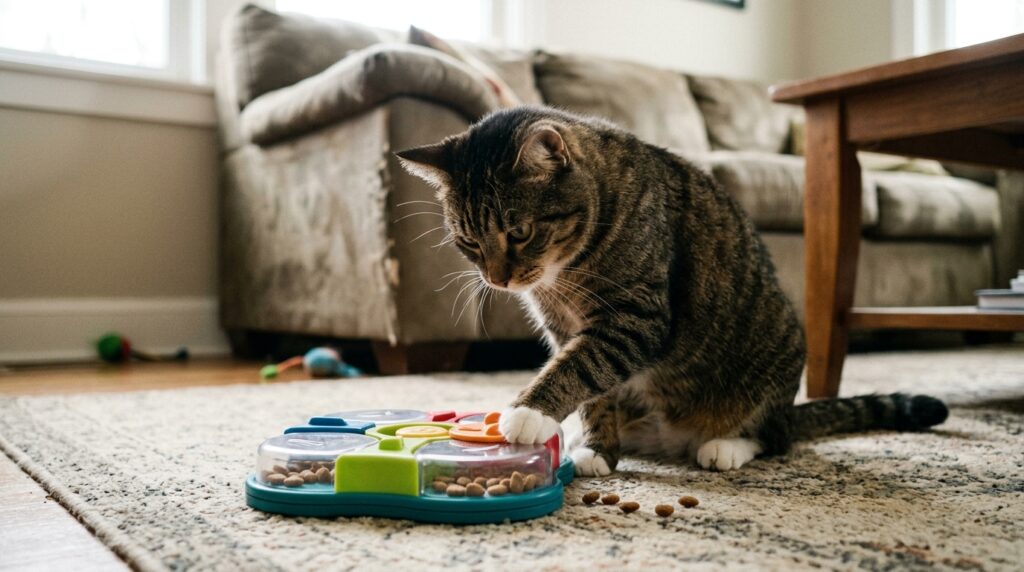
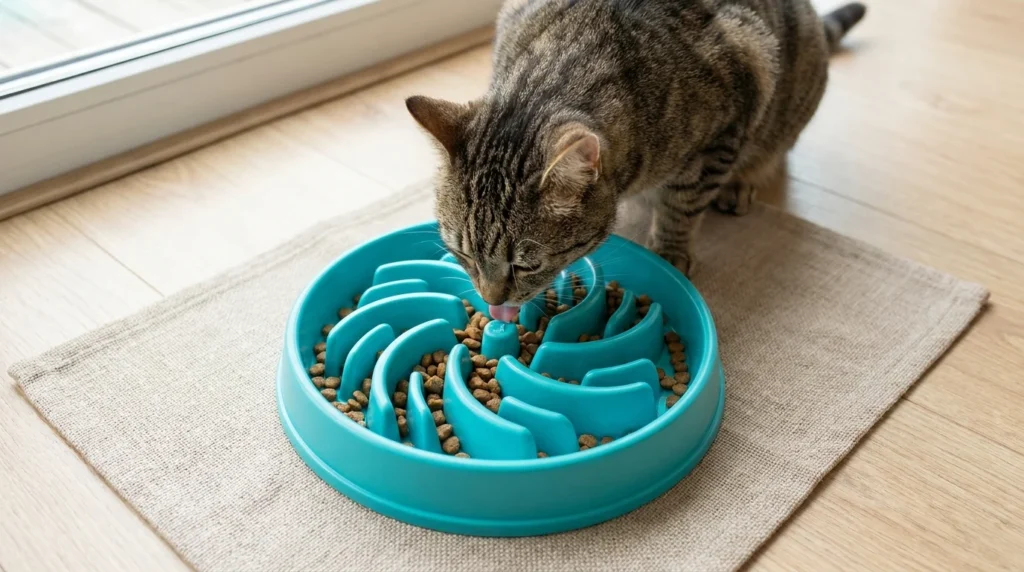
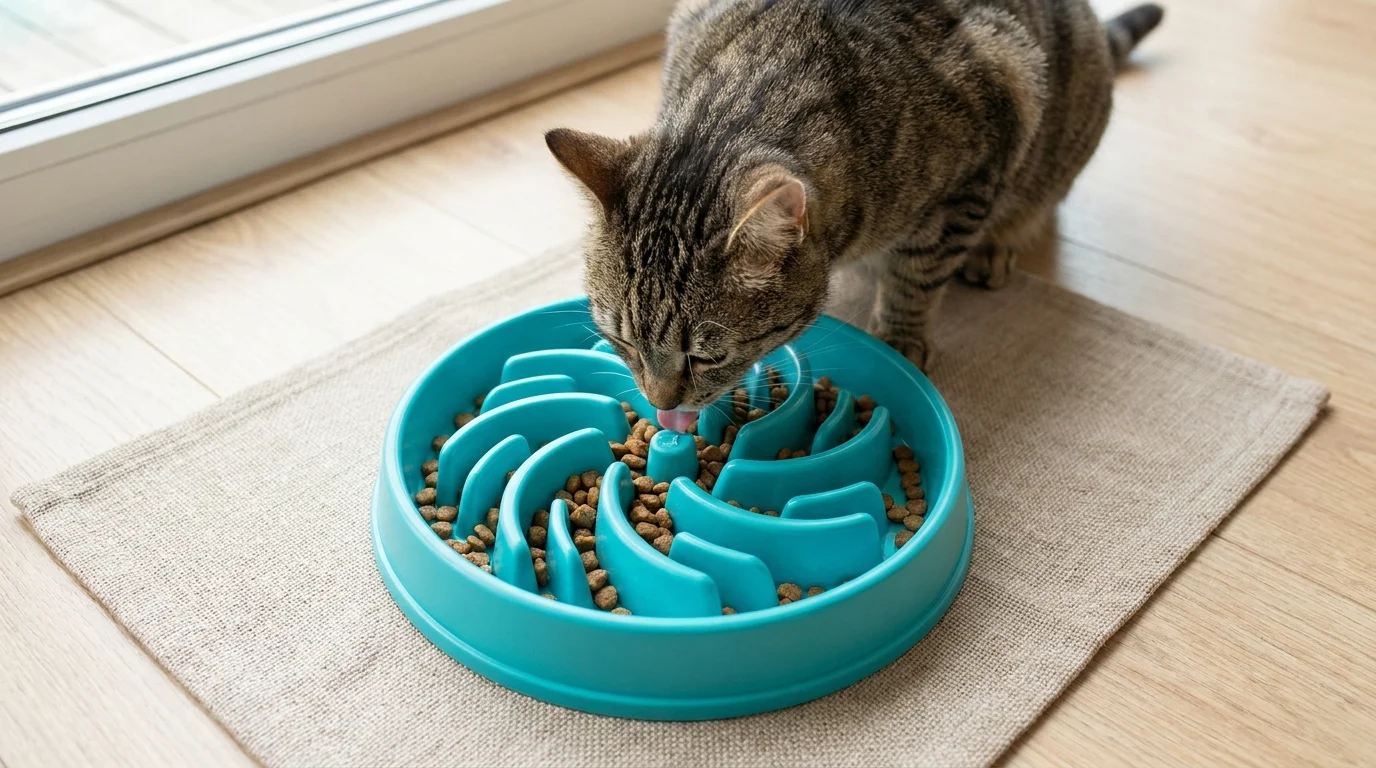
- 2. Upgrade to a Commercial Slow Feeder: Ceramic or silicone slow feeders with intricate labyrinths compel cats to scoop individual kibbles out with their paws rather than shoveling mouth-first.
- 3. Flatten the Serving Surface: Ditch deep bowls. Spreading dry kibble or wet pâté thinly across a wide flat plate or baking sheet forces your cat to walk around and lick small portions.
- 4. Divide Into 4 to 6 Micro-Portions: Splitting daily caloric requirements into multiple smaller feedings—manually or with an automated programmable dispenser—removes the overwhelming pressure to consume everything at once.
- 5. Enforce Spatial Separation in Multi-Pet Homes: Feed cats in entirely separate rooms with closed doors, or set up microchip-activated selective feeders. When cats know their food cannot be stolen, anxiety drops dramatically. See our advice on multi-cat feeding routines.
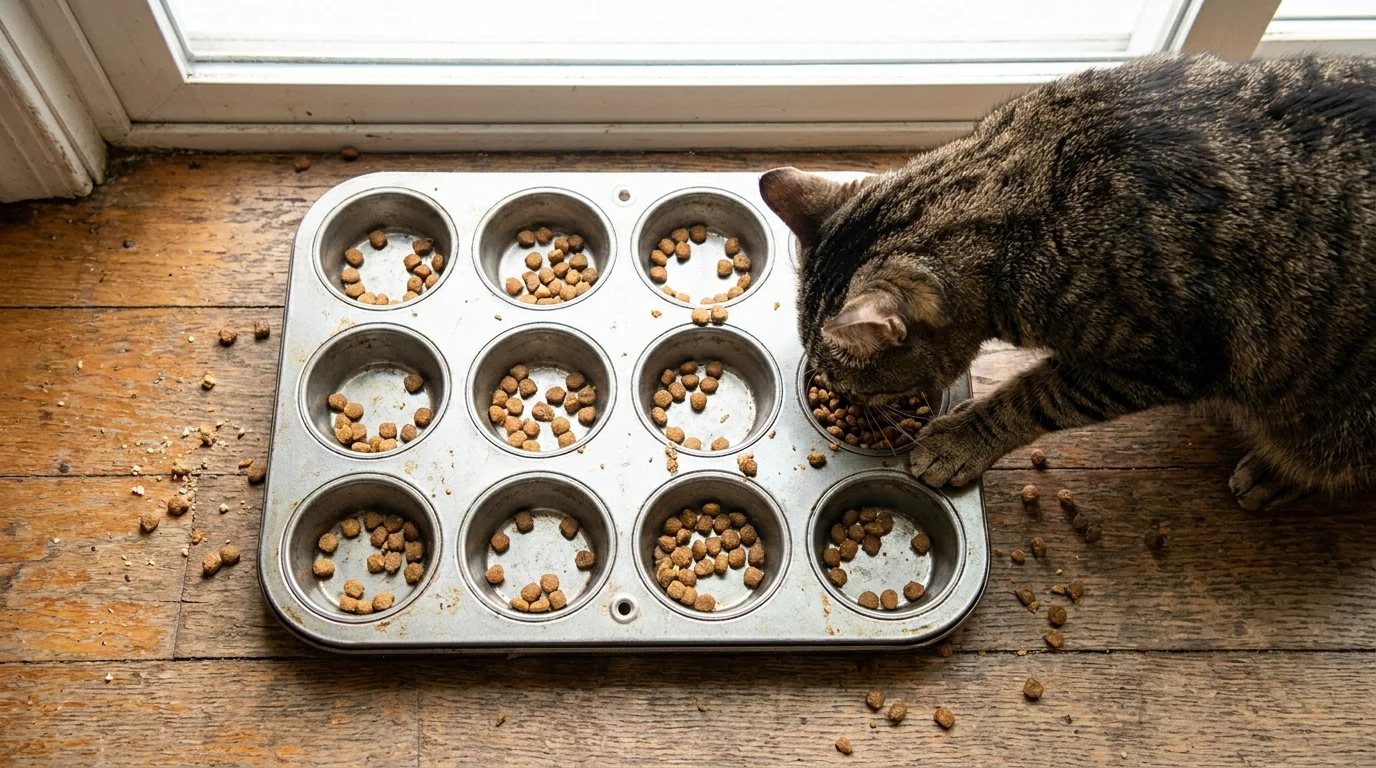
- 6. Try Free DIY Slow Feeders: Turn an upside-down muffin tin into an instant obstacle course, or place clean, large, smooth decorative stones into their bowl that they must navigate around.
- 7. Transition to High-Moisture Wet Food: Dry kibble absorbs fluid and swells rapidly once in the feline stomach, triggering the esophageal stretch reflex. High-protein wet foods offer immediate hydration without dramatic expansion.

When to Book an Immediate Vet Visit
Seek veterinary diagnostics if any of the following clinical warning signs accompany rapid eating:
- Regurgitation or vomiting occurs multiple times per week despite feeding interventions
- Your cat exhibits progressive weight loss despite eating ravenously (polyphagia)
- Blood, brown coffee-ground flecks, or foreign material appear in the expelled fluid
- Noticeable lethargy, dehydration, or diarrhea accompanies digestive upset
- Your cat paws at their mouth, gags painfully without producing food, or displays choking distress
Frequently Asked Questions
Is it normal for cats to occasionally throw up after eating fast?
Occasional regurgitation right after a fast meal without other symptoms is common and usually resolves with slow-feeder bowls. However, frequent episodes (more than once or twice a month) are not normal and warrant veterinary assessment for gastrointestinal motility issues.
Will a slow feeder work for every cat?
Most cats adapt within 3 to 5 days. If an anxious cat refuses an intricate maze, step back to spreading kibble on a flat baking sheet or silicone lick mat, which achieves identical pacing without frustrating your pet.
Can eating too fast cause choking?
Yes. Bolting large, dry kibble pieces without chewing can lodge food in the pharynx or upper esophagus. If your cat paws at their mouth, drools excessively, or displays breathing difficulty, treat it as an immediate medical emergency.
Authoritative Sources & Further Reading
- Dutch: My Cat Ate Too Fast and Vomited: Why & What to Do
- PetMD: How to Slow Down a Cat Who Is Eating Too Fast
- The Vet Desk: 4 Vet-Verified Methods to Slow Down Fast Eaters
🐾 Explore More Cat Nutrition & Feeding Guides
Optimize your cat’s digestion and mealtime wellbeing: