By Emma Hartley | Reviewed by IndoorCatWell Editorial Team | Last updated September 2026
This article provides practical, veterinary-supported cat care guidance. If you buy through our links, we may earn an affiliate commission at no extra cost to you. Read our full Affiliate Disclosure.
You don’t need an expensive shopping trip to satisfy an indoor cat’s predatory drive and curiosity. Everyday household recyclables—cardboard boxes, toilet paper rolls, egg cartons, and muffin tins—can be transformed into stimulating puzzle feeders, foraging courses, and multi-level hideouts at zero extra cost.
⚡ Quick Summary: DIY Enrichment Blueprint
The goal of feline enrichment is not just giving your cat a toy to bat around once and abandon, but providing opportunities to forage, problem-solve, and explore. Household recyclables provide novel textures, scents, and challenges that combat boredom, depression, and destructive behaviors.
Puzzle Feeders from Items Already in Your Recycling Bin
Wild felines spend up to 80% of their waking hours hunting and scavenging. Serving all meals in a static bowl eliminates this instinct, leading to lethargy and overeating. These DIY food puzzles reintroduce the thrill of the hunt:
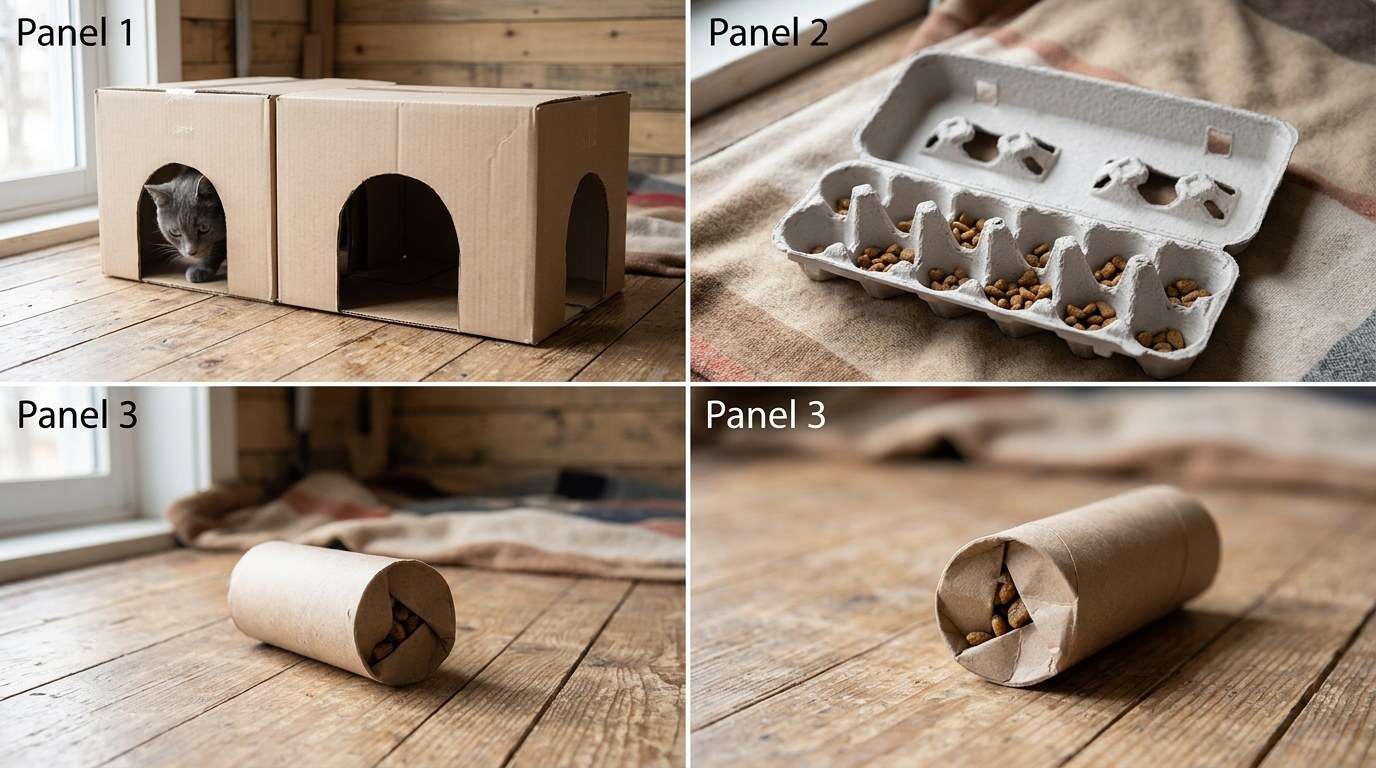
- Toilet paper roll dispenser: Fold one end of an empty cardboard roll inward, drop in a tablespoon of kibble or crunchy treats, fold the opposite end shut, and cut two or three nickel-sized holes along the cylinder. Your cat must bat and roll the tube to release rewards.
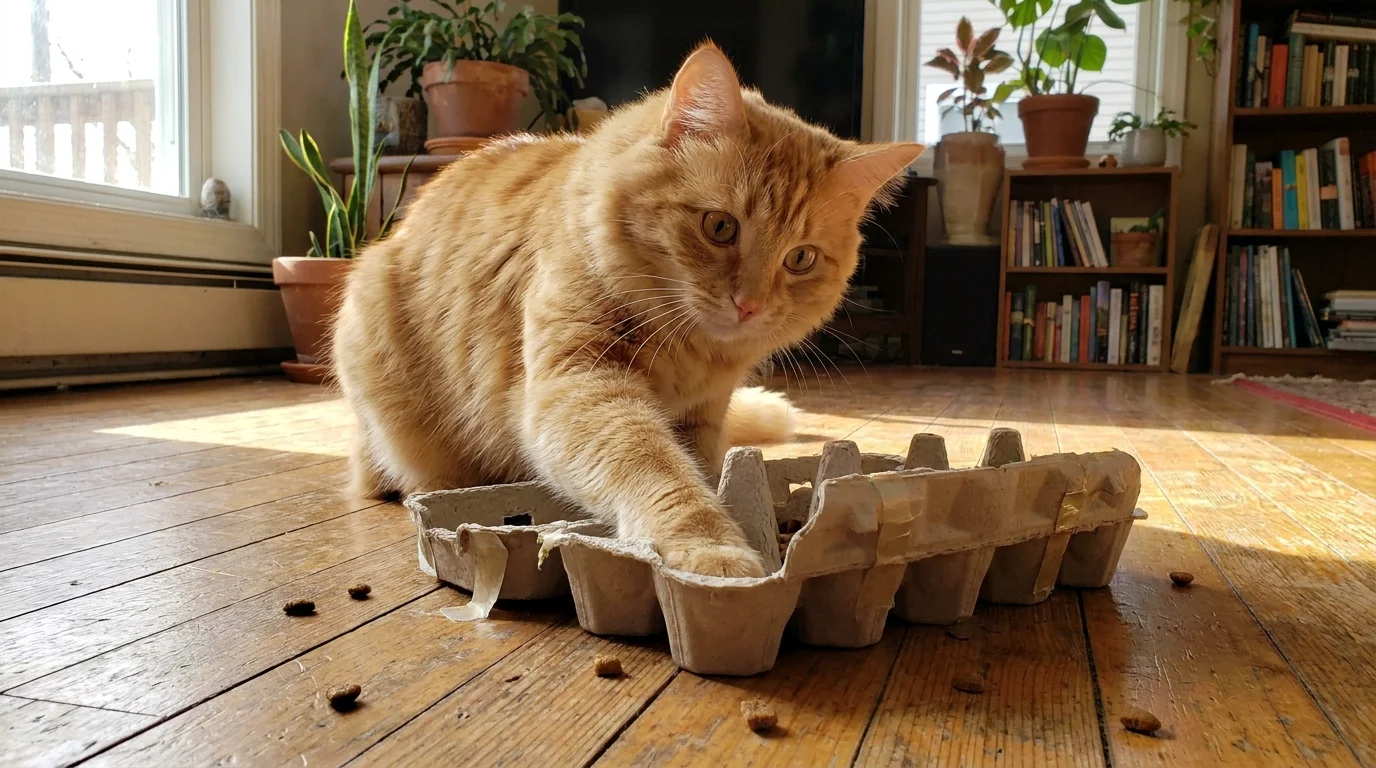
- Egg carton scavenger puzzle: Place kibble or freeze-dried treats in an empty paper egg carton’s cups. For an added layer of problem-solving, cover several cups with lightweight ping pong balls or crumpled brown paper so your cat has to remove obstacles first.
- Rolling bottle dispenser: Rinse and completely dry a small plastic water bottle. Cut 3 to 4 small holes slightly larger than a single kibble piece. As your cat rolls the bottle across the floor, food dispenses gradually.
- Shoebox foraging pit: Fill a clean shoebox with crumpled kraft paper, toilet paper tube rings, and corks. Scatter a handful of dry food across the bottom. Your cat must dig through the tactile layers to sniff out their meal.
- Muffin tin brain teaser: Place treats in the 6 or 12 cups of a muffin baking tin, then cover each cup with clean tennis balls. Cats use their nose and paws to nudge the balls away.
Hideouts and Tunnels from Sturdy Cardboard
Cardboard is an exceptional insulator that retains body heat and absorbs feline territorial scent. Use delivery boxes to build dynamic exploration structures:
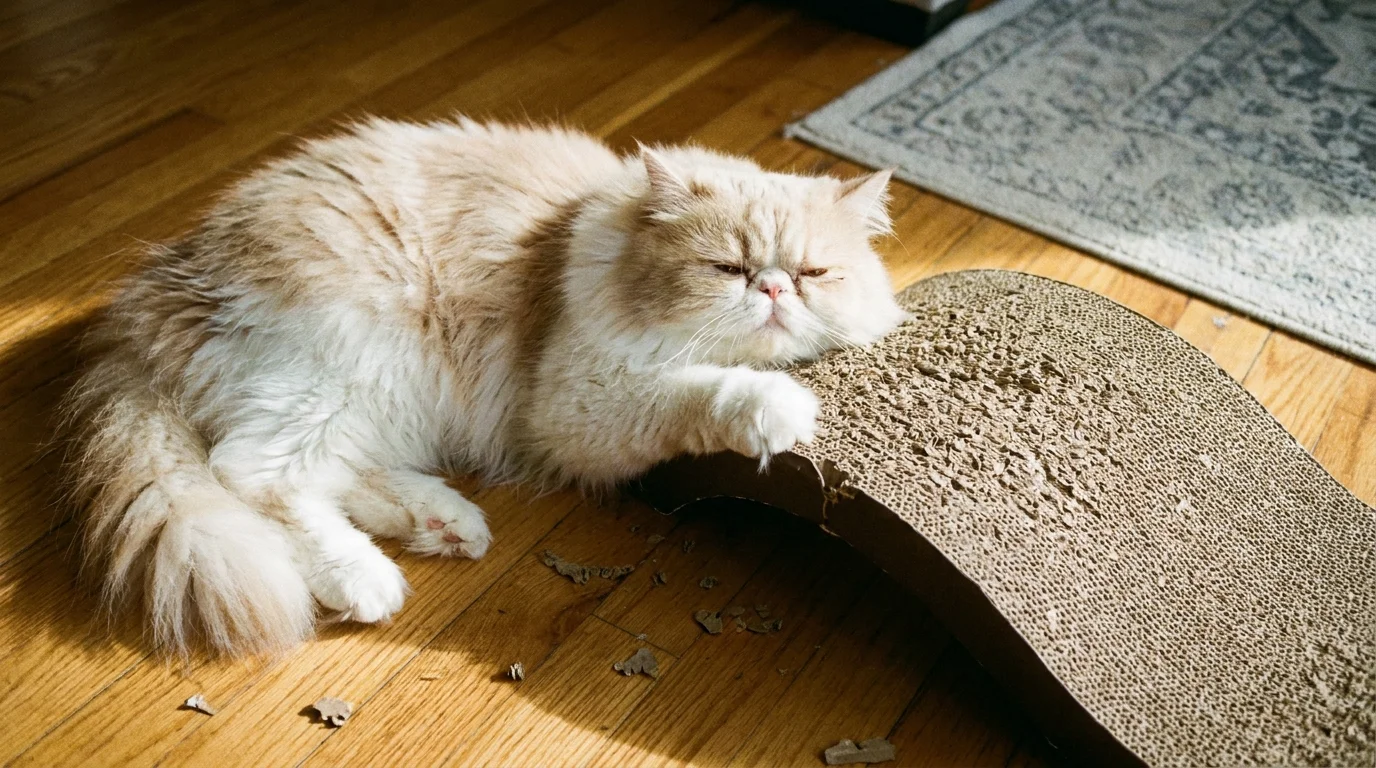
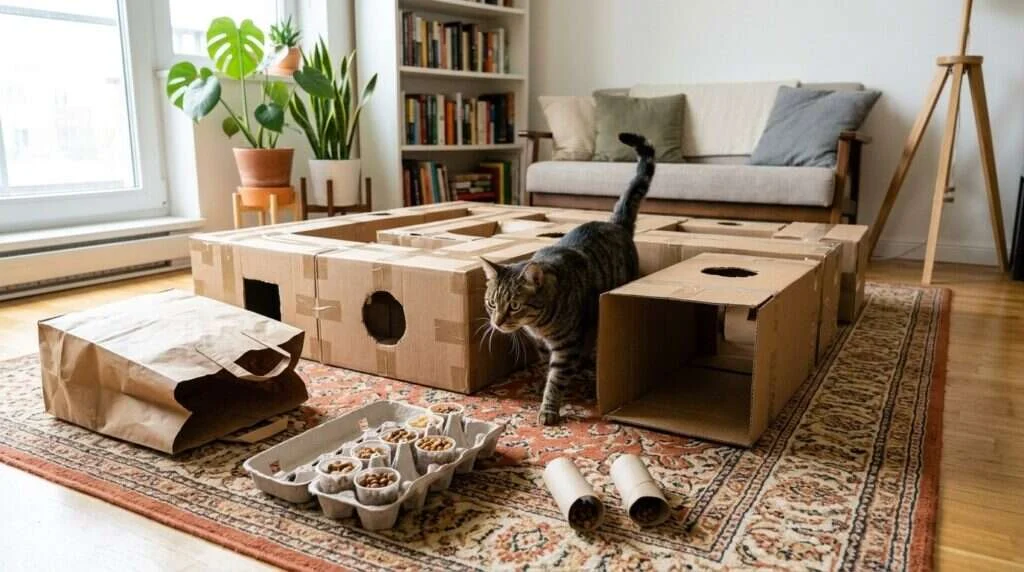
- Modular box tunnel: Cut circular openings in both ends of two or three shipping boxes, tape them end-to-end with paper packing tape, and create a 6-foot burrow your cat can sprint through and pounce from.
- Multi-story box castle: Stack a medium box on top of a larger box. Cut a passageway between the tiers and multiple external windows. Felines love having distinct escape routes so they never feel trapped.
- Cozy sensory retreat: Take a single medium box, cut a cat-sized arched doorway, and line the interior with a worn fleece blanket carrying your scent.
Interactive Toys from Odds and Ends
- DIY feather wand: Tie a soft ribbon strip or craft feather to the end of a wooden chopstick or dowel using sturdy twine. Drag it erratically behind furniture corners to mimic mouse scurrying.
- Kicker sock toy: Take an old clean tube sock, stuff it tightly with fabric scraps and two pinches of organic catnip, then knot or stitch the cuff tightly. Ideal for bunny-kicking wrestling sessions.
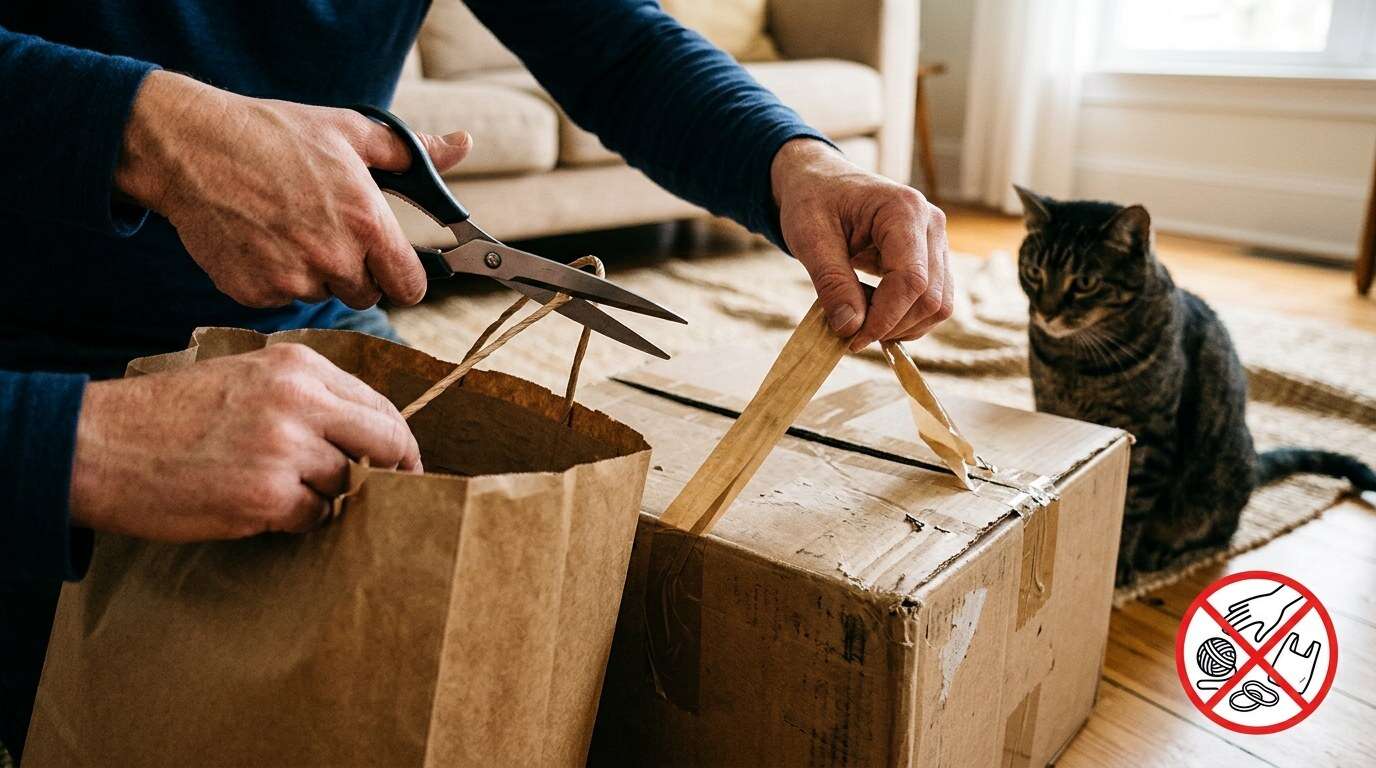
- Paper bag cave: Remove all handles from a brown paper grocery bag (for neck safety) and cut a 3-inch viewing peephole in the bottom. The crinkling sound triggers instant hunting curiosity.
Feeding Enrichment Without Any Props
If you do not have time to build crafts, you can still transform daily feeding into an active mental workout:
- Towel scatter foraging: Roll out a bath towel, scatter half a cup of dry kibble across the fabric, and loosely scrunch the towel into ridges. Your cat has to nose through the folds to discover each piece.
- Newspaper parcels: Wrap individual kibbles loosely inside a single sheet of newsprint, crumple into a loose ball, and toss across the room.
- Room cache hunting: Split the morning meal into three or four tiny ramekins and hide them on window sills, behind the couch, or on cat tree landings.
3 Essential Safety Rules for DIY Toys
- 1. Supervise string and ribbons: Never leave dangling strings, rubber bands, or yarn accessible when unattended. Ingestion can cause dangerous linear foreign body intestinal blockages.
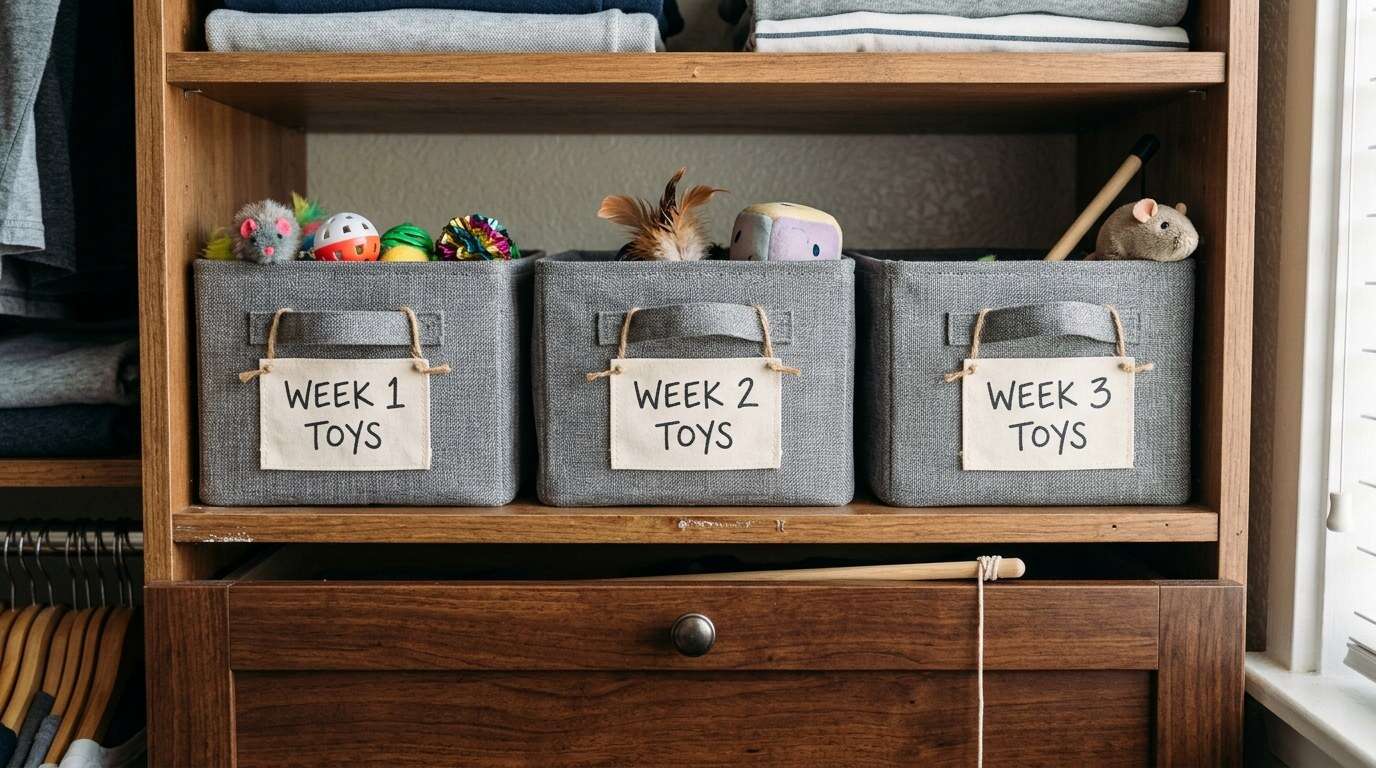
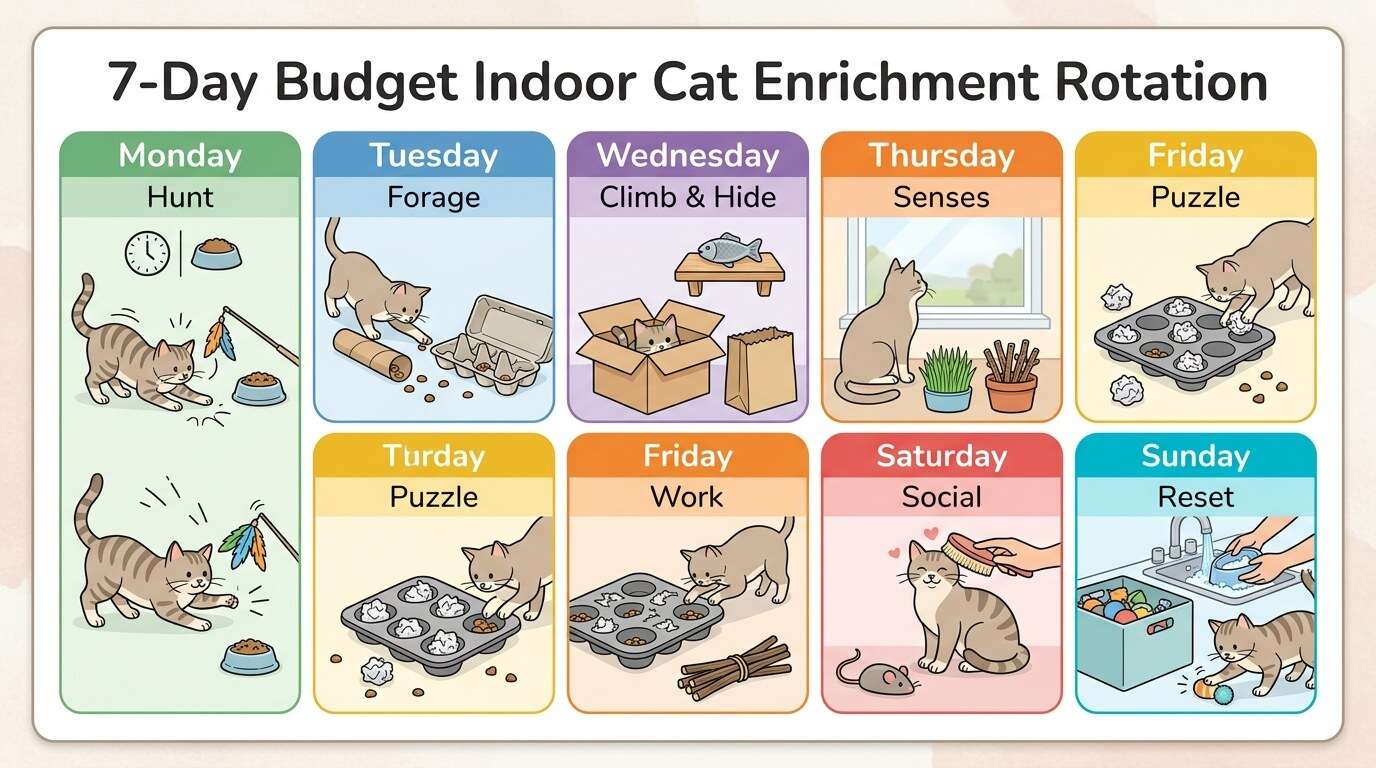
- 2. Rotate items weekly: A cardboard maze left in the middle of the room for three weeks turns into background noise. Stash DIY toys in a closet for two weeks, then bring them back out to renew excitement.
- 3. Complement with interactive play: Solo puzzles keep minds active while you work, but they do not replace 15 minutes of direct wand play with you each evening. See our guide on how much exercise an indoor cat needs.
Frequently Asked Questions
Are cardboard enrichment toys safe for cats that chew aggressively?
Monitor cats the first few times they interact with cardboard. While tearing and shredding cardboard is healthy predatory behavior, remove any items if your cat begins swallowing cardboard chunks rather than spitting them out.
How often should I change up DIY enrichment setups?
Rotate or modify setups every 3 to 5 days. You don’t need to make new toys constantly; simply moving a cardboard tunnel to another room or changing treat placements rekindles exploratory interest.
Can DIY puzzle feeders replace commercial store-bought ones?
Yes. For foraging, paw dexterity, and slow feeding, DIY options work just as well as commercial puzzle feeders. High-end puzzle boards are great for progressive multi-tier difficulty, but household alternatives provide identical mental enrichment benefits.