By Emma Hartley | Reviewed by IndoorCatWell Editorial Team | Last updated September 2026
This article provides practical, veterinary-supported cat care guidance. If you buy through our links, we may earn an affiliate commission at no extra cost to you. Read our full Affiliate Disclosure.
A thriving indoor cat does not require a large multi-bedroom home. What matters far more than square footage is establishing four distinct, separated territorial zones: sleeping, feeding, elimination, and vertical observation. By leveraging vertical wall clearance, furniture highways, and quiet corners, you can create a feline paradise in any studio or one-bedroom apartment.
⚡ The 4 Essential Feline Zones
- 1. Sleeping Zone: Elevated, quiet perches away from drafts and heavy pedestrian traffic.
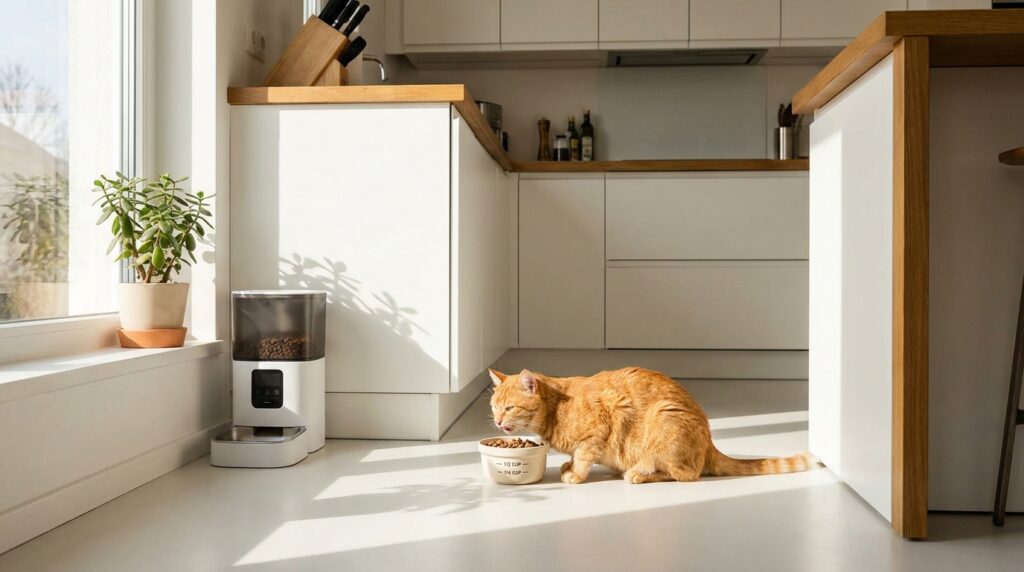
- 2. Feeding Zone: Elevated dishes placed far away from the litter box and water source.
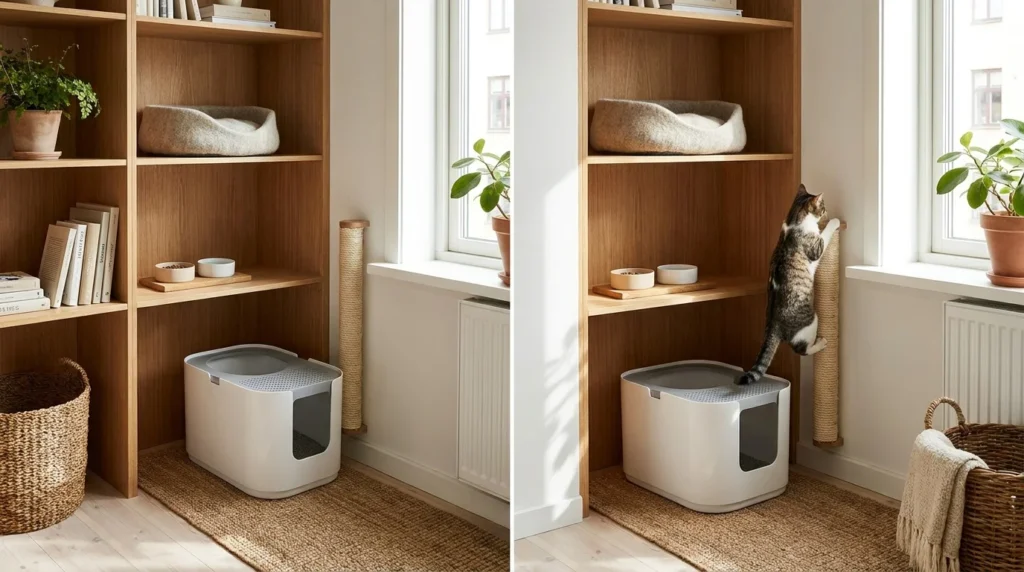
- 3. Elimination Zone: A private, low-traffic nook with a clear 360-degree approach and escape route.
- 4. Play & Perch Zone: Window bird-watching perches and vertical cat trees to maximize cubic volume.
The Science Behind the Four Territorial Zones
In feline evolutionary biology, resources are strictly segmented across territory to prevent parasitic contamination and predator ambushes. When apartment dwellers group food, water, and litter boxes side-by-side in a bathroom or laundry closet, cats experience chronic territorial anxiety.
- Sleeping: A cozy cave bed or raised platform where your cat can sleep deeply without being startled by opening entry doors. Having two or three sleeping options at different room heights satisfies rotational resting instincts.
- Feeding: Cats are solitary hunters that eat in peace. Keep bowls away from refrigerators or washing machines that might kick on suddenly during meals.
- Litter: Never trap a litter box in an enclosed closet behind a swinging door. Position it in an easily accessible corner with clear lines of sight. For room layout strategies, read our guide on best litter box placement in an apartment.
- Play and observation: Height equates to security in the cat world. A high vantage point lets cats monitor their territory without being disturbed.
Smart Hacks to Maximize Small Apartment Square Footage
- Prioritize height over floor footprint: Choose a 6-foot tall cat tree with a compact 20×20 inch base instead of a wide, sprawling unit. A vertical tower triples usable feline territory without sacrificing human walkway room.
- Create a “furniture highway”: Clear off the top shelf of a bookcase and dresser. Align them near a sofa armrest so your cat can navigate an entire room at shoulder height without touching the carpet.
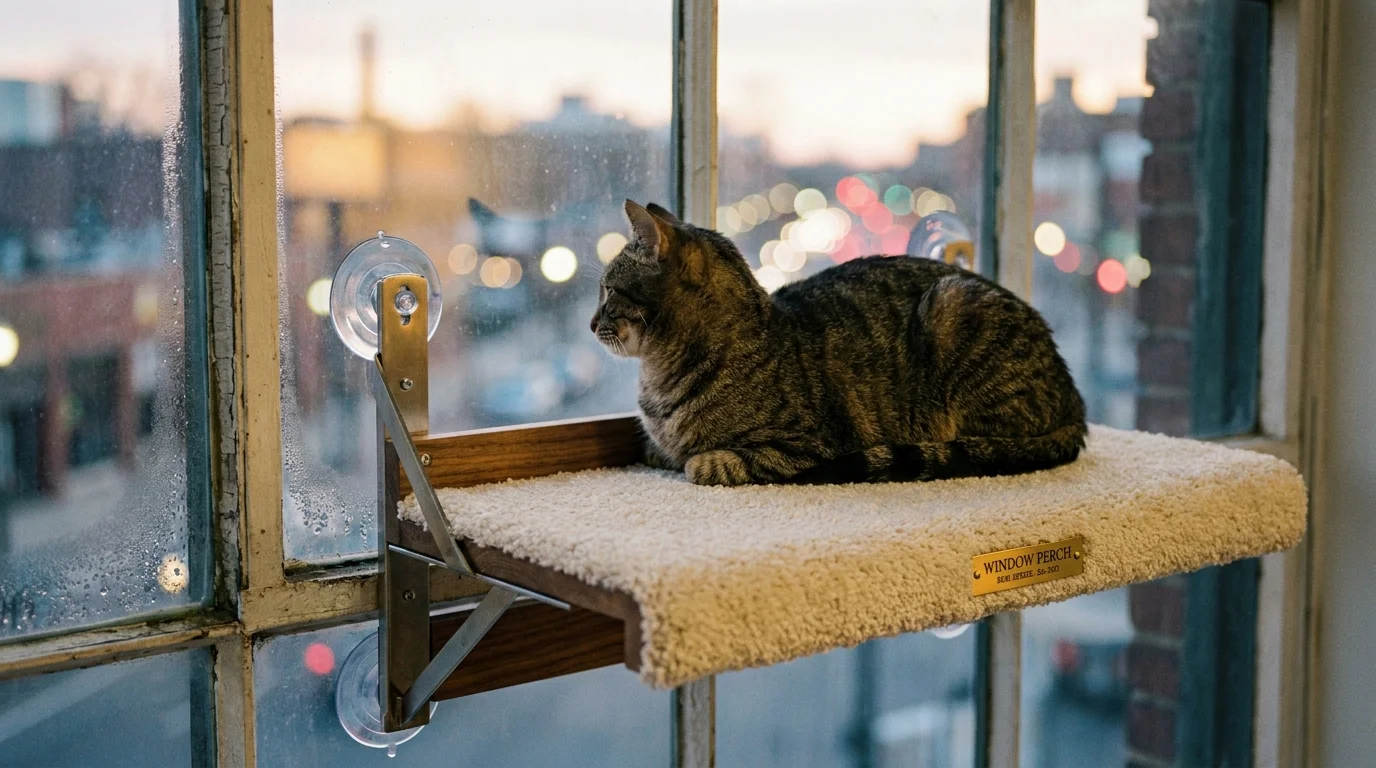
- Claim high-value window glass: Suction-mounted window perches rated for 30+ pounds provide unmatched mental enrichment by offering front-row views of birds, trees, and street activity.
- Utilize no-drill tension poles: Floor-to-ceiling spring poles with stepped platforms offer vertical highways that leave zero marks on rental drywall. Check our complete walkthrough on how to create vertical space for cats without drilling.
- Separate hiding retreats from main beds: Place a covered cardboard cave or under-bed cubby in your quietest corner, giving your cat a private sanctuary during vacuuming or dinner parties.
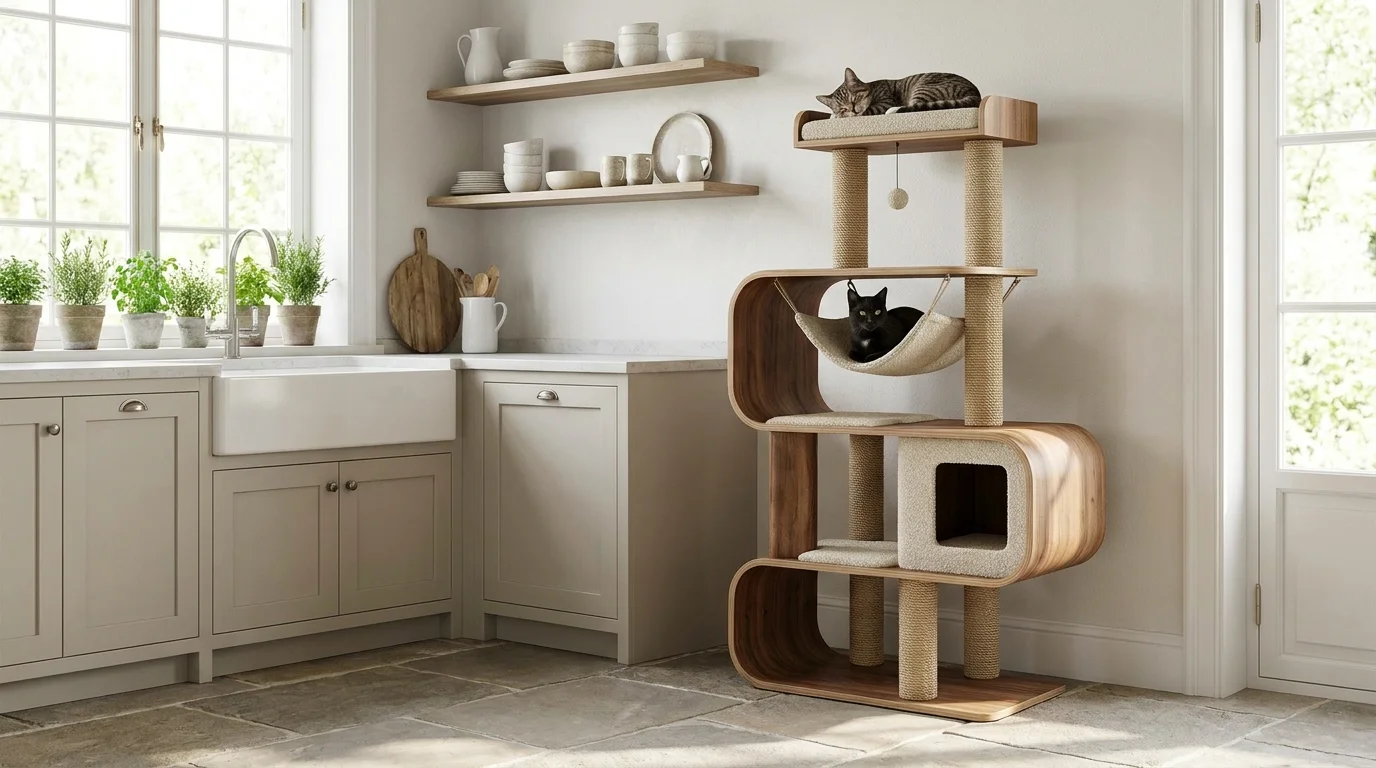
Sample Layout: Setting Up the 4 Zones in a Single Studio Room
If you are working with a studio apartment or a single dedicated basecamp room, follow this balanced spatial blueprint:
| Zone | Optimal Placement | Key Consideration |
|---|---|---|
| Litter Box | Farthest corner from door & food | Open sightlines; never cornered behind door |
| Feeding Station | Opposite wall or raised counter | Minimum 6 to 10 feet away from litter pan |
| Vertical Perch | Facing the main window or room center | Allows visual survey of entire apartment |
| Sleep Retreat | Quiet nook or under raised platform | Dark, quiet sanctuary for uninterrupted rest |
4 Costly Small-Apartment Setup Mistakes
- 1. Placing food bowls beside the litter box: Felines instinctively avoid drinking or eating near waste sites. Even a 5-foot separation drastically improves feeding comfort and hydration.
- 2. Confining life to the floor: In a 500-square-foot apartment, floor space is crowded. Adding vertical climbing paths doubles your cat’s functional territory.
- 3. Neglecting private escape routes: In small apartments, visitors or roommates can easily corner a timid cat. Always ensure every resting station has two exits.
- 4. Cluttering one corner: Spreading items across all four room corners encourages regular movement and prevents territorial defense tension.
Frequently Asked Questions
Do I need an entire separate room dedicated to my cat?
Not at all. While a temporary dedicated room is ideal when first bringing a rescue home, established cats thrive in open-concept living rooms as long as the four functional zones are clearly respected.
How much vertical space does an indoor apartment cat actually require?
There is no rigid minimum square footage, but at least two distinct high vantage points—such as a tall cat tower and a window perch—are essential to satisfy predatory surveying instincts.
Is it bad to place the litter box in my bedroom?
In tiny studio units, bedroom placement is often unavoidable. Choose the corner farthest from your bed, scoop twice daily, use low-dust unscented litter, and place a high-walled decorative screen for visual privacy.