By Emma Hartley | Reviewed by IndoorCatWell Editorial Team | Last updated September 2026
This article provides practical, veterinary-supported cat behavior guidance. If you buy through our links, we may earn an affiliate commission at no extra cost to you. Read our full Affiliate Disclosure.
A cat that ignores every toy you wave usually isn’t lazy, aloof, or “just not playful.” The overwhelming culprit is technique: the toy moves the wrong direction, the sessions drag on too long, or the exact same mouse has been lying on the living room carpet so long it has turned into furniture rather than prey.
⚡ Quick Summary: Getting a Reluctant Cat to Play
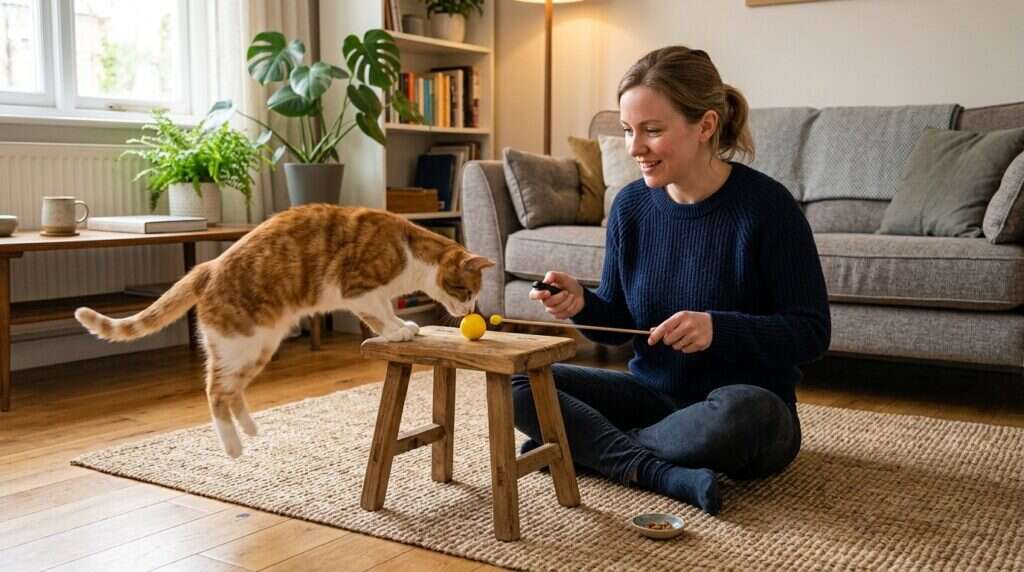
Real prey flees from predators; it never charges them. Drag wand toys away from your cat and let them vanish behind furniture corners with 3 to 5-second pauses. Keep play micro-sessions to 3 to 5 minutes, rotate toys out of sight weekly, and always let the cat make a tactile “catch” at the finish.
A few small changes to how you present toys—coupled with ruling out arthritis or excess body weight—will get the vast majority of inactive indoor cats engaged again. Once your cat rediscovers their predatory drive, refer to our core guide on how much exercise an indoor cat needs to maintain consistent physical fitness.
5 Common Reasons Cats Stop Responding to Toys
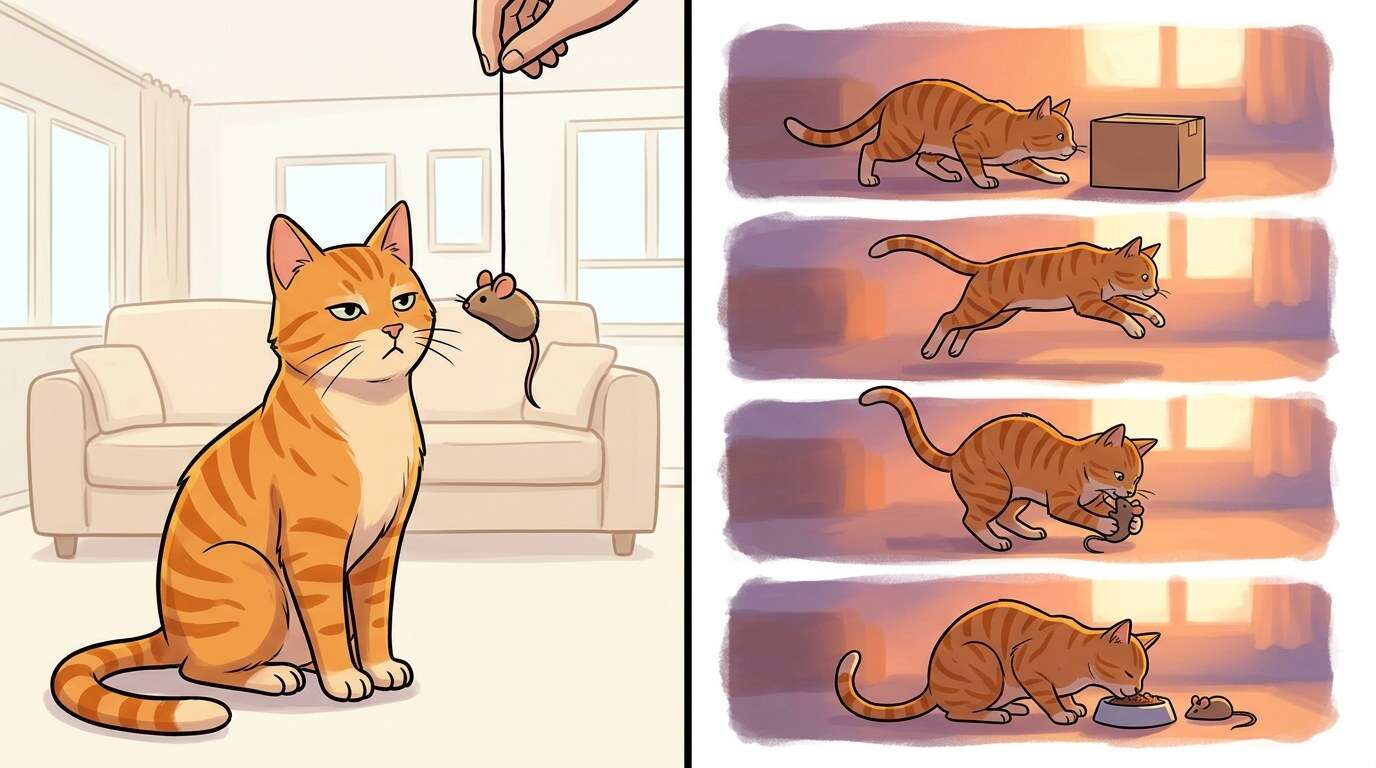
Before giving up on your cat’s play drive, look at how the game appears from their perspective:
- 1. The Toy Moves Toward the Cat: In nature, rodents and birds run or fly away from cats. Shaking a toy in a cat’s face or tossing it directly at their paws violates their hunting wiring and can even make nervous cats feel intimidated.
- 2. Lack of Pauses and Stillness: The stalk is the most cognitively demanding portion of the feline predatory sequence. If a toy never stops moving, the cat has zero opportunity to calculate trajectory, shift weight onto their haunches, and execute a pounce.
- 3. Habituation (Toy Stagnation): A plastic ball or mouse left lying in the hallway for three weeks becomes dead background scenery. Cats only hunt what moves or smells fresh.
- 4. Marathon Sessions That Cause Boredom: Humans tend to expect 20 uninterrupted minutes of chasing. Cats evolved for 3-minute anaerobic explosions. Walking away after a short chase is normal behavior.
- 5. Underlying Joint Pain or Excess Weight: An overweight cat burns immense energy hauling extra mass, making jumping uncomfortable. In senior cats, subclinical osteoarthritis makes landing on hard floors painful.
The 10-Minute Play Test
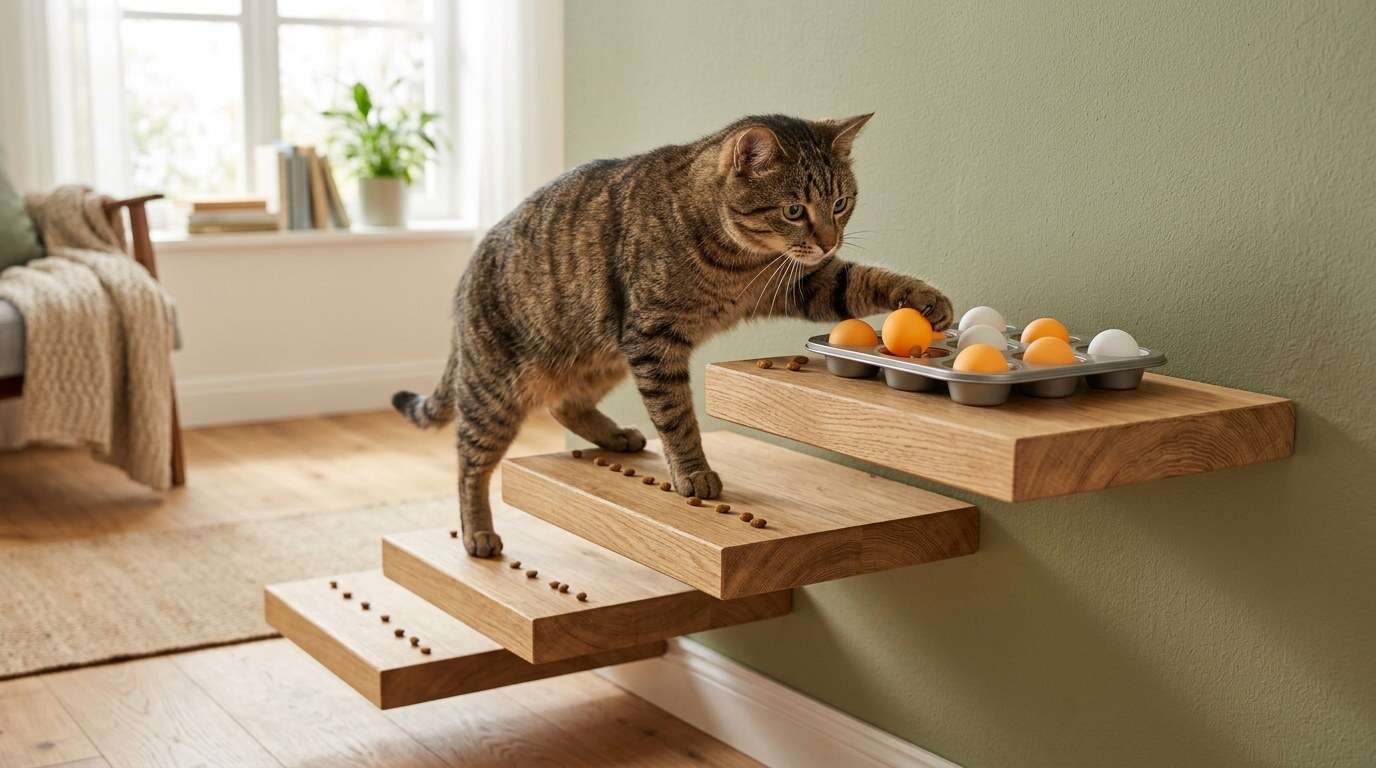
Before assuming your cat is simply uninterested in physical play, run through this protocol once:
- 1. Grab a Long Wand Toy: Keep your hands away from the action. A flexible wand provides safe distance and natural flight mechanics.
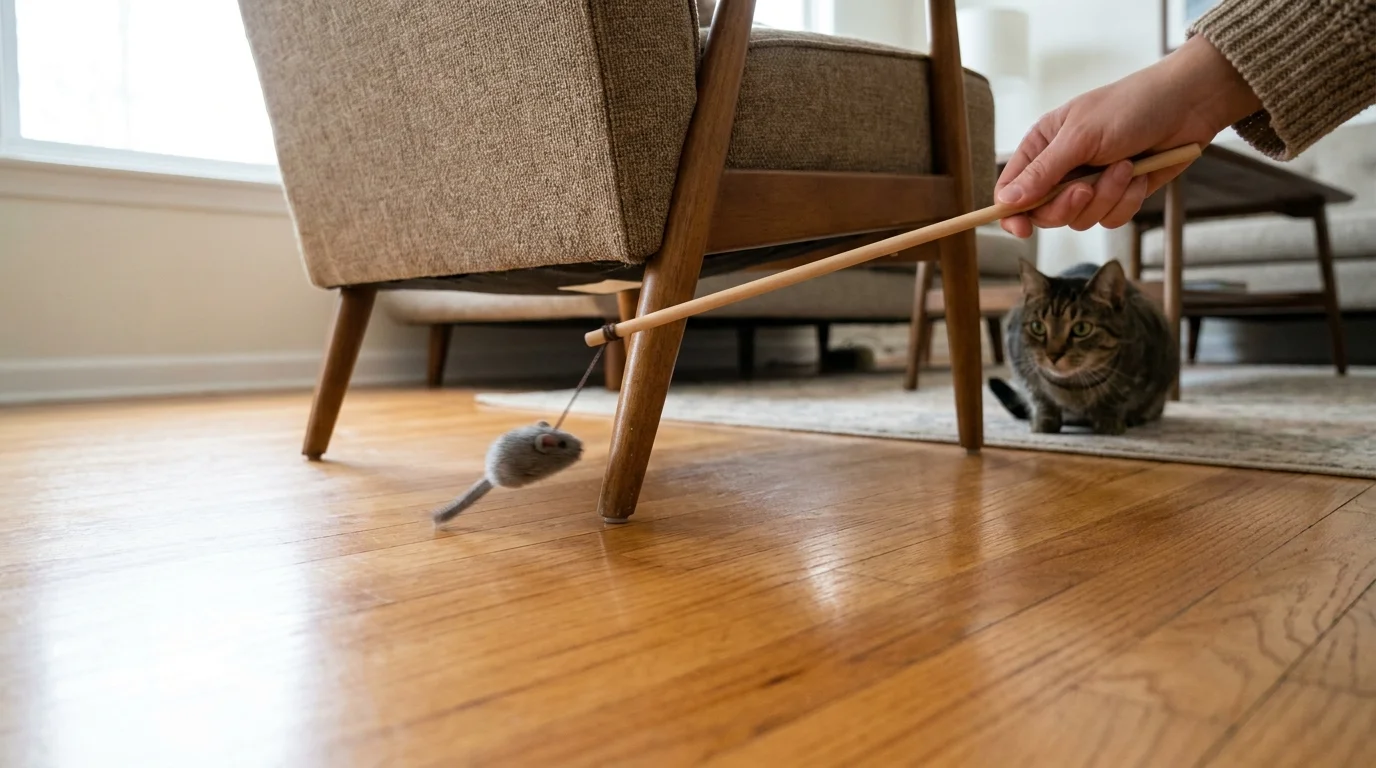
- 2. Drag It Slowly Away: Drag the lure across the carpet moving away from your cat, allowing it to slip behind a sofa, doorframe, or armchair.
- 3. Freeze Completely for 3 to 5 Seconds: Let the toy sit motionless out of direct sight, then give it a tiny twitch.
- 4. Permit Frequent Captures: When your cat pounces, do not violently snatch the toy away. Let them clutch it with their front paws, bite it, and register a victory.
- 5. Cap the Test at 5 Minutes: Even if your cat only watches, end the session and put the wand out of sight in a closet.
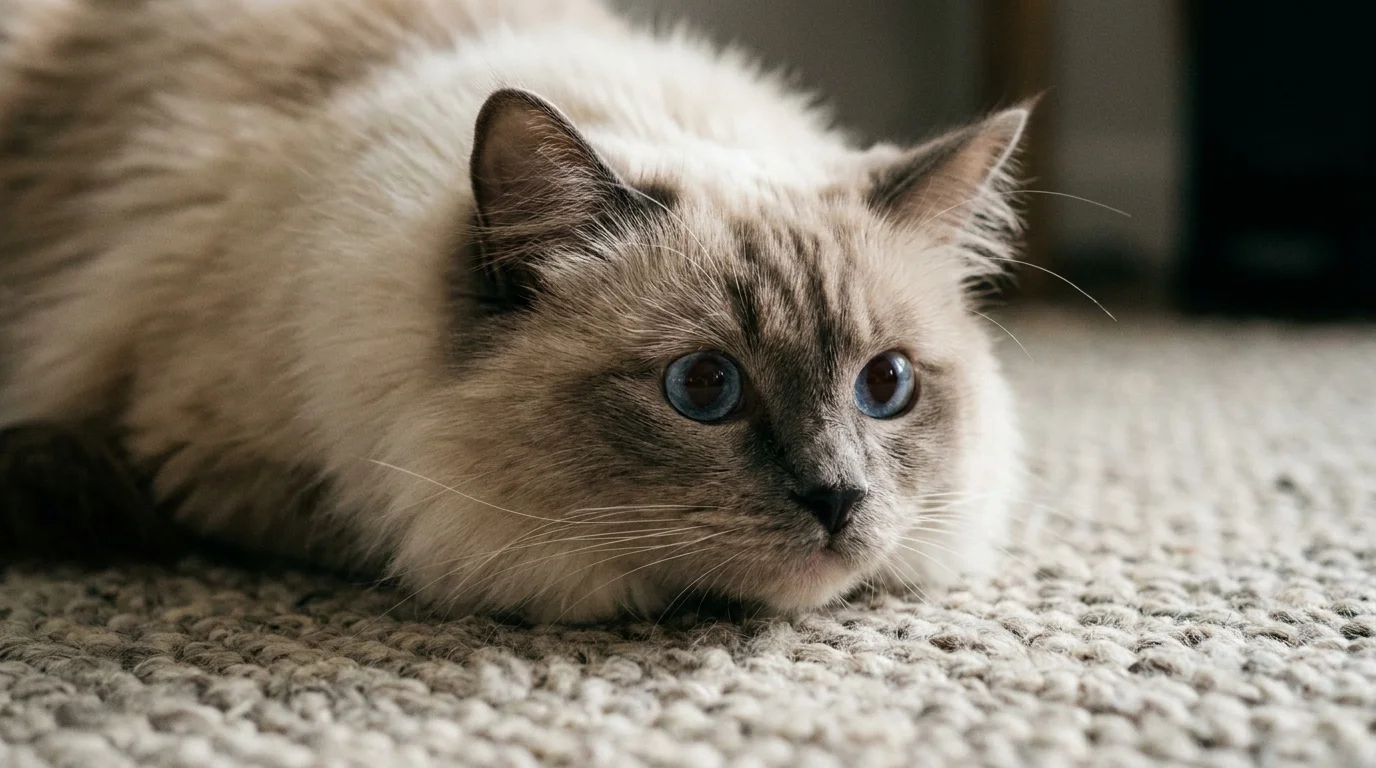
If your cat shows forward-facing ears, pupil dilation, whisker twitching, or a slow, stealthy crawl, you have ignited their prey drive. Stalking is play. If there is zero reaction over several days of testing and the cat was previously active, a veterinary exam is indicated.
How to Build the Play Habit Back Up
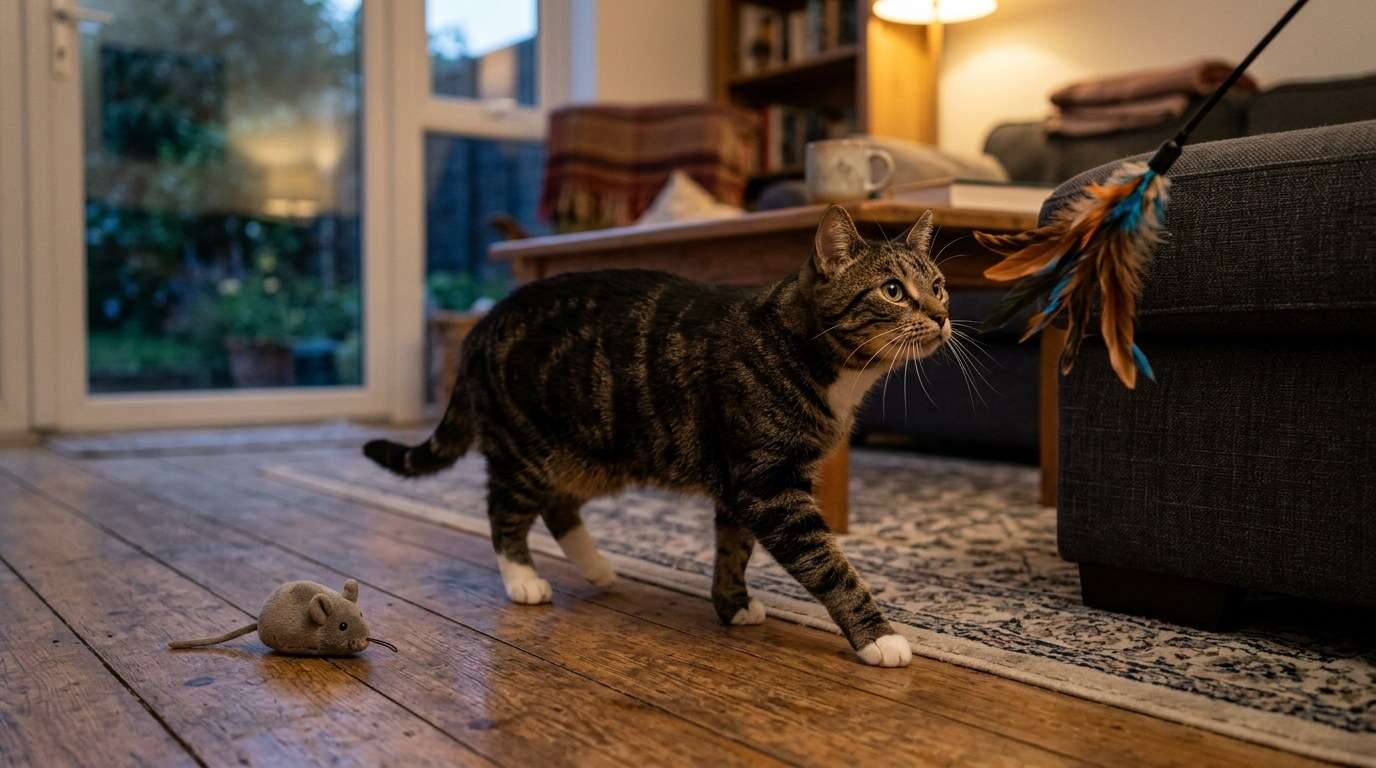
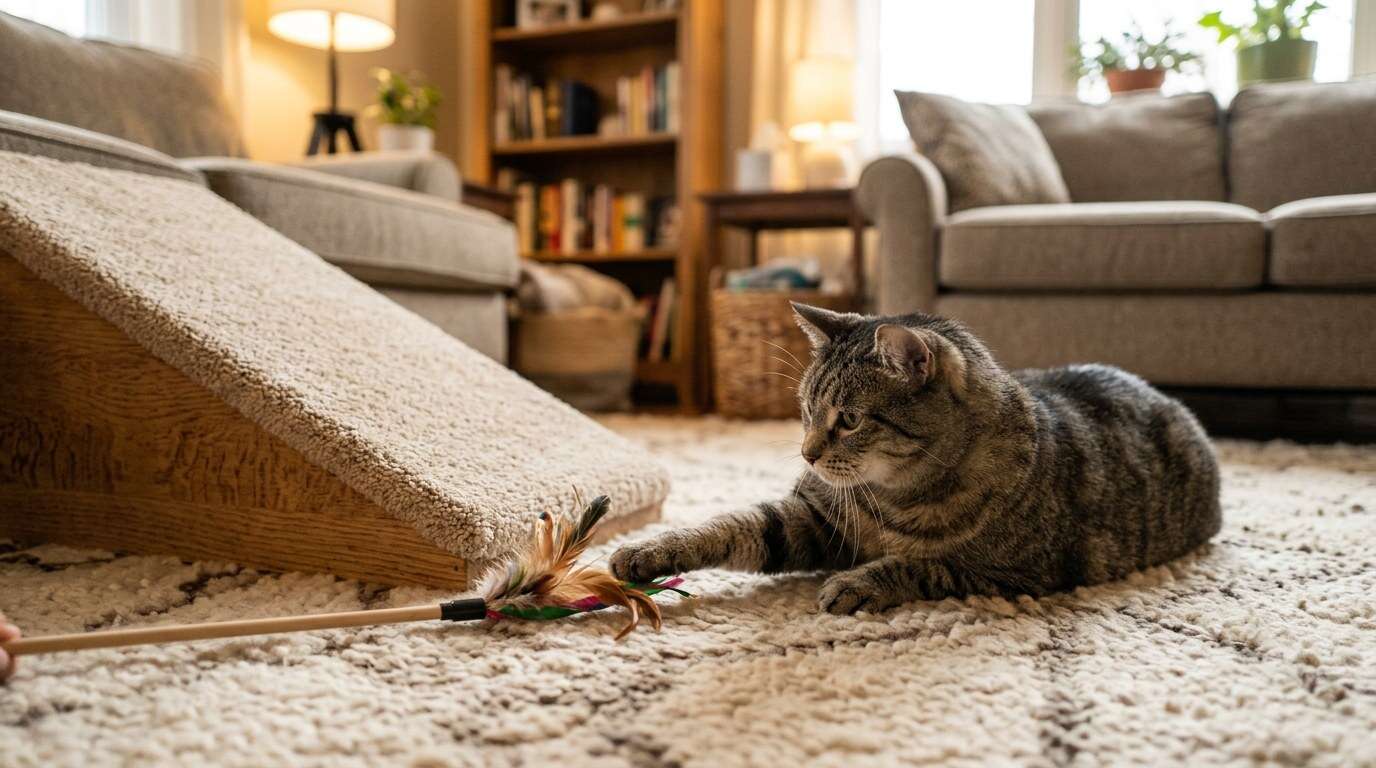
- Micro-Sessions: Schedule two to three 3-to-5-minute sessions per day rather than one long attempt. Reluctant players stay motivated when they know they won’t get exhausted.
- Match Prey Archetype to Cat Preference: Some felines are “bird hunters” that respond to fluttering feathers in midair, while others are “rodent hunters” that only care about wool worms scuttling across baseboards. Check our curated list of the best interactive cat toys to test different motion styles.
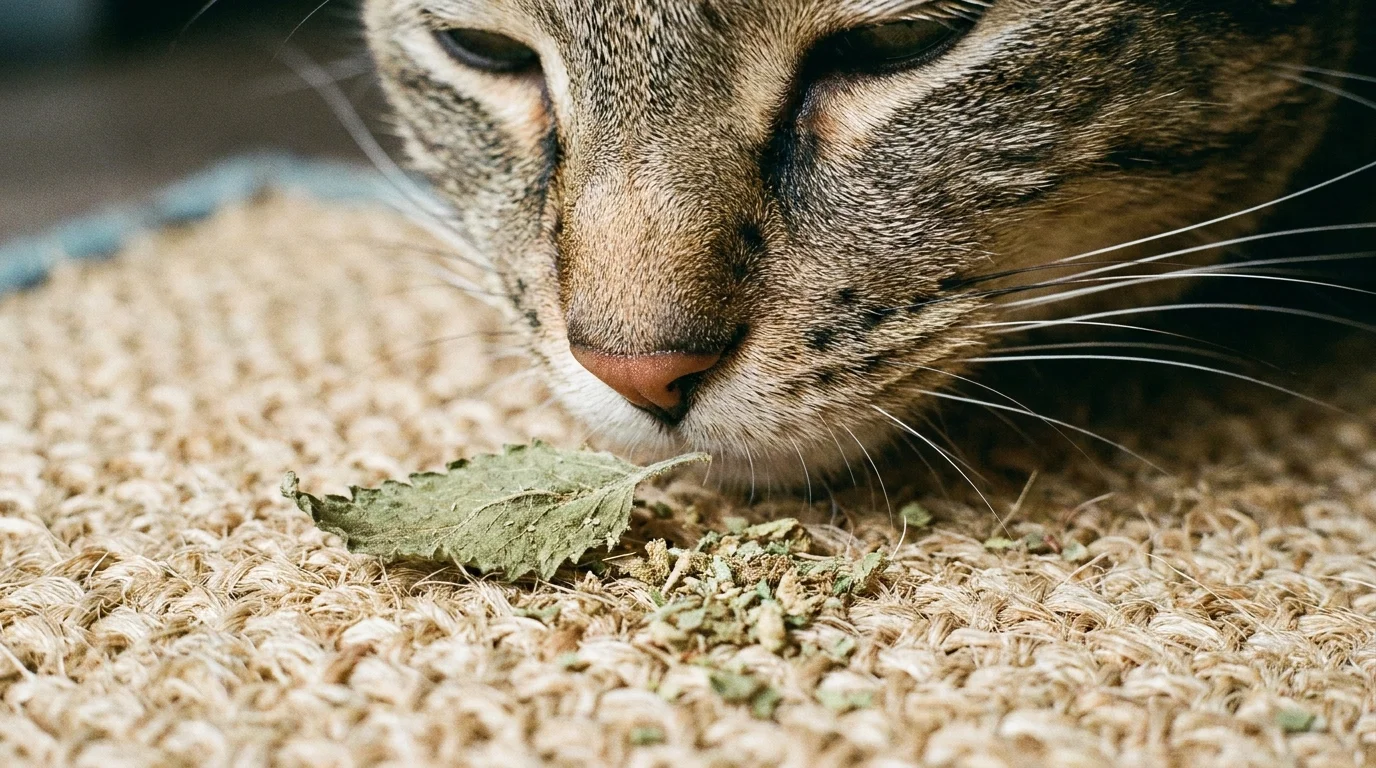
- Incorporate Olfactory Stimulation: Approximately 70% of cats respond euphorically to catnip (nepetalactone). For cats that carry the genetic non-response trait, try silvervine (Actinidia polygama) or Valerian root, which engage a much wider percentage of felines.
- Weekly Toy Rotation: Store toys in an airtight plastic container or drawer. Keep only two items accessible at any given time, rotating them every Sunday evening to preserve novelty.
- End on an Unambiguous Win: Conclude every play session by tossing a high-value protein treat or serving a meal, satisfying the hunting cycle so your cat never feels thwarted.
When Inactivity Signals a Medical Concern
If an adult or mature cat that previously loved leaping suddenly retreats to a loaf position or shows hesitation jumping down from furniture, do not chalk it up to stubbornness or laziness. According to veterinary mobility studies, over 90% of cats older than 12 years suffer from degenerative joint disease (osteoarthritis).
A thorough veterinary orthopedic exam can identify silent chronic discomfort. Modern treatments—ranging from feline-specific anti-nerve growth factor injections (Solensia) to joint supplements—frequently restore pain-free movement. Pair treatment with our tailored enrichment ideas for senior cats for safe, low-impact stimulation.
Frequently Asked Questions
My cat watches the toy intently but never pounces. Is that a problem?
Not at all. In wild felids, stalking and visual tracking consume up to 80% of predatory hunting energy. Watching with dilated pupils and twitching tail tips is mentally demanding and physically stimulating exercise in its own right.
Should I use my bare hands or feet to play with my cat?
Never use your hands or feet as prey. Roughhousing with hands teaches kittens and adult cats that human skin is an acceptable target for claws and teeth, establishing painful play-aggression habits that become difficult to untrain.
How long should I try before concluding my cat just isn’t a player?
Give the refined technique at least 10 to 14 consecutive days of short, low-pressure sessions. If your cat remains completely unresponsive while eating and grooming normally, provide mental stimulation through window bird feeders and puzzle mats instead.
Authoritative Sources & Further Reading
- Fear Free Happy Homes: Cat Play the Right Way: 7 Mistakes to Avoid
- Preventive Vet: Cat Play Sessions Using the Prey Sequence
- Modern Cat: How to Play with Your Cat Correctly
🐾 Explore More Cat Play & Behavior Guides
Keep your indoor cat stimulated, happy, and fit with our practical care guides: