By Emma Hartley | Reviewed by IndoorCatWell Editorial Team | Last updated September 2026
This article provides practical, veterinary-supported feline dietary guidance. If you buy through our links, we may earn an affiliate commission at no extra cost to you. Read our full Affiliate Disclosure.
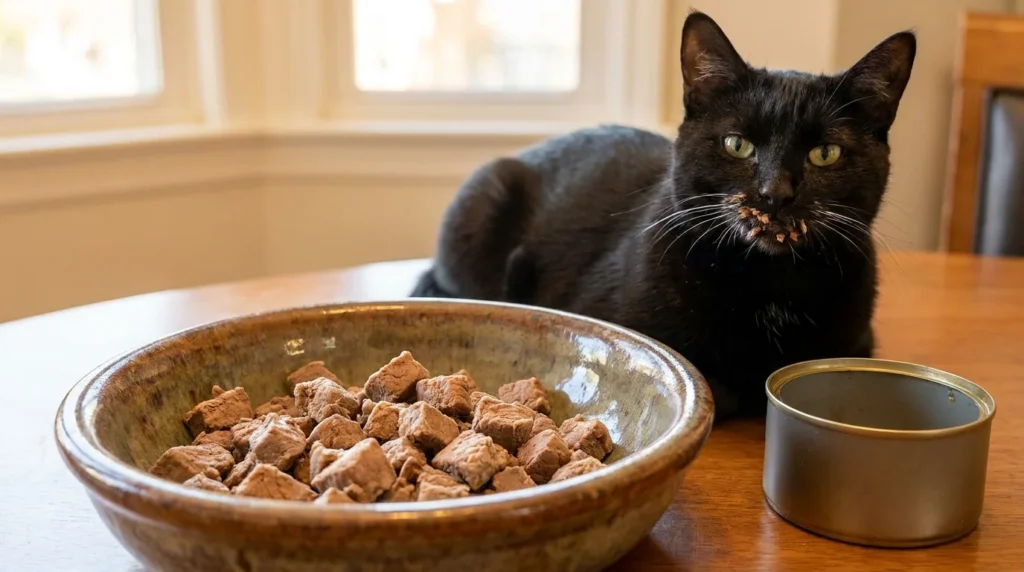
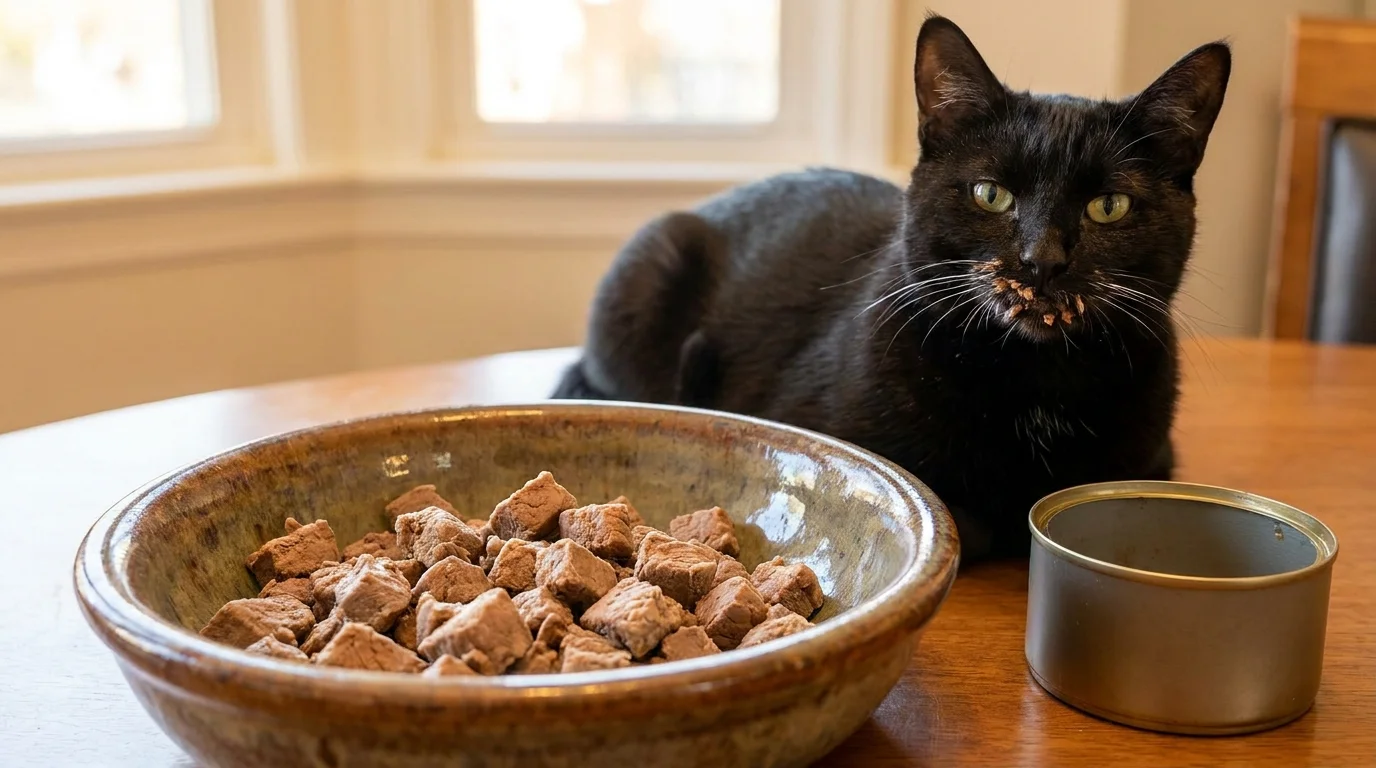
Most of the time, a cat licking up the rich gravy while leaving the solid meat chunks behind is simply expressing a tactile texture preference rather than a medical problem. Gravy is warm, aromatic, and effortless to lap up, whereas chunks demand chewing effort. However, if this selective eating pattern develops abruptly, it warrants a prompt veterinary oral exam.
⚡ Quick Summary: Cat Only Licking Gravy?
If your cat has always done this and maintains a healthy body weight, it is likely just a texture quirk. Fix it by blending chunks with a fork or switching to smooth poultry or fish pâté. If an older cat suddenly stops chewing solid chunks, examine their mouth for broken teeth, feline resorptive lesions (FORLs), or gingivitis.
While gravy provides beneficial hydration, the primary protein, amino acids (taurine), and essential micronutrients reside within the meat chunks. If your cat refuses solid food consistently, explore our guide on how to transition a cat from dry food to wet food to find textures they love.
6 Reasons Why Cats Only Eat the Gravy
- 1. Inherent Texture & Mouthfeel Aversion: Cats are notoriously sensitive to food texture. Some felines dislike rubbery, gelatinous extruded chunks or find large morsels awkward to grasp with their barbed tongues.
- 2. Concentrated Aroma & Moisture: Gravy carries the majority of volatile scent compounds and animal fats. Because feline appetite is guided almost entirely by smell rather than taste, the sauce is naturally the most irresistible component.
- 3. Silent Dental Pain: Tooth resorption lesions, severe gingivitis, cracked molars, or stomatitis make crunching or chewing dense meat painful. Lapping up fluid requires zero mechanical jaw pressure.
- 4. Overfeeding & Caloric Satiety: If your cat receives calorie-dense dry kibble between meals, they simply might not be hungry enough to work through solid chunks, treating gravy as a delicious dessert.
- 5. Blunted Olfactory Senses in Seniors: As senior cats age, their sense of smell naturally dulls. They gravitate toward the sauce because it produces the strongest scent signal.
- 6. Early Gastrointestinal Discomfort: Mild nausea from inflammatory bowel disease or kidney changes can make swallowing heavy meat unappealing. Liquid gravy is easier on a sensitive digestive tract.
When It’s Normal Preference vs. When to See a Vet
| Likely Just Feline Preference | Warrants a Veterinary Exam |
|---|---|
| Your cat has exhibited this habit since kittenhood | The behavior started suddenly in a cat that always ate chunks |
| Body weight, coat luster, and energy remain stable | Accompanying weight loss, muscle wasting, or reduced appetite |
| Cat happily crunches dry treats or dental treats | Chews awkwardly, tilts head to one side, drops food, or drools |
| Litter box habits and water consumption are normal | Increased water drinking, vomiting, or foul oral odor (halitosis) |
5 Practical Solutions to Try at Home
- 1. Switch to Homogeneous Pâté: Classic pâté recipes blend protein, fat, and broth into a single uniform texture. Because there are no distinct chunks, your cat cannot separate the moisture from the meat.
- 2. Puree Chunks With a Fork or Immersion Blender: If you have cans of chunks in gravy in your pantry, mash them with a fork and add a splash of warm water. Creating a creamy slurry prevents selective licking.
- 3. Warm the Food Slightly: Warming canned food for 4 to 6 seconds releases aromas from the solid protein, making the meat just as enticing as the sauce. Be sure to check safe limits in our guide on how long wet cat food can sit out.
- 4. Test Shredded or Minced Cuts: Some felines reject molded cube chunks but relish real shredded chicken or minced salmon. Exploring texture varieties keeps mealtime engaging.
- 5. Schedule a Professional Dental Check: Have your veterinarian examine your cat’s premolars and molars. Resolving tooth pain often restores a cat’s enthusiasm for chewing solid foods. Read our guide on how to tell if your cat is in pain.
Frequently Asked Questions
Is my cat getting enough nutrition if they only eat the gravy?
If this occurs occasionally and your cat eats dry kibble or other meals normally, it is not a deficiency risk. However, if canned food is their sole diet and they abandon the meat chunks, they will miss critical protein, taurine, and minerals. Switch to pâté or mash the chunks to ensure complete nutrition.
Should I throw away the meat chunks my cat leaves behind?
Once the gravy has been licked off, the remaining meat dries into a leathery skin within an hour. Discard the leftover chunks within 1 to 2 hours to prevent bacterial contamination and odor.
Could my cat be drinking gravy because they are thirsty?
Yes. Cats have a low biological thirst drive and often seek moisture through food. If gravy-licking is accompanied by frequent visits to the water bowl, have your veterinarian run a screening panel for kidney disease or diabetes.
Authoritative Sources & Further Reading
- Untamed: Help! My Cat Licks the Gravy but Leaves the Meat
- MyCatJournal: Why Does My Cat Only Lick His Wet Food?
🐾 Explore More Cat Diet & Health Guides
Help your cat enjoy every nutritious mealtime: