By Emma Hartley | Reviewed by IndoorCatWell Editorial Team | Last updated September 2026
This article provides practical, veterinary-supported cat care guidance. If you buy through our links, we may earn an affiliate commission at no extra cost to you. Read our full Affiliate Disclosure.
A cat with separation anxiety displays a distinct cluster of distress behaviors tied specifically to your departure and absence—including vocalizing as you leave, inappropriate elimination on your scent, and intense clinginess upon return. Unlike normal independence or occasional mischief, true separation anxiety is defined by predictable timing around your comings and goings.
⚡ Key Signs at a Glance
- Distress at departure cues: Hiding, pacing, or door-blocking when you grab keys or shoes.
- Absence vocalization: Loud yowling, meowing, or crying shortly after you leave.
- Targeted accidents: Urination or defecation specifically on your laundry or bed while away.
- Compulsive grooming: Licking belly or legs raw as a repetitive stress coping mechanism.
- Hyper-attachment: Constant shadow-following and inability to settle when you return.
One isolated behavior rarely means much on its own; the pattern across several signs is what points toward anxiety rather than a one-off bad day. Understanding this distinction is essential before planning your routine or discussing treatment with your veterinarian.
Signs That Point Toward Separation Anxiety
While dogs typically express separation anxiety through chewing furniture and barking, feline separation anxiety is often subtle or disguised as bad habits. Watch for these seven validated behavioral indicators:
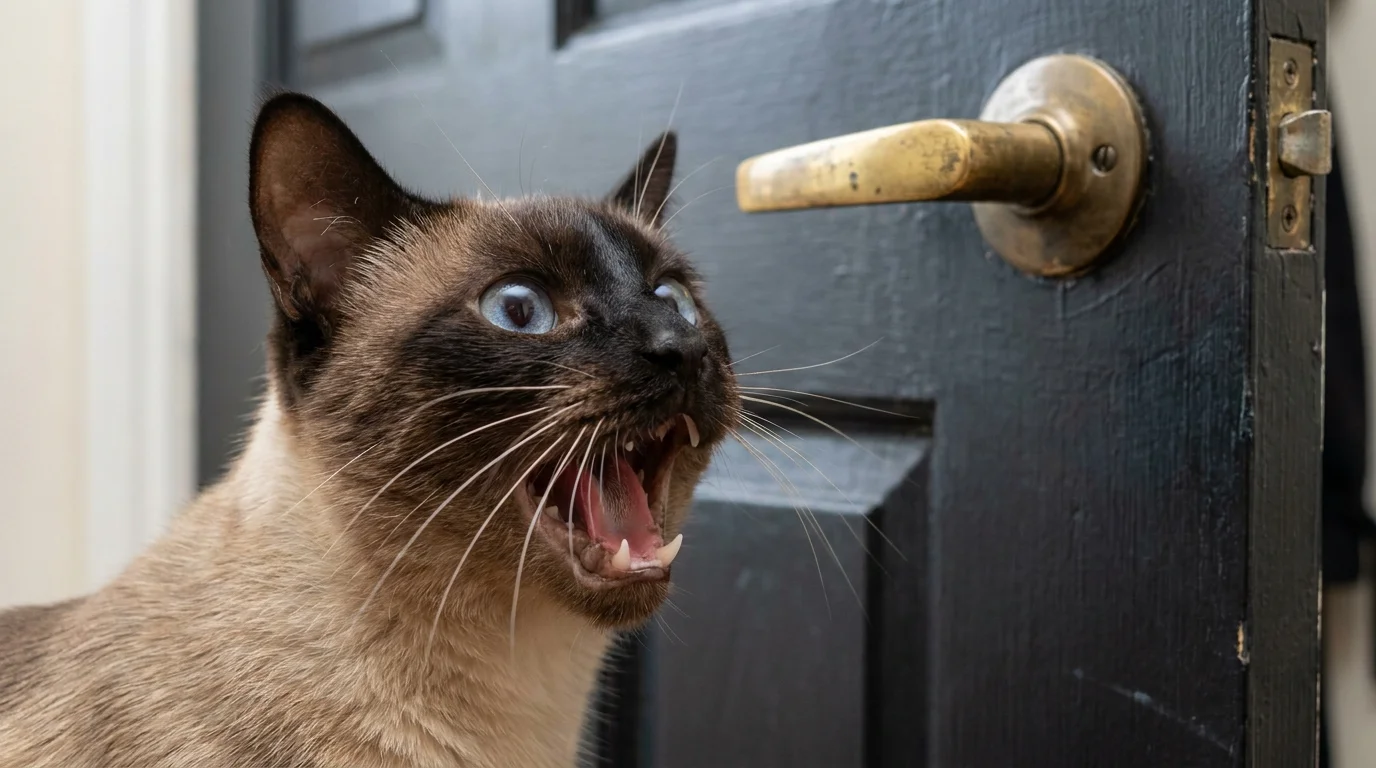
- Excessive vocalization tied to your absence: Loud meowing, yowling, or crying that starts the moment you shut the front door, or that an indoor pet camera captures repeating throughout the day.
- Accidents outside the litter box specifically when you are away: Urinating or defecating on your bedding, pillow, clothing, or dirty laundry pile. Depositing scent on personal items is an instinctive feline method of mingling scents to self-soothe.
- Psychogenic overgrooming: Compulsive licking that leads to thinned fur, broken hairs, or bald patches on the belly, inner thighs, or forelegs, utilized as a displacement coping mechanism for loneliness.
- Destructive scratching or chewing: Focused scratching around door frames, weatherstripping, window sills, or exit barriers that does not occur when you are physically home.
- Pre-departure panic: Cats are masters of associative learning. The jingling of car keys, putting on work shoes, or packing a bag triggers frantic pacing, pupil dilation, or blocking your path.
- Appetite changes tied to your schedule: Completely refusing dry or wet food while you are away, followed by gorging immediately once you walk back in the door.
- Extreme attachment when you are home: Demanding continuous physical contact, following you from room to room like a shadow, and exhibiting distress if an interior door is closed between you.
What This Is Not: Normal Independence vs. Anxiety
Independent behavior, occasional scratching on designated posts, or a cat that simply lounges and naps 14 to 16 hours a day while you are at work is completely normal feline behavior—not anxiety. The critical distinguishing factors are:
- Timing: Does the behavior cluster directly around your comings and goings?
- Physiological distress: Does the cat exhibit elevated respiration, dilated pupils, or loss of appetite?
- Baseline change: Is this an acute shift from your cat’s customary relaxed demeanor?
To learn more about realistic solitary time frames, check our practical guide on how long you can safely leave an indoor cat alone.
Ruling Out Medical Causes First
Several signs of separation anxiety directly mimic urgent physical ailments. Urinating outside the box is frequently caused by feline lower urinary tract disease (FLUTD), bladder stones, or urinary tract infections. Vomiting, skin inflammation from flea allergies, or abrupt appetite shifts can easily be misdiagnosed as behavioral distress.
Veterinary Caution: Always schedule a complete physical exam and urinalysis with your veterinarian before pursuing behavioral modification. Assuming house soiling or skin lesions are purely emotional can allow painful medical conditions to progress unchecked.
How to Check Without Guessing: Use Video Evidence
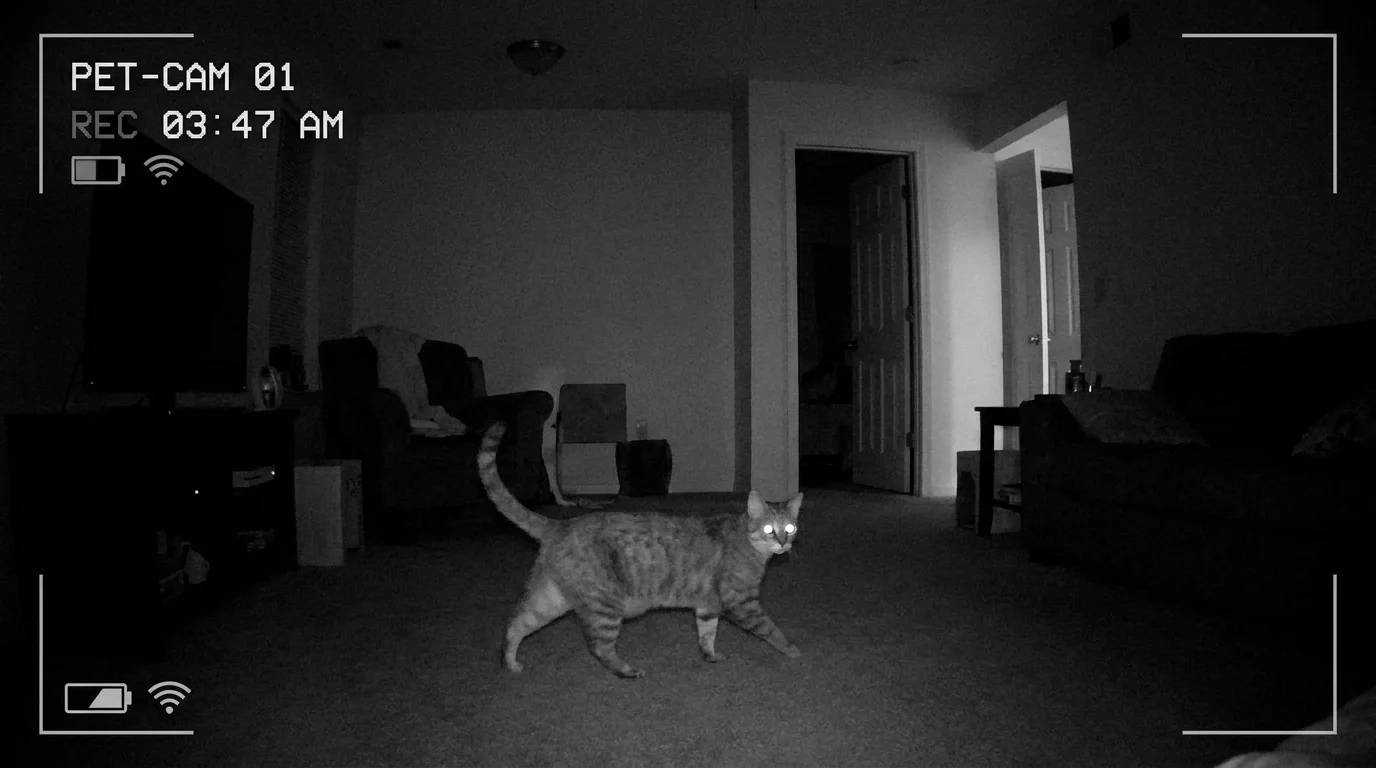
Because separation distress occurs almost exclusively behind closed doors, a Wi-Fi-enabled pet camera with audio recording is your single most effective diagnostic tool. Position the camera facing your entry hallway and main living area.
- Check the latency: How many minutes after the door clicks shut does crying or pacing begin?
- Evaluate settling time: Does your cat settle into a nap within 15 to 20 minutes, or do they remain restless for hours?
- Capture footage for your vet: Video recordings provide objective clinical insight for a veterinary behaviorist.
Actionable Steps to Ease Separation Anxiety
Relieving feline separation anxiety involves desensitizing departure triggers, establishing consistent environmental security, and providing solo mental engagement:
- Keep departures and arrivals low-key: Avoid emotional farewells, baby talk, or enthusiastic greetings. Ignore your cat for the first three minutes after arriving until all four paws are calm.
- Desensitize departure cues: Pick up your car keys and put on your coat, then simply sit on the sofa or make coffee without leaving. Breaking the association removes the trigger’s emotional charge.
- Build up micro-absences: Step outside the front door for 30 seconds, return calmly, and repeat, gradually extending to 2 minutes, 5 minutes, and 15 minutes as confidence grows.
- Provide solo mental stimulation: Offer puzzle feeders, cardboard tunnels, and rotated kicker toys. Explore our favorite zero-cost projects in our DIY cat enrichment guide.
- Establish a predictable routine: Feed, play, and groom at identical times each day to reduce baseline stress hormones. If nighttime crying is also an issue, see why cats wake owners up at night.
- Seek professional support: For severe cases with self-mutilation or anorexia, a board-certified veterinary behaviorist can prescribe targeted pheromone therapy or temporary SSRI medications.
Frequently Asked Questions
Is separation anxiety common in indoor cats?
Yes. Peer-reviewed research estimates that between 10% and 13% of domestic cats display at least one behavioral issue related to separation anxiety. It is increasingly recognized by feline specialists as a significant welfare concern rather than a canine-only condition.
My cat greets me loudly at the door. Is that a sign of anxiety?
Not necessarily. Many cats are naturally vocal communicators. An enthusiastic greeting is normal if your cat settles quickly once greeted, has not eliminated inappropriately, and shows no distress while you are away.
Should I get a second cat to help with separation anxiety?
Adopting a second cat is not a guaranteed remedy. Cats experiencing separation anxiety are typically attached specifically to their human caregiver, not lacking feline companionship. Introducing another animal can sometimes increase territorial stress unless introduced thoughtfully.