By Emma Hartley | Reviewed by IndoorCatWell Editorial Team | Last updated September 2026
This article provides practical, veterinary-supported cat care guidance. If you buy through our links, we may earn an affiliate commission at no extra cost to you. Read our full Affiliate Disclosure.
Most healthy adult cats manage a normal workday of 8 to 12 hours alone without trouble. A full day is occasionally fine if food, water, and clean litter are set up. Once you pass about 24 hours, someone should check on the cat. Kittens, senior cats, and cats with medical conditions need much shorter gaps.
⚡ Quick Summary: How Long Can You Leave a Cat Alone?
Adult cats can comfortably stay alone for an 8 to 12-hour workday. Up to 24 hours is acceptable as an occasional exception with automated food and redundant water bowls. Trips exceeding 24 hours require a daily pet sitter. Kittens under 4 months should not be left alone for more than 4 hours, while senior cats require customized schedules vetted by your doctor.
Those numbers come from leading feline welfare authorities including Hill’s Pet Nutrition, PetMD, and Merck Animal Health, and the sources do not all agree on every detail. The sections below show where they differ and how to decide what is safe and comfortable for your own feline companion. If you are preparing your home routine, explore our cornerstone indoor cat care guide for comprehensive daily setups.
Time Limits by Situation and Age
Feline independence depends heavily on age, diet, and cognitive security. Review standard veterinary benchmarks below:
| Situation or Life Stage | Typical Veterinary Limit |
|---|---|
| Healthy adult, normal workday | 8 to 12 hours |
| Healthy adult, one full day | Up to 24 hours, as an occasional exception |
| Two days (48 hours) | Avoid unless there is no choice; arrange check-ins |
| Longer than 24 hours | Arrange a trusted pet sitter or daily check-in visit |
| Weaned kitten (under 4 months) | No more than about 4 hours |
| Kitten still on milk replacer | 2 to 3 hours maximum between feedings |
| Six-month-old kitten | Around an 8-hour workday |
| Senior cat or medical condition | Significantly shorter gaps; follow vet recommendations |
Hill’s Pet Nutrition puts most healthy adults at 8 to 12 hours, notes that 24 hours is occasionally acceptable, and strongly advises against two full days without intervention. PetMD gives the same 8 to 12-hour baseline for adults and recommends a qualified pet sitter beyond 24 hours. Merck Animal Health states that kittens under four months should not be alone for more than four hours, while an adolescent six-month-old can manage an eight-hour working day.
Some sources permit 24 to 48 hours for an adult cat fed strictly dry kibble with ample water. However, veterinary professionals emphasize that water bowls get contaminated with hair, litter boxes become soiled, and feeders jam. None of these respected organizations recommend leaving an indoor cat unmonitored for more than 48 hours under any circumstance.
Why the Advice Varies
Every cat is an individual. A relaxed five-year-old with an enriching window perch and interactive toys handles solitude very differently than an anxious two-year-old rescue who has never spent a night without their human. The physical setup of your home matters just as much: a climate-controlled apartment with multiple water bowls is inherently safer than an older home where heating or air conditioning could suddenly cut out.
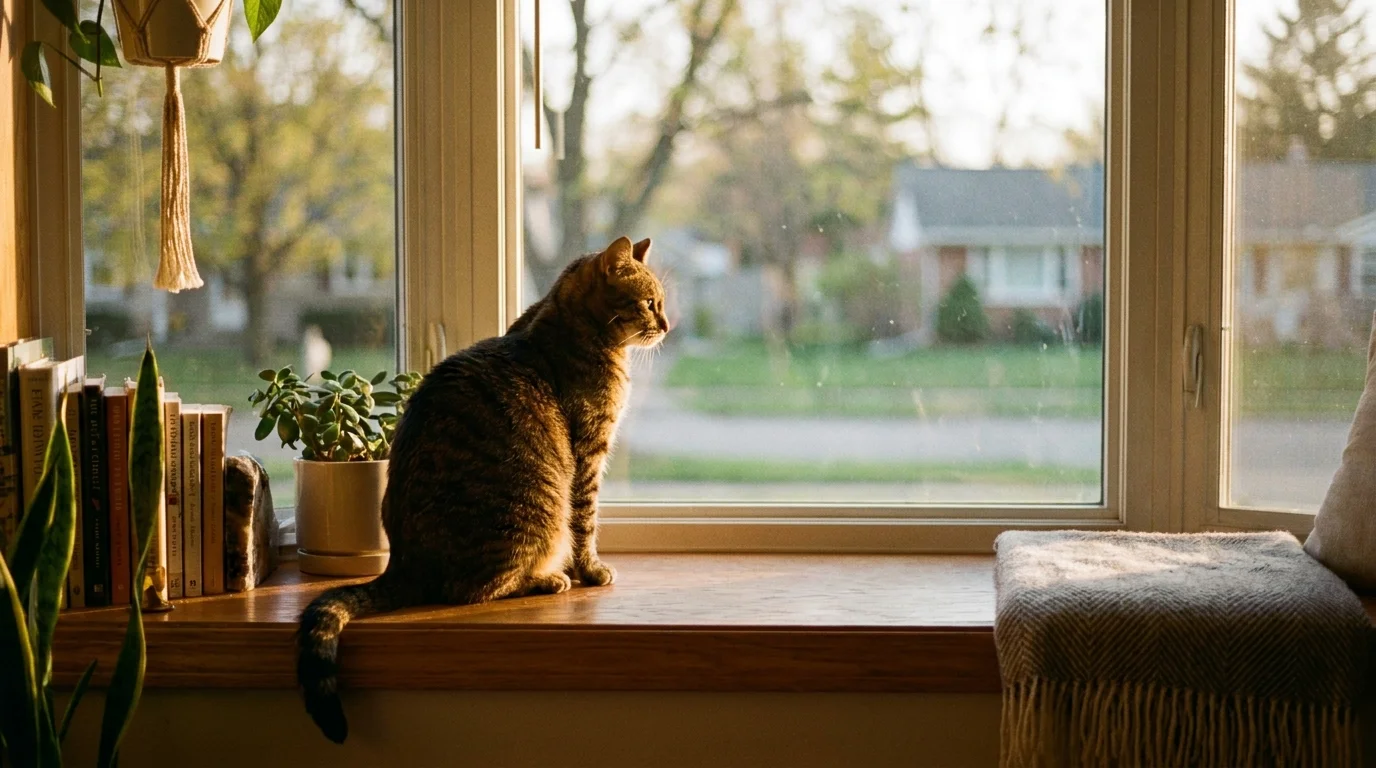
Veterinary clinicians cite age, health status, individual temperament, and home environment as primary risk factors. Cats on daily medications (such as insulin or blood pressure pills) require strict timing that cannot be skipped. Furthermore, Hill’s considers cats seniors around seven years of age—a milestone where kidney health and mobility make longer absences riskier.
Pre-Departure Checklist: What to Check Before You Leave
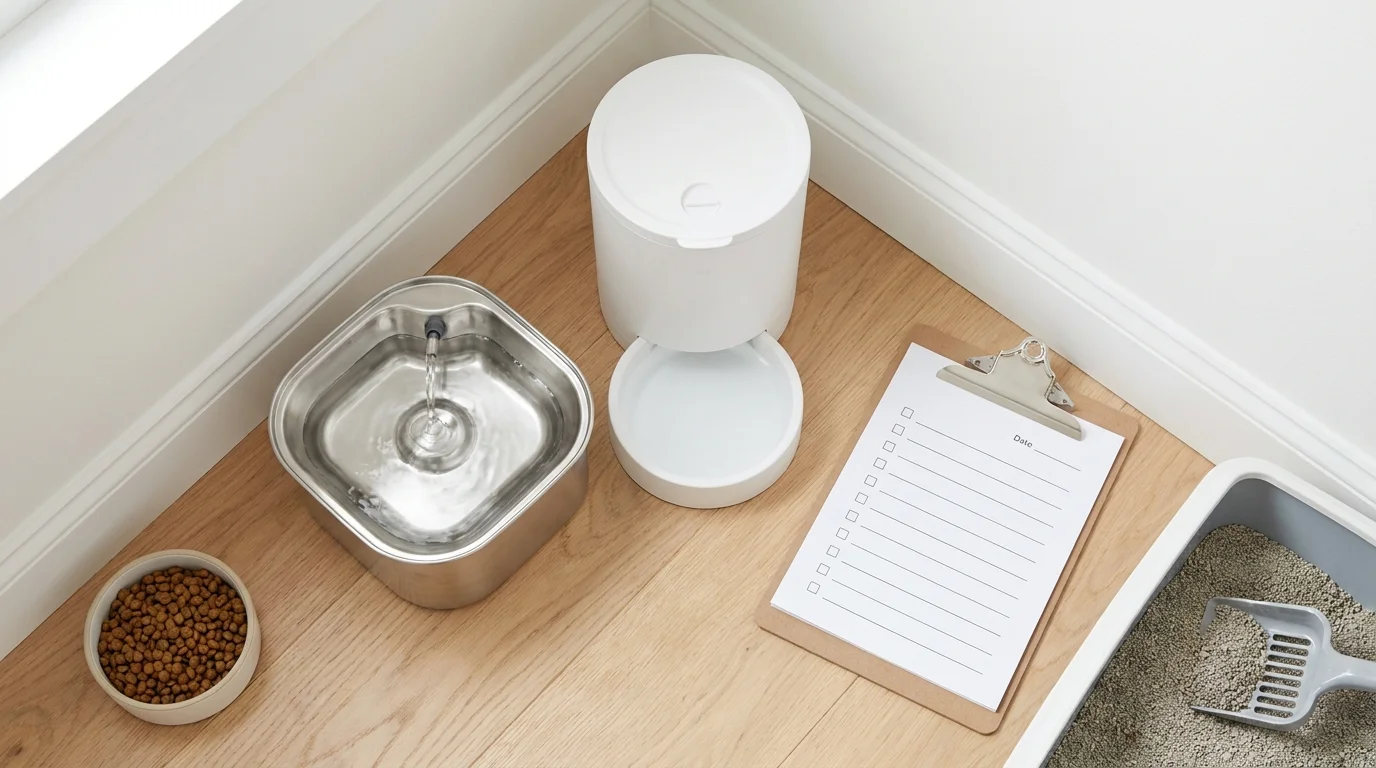
Run through this essential safety checklist prior to any absence that will exceed a normal workday:
- Redundant Water Sources: A knocked-over water dish is an emergency when you are away. Place two or three heavy ceramic bowls in different rooms, or pair a bowl with an automatic fountain. Read our cat hydration guide for optimal water setups.
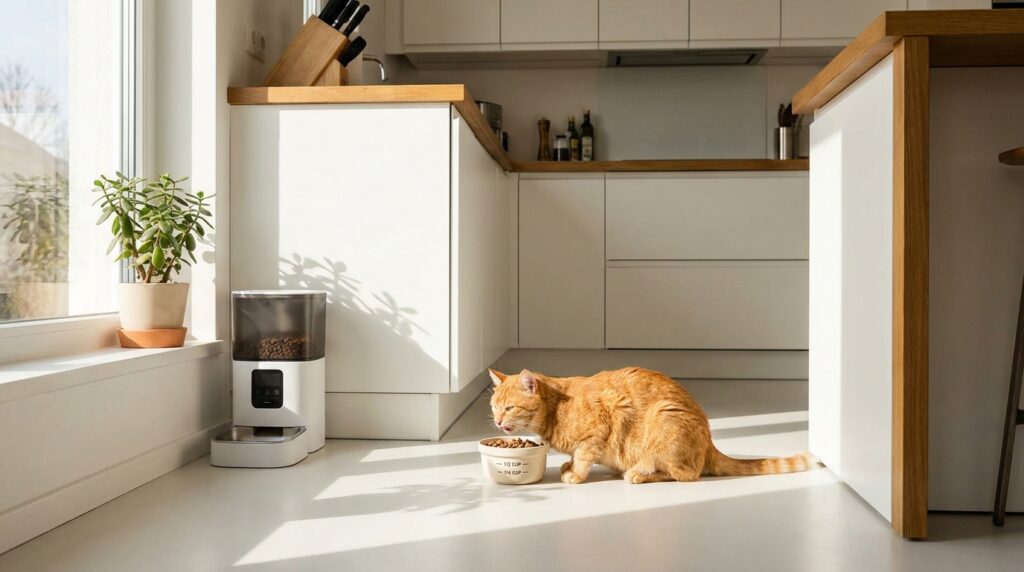
- Spoil-Proof Food Supply: Use dry kibble or a battery-backed timed feeder. Align portions with an established adult cat feeding schedule. Crucially, never leave opened wet food out all day—see our breakdown on how long wet cat food can sit out safely.
- Clean, Accessible Litter Boxes: Scoop all boxes right before walking out the door. If leaving for more than 24 hours, add an extra litter box. Consider ideal litter box placement in apartments so your cat is never locked out of their facilities.
- Reliable Climate Control: Ensure heating or air conditioning remains at a safe, moderate range (68°F–76°F / 20°C–24°C). Close blinds on hot days and secure drafty doors.
- Rotational Enrichment: Prevent destructive boredom with rotating puzzle feeders, scratching posts, and window seats. Check our guide on indoor cat enrichment and toys for boredom busters.
- Emergency Contact / Backup Person: Entrust a neighbor, friend, or professional pet sitter with an extra key who can reach your cat within hours if an emergency arises.
Signs Your Cat Is Not Coping Well Alone
While cats do not pack-bond like dogs, many experience genuine feline separation stress when left alone for extended periods. Watch for these behavioral indicators:
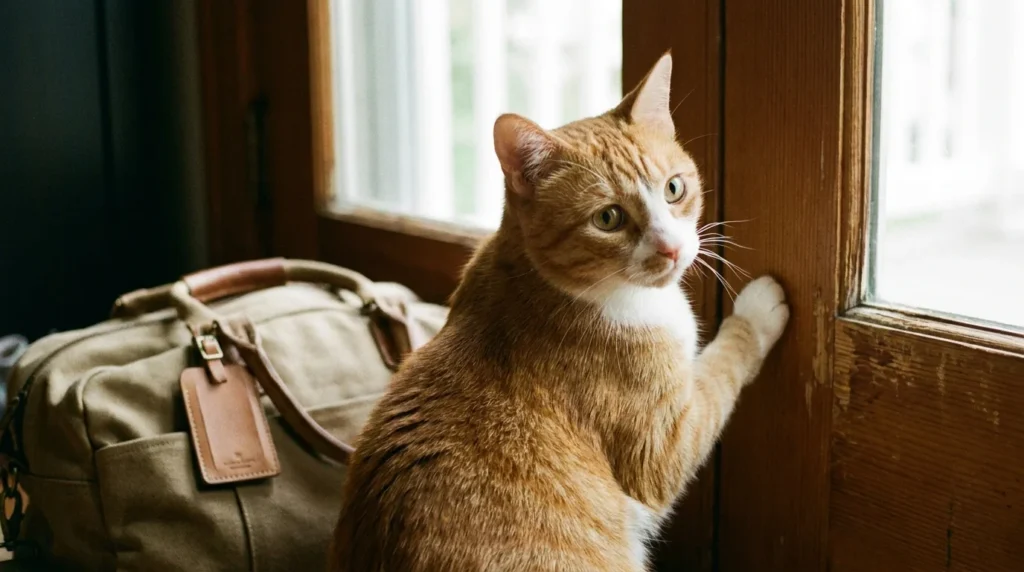
- Vocalizing, crying, or pacing near the entrance door as you prepare to depart
- Inappropriate urination or defecation outside the litter box that began after routine changes
- Destructive chewing, carpet digging, or scratching doorframes
- Refusing to eat food until you return to the home
- Excessive psychogenic grooming (licking bare patches on thighs or belly) or following you aggressively room-to-room upon your return
The FelineVMA position statement on indoor cats stresses that safety alone is not enough. Indoor cats require environmental agency, mental stimulation, and emotional security just as much as physical protection from outdoor hazards. Always rule out urinary tract infections or metabolic illnesses with your veterinarian before attributing litter box accidents purely to behavior.
Overnight and Weekend Trips: What Is Safe?
For a single overnight absence with a healthy adult cat, a thorough setup of extra water, full dry bowls or timed feeders, and an extra litter box is usually sufficient. However, if your trip spans two or more nights, schedule a daily visit from a trusted friend or professional pet sitter.
A daily sitter does much more than scoop litter and top up food. They provide essential human interaction, inspect for illness, and confirm your cat has not gotten trapped inside a closet or suffered a household injury. While commercial cat boarding is an option, unfamiliar boarding facilities often cause far greater territorial stress than staying in familiar home surroundings with a visiting sitter.
Frequently Asked Questions
Can I leave my cat alone for a weekend?
A healthy adult cat may be fine for a single night, but across a full weekend (Friday evening to Sunday afternoon), you should arrange a visit at least once per day. Water bowls can get spilled, automatic feeders can jam, and an injured or acutely ill cat cannot call for help.
Is 8 hours too long for a kitten?
Yes, for most young kittens. Weaned kittens under four months should not be left alone for more than about 4 hours. Kittens still on milk replacer require round-the-clock feedings every 2 to 3 hours. Only once a kitten reaches around six months can they routinely manage an 8-hour workday alone.
Does having a second cat change the limits?
A bonded feline companion provides emotional company and alleviates boredom, but the physical limits for water, fresh food, and litter cleanliness remain identical. In fact, multiple cats soil litter boxes twice as fast, and sudden territorial conflict has no human mediator.
How long should a new cat settle in before I leave it alone?
Give a newly adopted cat at least several days to two weeks to learn their home, bond with you, and establish reliable eating and litter box habits. Practice short trial absences before leaving them for an entire workday.
Authoritative Sources & Further Reading
- Hill’s Pet Nutrition: Leaving a Cat Home Alone Safely
- PetMD: How Long Can You Leave a Cat Alone?
- Merck Animal Health: How Long Can You Safely Leave a Cat Alone?
- FelineVMA Position Statement: Meeting the Physical and Emotional Needs of Indoor Cats
🐾 Explore More Indoor Cat Care Guides
Keep your indoor cat safe, thriving, and mentally engaged with our veterinary-supported guides: