By Emma Hartley | Reviewed by IndoorCatWell Editorial Team | Last updated September 2026
This article provides practical, veterinary-supported cat behavior guidance. If you buy through our links, we may earn an affiliate commission at no extra cost to you. Read our full Affiliate Disclosure.
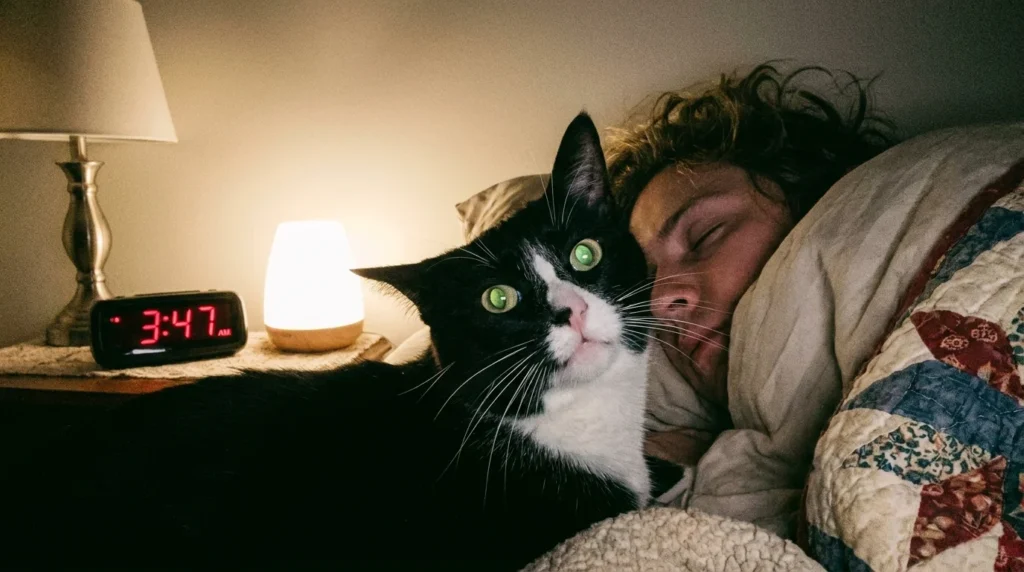
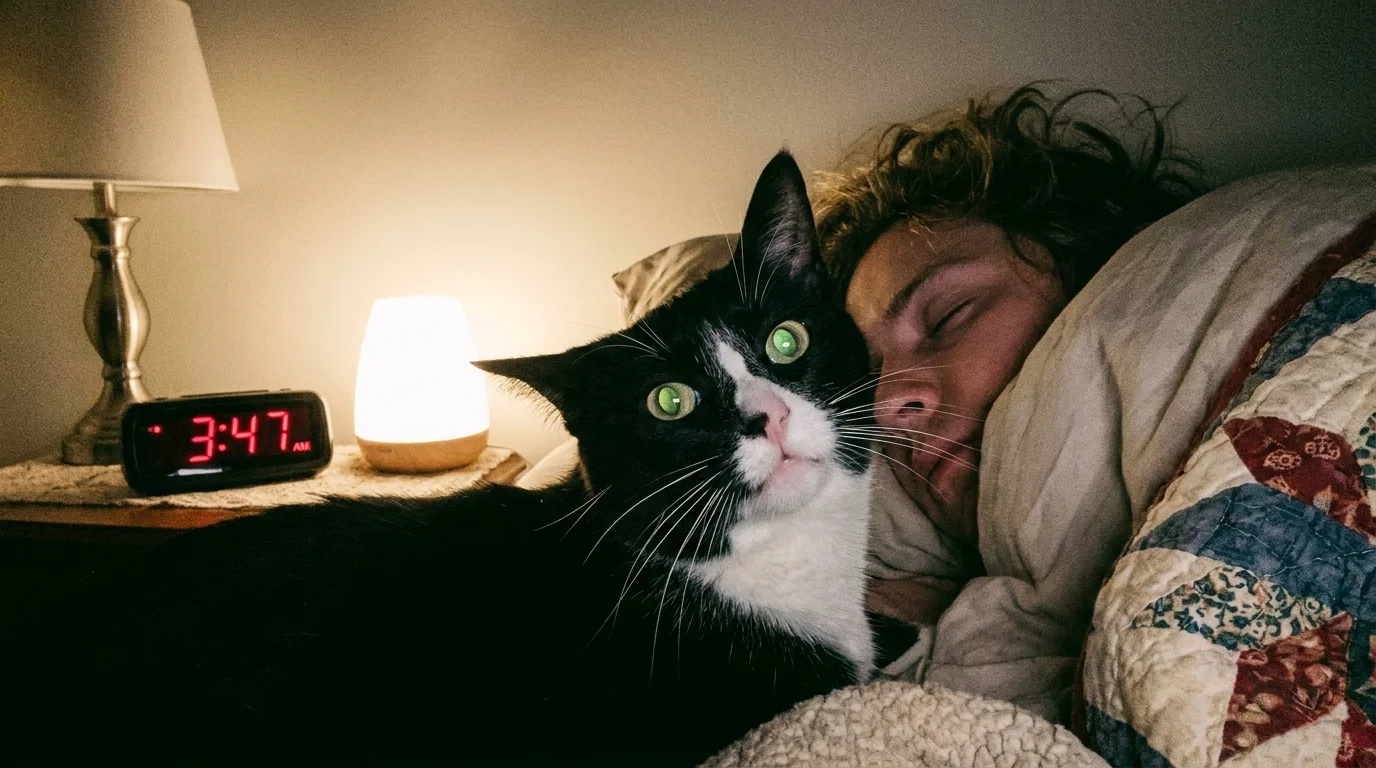
Cats are crepuscular creatures, meaning their biology predisposes them to peak activity at dawn and dusk rather than midday. Combine that natural rhythm with hunger, daytime boredom, or an unintentional routine that trains them to expect breakfast the second you stir, and 4 a.m. wake-up meows start to make complete sense.
⚡ Quick Summary: How to Stop Your Cat Waking You Up
The most permanent solution mirrors the natural feline predatory sequence: Hunt, Eat, Groom, Sleep. Engage in 15 minutes of vigorous wand toy play right before bedtime, feed their final meal immediately afterward, delay morning feeding by 30 minutes after getting out of bed, and never reward 4 a.m. meowing with food or attention.
The fix is almost always establishing a strict, predictable routine. Play before bed, feed right after, and systematically stop responding to nighttime vocalizations in between. However, sudden nocturnal behavior changes in older cats can signal underlying health conditions that warrant a veterinarian’s evaluation first.
7 Most Common Reasons Your Cat Wakes You Up at Night
Understanding the precise catalyst behind your cat’s nighttime alerts is key to tailoring an effective solution:
- 1. Hunger and Anticipation of Breakfast: If your cat receives food the moment your feet hit the floor, they quickly learn that waking you produces an immediate meal reward. This is by far the single most common cause of early morning waking.
- 2. Daytime Under-Stimulation & Stored Energy: An indoor cat left alone with minimal mental or physical activity all day accumulates pent-up predatory energy that inevitably erupts as 3 a.m. zoomies. See our guide on how much exercise an indoor cat needs.
- 3. Inherent Crepuscular Biology: Wild feline ancestors hunt during twilight hours (dawn and dusk) when prey is most active. Even well-fed domestic cats retain an instinctive internal clock that stirs them before sunrise.
- 4. Outside Environmental Stimuli: The nocturnal rustle of raccoons, neighborhood stray cats prowling near windows, nocturnal birds, or car headlights slicing through blinds can instantly stimulate your cat’s prey drive.
- 5. Dirty Litter Box or Empty Water Bowl: Cats are fastidious animals. If their litter box has become soiled overnight or their water bowl ran dry, meowing by your pillow is their only way of asking for assistance.
- 6. Accidental Reinforcement (Attention Seeking): If getting up, speaking soothingly, or petting your cat has ever followed nighttime meowing—even once—the behavior can persist indefinitely because intermittent rewards are the strongest behavioral reinforcers.
- 7. Underlying Medical Issues: A cat that suddenly begins waking you after years of peaceful nights—especially cats over 7 years old—requires an exam. Hyperthyroidism, hypertension, cognitive dysfunction syndrome (feline dementia), and arthritis pain are documented drivers of nighttime distress.
Rule Out a Medical Cause First
Age and onset speed dictate your first steps. A senior cat (ages 7 to 10+) who abruptly starts pacing and vocalizing at night—especially if accompanied by weight loss, ravenous appetite, or excessive thirst—needs a veterinary check before attempting behavioral adjustments. Conditions like an overactive thyroid or elevated blood pressure cause genuine physical disorientation and discomfort.
Conversely, a young, vigorous cat with a long-standing pattern of early rising is almost certainly responding to routine, hunger conditioning, and available daytime energy.
The 6-Step Bedtime Routine That Actually Works
Feline behaviorists and veterinary resources (including the San Francisco SPCA nocturnal behavior guidelines) agree that synchronizing with the feline biological rhythm—Hunt, Eat, Groom, Sleep—yields dependable results:
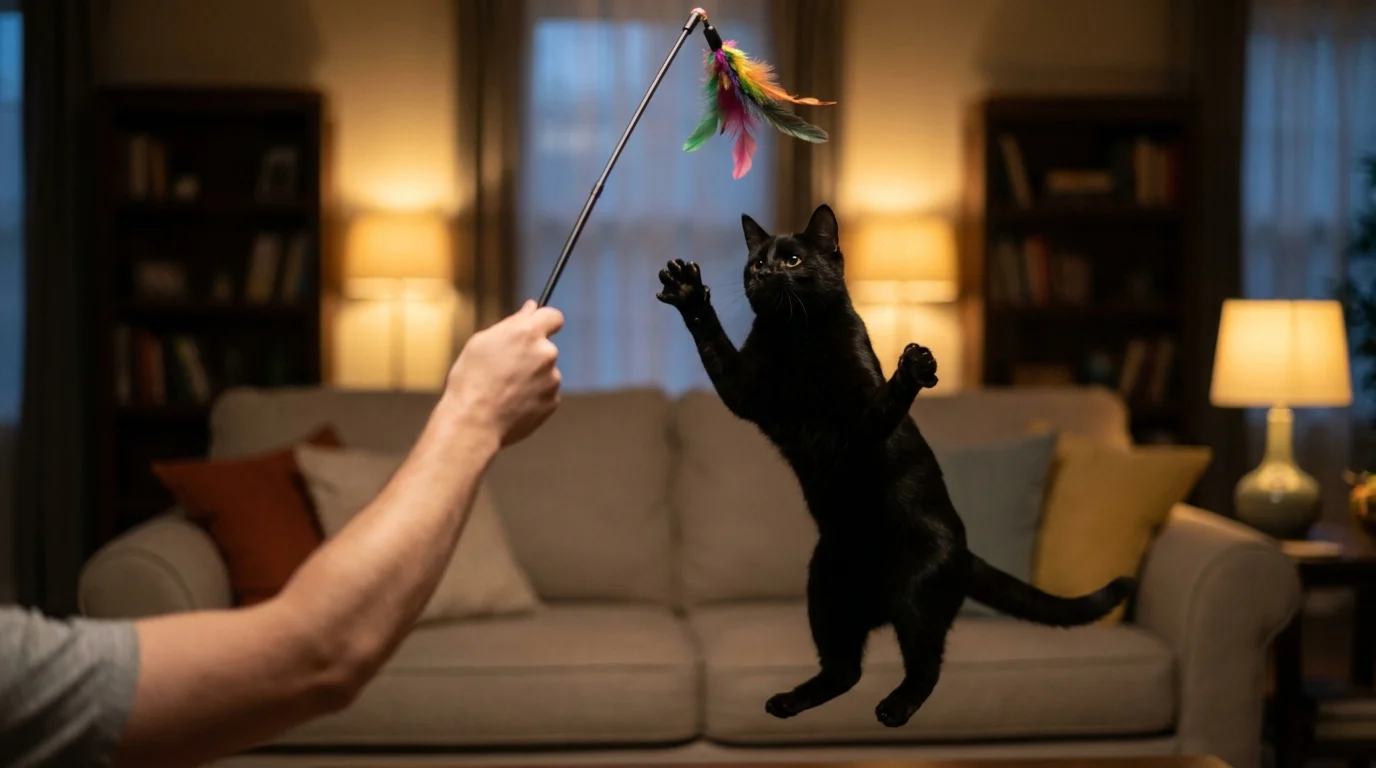
- 1. Play for 10 to 20 Minutes Before Bedtime: Use an interactive wand toy rather than your hands. Emulate fleeing prey with bursts of speed and pauses behind furniture. Allow your cat to physically catch the lure several times so the hunting loop reaches satisfaction.
- 2. Feed High-Protein Food Immediately After Play: This completes the predatory cycle. Digesting a satisfying meal triggers natural feline post-prandial grooming followed by deep sleep. Refer to our adult cat feeding schedule for proper timing.
- 3. Decouple Your Waking From Breakfast: When your alarm goes off, deliberately wait at least 30 to 45 minutes before serving breakfast. Shower, make coffee, and start your morning first. Once your cat realizes that waking you does not trigger food, they stop viewing you as an alarm clock.
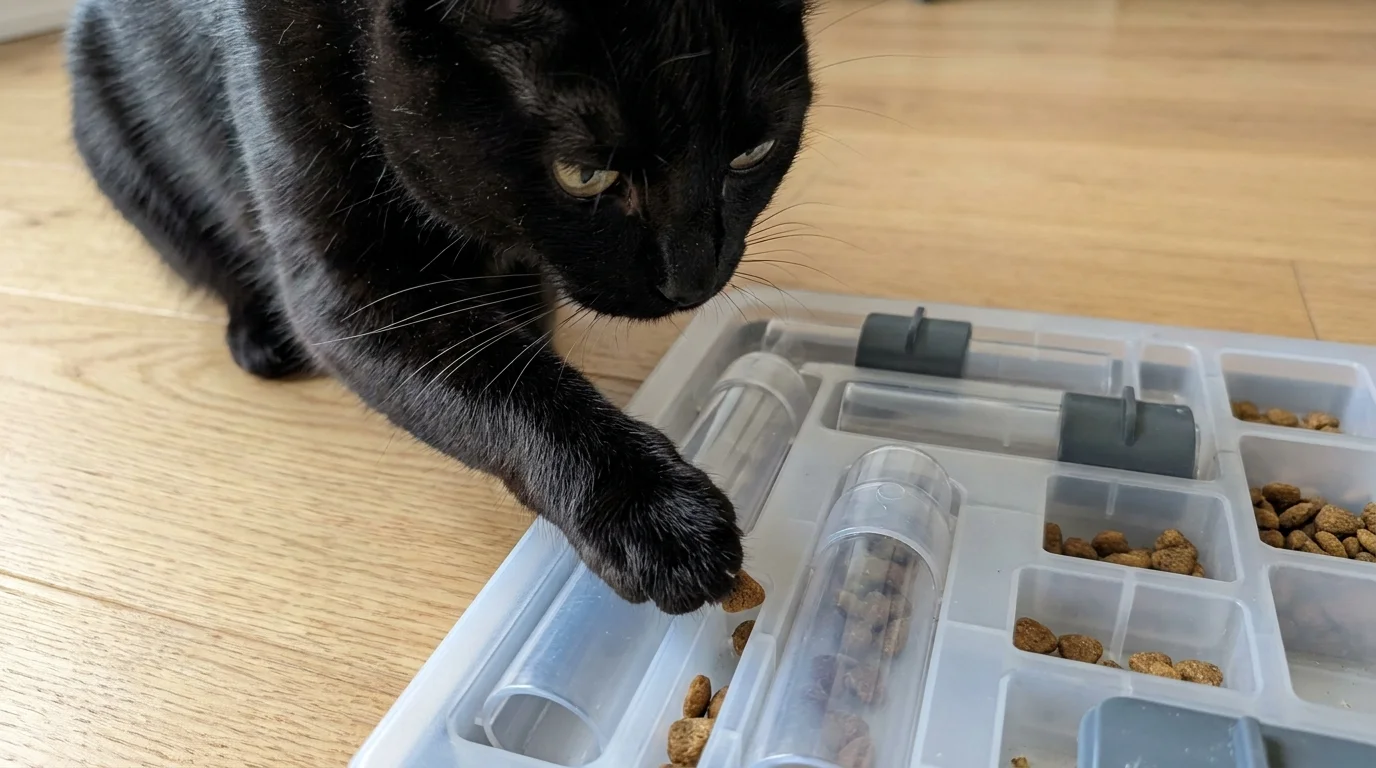
- 4. Deploy an Automated Feeder for Middle-of-the-Night Snacks: If your cat reliably wakes at 4 a.m. due to an empty stomach, set a timed automatic feeder or leave an overnight puzzle feeder scheduled for 3:45 a.m. The feeder delivers the food, completely taking you out of the equation.
- 5. Extinguish Attention-Seeking Meows: This requires unwavering discipline: do not speak, do not yell, do not pet, and do not get up. Even negative reactions (like sighing or tossing under the covers) tell the cat their vocalization worked. Consistency across 2 to 3 weeks is critical.
- 6. Conduct an Evening Basics Check: Scoop the litter box thoroughly, refresh water dishes, and close bedroom window blinds to block passing headlights or neighborhood wildlife.
4 Common Habits That Make Night Waking Worse
- Giving in “Just This Once”: Getting out of bed at 4:30 a.m. to feed the cat because you are exhausted resets weeks of progress. In behavioral science, variable intermittent reinforcement produces the most persistent habits.
- Shifting Morning Meals Progressively Earlier: If you feed at 5:30 a.m. because they cried, they will start meowing at 5:00 a.m. next week, and 4:30 a.m. after that.
- Half-Hearted Play Sessions: Tossing a plush toy across the rug does not elevate their heart rate. Aim for 10 to 15 continuous minutes of active leaping and stalking.
- Dismissing Senior Changes as “Normal Aging”: Older cats who wander and yowl at night often suffer from treatable systemic hypertension or osteoarthritis pain.
When to Consult a Veterinarian
Schedule a veterinary exam if the nocturnal vocalization started abruptly, especially in cats over seven years old, or if you note any of the following accompanying symptoms:
- Progressive weight loss despite a voracious, ravenous appetite
- Noticeable increase in daily water intake or larger litter box urine clumps
- Deep, mournful yowling that sounds like distress rather than standard conversational meows
- Pacing aimlessly or appearing confused and disoriented in familiar rooms
- Marked alterations in grooming, mobility, or reluctance to jump onto beds
Frequently Asked Questions
Will my cat ever stop waking me up completely?
Yes. With consistent application of an evening play-and-feed routine and strict extinction of daytime feeding associations, the vast majority of cats learn to sleep through the night or entertain themselves quietly until your household awakens.
Is it okay to close my cat out of the bedroom?
Absolutely. For light sleepers, keeping the bedroom door closed is often the cleanest solution. Provide your cat with a cozy bed, fresh water, a clean litter box, and safe overnight toys in another room. Expect a few nights of vocal protest before they settle into the new boundary.
Should I ignore my cat crying at night?
Once medical problems have been eliminated and you have confirmed that fresh water and clean litter are available, ignoring the meowing completely is the definitive way to break the attention-seeking cycle. If vocalization sounds like acute pain or physical distress, investigate immediately.
Authoritative Sources & Further Reading
- San Francisco SPCA & Cornell-Affiliated Guide: Nocturnal Behavior in Cats
- Catster: Why Does My Cat Wake Me Up at Night? Vet-Reviewed Reasons
- Zoetis Petcare: How to Keep Your Cat from Waking You Up
🐾 Explore More Cat Behavior & Care Guides
Restore peace and harmony to your household with our veterinarian-supported resources: