By Emma Hartley | Reviewed by IndoorCatWell Editorial Team | Last updated September 2026
This article provides practical, veterinary-supported cat care guidance. If you buy through our links, we may earn an affiliate commission at no extra cost to you. Read our full Affiliate Disclosure.
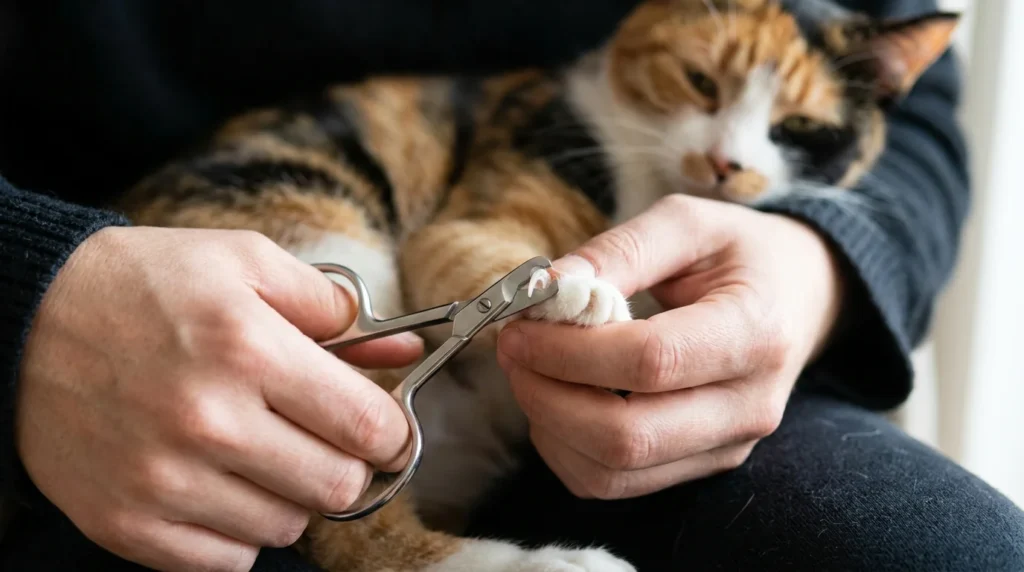
Trimming an indoor cat’s claws without blood or tears comes down to patience and desensitization rather than physical force. By conditioning your cat to gentle paw handling during calm moments, trimming only one or two claws per session, and using dedicated pet clippers, nail maintenance becomes a calm, scratch-free two-minute routine.
⚡ Essential Tool Kit
- Cat Scissor Clippers: Small, curved stainless steel blades designed specifically for feline claws. Never use human flat clippers.
- Styptic Powder (or Cornstarch): Instantly cauterizes and stops bleeding if you accidentally clip into the pink quick.
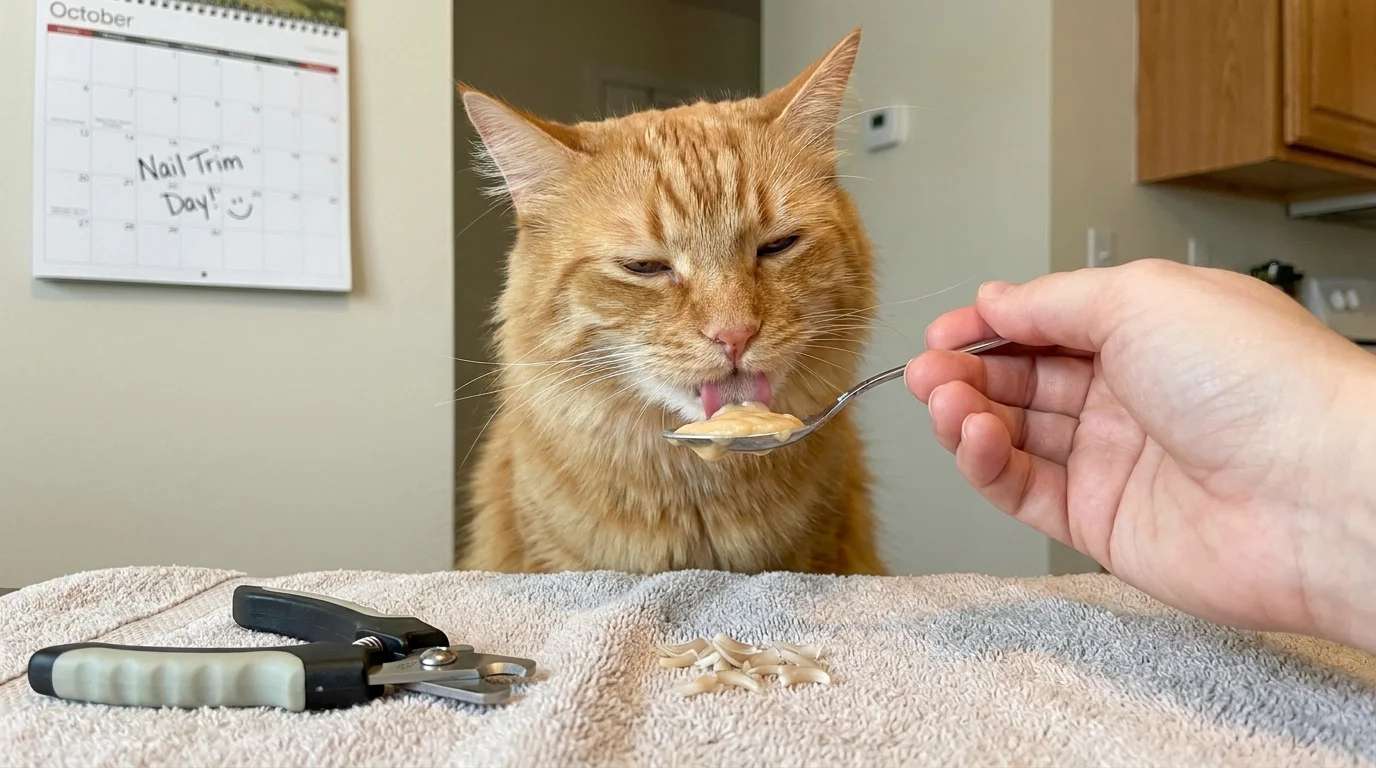
- High-Value Lickable Treats: Churu or squeeze puree reserved exclusively for grooming rewards.
- Soft Bath Towel: For a snug, calming “purrito” wrap if handling a squirmy or anxious feline.
Phase 1: Build Comfort with Paw Handling First
The most common mistake cat owners make is brandishing clippers before the cat even tolerates having its toes touched. Over 3 to 5 days of normal cuddle sessions:
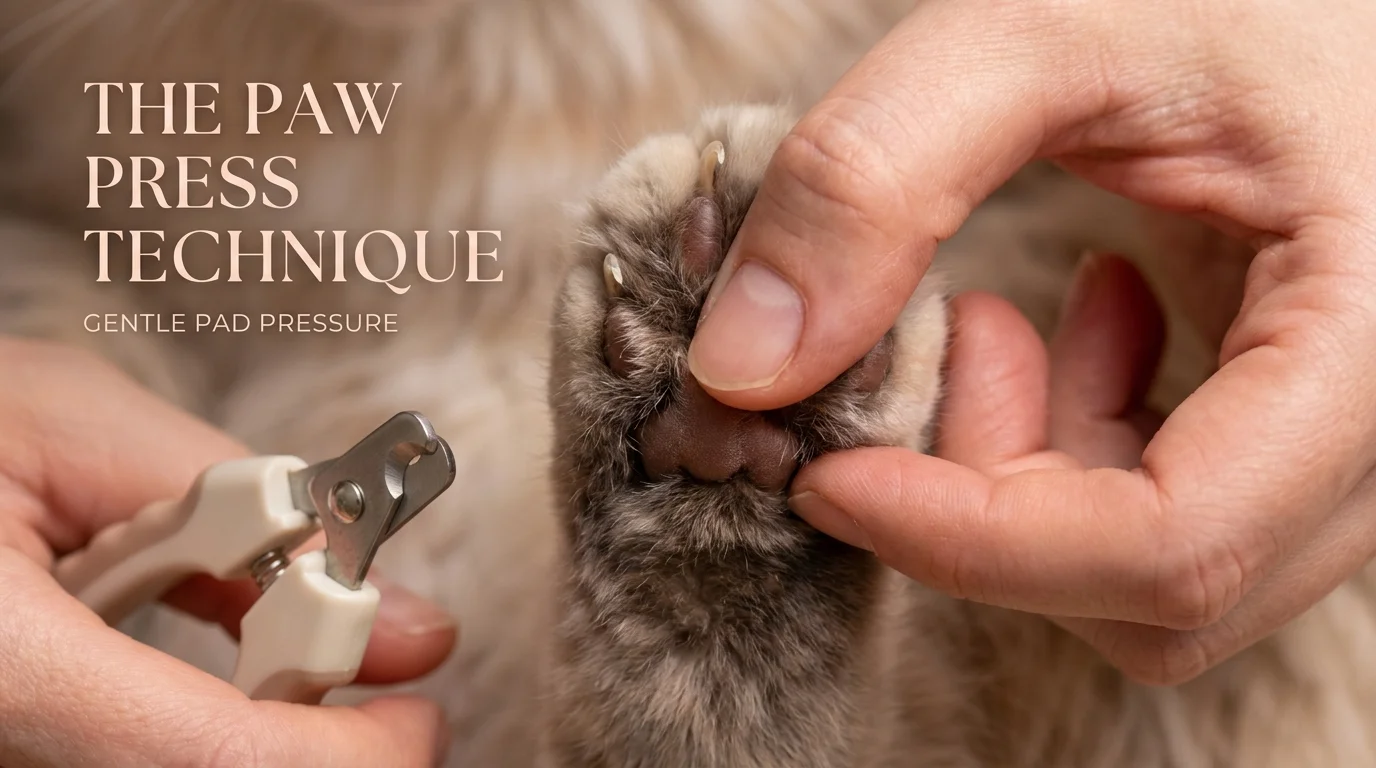
- Rest your hand gently over your cat’s paw while they are relaxed in your lap. If they pull away, let them go without restraining them.
- Practice pressing softly on the top and bottom of a single toe pad to extend the claw, then immediately release and offer a treat.
- Introduce the clippers by tapping them softly against the paw while feeding a treat, creating a positive emotional link.
Step-by-Step: The Safe Trimming Technique
- Choose post-nap relaxation: Never attempt nail trims during high-energy zoomies or right before mealtime. The best window is when your cat is curled up drowsy after an active play session.
- Position securely: Sit on the floor with your cat in your lap facing away from you, with their back resting against your chest. This prevents backward squirming and protects your torso.
- Identify the quick: In translucent feline nails, locate the interior pink triangle. This vascular core contains sensitive nerve endings and capillary blood vessels.
- Snip only the razor-sharp hook: Cut 2 millimeters in front of the pink quick at a 45-degree angle matching the claw’s natural curve. When in doubt, taking just the needle-like tip off is 100% sufficient.
- Reward immediately: Offer a lick of puree treat after each claw.
- Stop after 2 or 3 claws: There is no award for finishing all 10 front claws in one sitting. Trimming two claws per day creates a calm cat who never dreads grooming.
What to Do If You Accidentally Nick the Quick
Even experienced veterinary technicians nick the quick occasionally on squirmy felines. If a claw starts bleeding:
- Stay completely calm. Cats pick up on human panic and will associate the incident with extreme danger.
- Dip the bleeding nail directly into styptic powder (or plain kitchen cornstarch) and apply firm, gentle pressure with a tissue for 60 seconds.
- Release your cat immediately and provide an extra-generous treat reward. Never scold or force further trimming that day.
How Often Do Indoor Cats Need Claws Trimmed?
Indoor cats require nail trims every 2 to 4 weeks. Unlike outdoor cats who naturally wear down claws on tree bark and concrete, indoor claws continually shed outer sheaths and grow sharp curve tips. In senior felines with reduced mobility, claws can curl around and painfully penetrate pad tissue if neglected.
Provide sturdy scratching posts to encourage natural sheath shedding. Read our comprehensive guide on how to teach a cat to use a scratching post.
Frequently Asked Questions
Can I use human fingernail clippers on my cat?
Avoid human flat clippers. Human nail clippers crush the round feline nail shaft laterally, causing painful splintering and broken nail sheaths. Cat-specific scissor clippers have curved notches that slice cleanly.
Do I need to trim back claws as often as front claws?
No. Front claws grow much faster and become sharper. Rear claws are thicker and naturally stay shorter through propulsion and jumping, usually requiring attention only every 6 to 8 weeks.
My cat panics the moment she sees clippers. What can I do?
Wrap your cat snugly in a bath towel burrito with only one paw exposed, or have a partner feed a continuous stream of lickable puree while you quickly snip the tip of one claw.
Authoritative Sources & References
- Chewy: How to Trim Cat Nails: A Step-by-Step Guide From a Pro
- Cats.com: How to Safely Trim Cat Nails – Complete Step-by-Step
- A-Z Animals: How to Trim Your Cat’s Nails at Home Without Getting Scratched