By Emma Hartley | Reviewed by IndoorCatWell Editorial Team | Last updated September 2026
This article provides practical, veterinary-supported litter box behavior guidance. If you buy through our links, we may earn an affiliate commission at no extra cost to you. Read our full Affiliate Disclosure.
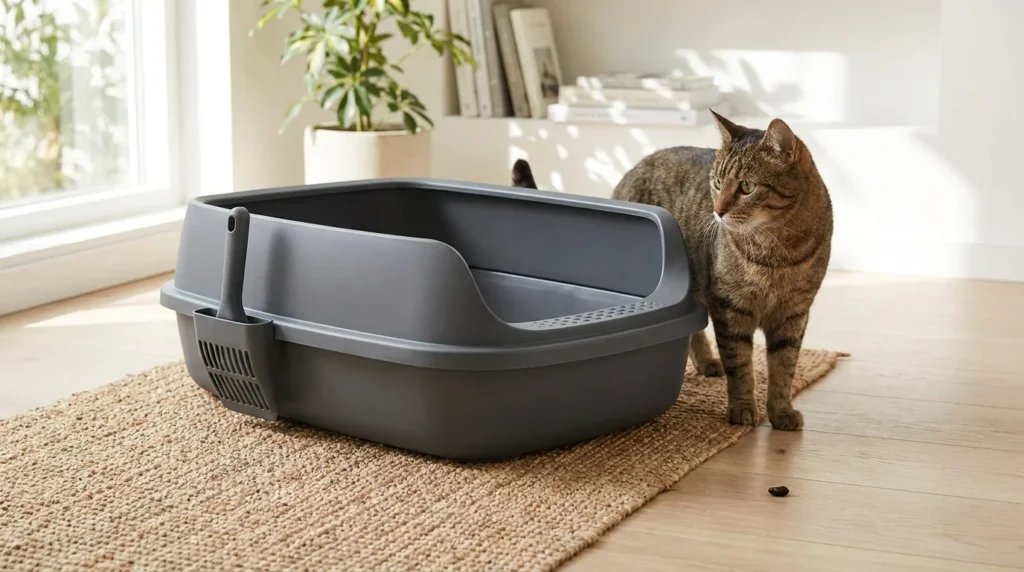
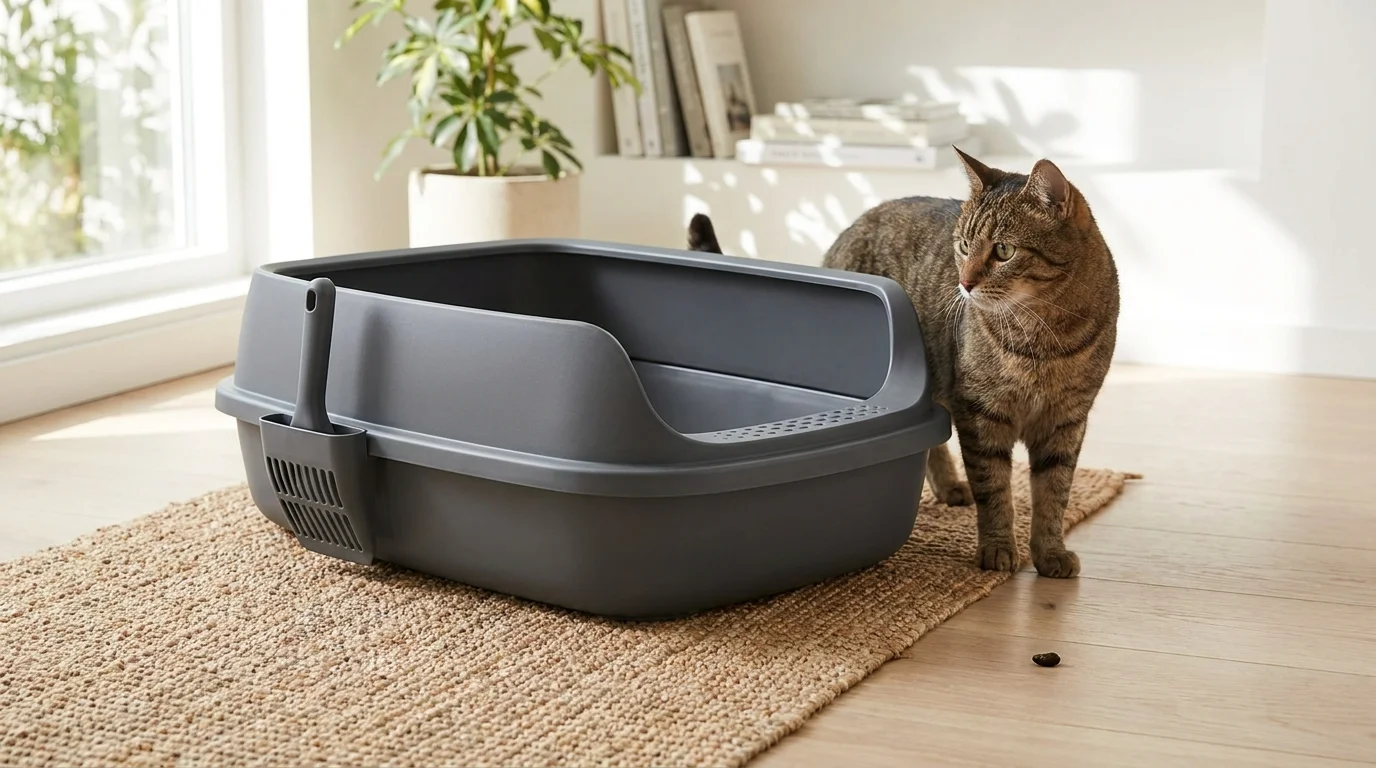
If your cat uses the litter box consistently to urinate but deposits stool on the bathroom tile or living room rug right outside, the box itself is rarely the entire problem. Because the cat clearly enters to pee, this split pattern points directly toward something specific to the physical act of defecation: constipation, squatting pain from arthritis, anal gland inflammation, or a box that feels too cramped for bowel movements.
⚡ Quick Summary: Peeing Inside, Pooping Outside?
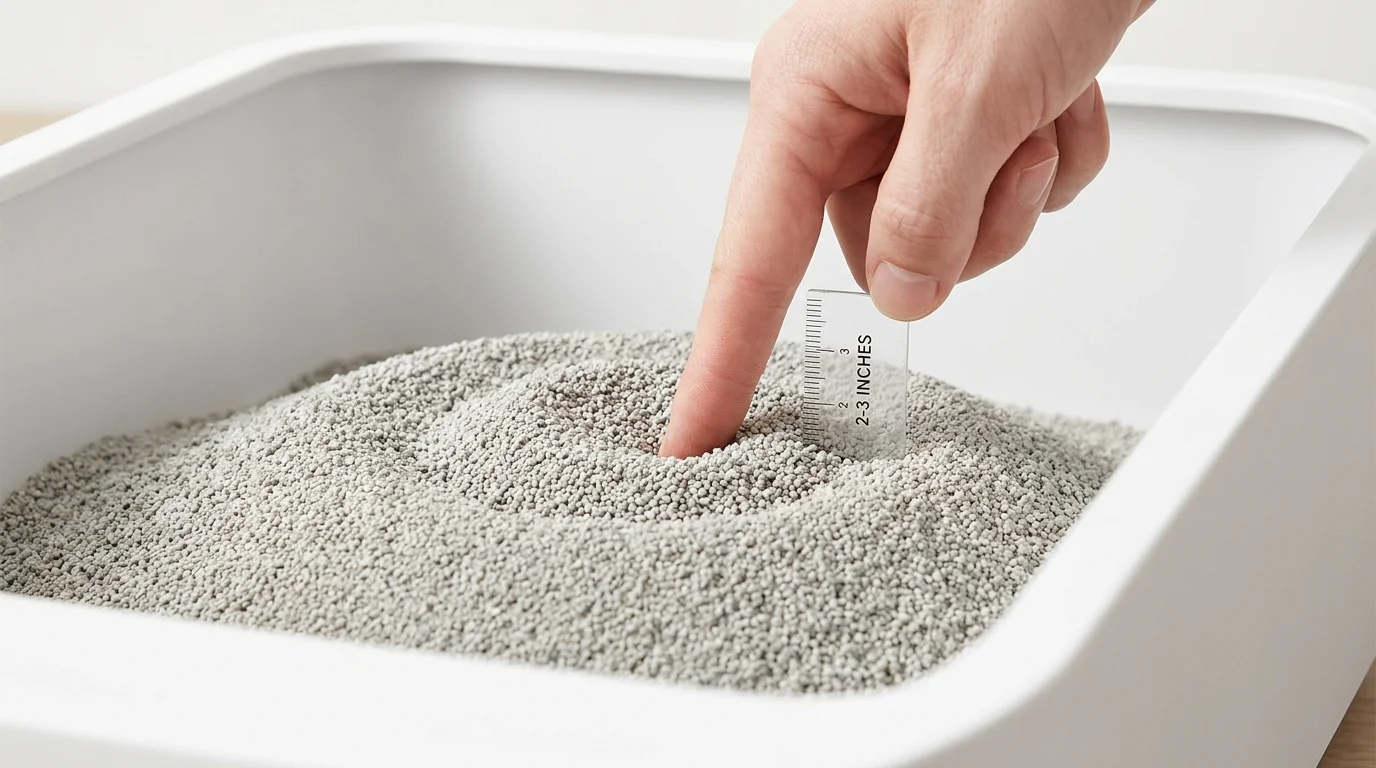
Have a veterinarian screen for chronic constipation, anal sac disease, or osteoarthritis first. Behaviorally, upgrade to an uncovered box at least 1.5 times the length of your cat, add a second litter box in an alternate location, ensure litter depth is calibrated (2 to 3 inches), and never scold or punish your pet.
A vet visit must always come first. Straining in the litter box can mimic other life-threatening conditions, and resolving medical discomfort frequently eliminates the inappropriate defecation on its own. For substrate adjustments, explore our companion guide on how deep cat litter should be.
Why the Pee vs. Poop Split Is Clinically Significant
A cat that boycotts the litter box entirely (urinating and defecating on carpet) usually has a generalized aversion to the litter texture, the scent, or the scary location. But a cat that reliably pees in the box while pooping outside is delivering specific diagnostic feedback: the act of passing stool is triggering distress.
Urinating requires a brief, low-strain squat of just a few seconds. Defecation, by contrast, demands a sustained, deep abdominal crouch, prolonged pelvic muscle contraction, and often extensive circling to align posture. If anything makes that prolonged crouch uncomfortable, the cat will seek an easier, flatter surface. If your cat also misses the box when urinating, consult our guide on why cats pee right next to the litter box.
6 Common Medical & Environmental Causes
- 1. Feline Constipation or Megacolon: Dry, hard, painful stools cause acute distress. Cats associate the physical location where the pain occurred (the litter box) with the pain itself, developing a conditioned box aversion.
- 2. Osteoarthritis & Mobility Pain: Over 90% of senior cats suffer from degenerative joint disease. Sinking into deep, unstable litter while maintaining a prolonged deep squat puts painful strain on arthritic hips, stifles, and lumbar vertebrae.
- 3. Cramped or Covered Enclosures: Covered hoods trap fecal dust and ammonia vapors. More importantly, they prevent a cat from raising their tail fully or standing upright during a bowel movement.
- 4. Litter Box Dimensions Are Too Small: Feline behavior standards dictate that a litter box should measure at least 1.5 times the cat’s length from nose to base of tail. Review our litter box size guide by cat weight to verify dimensions.
- 5. Separate Elimination Preference: In nature, cats rarely urinate and defecate in the exact same footprint to prevent concentrated olfactory signaling to predators. Many cats adamantly require one box for urine and a second box for feces.
- 6. Impacted or Infected Anal Glands: Irritated anal sacs cause sharp, stinging discomfort right as stool is evacuated, prompting the cat to leap out of the box mid-elimination.

6 Actionable Steps to Resolve the Behavior
- 1. Schedule a Veterinary Workup: Rule out constipation, megacolon, arthritis, and anal gland impaction first. Treating joint inflammation or adding a stool softener (like vet-prescribed Miralax or lactulose) often solves the problem within days.
- 2. Remove the Hood and Upgrade to an Extra-Large Box: Transition to an uncovered high-sided storage tote (with a low entry cutout) or an extra-large stainless steel litter pan. Your cat must be able to turn 360 degrees without touching the walls.
- 3. Add a Second Box in a Different Location: Adhere to the golden rule of litter boxes (Number of Cats + 1). Place the second box in a completely different room—not right beside the first. Read our advice on how many litter boxes you need and optimal apartment placement.
- 4. Calibrate Litter Depth: Maintain a consistent 2 to 3-inch layer of fine-grain, unscented clumping clay litter. Shorter layers (1 to 1.5 inches) provide firmer, more stable footing for arthritic seniors.
- 5. Deep-Clean the Accident Zone With Enzymatic Cleaners: Standard household cleaners leave lingering pheromone traces that trigger cats to re-soil the same area. Saturate floorboards with an enzymatic pet odor eliminator.
- 6. Exercise Patient Desensitization: Even after pain resolves with medical treatment, learned fear of the box takes 1 to 3 weeks of gentle consistency to unlearn. Offer quiet praise and treats near the box.
From a distance, a cat straining to pass a hard stool looks nearly identical to a cat straining with a urethral blockage (feline lower urinary tract disease). A blocked male cat can suffer fatal cardiac arrest or bladder rupture within 24 hours. If your cat visits the box repeatedly, cries out, licks their genitals obsessively, or strains with little or no urine produced, treat it as an emergency and rush to a veterinary clinic immediately.
Frequently Asked Questions
Should I punish or yell at my cat for pooping on the floor?
Never punish, scold, or rub your cat’s nose in feces. Punishment causes acute cortisol spikes, damages the human-animal bond, and teaches the cat to fear elimination in your presence, often forcing them to hide bowel movements under beds or behind closets.
Will adding a second litter box actually fix this?
In many non-medical cases, yes. Adding an open, spacious second box in another quiet room satisfies the natural feline instinct to segregate urine and feces, resolving the issue without stress.
My senior cat just started doing this. Is it just old age?
It is very likely osteoarthritis or chronic constipation. While more common in older felines, both conditions are treatable with modern veterinary therapies. Do not accept house soiling as untreatable old age.
Authoritative Sources & Further Reading
- PetMD: Why Is My Cat Pooping Outside the Litter Box?
- Catster: Why Does My Cat Pee In The Litter Box But Poop On The Floor?
- Comal Pet Hospital & Resort: The ‘Out of Box’ Mystery
🐾 Explore More Litter Box & Feline Care Guides
Restore flawless litter box habits with our proven guides: