By Emma Hartley | Last updated July 30, 2026
A cat that consistently pees right next to the litter box rather than somewhere random around the house is usually telling you something specific about the box itself: it is too small, too dirty, the wrong type, or shared with another cat in a way that creates hesitation right at the entrance. This pattern is different from general house-soiling, and it is worth treating as its own problem.
Quick answer: Check box size, cleanliness, and litter depth first — these cause the “right next to it” pattern more often than anything else. If the box checks out fine on all three, rule out a medical cause (urinary tract issues in particular) before assuming it’s purely behavioral.

Why Does a Cat Pee Just Outside the Box Instead of Somewhere Else?
Peeing right at the edge or just outside the box rather than in an unrelated part of the house usually means the cat is still motivated to use that general location. Something about the box itself — not the idea of using a litter box at all — is causing a last-second aversion. That’s a meaningfully different problem than a cat avoiding litter boxes altogether.
Understanding this distinction helps narrow down solutions quickly. For a broader overview of box setup, see our Ultimate Indoor Cat Care Guide.
Is the Litter Box Too Small for Your Cat?
Check this first. A box that is too small forces a cat to stand with part of its body outside the box while eliminating, which often results in urine landing just outside the edge. As a general guideline backed by the American Association of Feline Practitioners (AAFP), a litter box should be at least 1.5 times your cat’s body length from nose to base of tail.
Many standard commercial boxes sold as “regular size” are genuinely too small for an average adult cat, closer to kitten-appropriate sizing. See our types of litter boxes guide for spacious alternatives.
Is the Litter Box Clean Enough?
Cats are highly sensitive to a dirty box. A box that has been used multiple times without scooping can push a cat to eliminate at the edge rather than stepping fully into soiled litter.
Daily scooping, with a full litter replacement every one to two weeks, is the baseline for preventing this issue. If you scoop less often than daily, that is the first habit to change before troubleshooting further. Compare automatic vs. manual litter boxes if daily scooping is difficult to maintain.

Could Litter Depth or Litter Type Be the Problem?
Yes, both independently. Litter that is too shallow (less than two inches) doesn’t allow proper digging and covering, leading a cat to eliminate at the edge where litter naturally piles higher. A recent litter brand switch can also cause hesitation right at the entrance if your cat dislikes the texture or scent.
If you recently switched litters, revert to the previous formula gradually. For tested recommendations, read our guide on the best cat litter for odor control.
Could This Be About Box Placement?
Placement matters immensely. A box in a cramped corner, near a noisy appliance, or with only one entrance and exit can make a cat feel vulnerable. Cats prefer being able to see the room and having more than one escape route while eliminating.
Our apartment litter box placement guide breaks down ideal locations when space is tight.
Is This a Multi-Cat Household Conflict?
Often, yes. In a multi-cat home, a cat that feels ambushed or blocked from entering the box — even by a housemate who isn’t actively aggressive — may hesitate and eliminate just outside rather than risk being cornered inside. Covered boxes exacerbate this problem by limiting vision and exits.
Check how many boxes you have: our multi-cat litter box guide explains why the “n+1 rule” (one box per cat plus one extra) is critical. Also consider how introducing a second cat alters territory dynamics.
When Is This a Medical Issue (UTI, Crystals, Pain)?
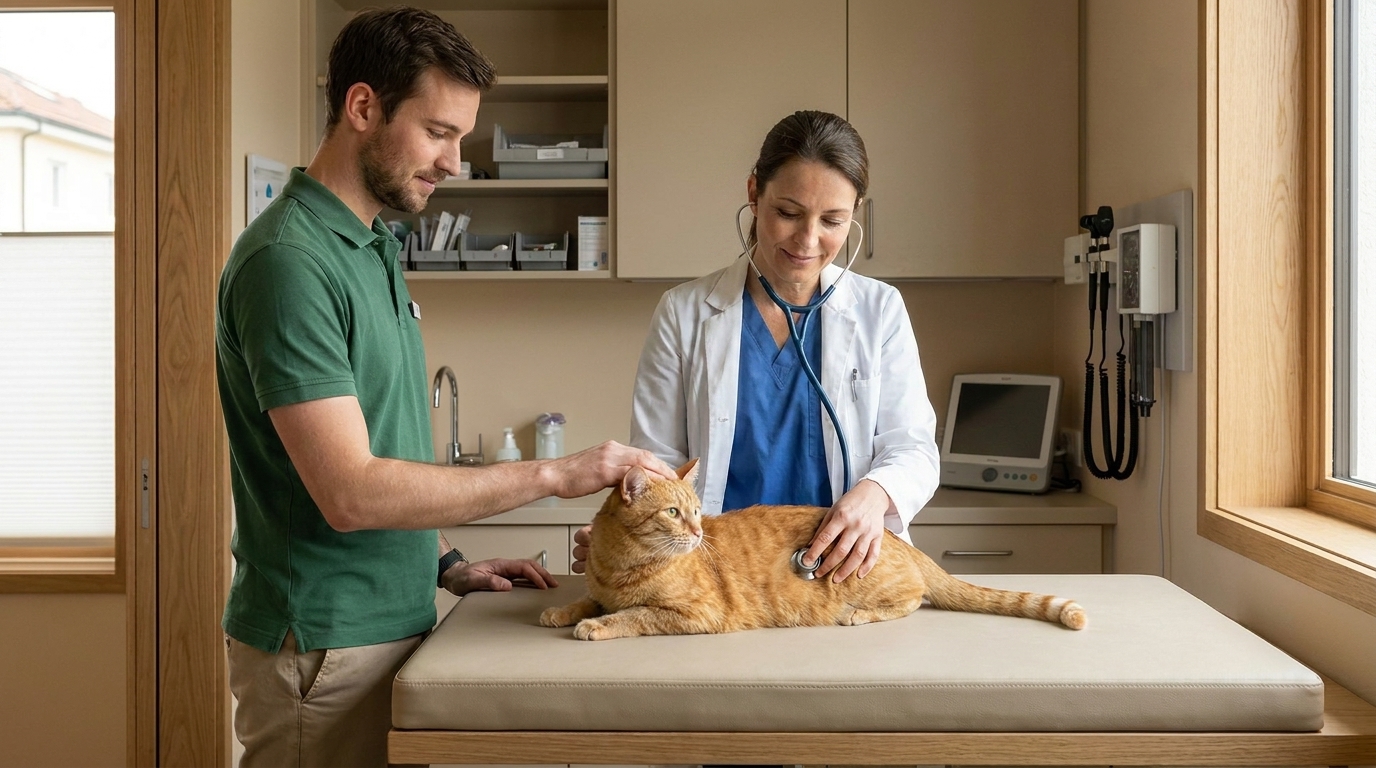
If box size, cleanliness, litter depth, and placement all check out, a medical cause becomes likely. Feline Lower Urinary Tract Disease (FLUTD), urinary tract infections, bladder stones, or arthritis can make entering or posturing in the box painful.
Watch for these warning signs:
- Straining or spending long periods in the box with little urine produced
- Frequent, small attempts to urinate
- Blood in the urine
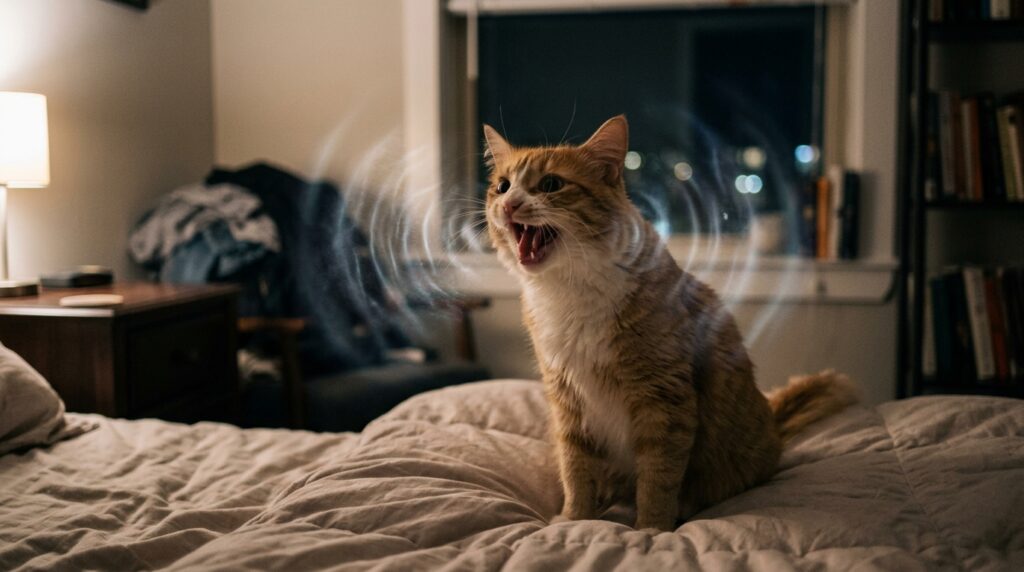
- Vocalizing or crying while eliminating
- Licking the genital area excessively
Straining combined with frequent attempts is a potential medical emergency — particularly in male cats where urinary blockage can be fatal within 24 to 48 hours. See our guides on indoor cat urinary problems and how to tell if your cat is in pain.
How to Fix the Behavior Step-by-Step
- Upgrade box size: Switch to an open container at least 1.5× your cat’s length.
- Scoop daily without exception: Maintain 2–3 inches of clean, unscented litter.
- Improve placement: Move to a quiet area with clear sightlines and multiple exits.
- Add an extra box: Separate boxes across different rooms in multi-cat homes.
- Clean accidents with enzymatic cleaner: Avoid ammonia-based cleaners which smell like urine to cats.
Frequently Asked Questions
Why does my cat pee just outside the litter box instead of in it?
Most commonly a box that is too small, uncleaned, has shallow litter, or is in a spot where the cat feels cornered. If box factors are fine, a UTI or urinary crystals should be ruled out.
Is peeing next to the litter box a sign of a medical problem?
It can be, especially if accompanied by straining, blood in urine, or frequent small amounts. A vet visit is recommended if box adjustments don’t resolve it quickly.
How big should a litter box be to stop this?
At least 1.5 times your cat’s body length from nose to tail base. Large plastic storage totes with a low entry cut into the side make great budget-friendly large boxes.
Does litter box placement affect this behavior?
Yes. Boxes placed in noisy laundry rooms, cramped closets, or near food bowls frequently cause last-second entrance hesitation.
Should I punish my cat for peeing outside the box?
No. Punishment increases stress, which worsens urinary problems and box avoidance. Focus on fixing environmental triggers or getting medical care.
First-hand Experience
Our senior cat Cleo started peeing on the bathroom mat right in front of her covered litter box. We initially thought it was behavioral until a vet visit revealed early arthritis in her hind hips — stepping over the 7-inch threshold of her covered box was causing her physical joint pain. Switching to a low-entry 3-inch shallow pan resolved the issue completely within 24 hours.
Related reading: Full Guide to Indoor Cat Care covers litter setup alongside nutrition, vet care, environment, and behavior. See also Types of Litter Boxes and Litter Box Placement Guide.
litter box size guide by cat weight
best litter for cats with allergies
How many litter boxes do I need for two cats?
Follow the n+1 rule: one box per cat plus one extra. For two cats, that’s three boxes placed in different areas to prevent territory conflicts and ambushes.
What litter depth is best for cats?
Maintain 2–3 inches of unscented litter. Litter that is too shallow (less than two inches) doesn’t allow proper digging and covering, which can cause avoidance.
How often should I scoop the litter box?
Scoop daily without exception, with a full litter replacement every one to two weeks. Cats are highly sensitive to a dirty box, and infrequent scooping is a top cause of avoidance.
Can stress cause a cat to pee outside the litter box?
Yes. Stress from multi-cat conflict, changes in routine, or punishment can worsen urinary problems and box avoidance. Focus on fixing environmental causes rather than punishing the cat.