By Emma Hartley | Last updated July 30, 2026
If you are wondering how to litter train a kitten, the good news is that most kittens litter train themselves within a few days with almost no active teaching required. The instinct to dig and bury waste is already there by the time they are four weeks old. Your job isn’t to teach the behavior from scratch — it is to make the box easy to find, easy to access, and free of anything that makes a kitten avoid it.
Quick answer: Place a low-sided, appropriately sized box in a quiet, accessible spot, put your kitten in it after meals and naps for the first few days, and scoop daily. Most kittens are reliably using the box within a week. Accidents in week one are normal, not a training failure.
Do Kittens Need to Be Taught to Use a Litter Box?
Not usually. Digging and burying waste is instinctive in kittens by around four weeks old, largely learned by watching their mother if she was present. Most kittens who have been with their litter that long already understand the basic concept before they ever come home. What genuinely needs teaching is location: where the box is, and that it’s accessible whenever needed.
Bottle-fed or orphaned kittens without maternal modeling sometimes need a bit more hands-on guidance in the first few days, but the underlying instinct is still present even without a mother cat’s example. For overall preparations, see our first month with a new cat guide.
What Size and Type of Litter Box Should You Start With?
A low-sided, open box that is easy to step into is the right starting point for any kitten under about four months old. Anything with high sides or a top-entry design — styles built to reduce tracking in adult cats — can be physically difficult for a small kitten to climb into. A box a kitten struggles to enter is a box a kitten starts avoiding.
Size matters too: too large can feel overwhelming to a very young kitten, while too small stops working within weeks as the kitten grows. A general-purpose small-to-medium open box works for most kittens through the first few months. Our litter box types guide covers the tradeoffs of each style once your kitten is old enough to use any of them.
How Many Litter Boxes Does a Kitten Need?
Start with one box in the kitten’s main living space, and add a second once the kitten has full access to more of the house, ideally within the first couple of weeks. The general rule of one box per cat plus one extra applies to kittens too, and it matters even more in a multi-level home where a kitten might not make it back to a single box on another floor in time. Our litter box quantity guide covers the reasoning in more depth.
Where Should You Put the Litter Box for a New Kitten?
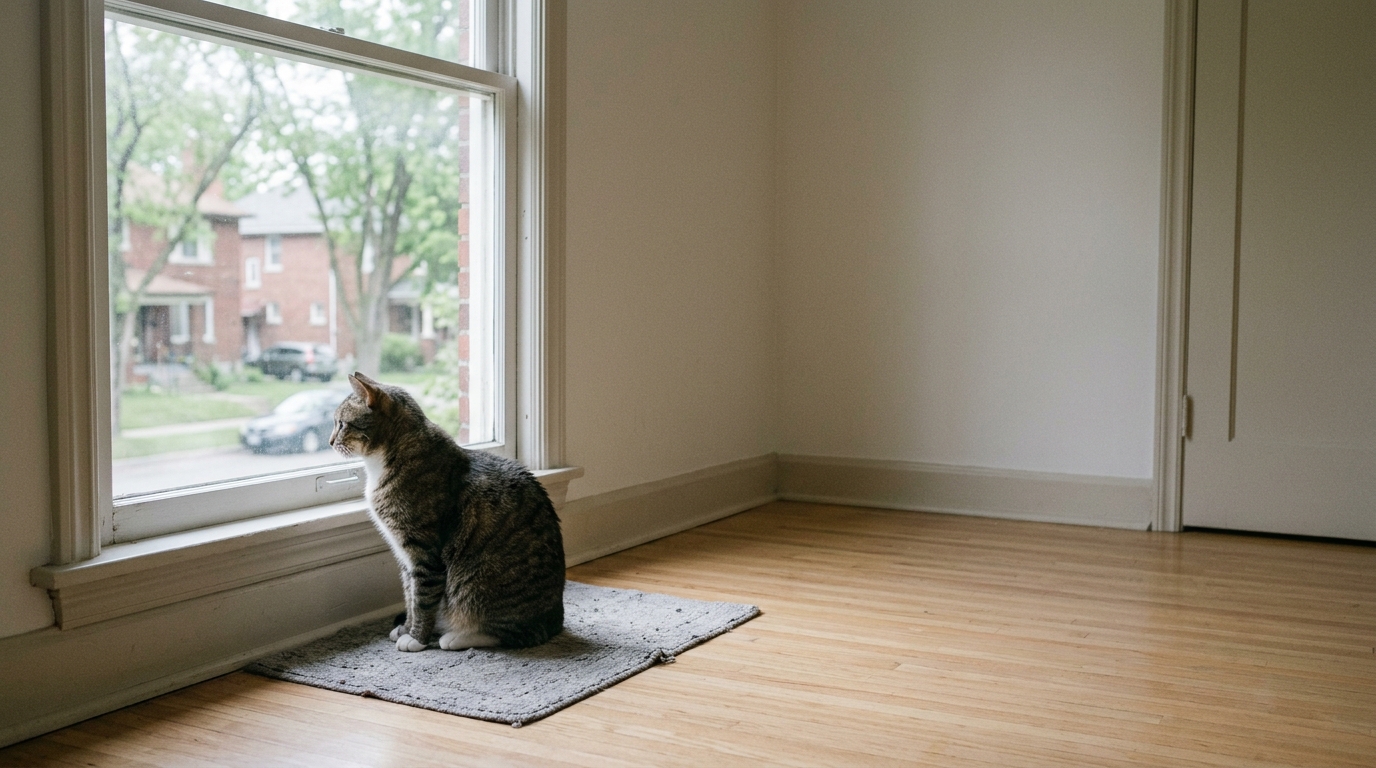
Choose a quiet, low-traffic spot that is easy to reach without navigating stairs or a closed door, especially in the first couple of weeks. A kitten confined to one room initially (a common and recommended setup for any new cat) should have the box in that same room, not down the hall.
Avoid placing it right next to food and water. As the ASPCA notes, cats generally dislike eating and eliminating in the same immediate area, and kittens are no exception even before they’ve developed strong preferences. See our apartment litter box placement guide for small space ideas.
Step-by-Step Guide: How to Litter Train a Kitten
- Set up the box before the kitten arrives: Place it in the starting room filled with about two inches of unscented litter.
- Show the kitten the box within the first hour: Place them gently inside without forcing them to dig or stay.
- Place the kitten in the box after meals, naps, and play: These are the times kittens most reliably need to eliminate. Repetition builds the location into habit faster than waiting for signs.
- Watch for early signs of needing to go: Sniffing the floor, circling, or scratching at a corner. Gently move the kitten to the box when you notice these.
- Scoop daily from day one: Kittens are sensitive to a dirty box, and a box that smells of old waste is a common reason for a kitten to eliminate elsewhere.
- Expand access gradually: As the kitten earns access to more rooms, ensure a box is always reachable, adding a second box if space is large.

What If Your Kitten Has Accidents Outside the Box?
Accidents are expected in the first few days and rarely mean anything is wrong. Clean the spot thoroughly with an enzymatic cleaner, not a standard household cleaner. Residual odor — undetectable to humans but obvious to a cat — can draw a kitten back to the same spot repeatedly.
Never punish an accident after the fact. Kittens do not connect delayed discipline to earlier behavior, and punishment creates anxiety around you or the room rather than reinforcing box use. If you catch a kitten in the act, a calm, immediate redirect to the box is the best response.
When Are Accidents a Medical Concern Rather Than Normal Learning?
A few accidents in the first week are ordinary. However, consult your vet if you notice:
- Straining or visible discomfort while trying to eliminate
- Very frequent small accidents rather than occasional full ones
- Blood in urine or stool
- Accidents that continue unchanged after two full weeks
- Active avoidance of the box even when placed directly in it
These signs can point to a medical issue such as urinary tract infections or parasites. Our guide on how to tell if your cat is in pain helps identify subtle signs of distress.
Does Litter Type Matter for Training a Kitten?
Somewhat. A fine-grain, unscented litter is generally the easiest for a kitten to dig in. Avoid clumping clay litter for kittens under eight weeks old, as ingesting small amounts during normal grooming carries risk at that age. For overall setup recommendations, check our Indoor Cat Starter Kit.
Frequently Asked Questions
How long does it take to litter train a kitten?
Most kittens use the box reliably within a week of arrival, since the digging instinct is already present. Location and access are what need to be taught.
Do I need to show my kitten how to use the litter box?
Usually not beyond placing them in the box a few times after meals and naps. Most kittens figure out the mechanics independently.
Why does my kitten keep having accidents after the first week?
Ongoing accidents past two weeks usually point to a box issue (dirty, wrong size, bad location) or a medical cause like parasites or a UTI.
Is clumping litter safe for kittens?
Avoid clumping clay litter for kittens under eight weeks old due to ingestion risk during grooming. Non-clumping paper or wood litter is safer for very young kittens.
Should I use more than one litter box for a kitten?
Yes, especially once the kitten has access to multiple rooms or floors. One box per cat plus one extra is standard guidance from kittenhood onward.
First-hand Experience
When we brought home our 8-week-old foster kitten Barnaby, he had two small accidents behind the sofa on day two. We realized the high-sided covered box we originally bought was too tall for his tiny legs to climb into quickly after a nap. Swapping it for a simple 2-inch shallow tray solved the issue instantly, and he didn’t miss the box a single time after that.
Related reading: Full Guide to Indoor Cat Care covers litter setup alongside nutrition, vet care, environment, and behavior. See also Types of Litter Boxes and How Many Litter Boxes Do You Need? as your kitten grows.