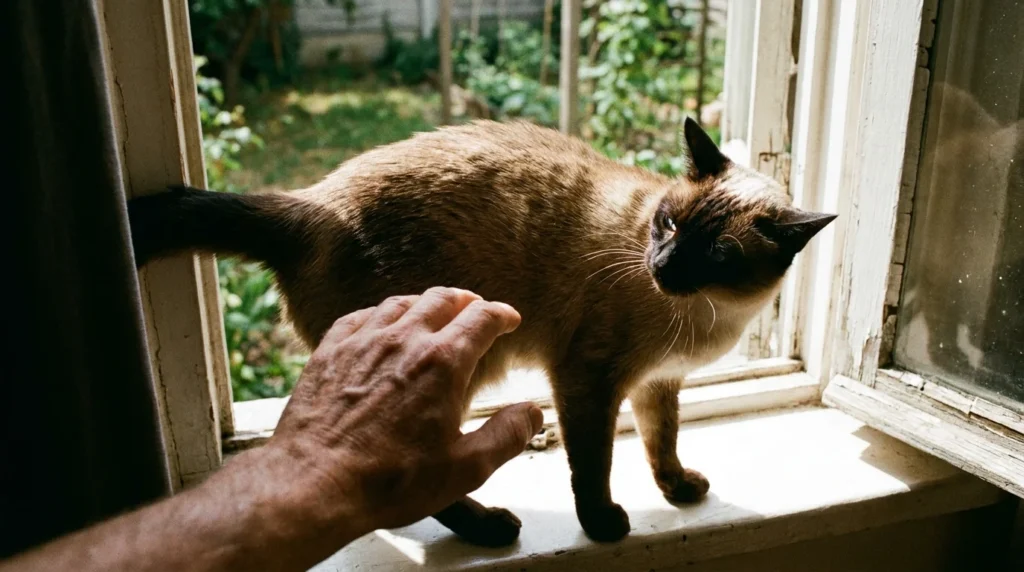
Quick Summary: Being near you is not an automatic invitation for physical contact. Cats frequently enjoy your presence, nap beside your chair, or follow you from room to room without wanting tactile petting. When your cat darts away as your hand reaches out, they are usually expressing sensory overstimulation, protecting a sensitive body area, or declining touch—not rejecting your relationship.
Few experiences feel more disheartening to a caring cat owner than reaching out affectionately to stroke your cat, only to have them dodge your palm and sprint out of the room. It is natural to wonder whether your cat dislikes you or if you did something wrong. Fortunately, in the vast majority of feline households, touch avoidance has nothing to do with emotional malice.
Unlike dogs, who often crave continuous physical contact and enthusiastic back rubs, felines have extraordinarily dense neural receptors beneath their fur. For many cats, physical presence, social napping, and gentle proximity are expressions of deep bonding in their own right, entirely separate from hands-on petting.
The primary reasons cats run from your hand
Understanding feline sensory wiring helps decode why petting can suddenly become intolerable:
- Sensory overstimulation (petting-induced arousal): A cat’s hair follicles are surrounded by highly sensitive nerve endings. Repeated, heavy strokes down the back or spine can quickly overload their nervous system, transforming pleasurable sensations into static, irritating physical discomfort.
- Touch-sensitive biological zones: Most cats intensely guard their bellies, rear flanks, paws, and the base of their tail. Because these regions house vital organs or trigger vulnerable predator reflexes, reaching for them often triggers an immediate escape or defensive swat.
- Abrupt, overhead hand approaches: Swooping a hand down over a cat’s forehead from high above resembles the predatory dive of a raptor or aerial threat. An approaching hand at eye level is far less intimidating.
- Under-socialization in kittenhood: Cats that did not receive gentle, positive human touch during their initial weeks of life frequently carry lifelong tactile sensitivity.
- Underlying physical pain or arthritis: If your previously cuddly cat suddenly flinches or flees when touched around their lower back, hips, or spine, feline arthritis, spondylosis, or a dental infection may be causing localized tenderness.
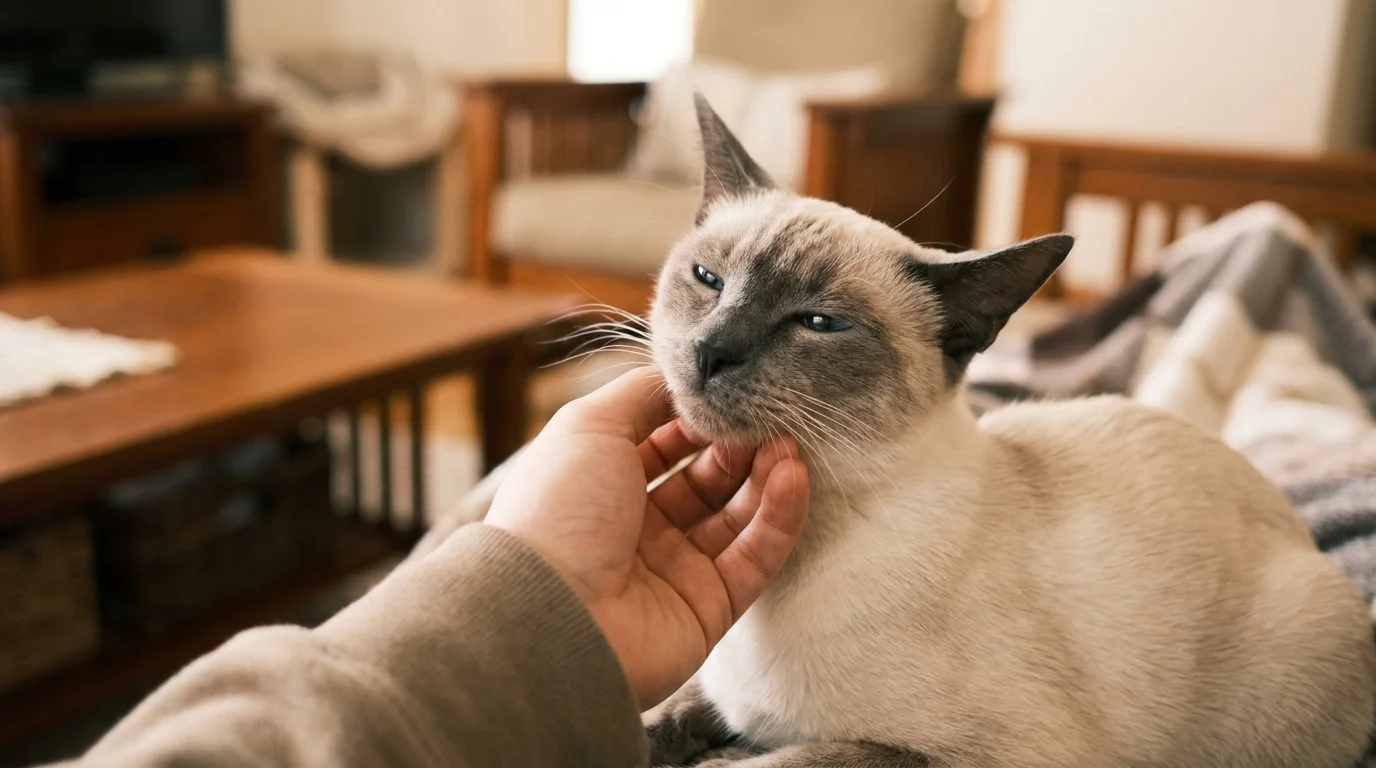
Subtle body language to read before they bolt
Cats rarely flee without giving subtle, early warning signals. Learning to identify these micro-expressions allows you to pause before your cat feels forced to retreat:
| Body Part | Green Light (Enjoys Touch) | Yellow/Red Light (Stop Petting Immediately) |
|---|---|---|
| Tail | Held upright, gentle question-mark curve, still. | Twitching tail tip, rhythmic swishing, thumping against floor. |
| Ears | Upright, forward-facing, relaxed. | Flattened back (“airplane ears”), rotating sideways. |
| Coat / Skin | Smooth, relaxed posture, lean into hand. | Rippling spasms along the spinal fur, stiffening muscles. |
| Eyes & Head | Slow blinking, nudging hand with cheek scent glands. | Sudden head turn toward hand, wide dilated pupils, hard stare. |
How to pet in a way your cat will welcome
Feline behavioral specialists recommend adopting the “consent test” protocol whenever interacting with touch-sensitive cats:
1. Offer the loose finger test: Before touching your cat, extend a relaxed index finger or closed knuckle at their nose height, roughly 3 to 4 inches away. Allow the cat to step forward and sniff. If they rub their cheek or forehead against your knuckle, you have explicit consent to pet.
2. Restrict strokes to glandular zones: Focus exclusively on the areas cats groom with mutual pleasure: the scent glands located directly beneath the chin, along the jawline, around the base of the ears, and across the forehead. Avoid full-body strokes down the spine.
3. Keep sessions remarkably short: Cap petting sessions at 3 to 5 gentle strokes, then pull your hand back. If the cat leans in and nudges for more, resume. If they sit quietly or gaze elsewhere, respect the pause.
4. Never chase or hold an escaping cat: If your cat ducks away, let them go immediately. Pursuing a retreating cat teaches them that boundaries will not be honored, making future evasions faster and more frantic.
When touch avoidance warrants a veterinary examination
While lifelong touch preferences are common, a sudden shift in behavior is a classic clinical indicator of hidden pain. If an older cat (aged 8 and above) who formerly adored back scratches abruptly growls, hisses, or runs when touched along their lower back or hindquarters, schedule a comprehensive orthopedic evaluation.
Over 80% of senior cats suffer from degenerative joint disease or spinal arthritis, which makes downward pressure intensely painful. Treating the underlying inflammation often restores their comfort and sociability.
Frequently Asked Questions
Does my cat dislike me if they frequently dodge my hand?
Not at all. Cats express affection through proximity, vocalization, following you room-to-room, and napping nearby. Running from a reaching hand simply means they do not want tactile stimulation at that precise moment.
Why does my cat purr while being petted and then suddenly bite or scratch?
This is classic “petting-induced aggression” caused by neurological sensory overload. The stimulation crossed their comfort threshold faster than they could gracefully exit. Watch for tail twitching or skin rippling to stop before the swat happens.
Can training help my cat become more comfortable with touch?
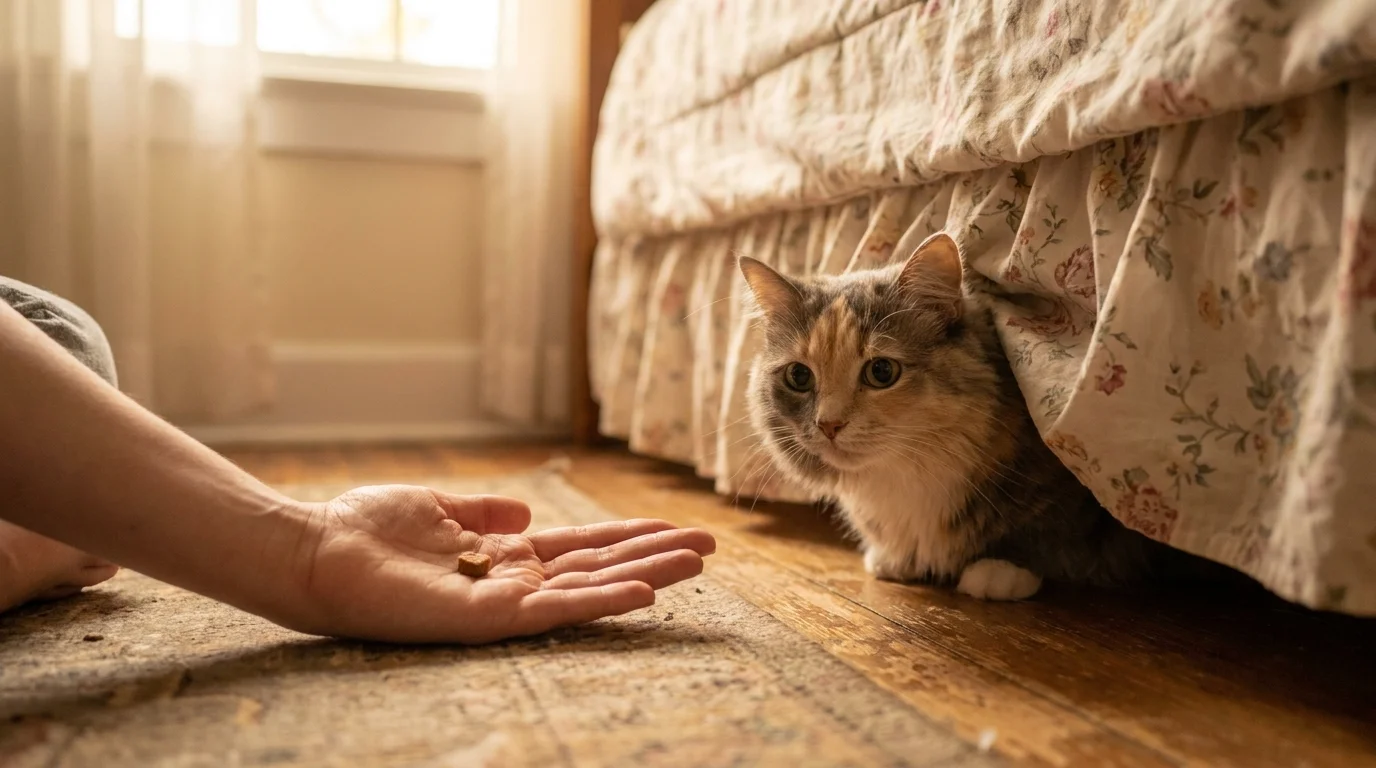
Yes. Pairing brief, one-stroke chin scratches with high-value treats builds positive cognitive associations. Learn step-by-step reinforcement principles in our guide on positive reinforcement cat training.
Related reading and authoritative sources
Explore companion guides to better understand your cat’s behavioral language:
- How to get a scared cat to trust you (step-by-step)
- Why does my cat hide when someone comes over?
- Why does my cat attack my feet? Causes and redirection
Authoritative Behavioral Reference Links: