By Emma Hartley | Reviewed by IndoorCatWell Editorial Team | Last updated September 2026
This article provides practical, veterinary-supported cat behavior guidance. If you buy through our links, we may earn an affiliate commission at no extra cost to you. Read our full Affiliate Disclosure.
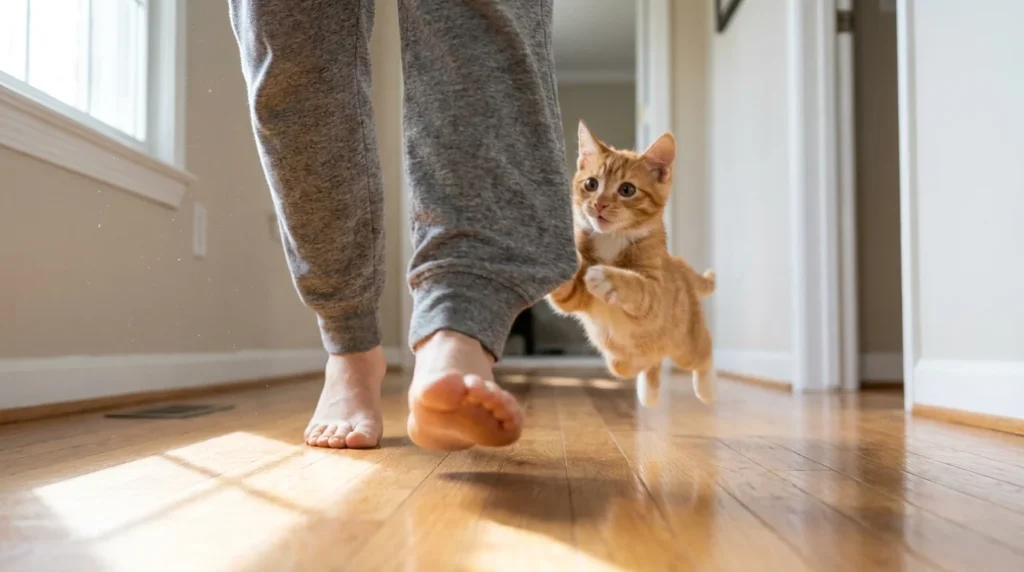
Feet shuffling across the living room carpet or twitching beneath a bed blanket look remarkably like scurrying rodents to a feline predator: they are low to the ground, move erratically, and produce subtle rustling sounds. The overwhelming majority of foot attacks represent displaced predatory play rather than malicious aggression, though sudden hostility in mature cats can signal underlying pain.
⚡ Quick Summary: Stopping Foot Attacks
Freeze instantly when pounced upon—pulling feet away fuels predatory chase instincts. Never use bare hands or feet as wrestling toys. Schedule two 15-minute daily interactive wand play sessions to expend hunting drive, deploy puzzle feeders, and position toys near common hallway ambush spots.
6 Reasons Why Cats Target Human Feet
Understanding what motivates your cat’s ambush tactics is essential to redirecting their energy effectively:
- 1. Feline Predatory Instinct: Moving ankles mimic fast-fleeing prey. The feline brain is hardwired to stalk, chase, and pounce upon rapid ground-level motion, even when fully fed.
- 2. Daytime Boredom and Lack of Aerobic Play: In the wild, cats hunt up to 10 to 20 times per day. Indoor cats deprived of structured interactive play will redirect that intense predatory energy at the nearest moving object in the home. See our guide on how much exercise an indoor cat needs each day.
- 3. Inadvertent Attention Reinforcement: Squealing, hopping, or shouting “ouch!” provides a burst of high-energy human drama that many cats interpret as an exciting play reaction.
- 4. Touch Overstimulation: If a cat was recently petted on the couch, sudden ankle swats as you walk away may be an overstimulated defensive reaction signaling they reached their tactile threshold.
- 5. Redirected Arousal: Seeing an unfamiliar stray cat through the window can trigger intense territorial arousal. Unable to reach the outdoor intruder, the cat redirects their pent-up aggression onto the nearest passing human ankle.
- 6. Underlying Pain or Endocrine Illness: Osteoarthritis, dental disease, or hyperthyroidism lowers stress tolerance. A cat experiencing chronic discomfort may lash out defensively to protect vulnerable personal space.
Telling Play Apart From Real Aggression
Behaviorists at Cats.com distinguish playful ambushes from genuine hostility by analyzing body language:
| Predatory Play Ambush | Defensive / Fear Aggression |
|---|---|
| Butt-wiggling crouch, ears forward, brief pounce | Flattened ears (airplane ears), hissing, growling |
| Cat dashes away immediately or invites chase | Puffed bottlebrush tail, arched spine, stiff stance |
| Inhibited claw/bite pressure (unless very young) | Deep puncturing bites, sustained clawing with back legs |
| Cat remains relaxed and affectionate afterward | Cat retreats, cowers, or maintains aggressive posture |
5 Proven Techniques to Stop Foot Attacking
- 1. Freeze in Your Tracks: If your cat lunges at your feet, stop walking immediately and stand completely still. Prey animals freeze; fleeing prey triggers sprint-and-capture. Once movement ceases, the cat loses the predatory trigger.
- 2. Never Use Hands or Feet as Toys: Wiggling toes beneath bed blankets or wrestling kittens with bare fingers directly conditions them to view human extremities as prey.
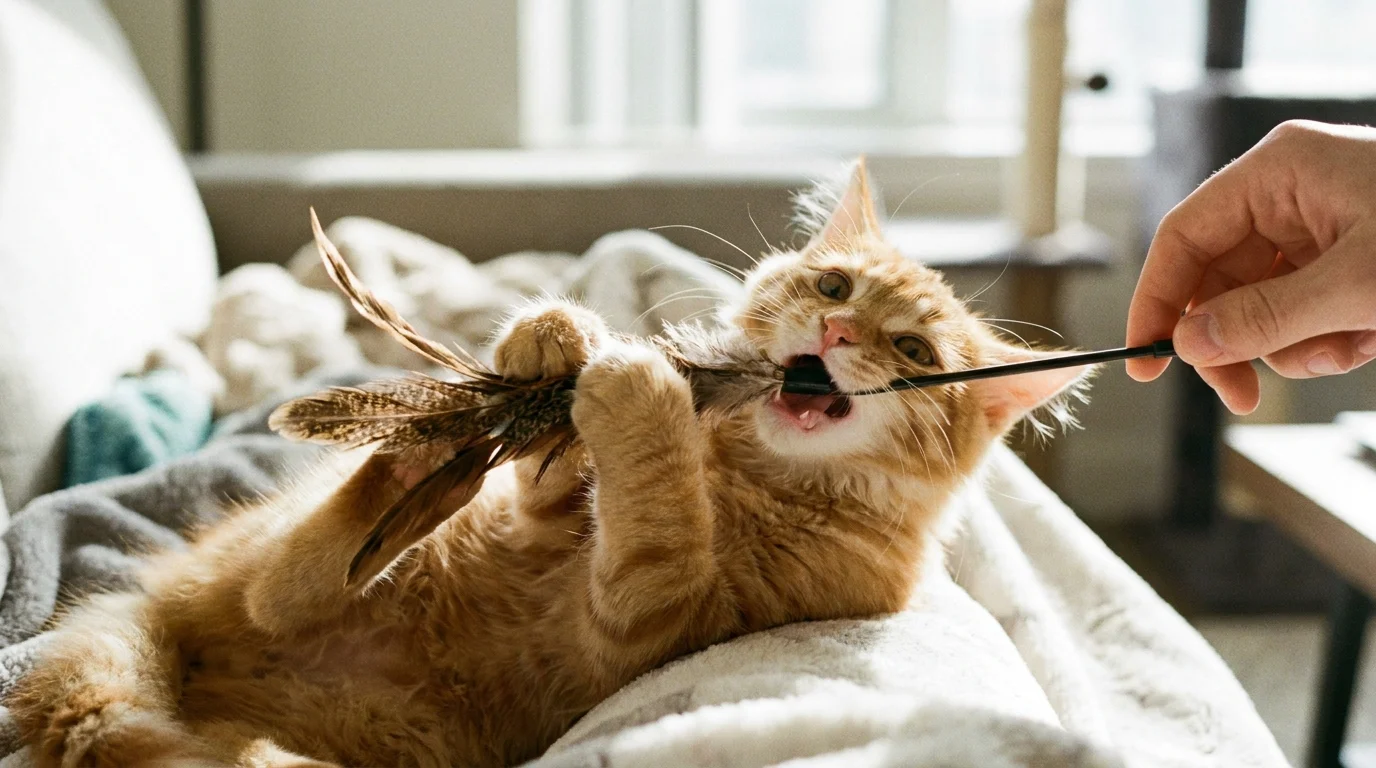
- 3. Daily Structured Wand Play: Engage your cat in two 10 to 15-minute daily sessions with feather wands or fleece lures. Letting them complete the full prey sequence (stalk, chase, pounce, bite) drains predatory drive safely. If your cat refuses toys, follow our guide on how to exercise a cat that doesn’t play.
- 4. Position “Decoy Toys” in Ambush Hallways: If your cat routinely pounces from behind the bathroom door or hallway corner, place kick-sticks, crinkle balls, or automated toys there. Toss a toy down the hall before walking past to divert their focus.
- 5. Deploy Food Puzzles: Challenge cognitive energy by serving dry meals in foraging toys. Review tested models in our guide to the best puzzle feeders for indoor cats.

When to Consult a Veterinarian
Veterinary clinicians at Hill’s Pet Nutrition recommend a medical checkup if the behavior started suddenly in a previously placid cat, or if attacks are accompanied by growling, hissing, dilated pupils, or frantic skin twitching. Chronic spinal pain or hyperthyroidism lowers behavioral thresholds and requires prescription relief.
Frequently Asked Questions
Is my cat actually aggressive toward me?
Almost certainly not. Over 90% of foot attacks are predatory play fueled by hunting instinct. Redirecting that energy onto interactive toys resolves the habit quickly.
Should I punish my cat or yell when they pounce on my ankles?
Never yell, swat, or use spray bottles. Punishment teaches cats that human presence is unpredictable and dangerous, escalating play into genuine defensive aggression.
Why does my cat only attack my feet in bed at night?
Twitching feet under bedsheets resemble burrowing rodents. Combine this with the natural feline crepuscular twilight activity cycle, and late-night pounces peak. Check our guide on why cats wake owners up at night for bedtime play-and-feed routines.
Authoritative Sources & Further Reading
- Cats.com: How To Stop Your Cat Attacking Your Ankles
- PetsRadar: Why Does My Cat Attack My Feet? Expert Explanations
- Hill’s Pet Nutrition: Why Does My Cat Attack My Feet?
🐾 Explore More Cat Behavior & Play Guides
Channel your cat’s energy into healthy, playful bonding: