By Emma Hartley | Reviewed by IndoorCatWell Editorial Team | Last updated September 2026
This article provides practical, veterinary-supported cat care guidance. If you buy through our links, we may earn an affiliate commission at no extra cost to you. Read our full Affiliate Disclosure.
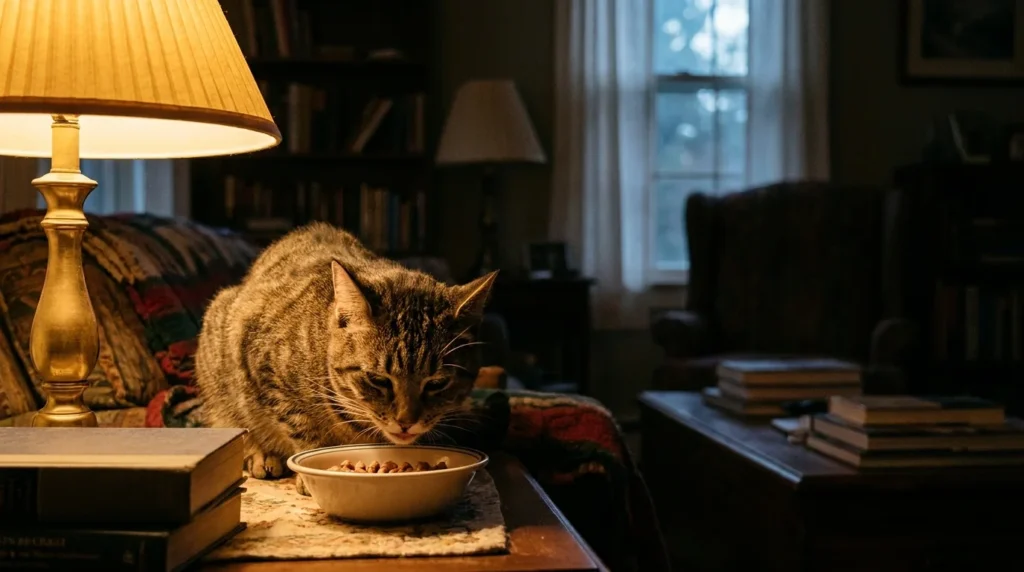
Cats are crepuscular predators naturally wired to hunt and feed during the quiet, dim hours of dawn and dusk. When an indoor cat ignores daytime meals and only cleans their bowl after midnight, it is usually an instinctual adaptation to household silence, fresher evening food, or avoiding daytime commotion. However, a sudden shift in appetite timing can also signal underlying metabolic illness.
⚡ Nighttime Eating at a Glance
- Crepuscular Instincts: Wild felines evolved to hunt when prey species (mice, small birds) are active at twilight.
- Household Serenity: Shy or nervous cats wait until foot traffic, television noise, and children subside before feeling safe enough to eat.
- Food Oxidation: Wet or dry food left out all day goes stale; fresh evening refills naturally taste significantly better.
- Multi-Pet Dynamics: Submissive cats often wait for dominant pets to sleep before accessing communal feeding zones.
The Evolutionary Biology of Twilight Hunting
Contrary to popular belief, cats are not strictly nocturnal; they are crepuscular. In the wild, midday heat forces desert ancestors to conserve energy, while twilight hours bring active rodent foraging. Peer-reviewed research published in the Journal of Animal Science confirms that indoor cats adapt their feeding rhythms tightly around environmental tranquility and owner presence.
4 Common Behavioral Drivers of Night Feeding
- Sensory peace and quiet: Eating requires lowering the head and turning attention away from potential threats. In homes with children, dogs, or regular commotion, nervous cats feel vulnerable during daylight and postpone meals until bedtime.
- Food freshness disparity: If dry kibble sits in a dish for 12 hours exposed to ambient humidity, it oxidizes and loses appetizing aromatic fats. If you top up the dish right before you go to sleep, your cat chooses the only fresh option available.
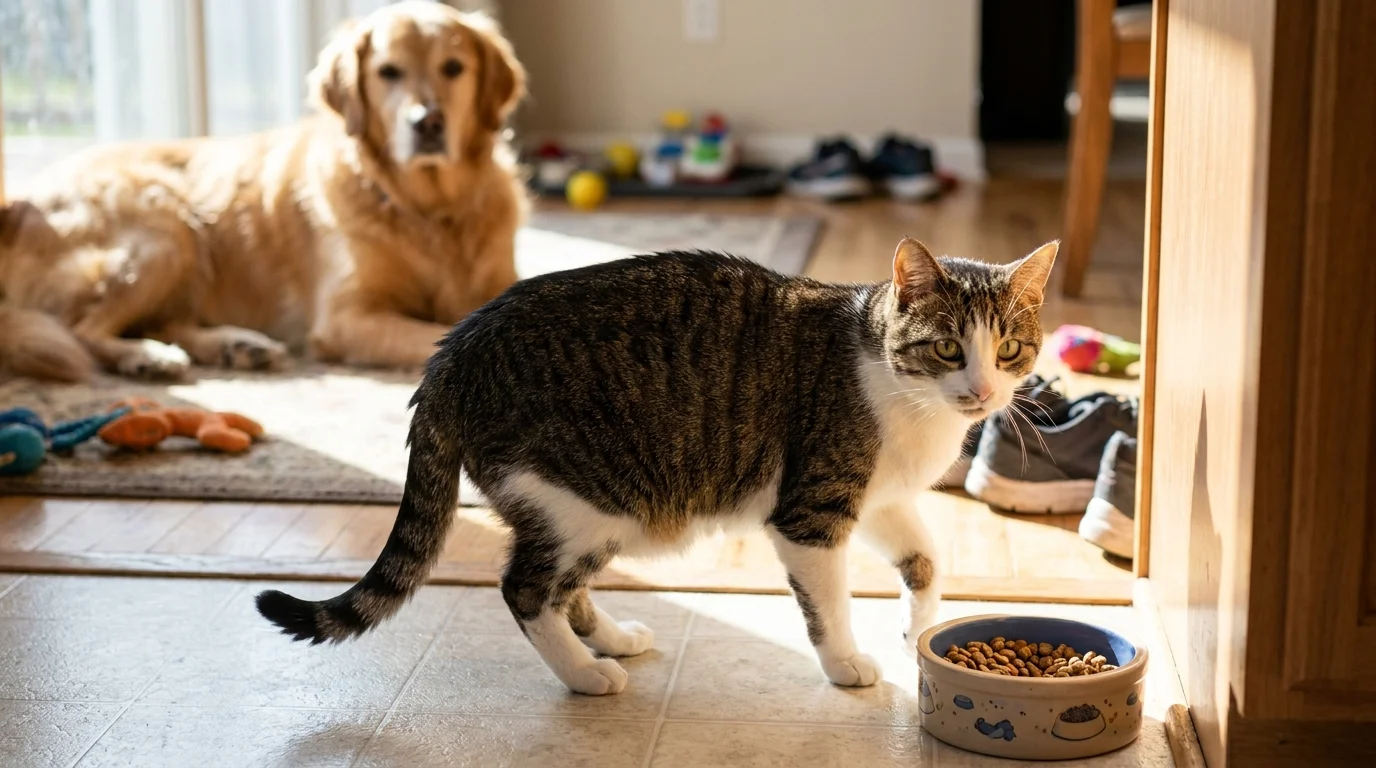
- Social avoidance in multi-pet homes: In homes with multiple cats or dogs, resource guarding occurs subtly. A timid cat might not challenge a confident cat during the day, choosing to feed uninterrupted while others are asleep.
- Learned circadian conditioning: Cats are creatures of rigid habit. If nighttime snacking became established during kittenhood or a move, the biological clock cements that window.
When Night Feeding Signals a Health Emergency
If your adult cat has happily grazed at night for years and maintains a stable body weight, this is generally a harmless personality preference. However, an abrupt change in eating schedule should prompt immediate veterinary investigation.
Veterinary Health Flag: A cat that suddenly stops eating during the day and frantically demands food at night, especially when accompanied by weight loss, unquenchable thirst (polydipsia), or increased urination, may be suffering from hyperthyroidism, feline diabetes mellitus, or chronic kidney disease (CKD).
How to Gently Shift Eating to Daytime Hours
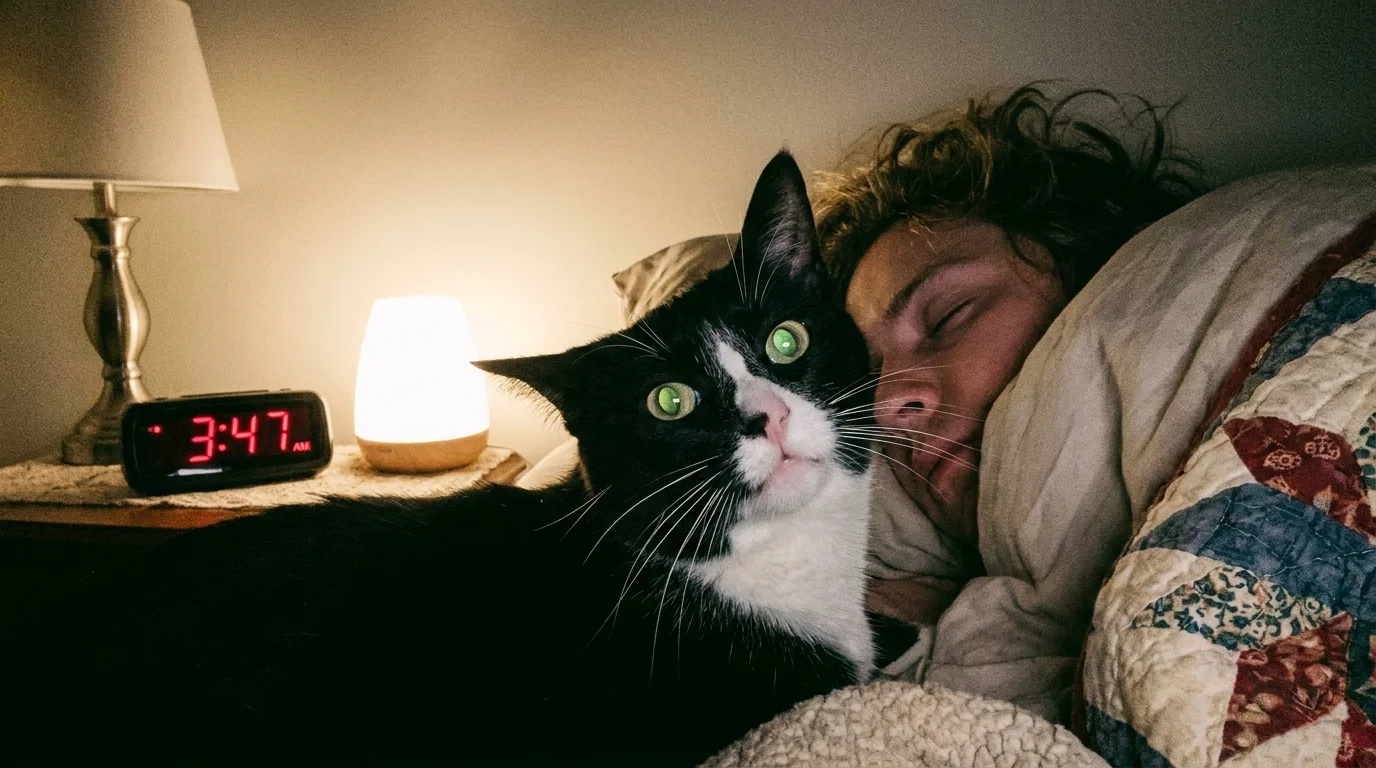
If nighttime crunching keeps you awake, or your cat wakes you up demanding midnight meals (see why cats wake owners up at night), use these proven behavioral adjustments:
- Evening “Hunt, Catch, Eat” routine: Engage your cat in 15 minutes of vigorous wand toy chasing right before your bedtime, immediately followed by their primary wet food meal. This triggers natural feline post-prandial sleep mode.
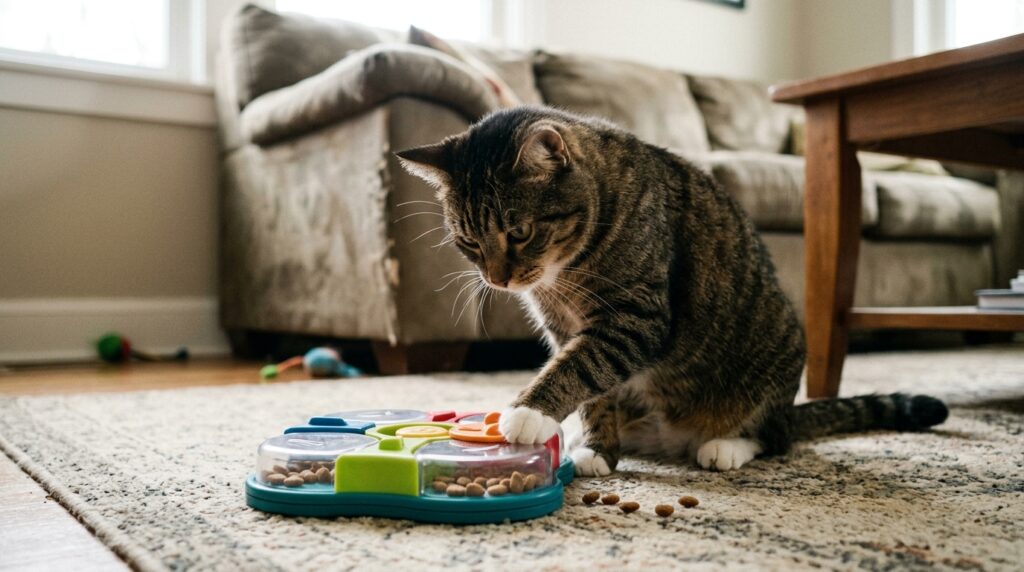
- Deploy timed micro-feeders: An automated carousel feeder can dispense small portions at 8:00 AM, 1:00 PM, and 6:00 PM, training digestive hormones to expect food during daylight. For speed eaters, check how to stop a cat from eating too fast.
- Create private daytime micro-stations: Place food bowls in low-traffic private zones, such as an elevated bathroom counter or quiet office closet, away from household commotion.
- Never starve into compliance: Never withhold food abruptly to force daytime eating. Overweight cats that go without food for as little as 48 hours are at high risk of fatal hepatic lipidosis (fatty liver syndrome).
Frequently Asked Questions
Is it physically harmful for my cat to eat primarily at night?
No. As long as total caloric intake is nutritionally balanced, body condition score remains stable, and there is no vomiting or diarrhea, nocturnal eating aligns perfectly with feline physiology.
Should I pick up uneaten food during the day?
Wet canned food should be picked up after 2 to 4 hours to prevent bacterial spoilage. Dry kibble can remain accessible unless daytime pests or another pet is overconsuming it.
My senior cat suddenly switched to night eating and is losing weight. What does that mean?
Book a senior feline blood and urine panel immediately. Conditions like hyperthyroidism accelerate feline metabolism while causing intense restlessness and appetite shifts.