By Emma Hartley | Reviewed by IndoorCatWell Editorial Team | Last updated September 2026
This article provides practical, veterinary-supported cat care guidance. If you buy through our links, we may earn an affiliate commission at no extra cost to you. Read our full Affiliate Disclosure.
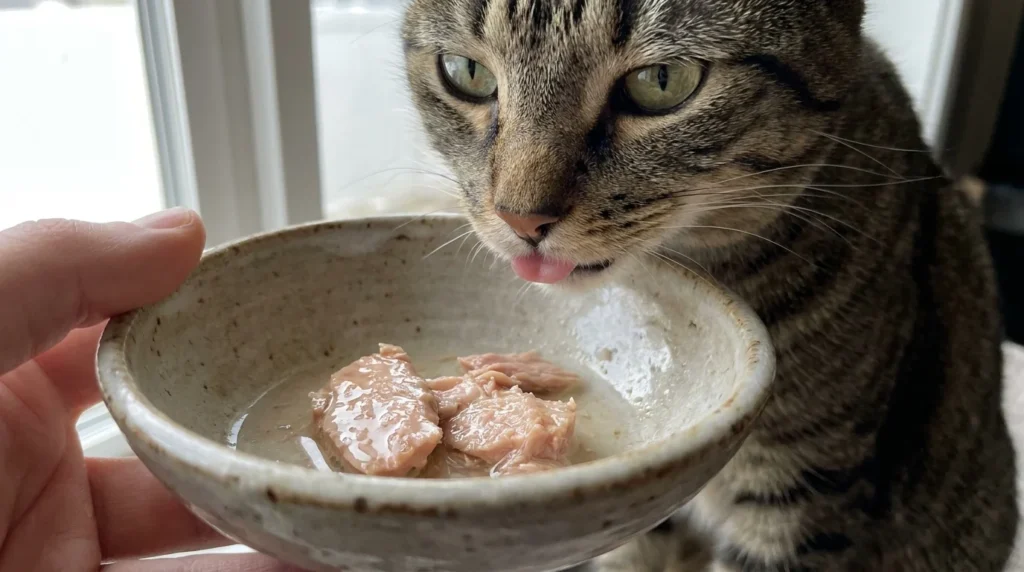
Yes, cats can eat canned tuna as an occasional delicacy, but it should never become a regular dietary staple. While cats go wild for tuna’s intense aroma, apex predator fish bioaccumulate heavy metals like methylmercury. Furthermore, plain canned human tuna lacks essential feline vitamins and taurine, risking severe nutritional deficiencies if fed routinely.
⚡ Veterinary Tuna Guidelines
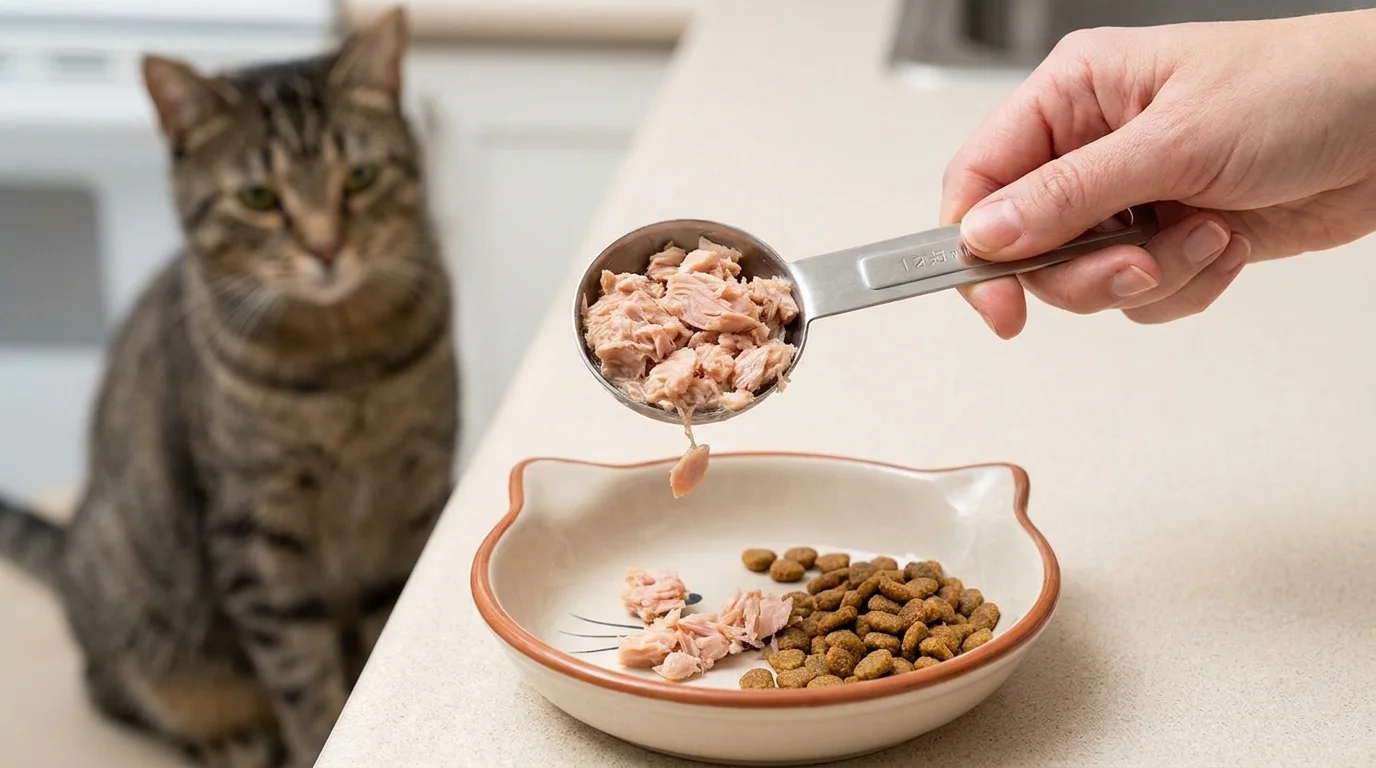
- Safe Portion: 1 to 2 tablespoons maximum, served no more than once per week.
- Type Matters: Choose plain chunk-light (skipjack) packed in spring water—never albacore, oil, or brine.
- Zero Additives: Avoid tuna salads or spiced packets containing onion, garlic, or excessive sodium.
- Treat Only: Human tuna must not exceed 10% of your cat’s weekly caloric intake.
Why Mercury is the Primary Health Hazard
Tuna are large, long-lived predatory fish at the top of the ocean food chain. Through a process known as biomagnification, tuna consume hundreds of smaller forage fish that have already absorbed industrial methylmercury from seawater. Because domestic cats have small liver masses (typically weighing under 10 pounds), heavy metals accumulate in feline tissue much faster than in adult humans.
Which Tuna Is Safest? Species Breakdown
Not all canned tuna carries the same chemical profile. The age and species dictate heavy metal concentration:
| Tuna Variety | Relative Mercury Level | Safety Rating for Cats |
|---|---|---|
| Skipjack (Chunk Light) | Lowest (young, small fish) | Safest Choice |
| Albacore (White Tuna) | 3x higher than skipjack | Use Sparingly |
| Yellowfin (Ahi) | High | Avoid Routine Feeding |
| Bigeye / Bluefin | Highest | Not Recommended |
How to Serve Tuna Safely: 4 Rules
- Spring water only: Never feed tuna packed in vegetable oil, sunflower oil, or salted brine. Oil triggers acute feline pancreatitis, while brine introduces toxic sodium levels.
- Check ingredients for aromatics: Canned seasoned tuna often contains onion powder or garlic powder. All members of the Allium family destroy feline red blood cells, causing fatal Heinz body anemia. See our master guide on human foods cats can and cannot eat.
- Never replace complete meals: Tuna lacks taurine, calcium, and vitamin E. Feeding tuna exclusively causes steatitis (yellow fat disease) and cardiac failure.
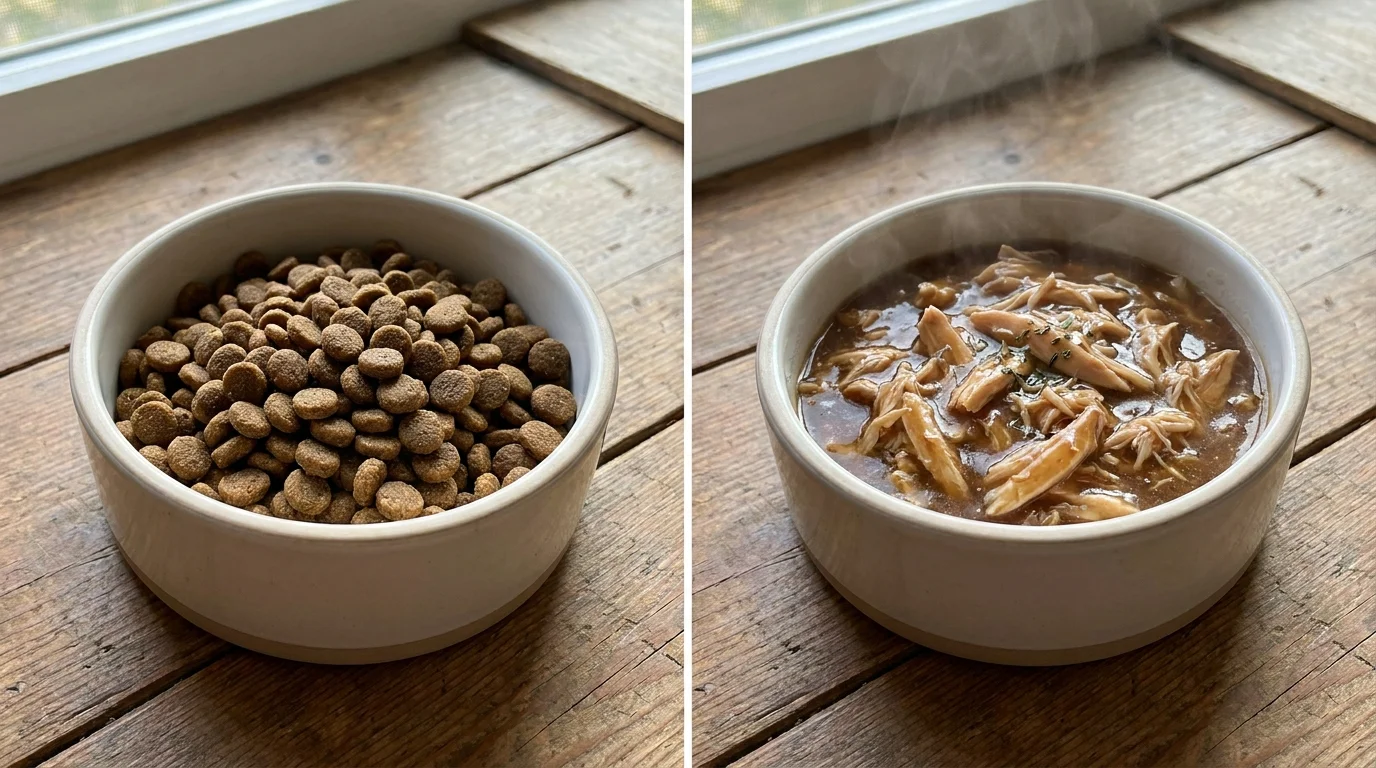
- Stick to small portions: Limit servings to a single tablespoon mashed onto regular wet food. If your cat is a sauce fanatic, read why cats only eat the gravy from wet food.
Signs of Feline Mercury Toxicity
Mercury poisoning is a cumulative neurological disorder that develops after weeks or months of chronic overfeeding. Watch for these clinical red flags:
- Loss of coordination (ataxia): Wobbling gait, swaying hindquarters, or stumbling off furniture.
- Involuntary muscle tremors: Twitching head or hyperactive reflexes.
- Pupil dilation and vision impairment: Bumping into door frames or hesitancy jumping down.
- Severe lethargy and behavioral shifts: Disorientation, vocal crying, or sudden aggression.
Human Canned Tuna vs. Commercial Tuna Cat Food
Pet parents often ask: If human tuna is risky, why do grocery stores sell tuna cat food? Commercial formulas use small portions of tuna blended with poultry or whitefish, fortified with synthetic taurine, vitamins, and minerals to meet AAFCO standards. Commercial feline diets are strictly tested for heavy metals, making them infinitely safer than human supermarket cans.
Frequently Asked Questions
My cat ate an entire can of human tuna. Will they be poisoned?
A single accidental feast will not cause acute mercury toxicity, which requires chronic bioaccumulation over time. The primary short-term concern is acute stomach upset, gas, or vomiting. Monitor for 24 hours.
Is tuna water or juice safe to entice a sick cat to eat?
Yes. Drizzling 1 teaspoon of water from an unsalted chunk-light tuna can over veterinary food is an effective trick recommended by vets to stimulate appetite in nauseous or anorexic cats.
Can growing kittens eat canned tuna?
Kittens have delicate neurological systems and developing organs. Avoid feeding human tuna to kittens under 12 months; stick strictly to balanced growth-formula kitten foods.