An occasional sneeze is normal, since cats sneeze at dust and strong smells just as people do. Repeated sneezing over several days, or sneezing with discharge, loss of appetite, or low energy, deserves attention. The most common causes in indoor cats are viral upper respiratory infections and airborne irritants, with dental disease, foreign material in the nose, and chronic nasal conditions behind the cases that don't go away. This guide covers what the causes are, which signs need a vet quickly, what you can do at home, and what a vet may do. It cannot diagnose your cat, and it is not a substitute for an exam.
Short answer
If your cat sneezes a few times and is otherwise bright, eating, and breathing normally, watch her for a day or two and look for triggers such as new litter, perfume, smoke, or cleaning sprays. If the sneezing continues, comes with discharge from the eyes or nose, or she is eating less, book a vet visit. If she is struggling to breathe, breathing with her mouth open, or has blue or gray gums, go to an emergency clinic immediately.
In this guide:
- Red flags: when not to wait
- Common causes in indoor cats
- Viral upper respiratory infection
- Bacterial infections
- Irritants and allergens
- Dental disease
- Foreign material in the nose
- Nasal polyps, tumors, and chronic rhinitis
- Fungal infection
- What you can do at home
- What a vet may do
- Prevention
- Quick guide: what the pattern might suggest
- Frequently asked questions
- Monitor or call: a quick guide
Red flags: when not to wait
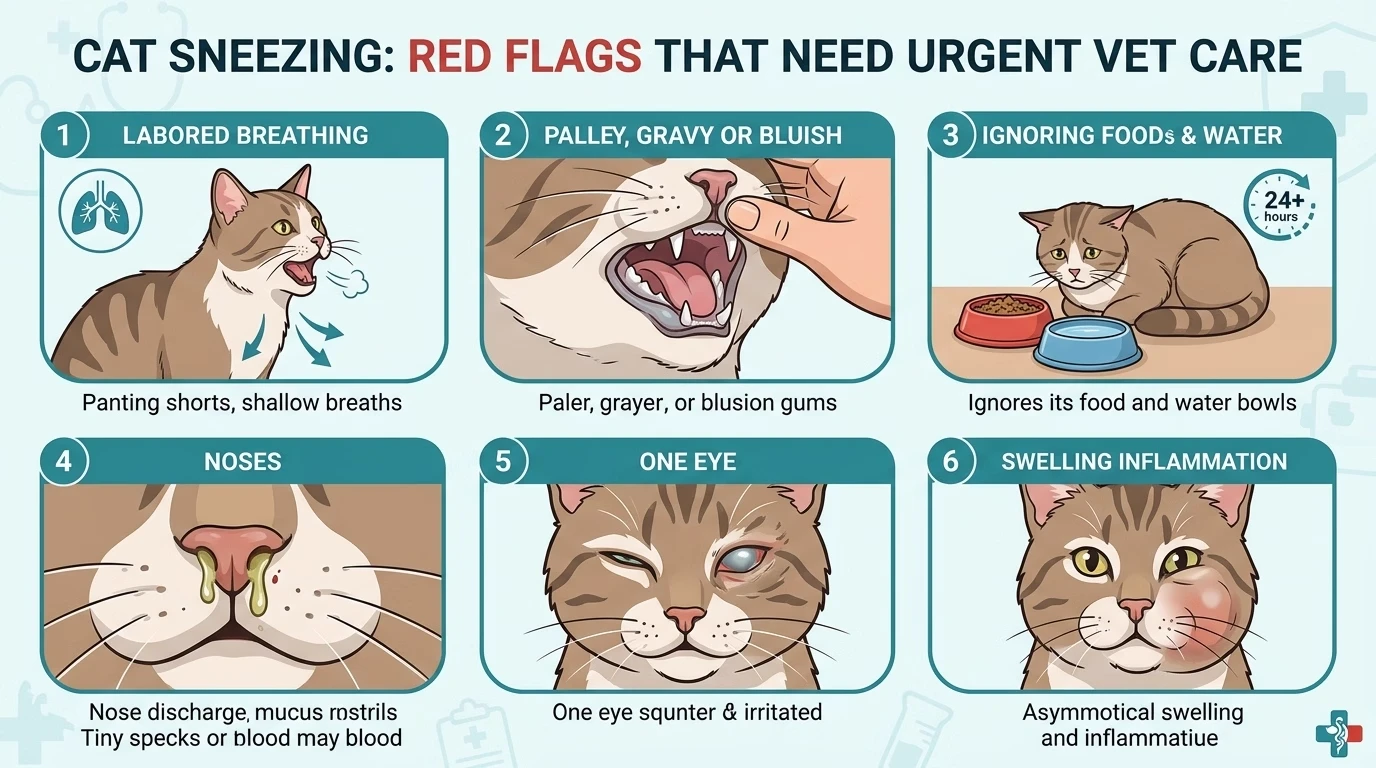
Go to a vet or emergency clinic right away for any of these.
Open-mouth breathing, labored breathing, or noisy breathing at rest
Gums that look blue, gray, or very pale
Refusing food for a day or more. Cats that stop eating can develop serious liver problems, so this matters
Marked lethargy, hiding, or weakness
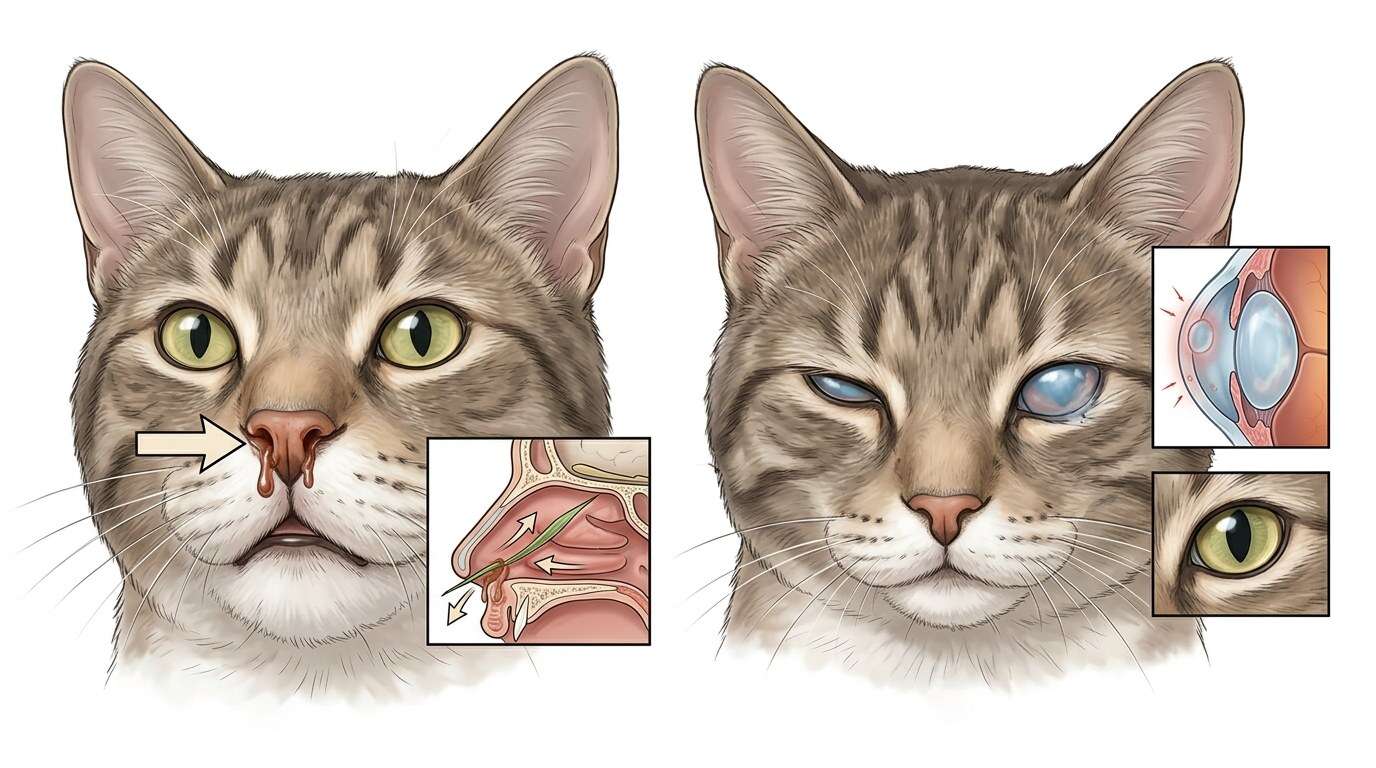
Thick yellow or green discharge, or bloody discharge from the nose
Squinting, a cloudy or bluish eye surface, or an eye that won't open (this can mean a corneal ulcer)
Sneezing in a kitten, an elderly cat, or a cat with another illness
Swelling of the face, or a change in the shape of the nose
Sneezing that follows a plant chewing incident or exposure to a chemical
Book a vet visit within a few days if sneezing lasts more than two or three days, comes and goes for weeks, affects only one nostril, or comes with weight loss.
Common causes in indoor cats
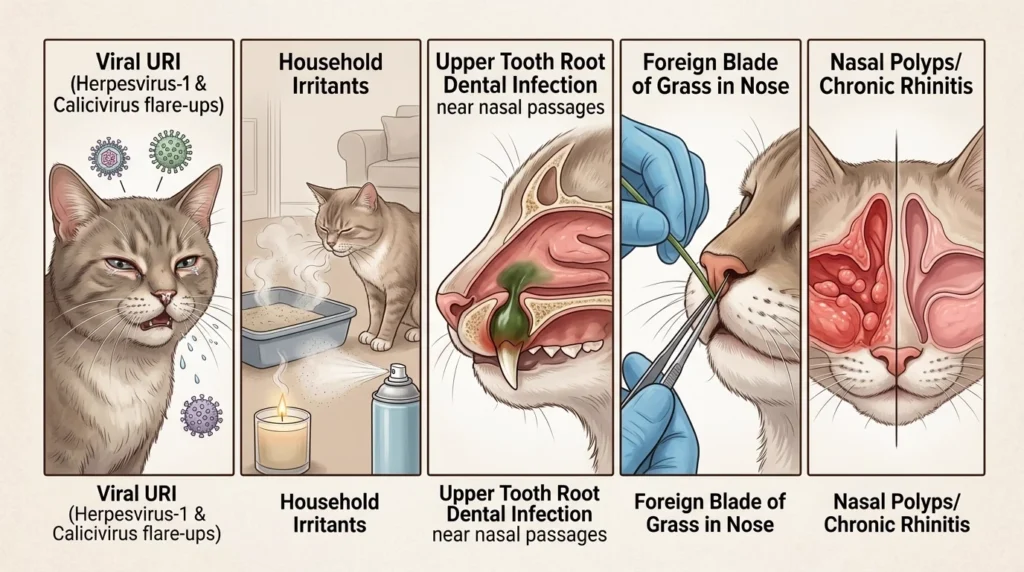
Viral upper respiratory infection
Feline herpesvirus 1 and feline calicivirus are the usual culprits behind "cat colds." Signs include sneezing, watery or colored eye discharge, nasal discharge, and sometimes mouth ulcers or fever. Indoor cats can catch them from a new cat, a vet or boarding visit, or a person who has handled another cat.
Herpesvirus has a feature owners should know about. Cats that recover usually stay infected for life, with the virus lying dormant. Stress, such as a move, a new pet, or a change in routine, can reactivate it, so an indoor cat with no obvious exposure may still have flare-ups.
Bacterial infections
Some respiratory infections involve bacteria such as Bordetella bronchiseptica or Chlamydia felis, and bacteria can also move in after a virus has damaged the nasal lining. Bacterial involvement is why a vet may prescribe antibiotics for some cats.
Irritants and allergens
Dust from litter, cigarette smoke, scented candles, incense, aerosol sprays, perfumes, cleaning products, and fireplace smoke can make a cat sneeze. If the sneezing started after a change in the home, such as a new litter or a new air freshener, remove the new item and see whether it improves. True allergies are thought to be a less common cause of sneezing in cats than infections, so don't assume it's an allergy.

Dental disease
The roots of the upper teeth lie close to the nasal passages. A tooth root infection or a gum disease can cause nasal discharge and sneezing, often on one side. This is easy to miss because the cat may not appear to have mouth pain. Bad breath, drooling, dropping food, or pawing at the mouth can point in this direction.
Foreign material in the nose
A blade of grass or other small material can lodge in a nasal passage or the back of the throat, usually after a cat chews on plants or vomits. The usual picture is sudden, violent sneezing, pawing at the face, and discharge from one nostril. Vets can often find and remove it.
Nasal polyps, tumors, and chronic rhinitis
Polyps, which are benign growths, are more common in young cats. Tumors are more common in older cats. Chronic rhinitis can follow severe viral infections in kittens and can lead to long-term snuffling. Persistent, one-sided, bloody, or progressive signs should be investigated.
Fungal infection
Fungal infections such as cryptococcosis can affect the nose, sometimes causing swelling over the bridge of the nose or a chronic discharge. These need a vet.
Is it contagious?
Many feline respiratory infections spread easily between cats through sneezing, shared bowls, and contact. If you have other cats, consider separating the sneezing one if you can, using separate bowls and bedding, and washing your hands after handling her. Viral infections that affect cats are mostly species-specific, so they are not usually a risk to people, but ask your doctor if someone in your home has a weakened immune system.
What you can do at home
These steps are for comfort while you arrange veterinary advice. They are not a treatment plan.
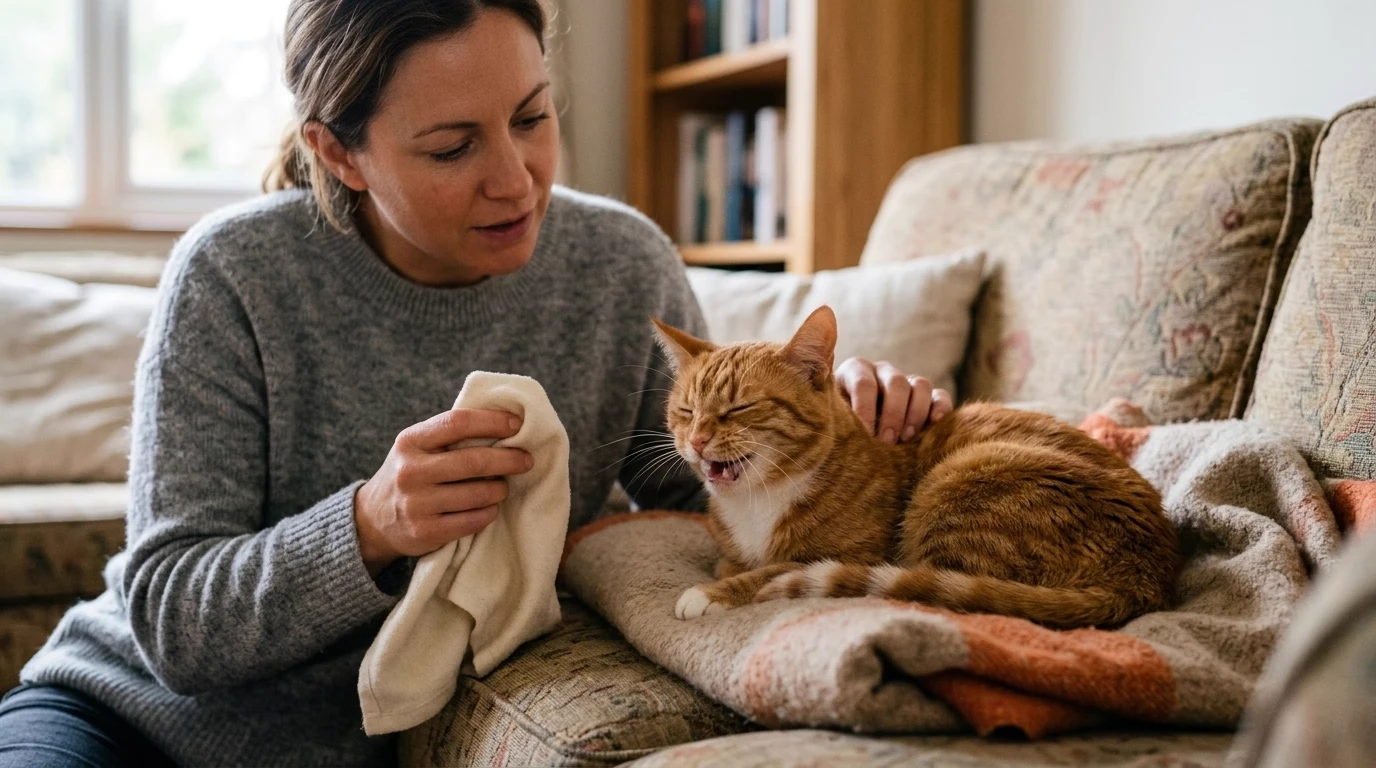
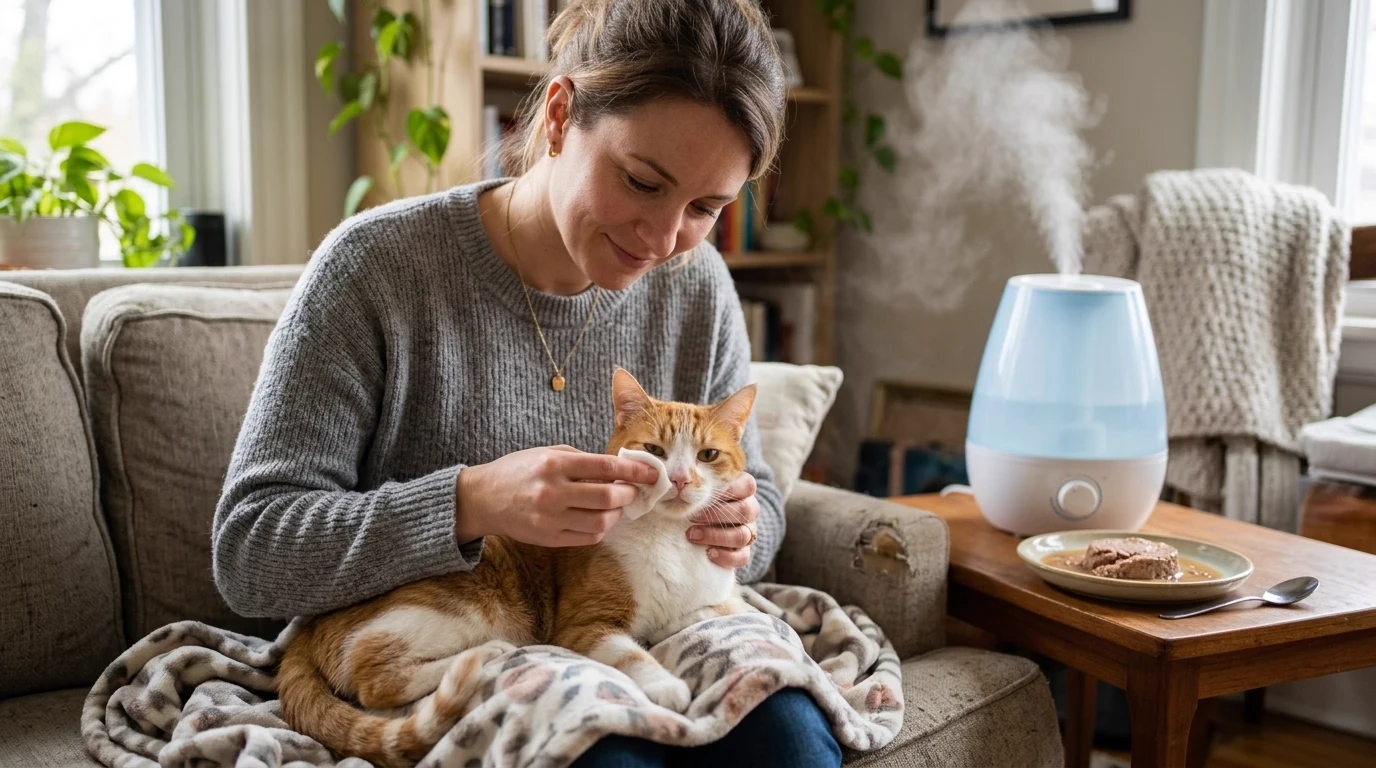
Wipe discharge gently from the eyes and nose with a warm, damp cloth or cotton pad. Use a clean piece for each eye.
Keep her warm and in a calm space.
Run a humidifier or a steamy bathroom for short periods. Moist air can loosen congestion. Keep her supervised and away from hot surfaces.
Offer strongly scented wet food, warmed slightly. Cats with a blocked nose can lose their appetite because they can't smell their food.
Check that she is drinking and using the litter box normally.
Remove irritants such as smoke, scented products, and dusty litter if you suspect them.
Write down when the sneezing started, how often it happens, the discharge color, her appetite, and any changes at home. Photos or a short video of the sneezing help your vet.
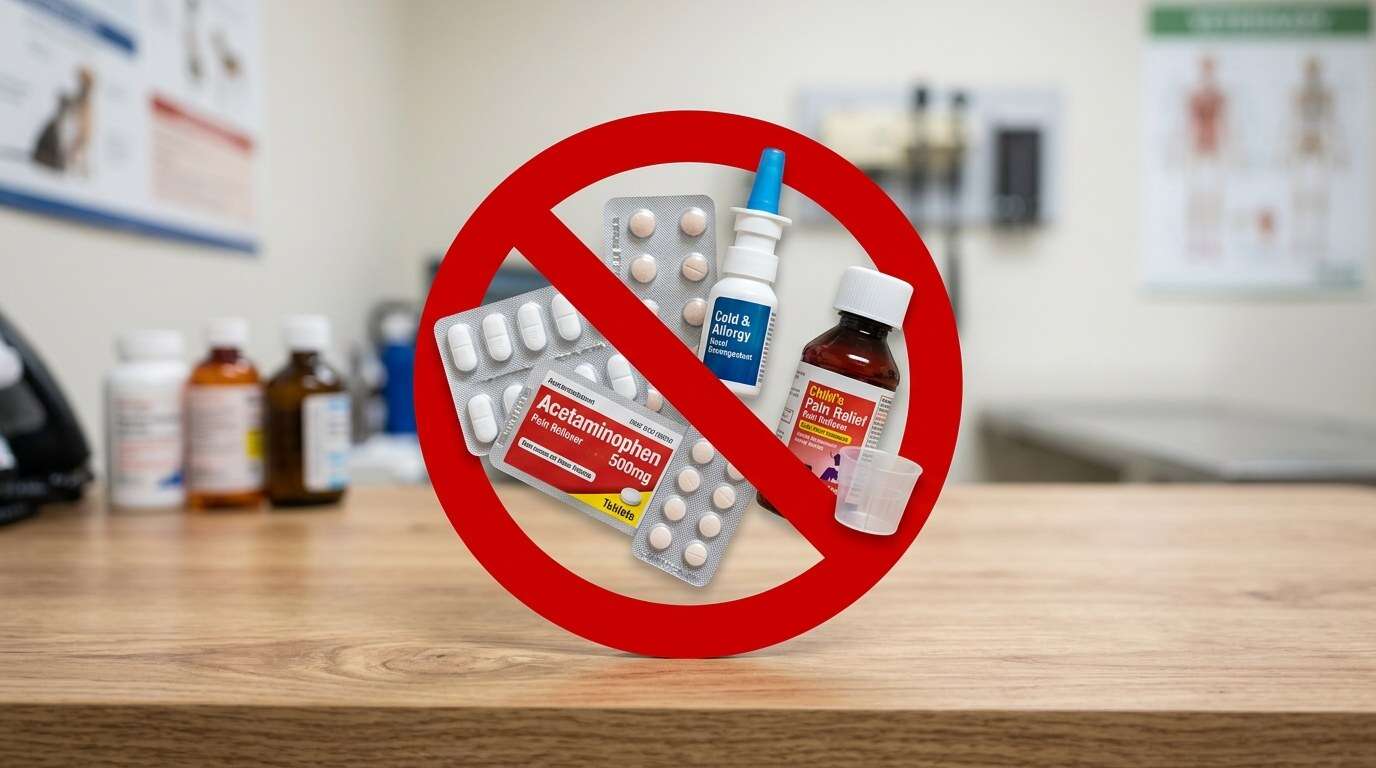
Do not give human cold or allergy medicines, decongestant sprays, or pain relievers. Some are dangerous for cats, and acetaminophen (paracetamol) can be fatal. Don't use essential oil diffusers or steam inhalants near her.
You may see advice online to give L-lysine for cat colds. Studies so far have not shown a clear benefit for cats with herpesvirus, and some veterinary guidelines advise against relying on it. Ask your vet before buying supplements.
What a vet may do
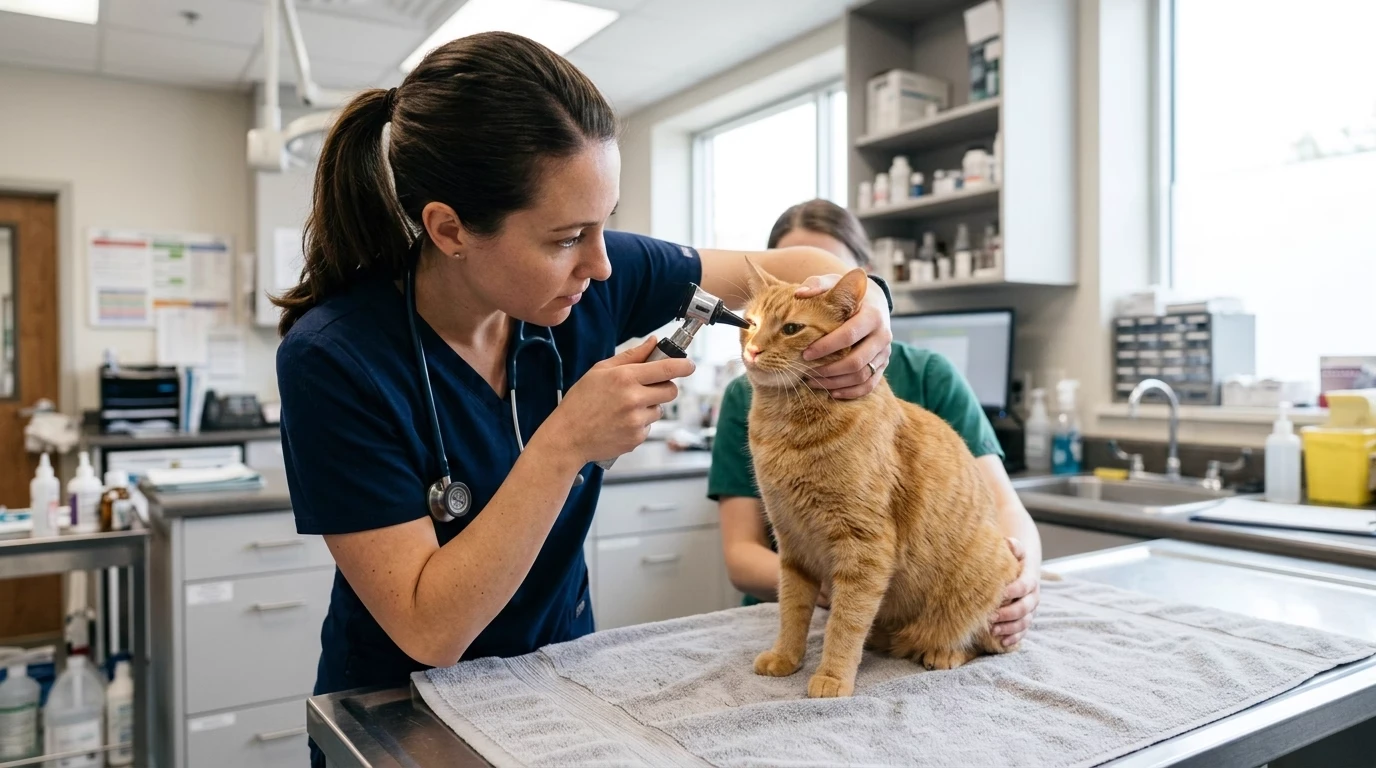
A vet will examine her, check her temperature, eyes, mouth, and nose, and listen to her chest. Depending on the findings, the next steps may include:
A swab for a respiratory PCR panel to identify the organisms
A dental exam, often with dental X-rays under anesthesia, if teeth are suspected
Imaging of the nose or skull
Looking into the nose with a small camera under anesthesia
Blood tests, especially if she is older or unwell
Testing for FeLV and FIV if she hasn't been tested
Treatment depends on the cause. Many mild viral infections run their course with supportive care. Antibiotics are used when bacteria are involved, antiviral medication may be prescribed for some herpesvirus cases, and fluids or assisted feeding may be needed for cats that won't eat. Dental disease, polyps, and foreign bodies need procedures.
Prevention
Keep vaccinations current. The FVRCP vaccine reduces the severity of herpesvirus and calicivirus disease, though it doesn't always prevent infection.
Reduce stress where you can, since stress can trigger herpesvirus flare-ups. Keep routines steady and give her places to hide and climb.
Isolate and quarantine a new cat for a period your vet recommends before introducing her to the others.
Use low-dust litter if dust seems to be a trigger, and avoid aerosols and strong scents near her.
Wash your hands after handling other cats, especially after visits to shelters or boarding.
Keep up with dental checkups.
Quick guide: what the pattern might suggest
This table shows patterns vets consider. It is not a diagnosis tool.
Frequently Asked Questions
Is it normal for cats to sneeze sometimes?
Yes. A few sneezes a day, with no other signs, is usually nothing.
Can stress make my cat sneeze?
Stress can trigger a flare-up of a latent herpesvirus infection, which then causes sneezing.
Can I catch a cold from my cat?
Common feline respiratory viruses don't usually infect people. If your cat is sick, wash your hands and call your doctor if anyone in the home is immunocompromised.
Should I take her to the vet for sneezing?
If it lasts more than two or three days, or she shows any red flag above, yes.
How long does a cat cold last?
Many mild cases improve within one to two weeks, but this varies, and some cats have lingering signs. A vet can say what to expect.
Related reading
References
Cornell Feline Health Center, feline upper respiratory infections (vet.cornell.edu)
Merck Veterinary Manual, feline respiratory disease complex (merckvetmanual.com)
AAFP and ISFM guidance on feline upper respiratory disease and L-lysine (catvets.com, icatcare.org)
International Cat Care, cat flu resources (icatcare.org)
[PASTE-IN SECTION — Row 67: 67. Sneezing: monitor or call the vet (paste into article 23, do not publish a new page)]
Your sheet's keyword for this row is "my indoor cat keeps sneezing," which is exactly the keyword article 23 already targets. A second page would compete with the first. The title for 67 does add something article 23 doesn't have in a single glance: a short monitor-or-call triage. Add it near the top of article 23, right after the short answer.
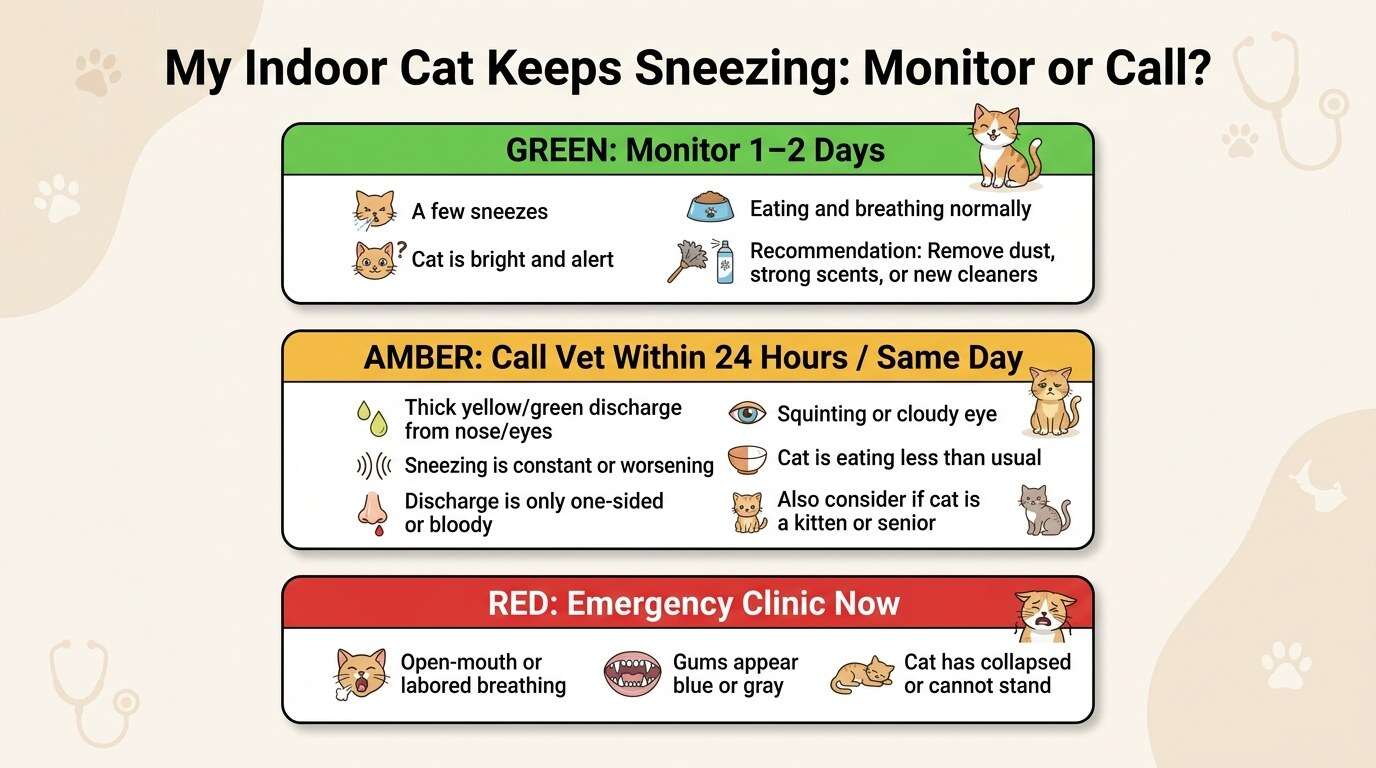
Monitor or call: a quick guide
This isn't a diagnosis. It helps you decide how fast to act.
Write down when it started, how often it happens, the color of any discharge, her appetite, and any change at home. A short video of the sneezing helps your vet.
Do not give human cold or allergy medicines, decongestants, or pain relievers. Some are dangerous to cats, and acetaminophen (paracetamol) can be fatal.
Keep the rest of article 23 as it is. Your sheet's note, "one focused symptom page, not multiple sneeze variants," is the right instruction.
How to Stop a Cat From Spraying Indoors: Find the Cause First