Yes, in almost every case. Veterinary groups classify rabies as a core vaccine for cats, many places require it by law, and an indoor-only lifestyle lowers your cat's risk without removing it. The usual way rabies reaches an indoor cat is a bat that gets into the house, or a brief escape through an open door. Rabies is fatal once signs appear, and the legal consequences of an exposure are far worse for an unvaccinated cat. This guide covers the actual risk, the legal picture, the standard schedule, and what to do if your cat meets a bat or bites someone.
Short answer
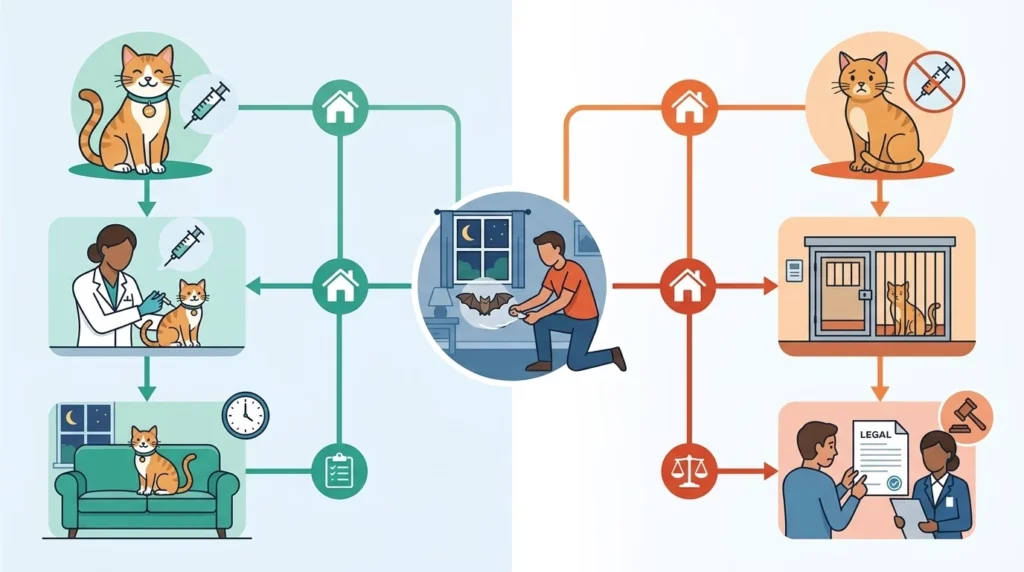
Vaccinate your indoor cat against rabies on the schedule your vet sets. The American Association of Feline Practitioners lists rabies among the core vaccines for all cats, and local law may require it regardless of lifestyle. Indoor cats are exposed less often than outdoor cats, but bats, escapes, and wildlife entering the home make the risk real. If a vaccinated cat is exposed, the follow-up is usually a booster and observation. If an unvaccinated cat is exposed, the options can be quarantine for months or euthanasia.
In this guide:
What rabies is and why it matters
Rabies is a viral disease that attacks the nervous system. It spreads mainly through the saliva of an infected animal, typically via a bite or a scratch contaminated with saliva. Once an animal or person develops clinical signs, the disease is almost always fatal. There is no treatment that saves a cat that has begun showing signs.
People can catch rabies from infected animals, which is why governments regulate it. A pet that could expose a family to rabies is a public health concern, not only a pet-health one.
In the United States, wild animals account for most reported rabies cases. Bats, raccoons, skunks, and foxes are the main reservoirs, and cats are the domestic animal most often reported rabid. Hawaii has historically been free of rabies, and other countries differ widely, so local data matters.
How an indoor cat gets exposed
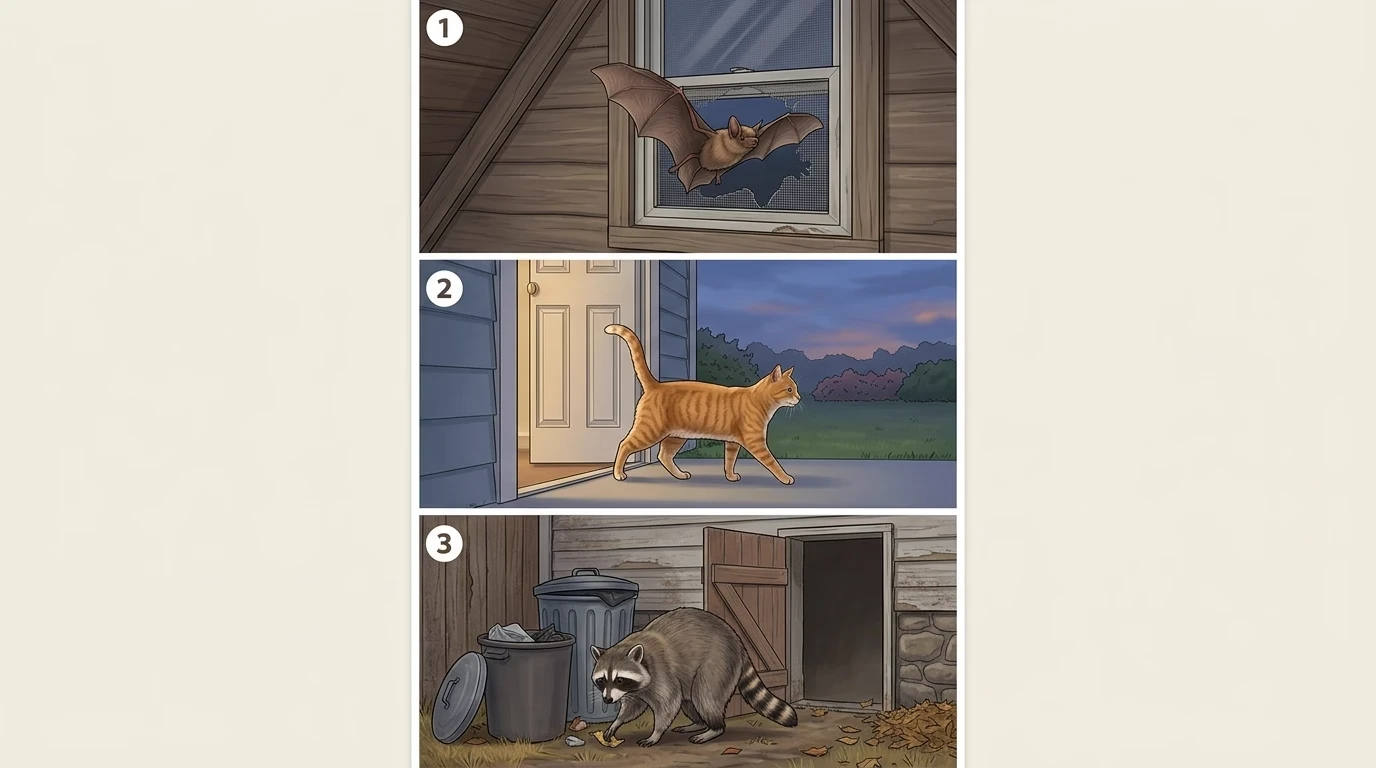
The idea that an indoor cat can't meet a rabid animal doesn't hold up. The realistic routes are:
Bats in the house. Bats can enter through chimneys, attic gaps, open windows, and damaged screens. A cat that bats at, catches, or plays with a flying or grounded bat may be bitten and you may not see it. Bat teeth are tiny, and a bite can leave a mark that is hard to find.
Escapes. A cat that slips through a door, a balcony, or a window can meet a raccoon, skunk, fox, or a stray in minutes.
Wildlife entering the home. Raccoons and other animals can come in through pet doors, garages, and basements.
Unvaccinated visitors or housemates. A new pet or a rescue with an unknown history can be a risk, although this is rarer.
None of these needs a cat that goes outdoors. That's why "my cat never leaves the apartment" is not a sound reason to skip the vaccine.
The legal side
Rules vary. In the United States, rabies vaccination for dogs is required in most areas, while requirements for cats vary by state, county, and city. Many jurisdictions require cats to be vaccinated and licensed, and some require proof for boarding, grooming, travel, or housing. Landlords and apartment complexes may also require it.
Even where cats aren't legally required to be vaccinated, the vaccine decides what happens after an exposure, which is covered below. The reliable way to find your rule is to ask your vet or check your local health department. Don't rely on a blog, including this one, for your exact legal requirement.
[ADD: the rule for your own area if you are writing from a specific location, with a link to the official local source.]
The standard schedule
Schedules depend on the vaccine product, local law, and your vet's judgment.
First dose: US rabies vaccines for cats are generally labeled for kittens at 12 weeks of age or older. Some vaccines can be given a bit younger depending on the product and local rules, but 12 weeks is the usual starting point.
Booster: a booster is typically given about a year after the first dose.
After that: some products are licensed for one-year intervals and others for three years. Local law can require a shorter interval than the label allows, so your vet will tell you which applies.
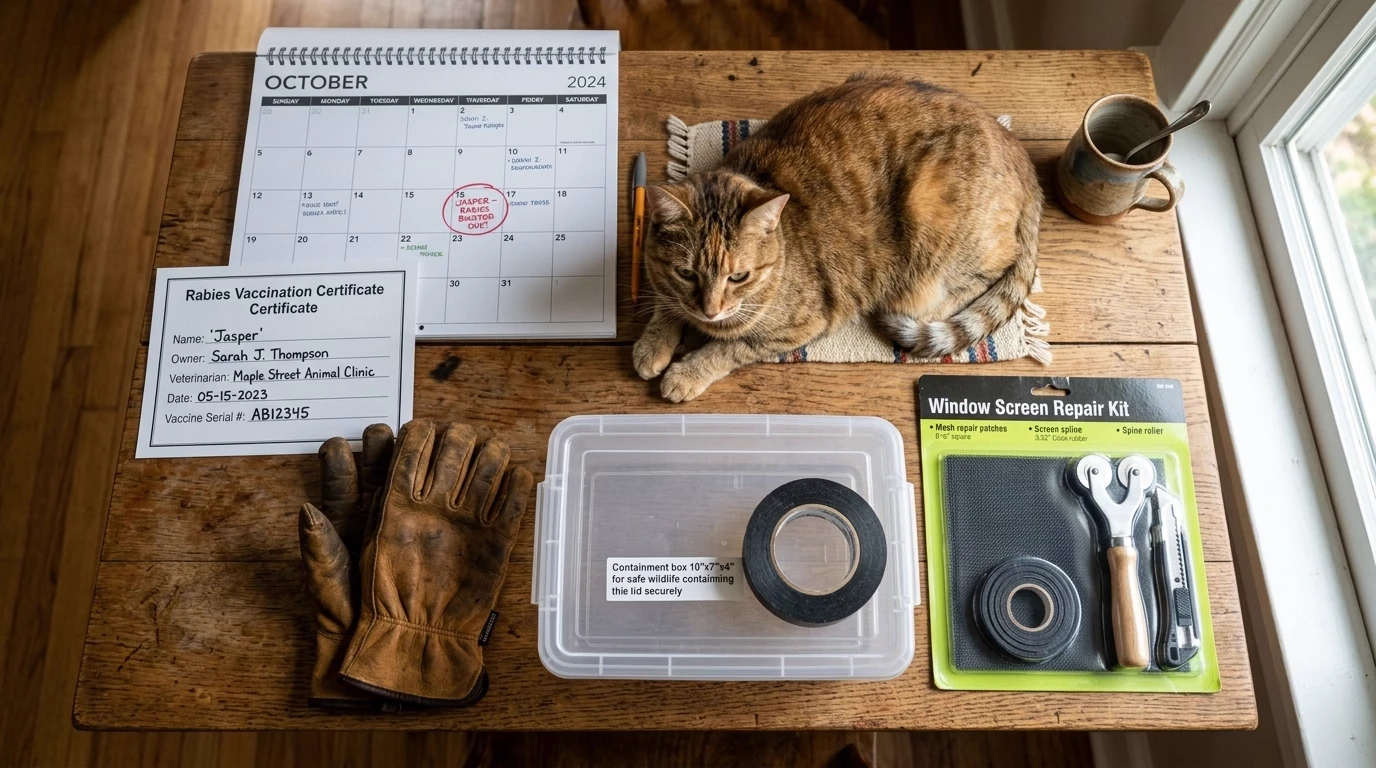
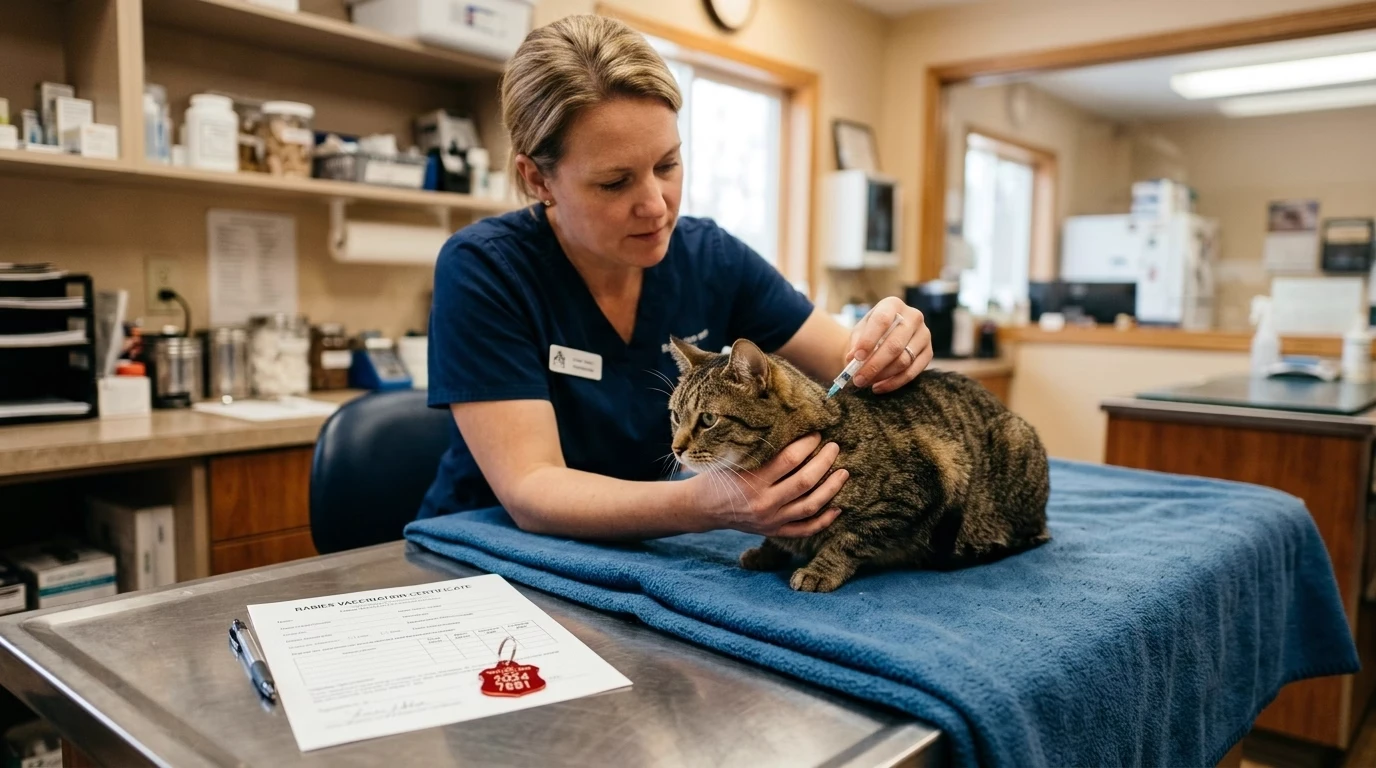
Keep the certificate your vet gives you. You may need it for boarding, a move, or an exposure incident, and an up-to-date record can make the difference after a bite.
Choosing a vaccine and site
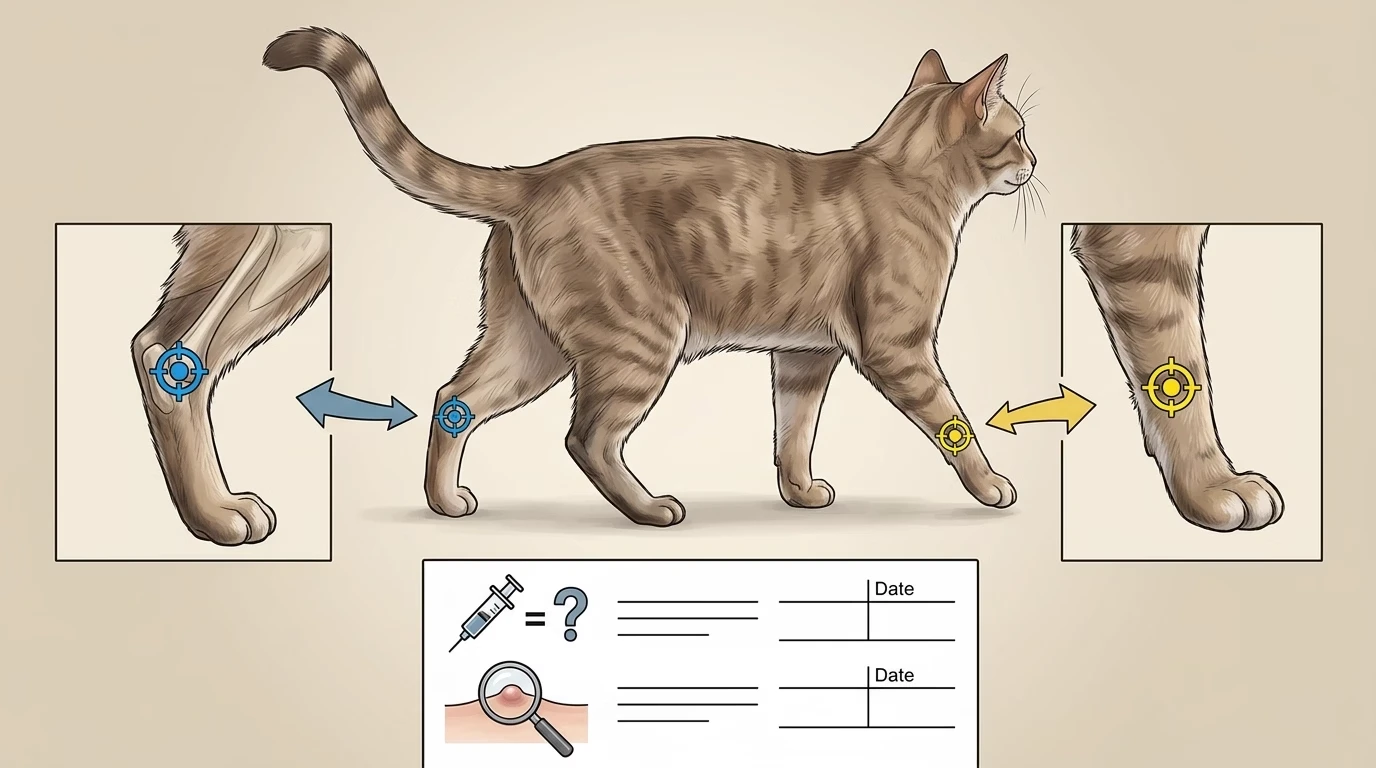
Your vet chooses the product. Some rabies vaccines for cats are non-adjuvanted, which means they don't contain an additive that boosts the immune response. Rarely, cats develop a tumor called an injection-site sarcoma at the place where a vaccine or other injection was given. It is uncommon, but it's the reason the AAFP recommends giving vaccines in specific, low spots on the limbs, so a tumor can be treated surgically if one ever forms. Ask your vet where the shot was given and note it in your records. A lump at a past injection site that lasts more than a few weeks, grows, or keeps growing three months after the injection should be checked promptly.
Mild side effects such as soreness, tiredness, or reduced appetite for a day are common and usually pass. Facial swelling, hives, repeated vomiting, or trouble breathing after a vaccine are emergencies.
What happens if your cat is exposed
This is the practical part many owners never hear until it happens.
A bat is in your home
Don't release it. If a bat has been in a room with your cat and you can't rule out contact, call your local health department or animal control and ask about testing. Capturing a bat safely means using gloves or a container and not touching it bare-handed, and you should ask the authorities how to do it. If the bat can be tested and the result is negative, the problem usually ends there. If it can't be tested, authorities may treat the contact as a possible exposure.
Your cat is vaccinated
Guidance used by US public health officials is that a currently vaccinated animal exposed to a possibly rabid animal is generally given a booster dose right away and observed. The length of observation depends on local rules. Call your vet the same day.
Your cat is overdue or unvaccinated
National guidance has recommended that unvaccinated animals exposed to a rabid animal either be euthanized or placed in strict quarantine for several months, with a vaccine given at the start. The actual outcome depends on your local health department, which sets the rules. Cats with a lapsed vaccine may be handled differently from unvaccinated ones, and some areas count a recently overdue animal as protected after a booster. Don't try to work out your cat's status on your own. Call your vet and the health department.
This is why vaccination is as much about protecting your cat's options as it is about protection from the virus.
Your cat bites a person
A cat that bites someone, whether vaccinated or not, usually triggers a mandatory observation period, commonly ten days, in which the animal is watched for signs of rabies. The person should wash the wound thoroughly with soap and water and contact a doctor. Reporting rules vary locally.
Common myths
"Indoor cats can't get rabies." They can, mainly through bats and escapes.
"The vaccine is only for the law." The law is part of it, but the vaccine also protects your cat and your household.
"My cat is old, so she doesn't need it." Older cats should still be vaccinated unless a vet advises otherwise for a specific medical reason. Medical exemptions exist in some places, but the decision is a vet's, not an owner's.
"One shot lasts forever." No. Boosters are needed on a schedule.
Does your cat have a medical reason to skip it?
A small number of cats with serious health conditions or previous vaccine reactions may need a different plan. Some jurisdictions allow a medical exemption letter from a vet. Don't skip the vaccine on your own because you're worried about side effects. Talk to your vet about the product, the injection site, and the schedule.
A simple checklist
Check your cat's rabies certificate for the date and the vaccine's validity period.
Put the booster date in a calendar you actually check.
Ask your vet about your local legal requirements.
Repair screens, seal chimney and attic gaps, and keep a container and gloves where you could use them if a bat gets in.
Keep your vaccination records in one place so you can find them in a hurry.
Know your local health department's phone number.
When to call your vet
Call your vet the same day if your cat has had contact with a bat or wild animal, or a bite from an unknown animal. Call promptly if she has sudden behavior changes, drooling, trouble swallowing, or unexplained aggression, because these can have many causes and need a professional assessment. Also ask your vet about the vaccine if your cat has never had one or her booster is overdue.
Frequently Asked Questions
Do indoor-only kittens need rabies shots?
Yes, with the first dose usually at 12 weeks or older, per the vaccine label and your vet.
How often do indoor cats need rabies boosters?
It depends on the vaccine and local law. Some are labeled for a year and some for three. Your vet will know what applies.
Can a vaccinated cat still get rabies?
No vaccine is perfect, but cases in properly vaccinated animals are very rare. Vaccination is the best protection available.
What if I lose the certificate?
Ask your vet for a copy. Clinics keep records, and the health department may need proof after an exposure.
Is it safe to vaccinate a senior cat?
Usually, but your vet decides based on her health.
Related reading
References
CDC, rabies information for people and animals (cdc.gov/rabies)
AAFP and WSAVA vaccination guidelines for cats (catvets.com, wsava.org)
National Association of State Public Health Veterinarians, Compendium of Animal Rabies Prevention and Control (nasphv.org). Check the current edition before quoting any quarantine length.
Your state or local health department, for the legal requirement in your area
My Indoor Cat Keeps Sneezing: Common Causes and Red Flags