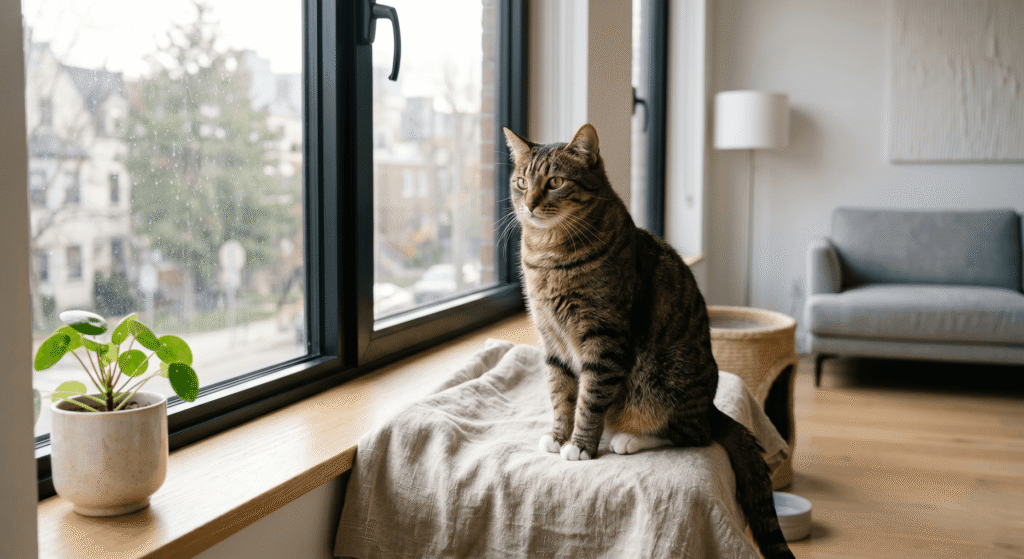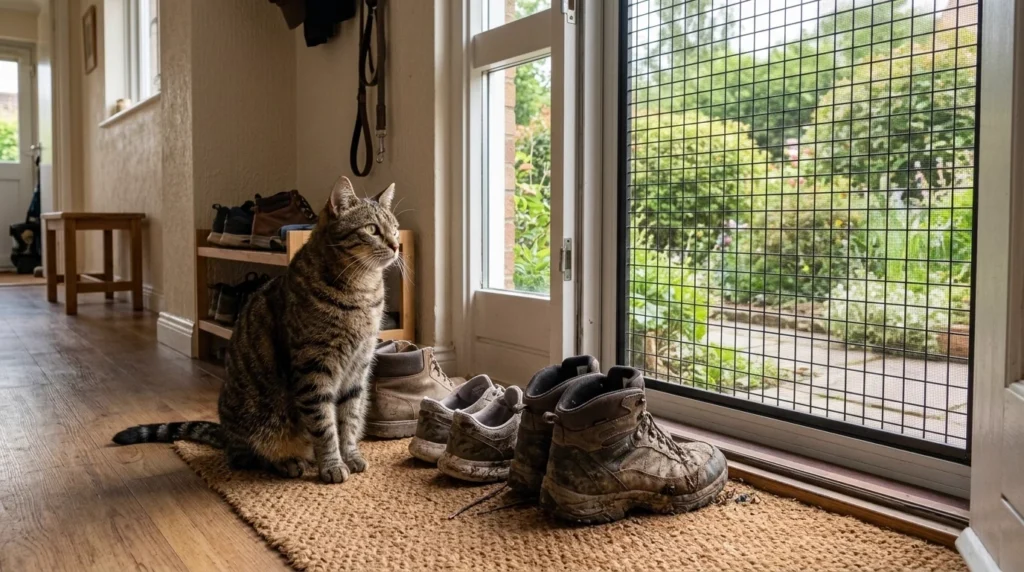
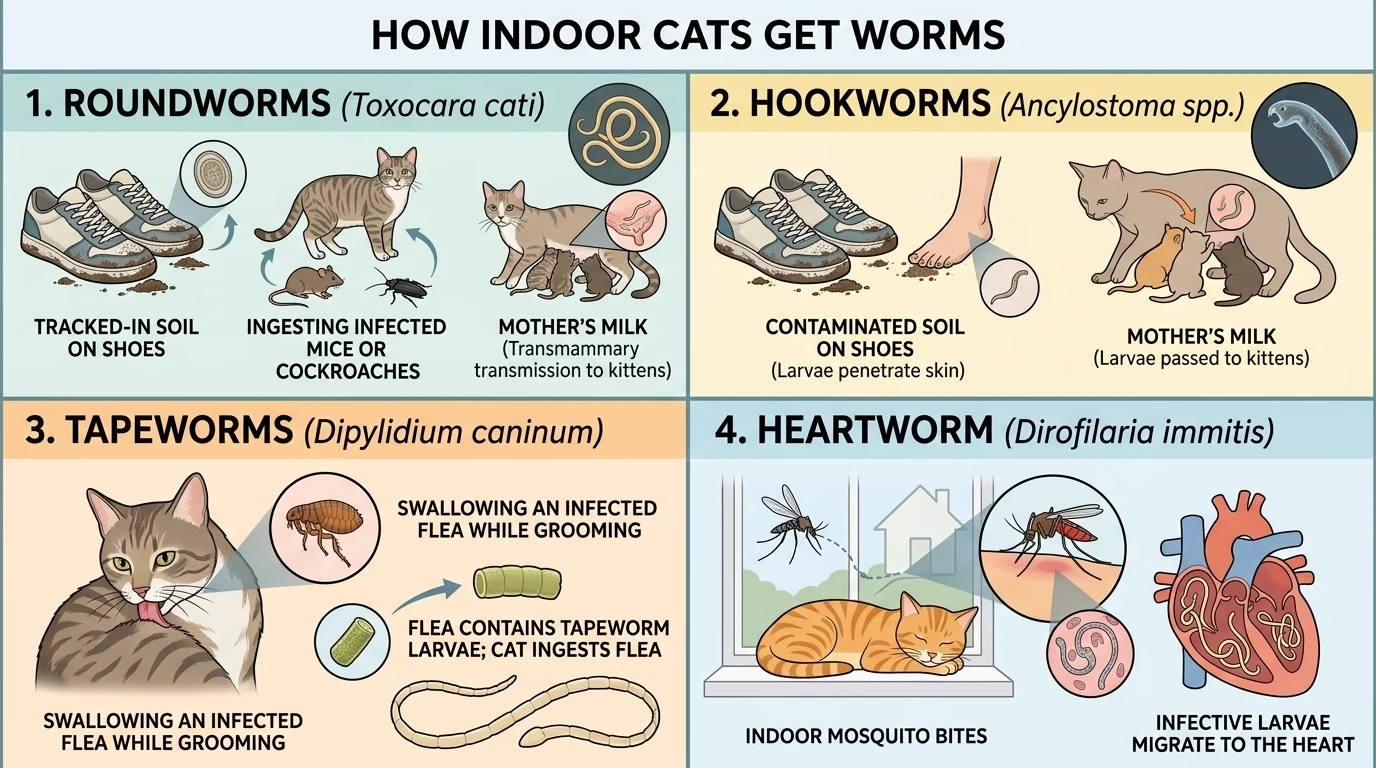
Indoor cats can get worms. The common routes are fleas, tracked-in eggs, prey such as mice and insects, infection from the mother as a kitten, and mosquito bites for heartworm. Many infected cats look healthy, so you can't rule worms out by appearance. This guide explains how each type gets in, what signs to watch for, and how your vet prevents and tests for them. It can't diagnose your cat. Only a vet can do that.
Short answer
Indoor life lowers the risk but doesn't remove it. Fleas bring tapeworms, rodents and insects carry other parasites, eggs and larvae can arrive on shoes, and kittens can be infected before they are born or through milk. Ask your vet about routine fecal testing and year-round parasite prevention rather than guessing.
In this guide:
How each type gets in
Ask your vet what's common in your region, since parasite risks differ by location.
Signs of worms
Many cats show no signs. When signs appear they may include:
- Visible rice-like segments around the anus or in bedding (tapeworm)
- Worms in vomit or stool (roundworm can look like spaghetti)
A potbelly, poor coat, or slow growth in kittens
Weight loss despite a normal or increased appetite
Diarrhea or vomiting
Pale gums or weakness, especially in kittens (heavy hookworm infection can cause anemia)
For heartworm, coughing, vomiting, or breathing trouble. Some cats show nothing before sudden collapse
None of these signs proves worms. They overlap with many other conditions, so don't diagnose from symptoms alone.
Why it matters for people
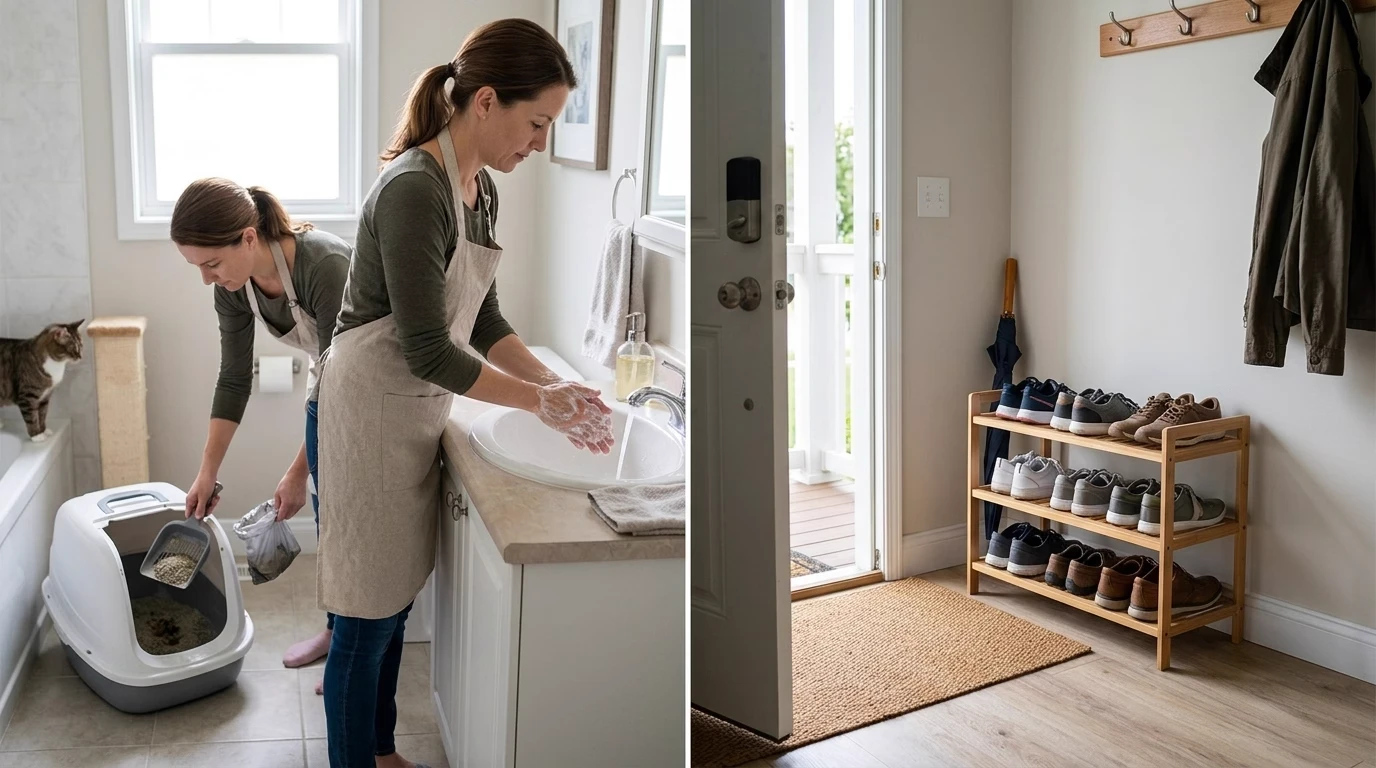
Roundworm and hookworm can infect people, mostly through contact with contaminated soil or feces, and children are at particular risk. Wash hands after scooping litter and gardening, and keep litter boxes away from kitchen counters and children's play areas.
How vets diagnose and prevent
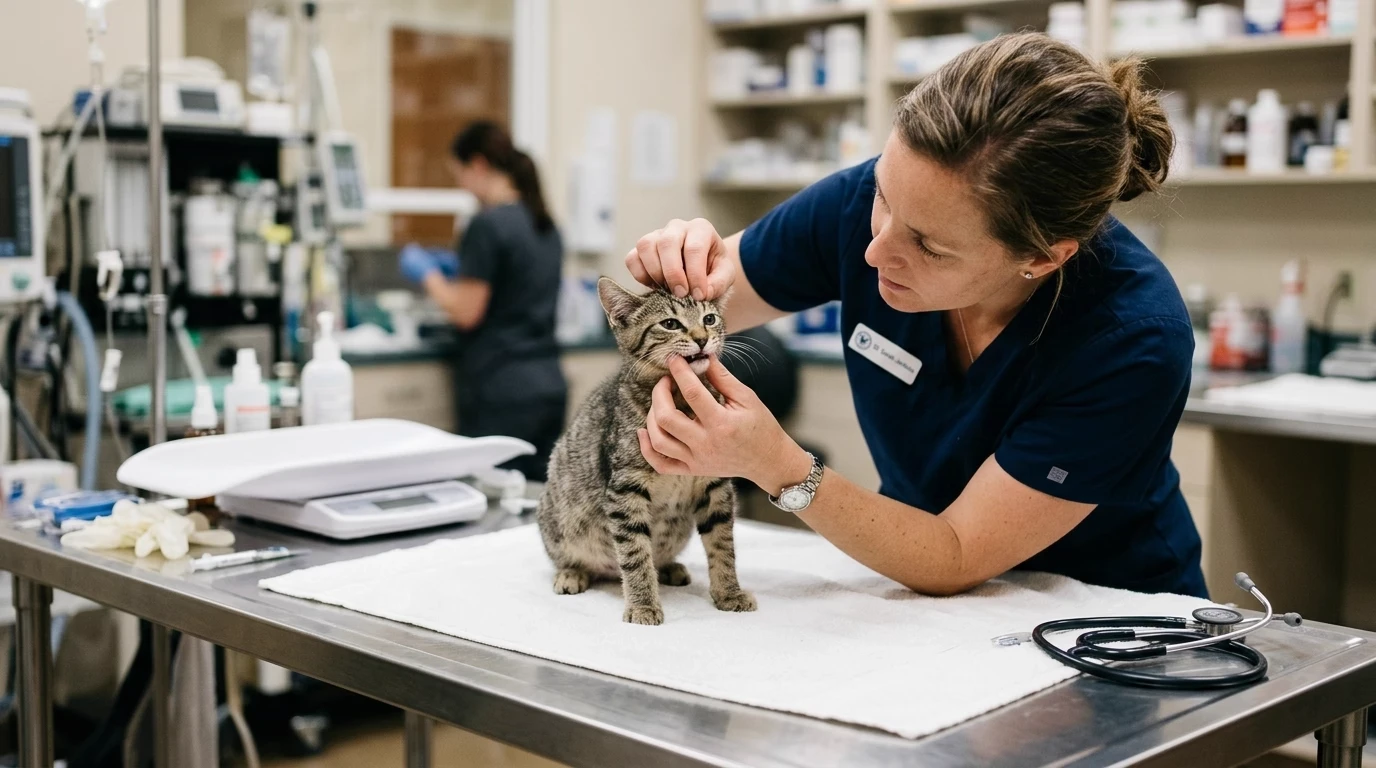
Fecal testing. Your vet checks a stool sample under a microscope. Your vet will tell you how often to test, and kittens are typically tested more often.
Deworming. Kittens are often dewormed on a schedule, and adults are treated when tests or risk call for it.
Year-round prevention. Many monthly prevention products cover several parasites at once, including heartworm and some intestinal worms and fleas. Your vet picks one based on your cat's age, weight, and lifestyle.
Don't buy over-the-counter dewormers on your own. Different worms need different drugs, and a wrong choice or dose can fail to work or cause harm. Treating fleas doesn't remove a tapeworm already in the cat, which needs its own treatment.
What you can do at home
Scoop the litter box at least daily, since fresh stool carries fewer infective stages than stool left sitting. Wash your hands afterward.
Keep fleas under control year-round with a product your vet recommends.
Take shoes off at the door if you've been walking through soil or areas where animals go.
Block rodent and insect access, and don't let your cat hunt pests.
Book regular vet checks and bring a fresh stool sample when asked.
Treat new kittens and newly adopted cats as unknown, and have them tested early.
When to call a vet
Call your vet if you see worms or segments, if your cat has ongoing diarrhea or vomiting, is losing weight, or if a kitten has a swollen belly or seems weak. Pale gums or collapse need urgent care.
Frequently Asked Questions
Can an indoor-only cat really get heartworm?
Yes. Mosquitoes can enter homes, and veterinary groups such as the American Heartworm Society recommend prevention for indoor cats in areas where heartworm occurs.
Can I see worms in my cat's stool?
Sometimes, but many infections are invisible without a lab test.
Can people catch worms from cats?
Some, such as roundworm and hookworm, can infect people. Hygiene and routine deworming reduce the risk.
Does my cat need a dewormer if she never goes outside?
Ask your vet. The answer depends on her age, exposure, and test results.
Related reading
References
Companion Animal Parasite Council, intestinal parasites and heartworm in cats (capcvet.org)
American Heartworm Society, feline heartworm guidelines (heartwormsociety.org)
Cornell Feline Health Center, intestinal parasites (vet.cornell.edu)
CDC, zoonotic roundworm and hookworm information (cdc.gov)
[PASTE-IN SECTION — Row 66: 66. Worms: signs and next steps (paste into article 20, do not publish a new page)]
Your sheet says to merge this with the worm prevention article, and article 20 already covers routes, signs, and prevention. The missing piece is a practical "what do I do now" sequence for an owner who has seen something worrying. Add this section to article 20, and have a vet review it.
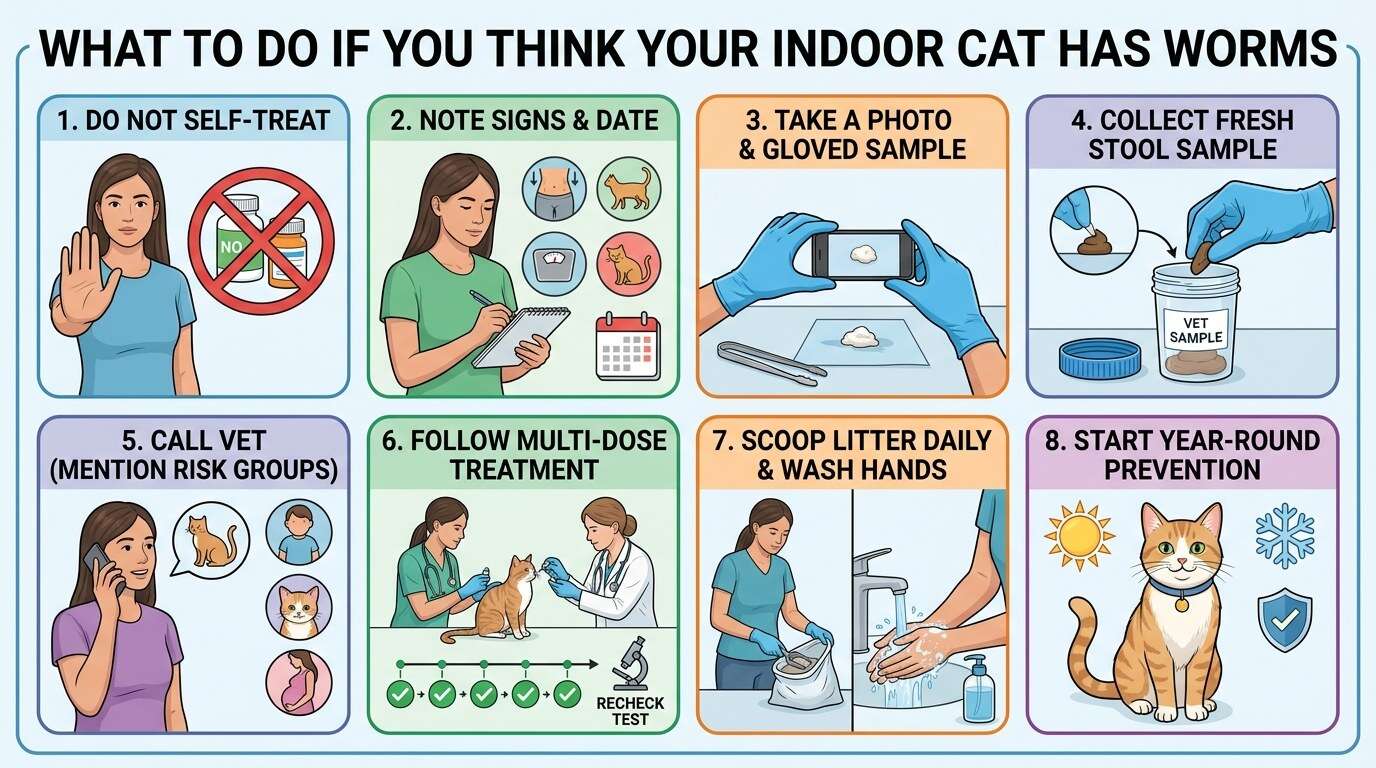
What to do if you think your cat has worms
Don't treat her on your own. Different worms need different medicines, and the wrong product or dose can fail to work or cause harm. Don't use a dog dewormer or an over-the-counter product without your vet's advice.
Note what you saw and when. For example, rice-like segments near the tail or on bedding, spaghetti-like worms in vomit or stool, scooting, a swollen belly in a kitten, weight loss, or diarrhea.
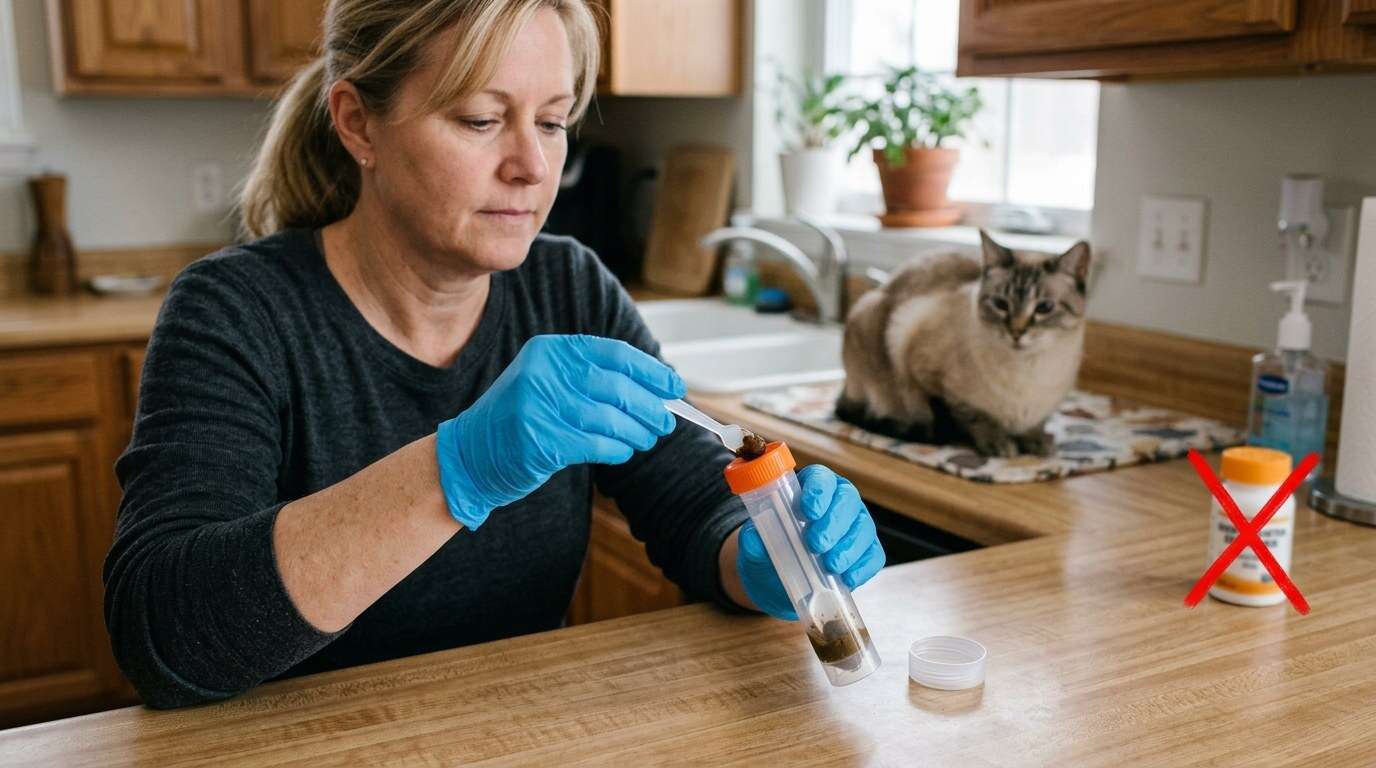
Take a photo, and if it's easy and safe, save a small sample in a sealed bag. Don't handle it with bare hands. Wash your hands afterward.
Collect a fresh stool sample if your vet asks for one. Use a clean bag or container, and take a piece from the freshest stool. Keep it cool and bring it in the same day if possible, or as your clinic directs.
Call your vet. Ask whether she needs to be seen and whether a fecal test is advised. Say if there are kittens, pregnant cats, children, or people with weakened immune systems in the home, since roundworm and hookworm can infect people.
Follow the treatment plan, and ask when to recheck. Many worms need more than one dose, and your vet may suggest a repeat fecal test.
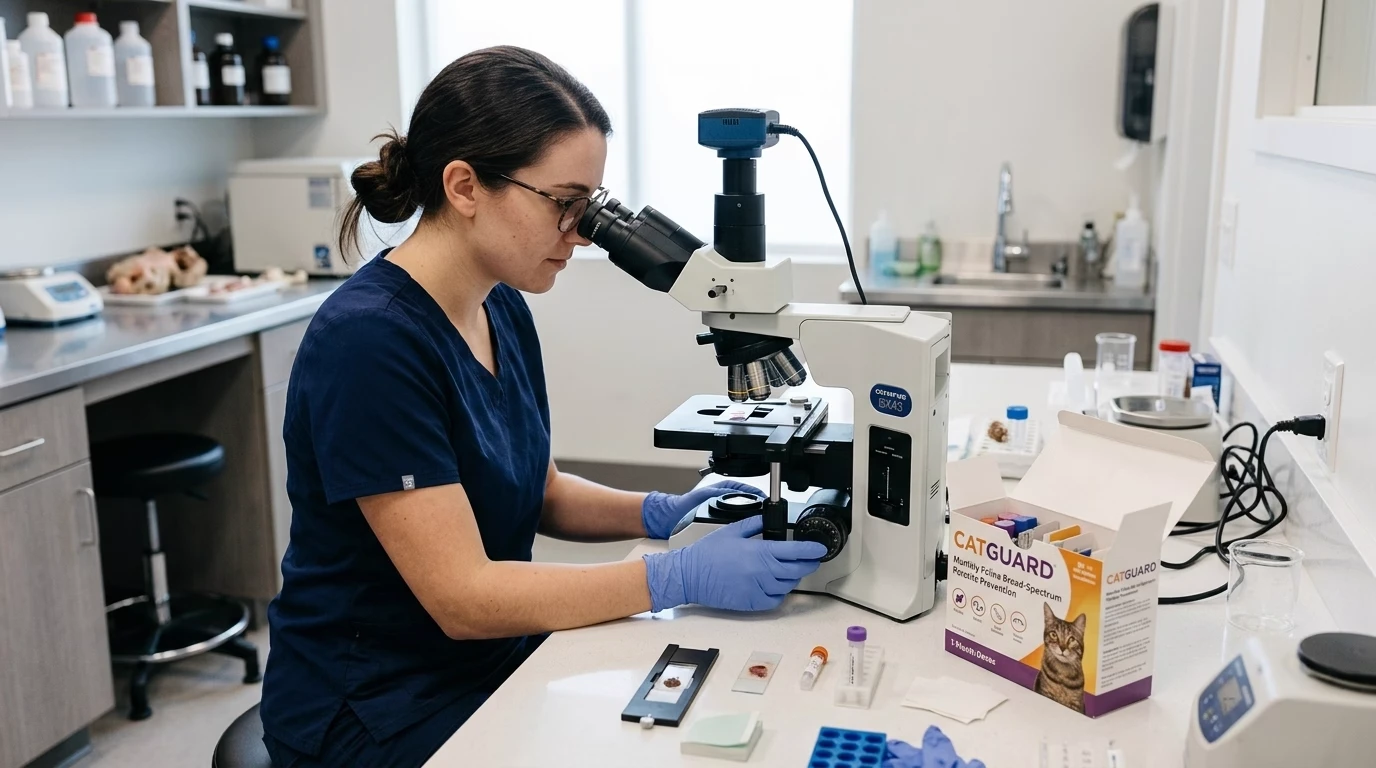
Clean up. Scoop the litter box at least daily, wash your hands, wash bedding, and ask your vet about any environmental steps.
Review prevention. Ask what year-round product is right for her, and whether flea control is part of the plan, since fleas carry tapeworm.
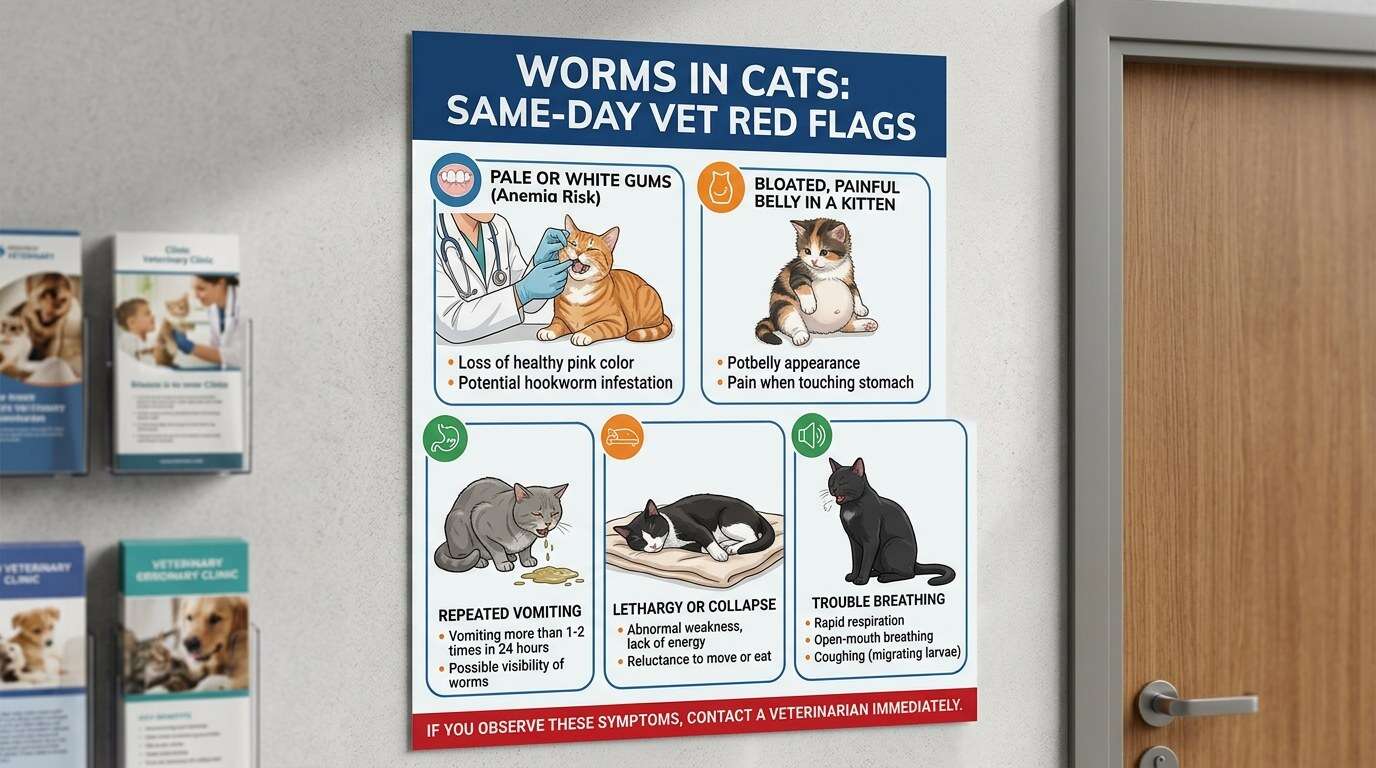
Urgent signs: pale gums, weakness, repeated vomiting, a bloated, painful abdomen, trouble breathing, or a kitten who is lethargic or not eating. These need a same-day call.
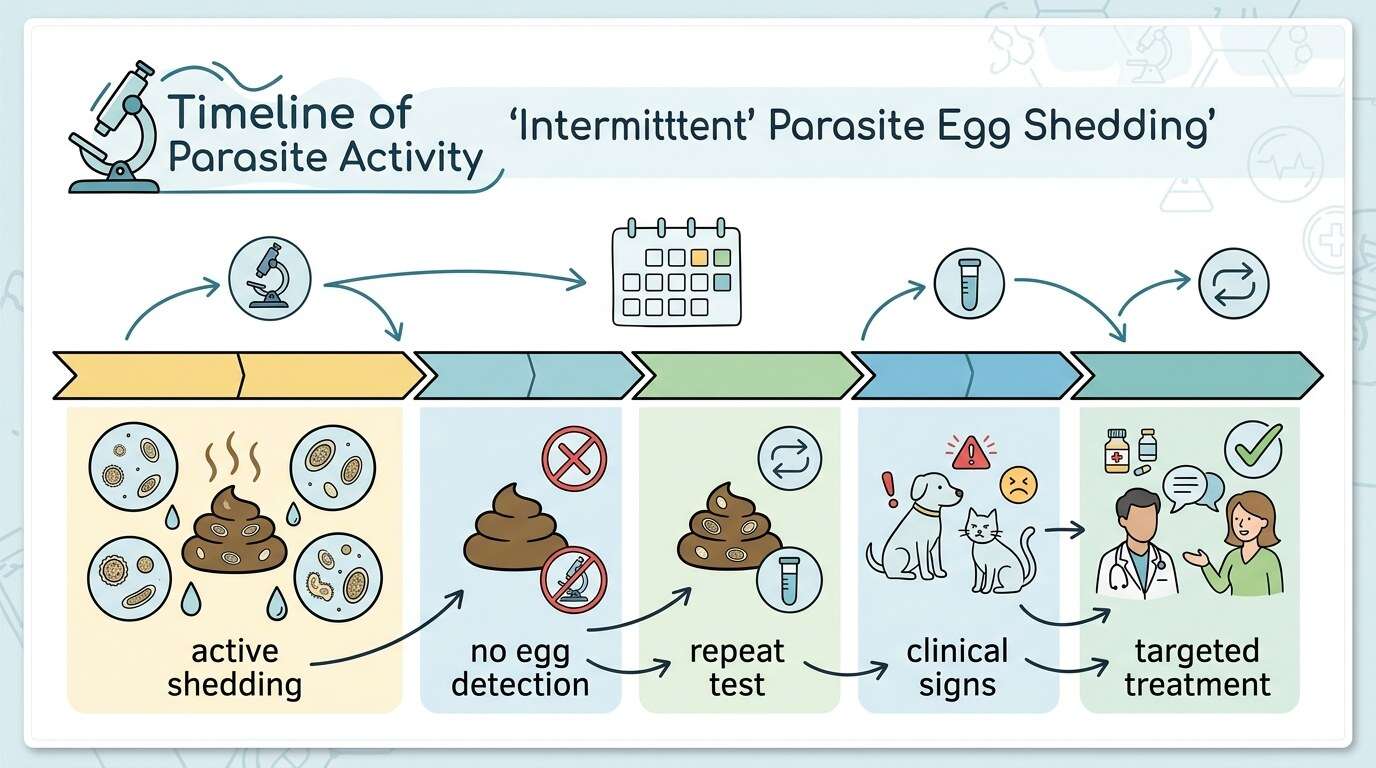
A normal fecal test doesn't always rule out worms, since some parasites shed eggs intermittently. If your cat has signs and the first test is negative, ask your vet whether a repeat or a different test makes sense.
Do Indoor Cats Need Rabies Shots? Risk, Rules and Vet Advice