A happy indoor cat has choices. She can hide or climb, play or nap, eat and drink without competition, and use a clean litter box in peace. You can't measure happiness directly, but you can watch for behavior that suggests she is comfortable and set up the home so that comfort is easy. This guide gives you the signals to watch and a checklist to work through.
Short answer
Cats do best when their environment meets a set of basic needs: a safe place, separate resources, chances to hunt and play, predictable and gentle interaction with people, and a home that respects their sense of smell. If those are in place and your cat's behavior is normal for her, she is probably doing well. If her behavior changes, check for a medical cause before assuming boredom.
In this guide:
Signs of a content cat

No single sign proves it, and every cat differs. Look at the overall pattern.
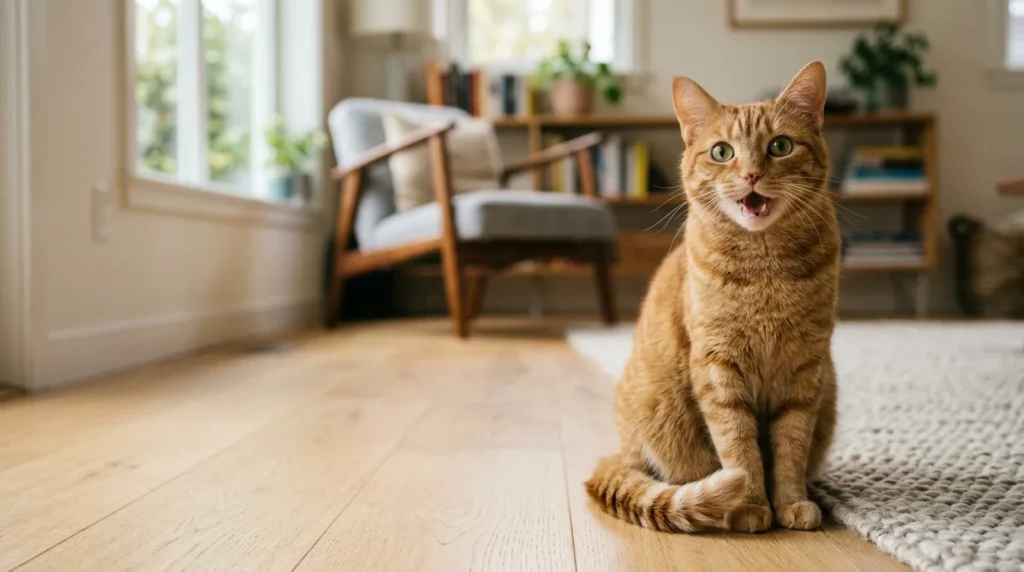
Relaxed body, with soft eyes and slow blinks
Tail held upright, or loosely relaxed when resting
- Normal appetite and routine grooming
- Using the litter box normally
Playing, exploring, and sleeping in a range of places
- Scratching appropriate surfaces
- Approaching you for attention on her terms
Know your own cat's baseline. A cat who has always been aloof is not unhappy because she isn't a lap cat.
Signs of stress or boredom
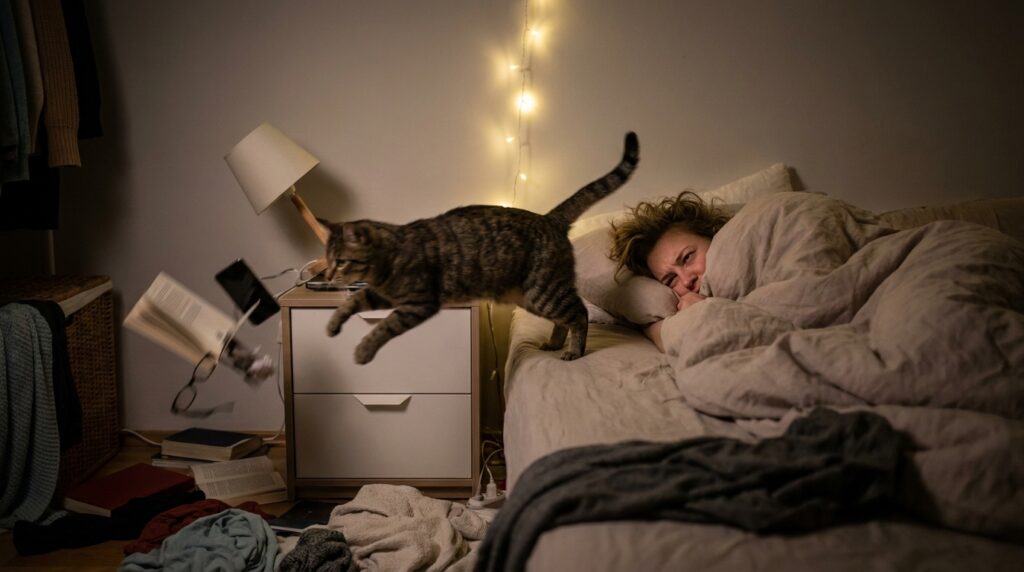
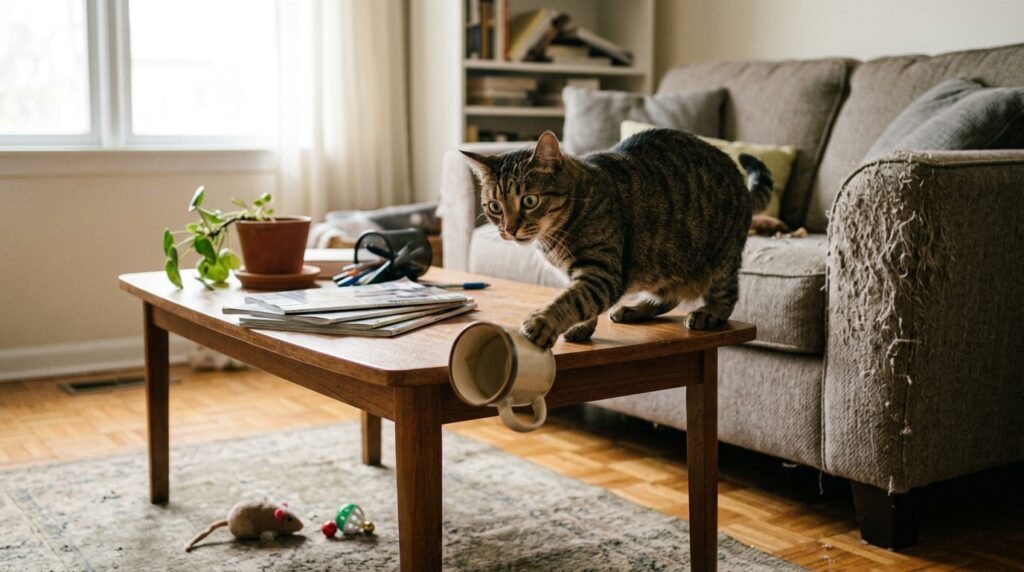
Hiding, overgrooming, loss of appetite, hissing, aggression, litter box accidents, and excess vocalizing can reflect stress, but they can equally come from pain or illness. Don't assume the cause. A cat that changes behavior suddenly or for more than a day or two should see a vet.
The five pillars of a healthy feline environment
International Cat Care and the American Association of Feline Practitioners describe five areas a good indoor environment covers. This is a practical way to audit your home.
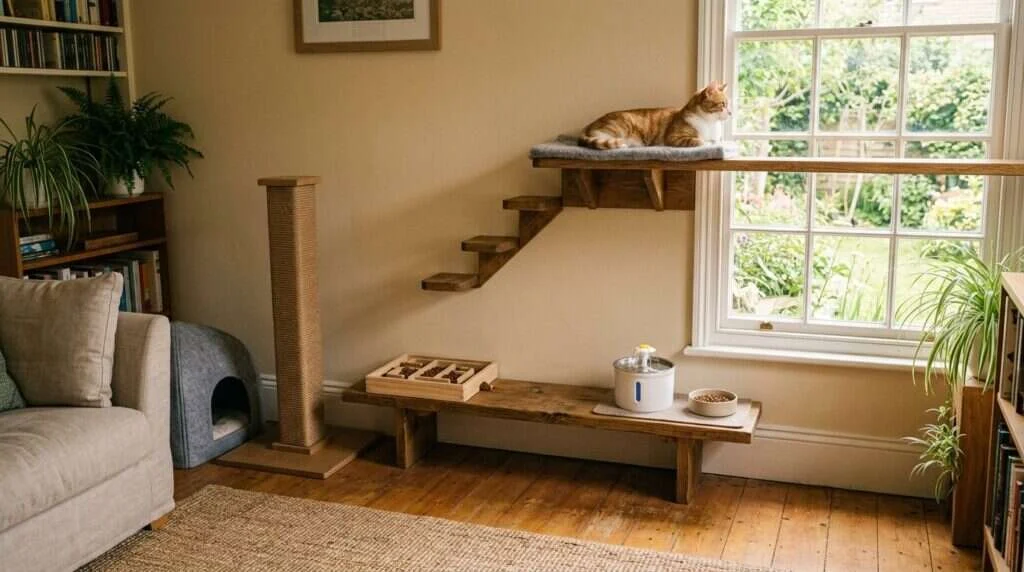
A safe place. Every cat needs somewhere to retreat: a box, a covered bed, a shelf, a quiet room. In a multi-cat home, offer more than one.
Multiple, separate resources. Food, water, litter boxes, scratching posts, resting places, and toys should be spread out so cats don't compete. A common guideline is one litter box per cat plus one extra, in different locations. Keep water away from food and litter if you can.
A chance to play and hunt. Daily play with a wand toy, plus puzzle feeders and solo toys, lets a cat use her natural behavior.
Positive, consistent, predictable interaction with people. Let your cat decide when she wants contact. Handle her gently, keep routines steady, and avoid punishment. Cats don't link punishment to the behavior.
An environment that respects her sense of smell. Scent is how cats feel secure. Avoid strong cleaning products and air fresheners near resting areas and litter boxes, and don't wash everything at once so familiar scents remain.
A daily checklist
Scoop litter at least once a day.
Fresh water, in more than one spot.
Meals at consistent times, with portions matched to calories.
At least one play session with a toy you move.
A food puzzle or foraging activity.
Calm time together if she wants it.
A quick look at appetite, litter box output, and mood.
A weekly checklist
Rotate toys.
Wash bowls and the water fountain, if you use one.
Check scratching surfaces.
Check for strings, plants, or other hazards she could reach.
Brush her, especially if she is long-haired.
Vertical space and window time
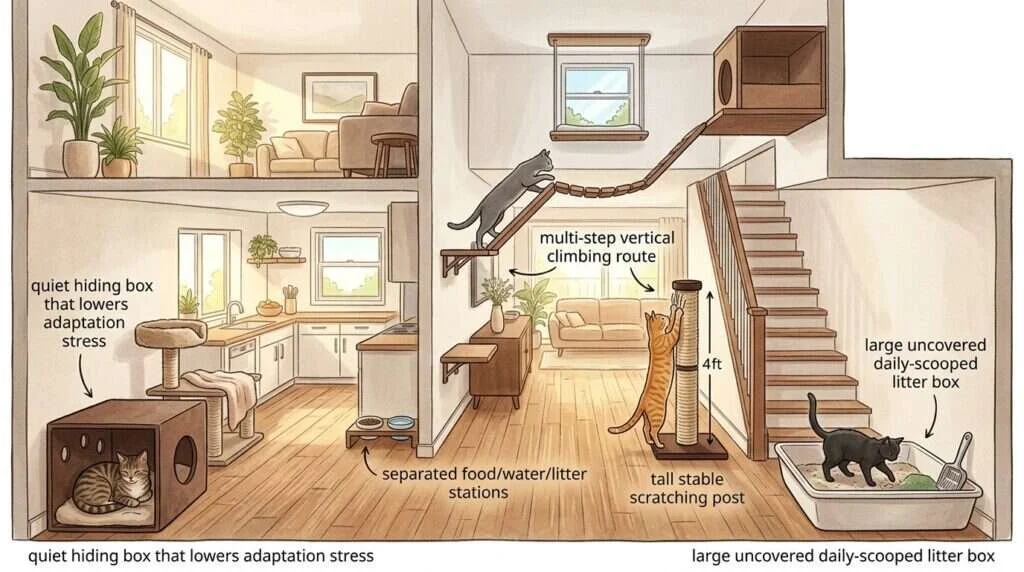
Cats like height. Shelves, a cat tree, or a sturdy window perch give her a way to survey the room. A window with a view gives her something to watch. Make sure window screens are secure, since cats can fall or push through weak ones.
Make changes slowly
Cats are sensitive to sudden changes. When you move furniture, change food, or introduce a new pet, do it gradually and keep her familiar items in place.
When to see your vet
Book a check-up for sudden changes in appetite, thirst, litter box use, vocalizing, or activity. Cats hide pain, so a behavior change is often the first sign. Regular checkups, usually at least yearly, catch problems earlier.
Frequently Asked Questions
Do indoor cats get lonely?
Some do, particularly when alone for long hours, but cats vary. Provide play and interaction and watch for changes. A second cat isn't automatically the solution, since cats don't always get along.
How do I know if my cat is bored?
Look for restless behavior, destructive scratching, or overeating, and rule out medical causes. Add play, puzzles, and vertical space.
Is it cruel to keep a cat indoors?
Indoor cats can live full lives if their needs are met. Indoors also protects against cars, predators, and some infectious diseases.
Related reading
References
AAFP and ISFM, Feline Environmental Needs Guidelines (catvets.com)
International Cat Care, environment and welfare resources (icatcare.org)
How Do Indoor Cats Get Worms? Routes, Signs and Prevention