Direct Answer: Is an Indoor Cat Cage or Playpen Better?
Neither an indoor cat cage nor a playpen is universally better. The right choice depends on the purpose.
An indoor cat cage is usually better when you need:
- Short-term confinement
- Post-surgery recovery space
- Safe transport
- Controlled introductions
- Monitoring of illness or injury
A cat playpen is usually better when you need:
- More movement space
- Kitten safety
- Temporary indoor exploration
- A larger contained area
For most healthy cats, these should not replace normal living space, exercise, and enrichment. They are management tools designed for specific situations.
Quick Takeaways
Indoor cat cages are best for controlled, short-term situations.
Playpens usually provide more room and flexibility.
Cats need enough space to move, rest, and access basic resources.
Long-term confinement can negatively affect wellbeing.
Introduce any confined space gradually.
The setup should include comfort, enrichment, and safety features.
Why Cat Owners Use Indoor Containment Areas
Although cats generally benefit from having freedom and environmental choice, temporary confinement can be useful.
Common reasons include:
New Cat Introductions
When bringing a new cat home, immediate free access to the entire house may create stress.
A controlled area allows:
- Gradual adjustment
- Scent exchange
- Safe observation
- Reduced conflict
Kitten Safety
Young kittens are curious and can get into dangerous situations.
A temporary play area can help protect kittens from:
- Electrical cords
- Small objects
- Unsafe areas
- Household hazards
Medical Recovery
After surgery or injury, cats may need reduced movement.
A controlled environment can help prevent:
- Excessive jumping
- Running
- Accidental injury
- Veterinary instructions should always guide recovery setups.
Travel and Temporary Situations
A contained area can help during:
- Moving homes
- Visitors staying over
- Home repairs
- Emergency situations
Understanding Indoor Cat Cages
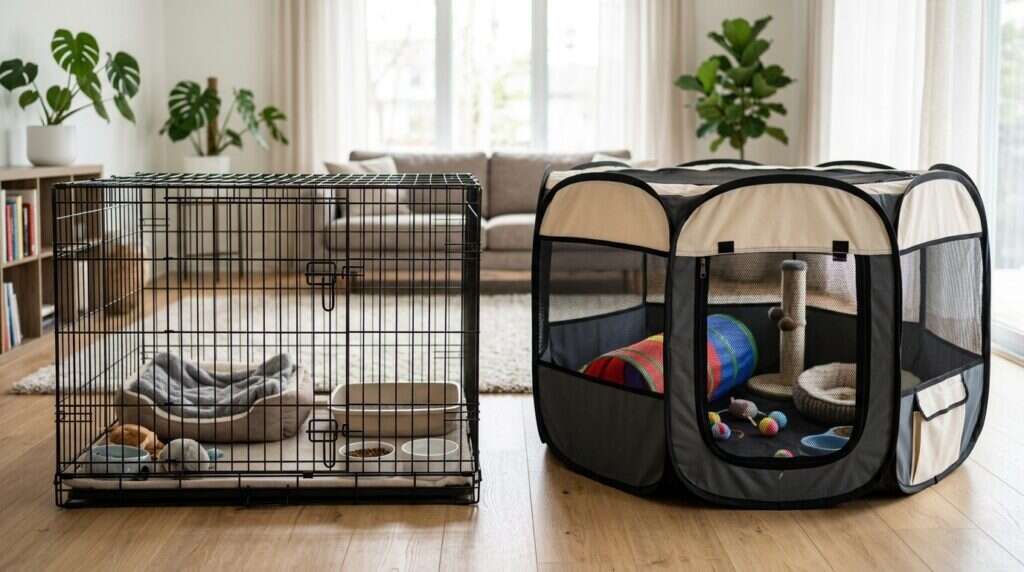
An indoor cat cage is typically a structured enclosure made from materials such as:
- Metal wire
- Plastic panels
- Hard-sided materials
- They are designed for security and controlled access.
Benefits of Indoor Cat Cages
Strong Containment
Cages are usually more secure than soft-sided options.
This makes them useful for cats that:
- Try to escape
- Need monitoring
- Require restricted movement
Easy Monitoring
Many cages allow owners to observe the cat easily.
This can help with:
- Medication schedules
- Food monitoring
- Recovery observation
Durable Construction
A well-built cage can provide long-term usefulness for occasional situations.
Limitations of Indoor Cat Cages
Despite their usefulness, cages have limitations.
Limited Movement
Small cages may restrict:
- Walking
- Stretching
- Exploration
- Cats need movement for physical and mental health.
Potential Stress
Some cats may feel uncomfortable if placed in a cage suddenly.
Signs of stress may include:
- Excessive vocalization
- Attempts to escape
- Hiding behavior
- Reduced appetite
Not Suitable as Permanent Housing
A cage should not replace a proper indoor environment.
Cats need:
- Play
- Social interaction
- Exploration
- Choice
Understanding Indoor Cat Playpens
Cat playpens are usually larger enclosed areas made from:
- Mesh fabric
- Foldable panels
- Lightweight materials
- They are designed to provide more freedom while maintaining control.
Benefits of Cat Playpens
More Space
Compared with many cages, playpens allow cats to:
- Walk around
- Play
- Stretch
- Explore
Flexible Placement
Many playpens can be moved easily.
This makes them useful for:
- Apartments
- Temporary setups
- Travel
Good for Kittens
Playpens can create a safe environment for young cats learning about their surroundings.
Limitations of Cat Playpens
Escape Risk
Some cats are excellent climbers and may escape from weaker designs.
Always consider:
- Height
- Material strength
- Closure systems
Less Durable
Soft materials may be damaged by:
- Scratching
- Biting
- Active cats
Cleaning Challenges
Fabric surfaces may absorb:
- Fur
- Dirt
- Odors
- Choose designs that are easy to maintain.
Indoor Cat Cage vs Playpen Comparison
| Feature | Indoor Cat Cage | Cat Playpen |
|---|---|---|
| Security | Very high | Moderate to high |
| Space | Limited | Usually larger |
| Best Use | Short-term control | Temporary living area |
| Portability | Depends on design | Usually easier |
| Recovery Support | Often better | Depends on situation |
| Kitten Use | Possible | Often suitable |
| Long-Term Use | Not recommended | Not recommended without supervision |
Choosing the Right Option Based on Situation
For a New Kitten
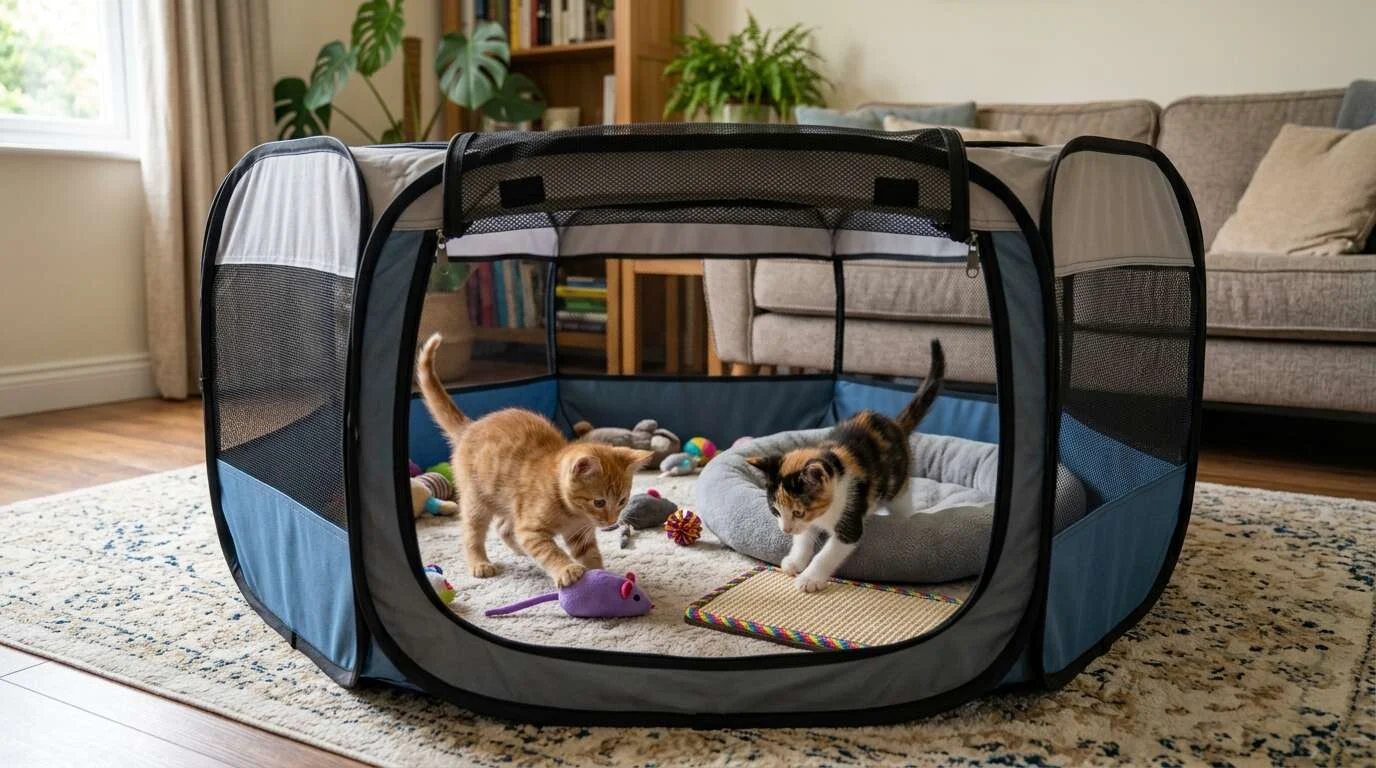
A playpen is often more suitable because kittens need room to:
- Move
- Play
- Explore safely
- Include:
- Bed
- Food area
- Water
- Toys
- Litter box
For Post-Surgery Recovery
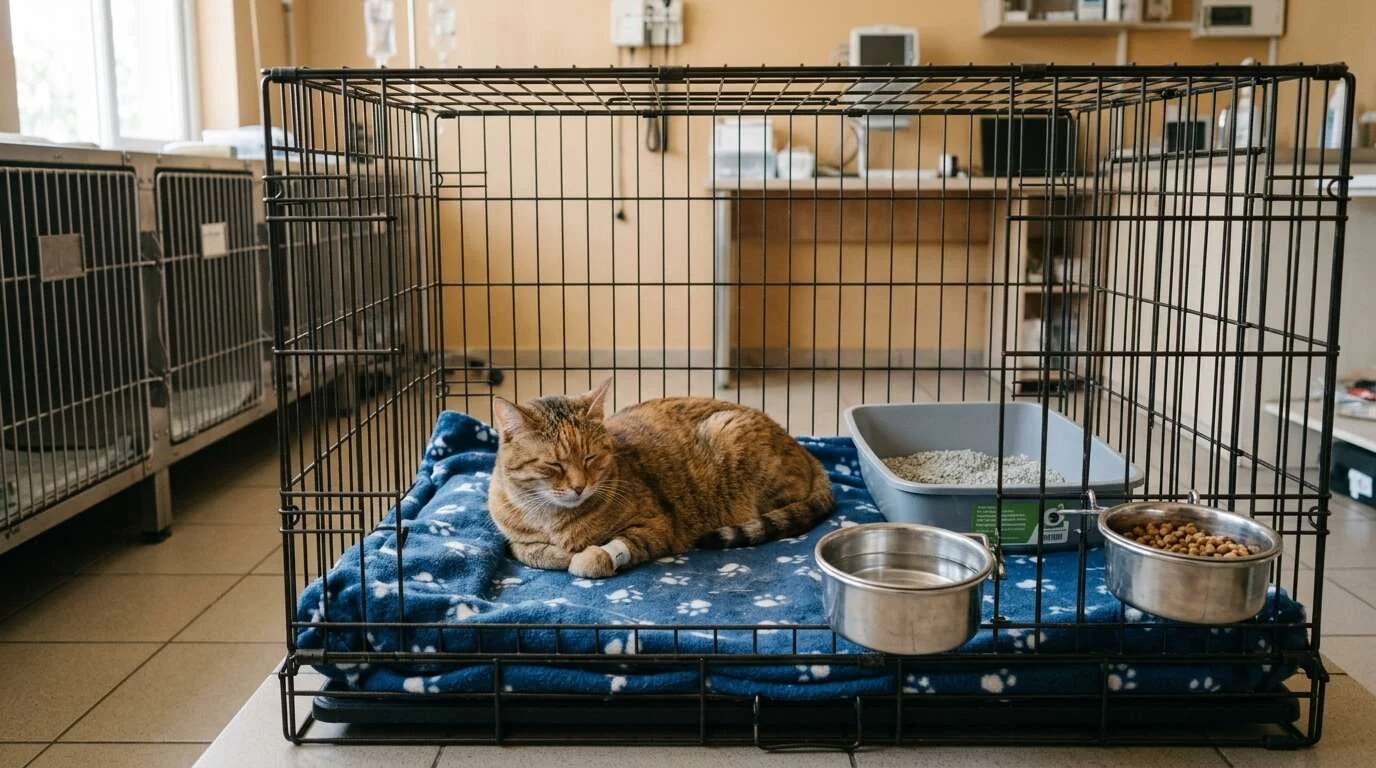
A cage may be more appropriate because movement may need to be restricted.
However, follow veterinary instructions regarding:
- Size requirements
- Activity limits
- Recovery duration
For Introducing a New Cat
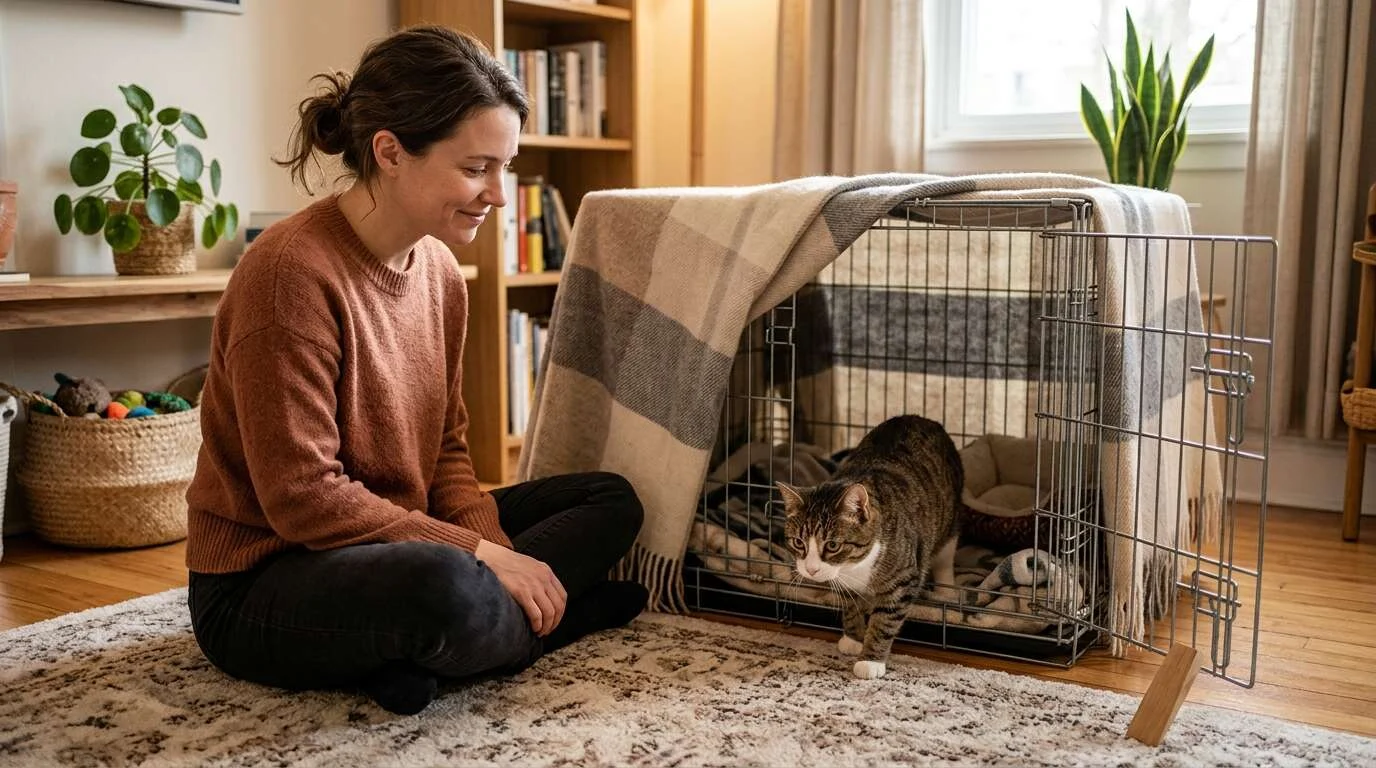
A separate room is often preferred, but a larger contained setup may help in certain situations.
The goal is reducing stress, not forcing interaction.
For Travel
A secure carrier is usually more appropriate for transportation.
Playpens may help at destinations where temporary containment is needed.
How to Make a Cat Cage or Playpen Comfortable
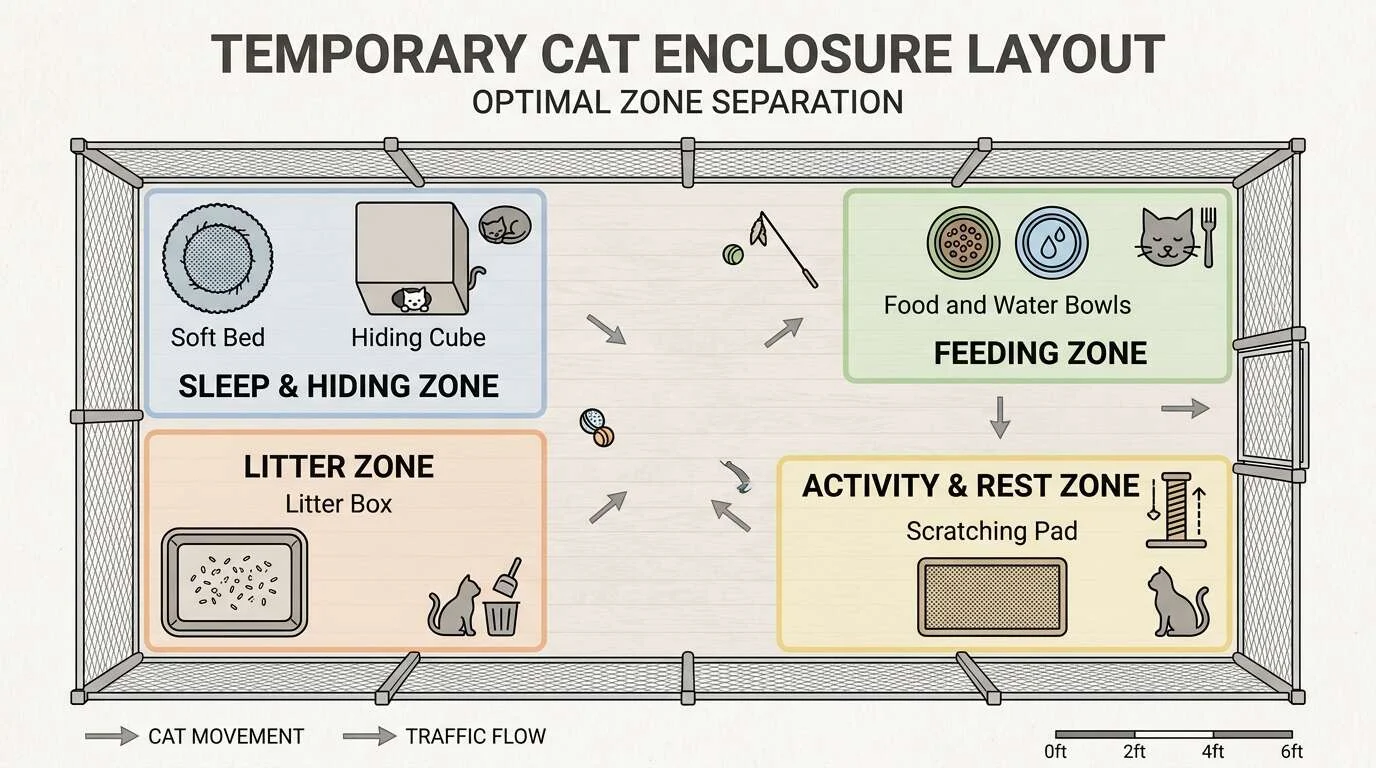
A confined space should still feel safe and comfortable.
Include:
Resting Area
Provide:
- Soft bedding
- Familiar blankets
- Comfortable temperature
Food and Water
Keep resources separated where possible.
Cats generally prefer distance between:
- Food
- Water
- Litter area
Litter Box
The litter box should be:
- Appropriately sized
- Clean
- Easily accessible
Enrichment
Even temporary spaces need stimulation.
Options include:
- Safe toys
- Puzzle feeders
- Scratching surfaces
Signs Your Cat Is Not Comfortable
Every cat reacts differently.
Monitor for:
- Constant hiding
- Refusing food
- Aggressive behavior
- Excessive stress behaviors
- Attempts to escape repeatedly
- If a cat shows significant distress, reassess the setup.
Common Mistakes When Using Cat Cages or Playpens
Using Them as Permanent Housing
Cats need freedom and environmental choices.
Choosing a Space That Is Too Small
Cats should be able to move comfortably.
Ignoring Enrichment
A bare enclosure can become stressful.
Introducing It Suddenly
Allow cats to explore gradually.
Frequently Asked Questions
Are indoor cat cages good for cats?
They can be useful for specific situations such as recovery, safety management, or temporary confinement. They should not replace normal living space.
How long can a cat stay in a playpen?
The appropriate time depends on the reason, setup, and individual cat. Cats need regular interaction, exercise, and enrichment.
Is a playpen better than a cage for kittens?
Often yes, because kittens usually benefit from more movement space and exploration opportunities.
Can a cat sleep in a playpen overnight?
A properly prepared playpen may be suitable temporarily if it provides enough space, comfort, and resources.
Do cats dislike being confined?
Some cats tolerate confinement well, while others find it stressful. Gradual introduction and proper setup can improve comfort.
Conclusion
Indoor cat cages and playpens can both be useful tools when used correctly. The best option depends on the reason you need containment.
A cage is generally better for secure, short-term situations where monitoring or movement restriction is important. A playpen is usually better when a cat needs more room for temporary exploration and activity.
The goal should always be to balance safety with quality of life. Cats need opportunities to move, play, explore, and make choices. A temporary enclosed area should support those needs rather than limit them unnecessarily.