Indoor Cat Houses Best Styles for Hiding Sleeping and Play
Direct Answer: Are Indoor Cat Houses Good for Cats?
Yes, indoor cat houses can be beneficial for cats because they provide a safe resting area, reduce stress, support natural hiding behaviors, and give cats a place they can consider their own.
A good indoor cat house should provide:
- Comfort
- Privacy
- Security
- Appropriate size
- Easy cleaning
- Safe materials
Cat houses are especially useful for shy cats, multi-cat households, senior cats, and cats that need quiet spaces away from household activity.
However, a cat house should not replace other environmental needs such as play, climbing, scratching, and social interaction.
Quick Takeaways
Cats naturally seek small, protected spaces for rest.
Indoor cat houses can reduce stress by providing a private retreat.
The best style depends on your cat’s personality and habits.
Older cats may need easier access and softer surfaces.
Cleaning and durability are important factors.
Some cats prefer open beds while others prefer enclosed houses.
Why Cats Like Indoor Cat Houses
Cats are both predators and prey animals by nature. Their instincts encourage them to find locations where they can rest while feeling protected.
An enclosed space provides several psychological benefits.
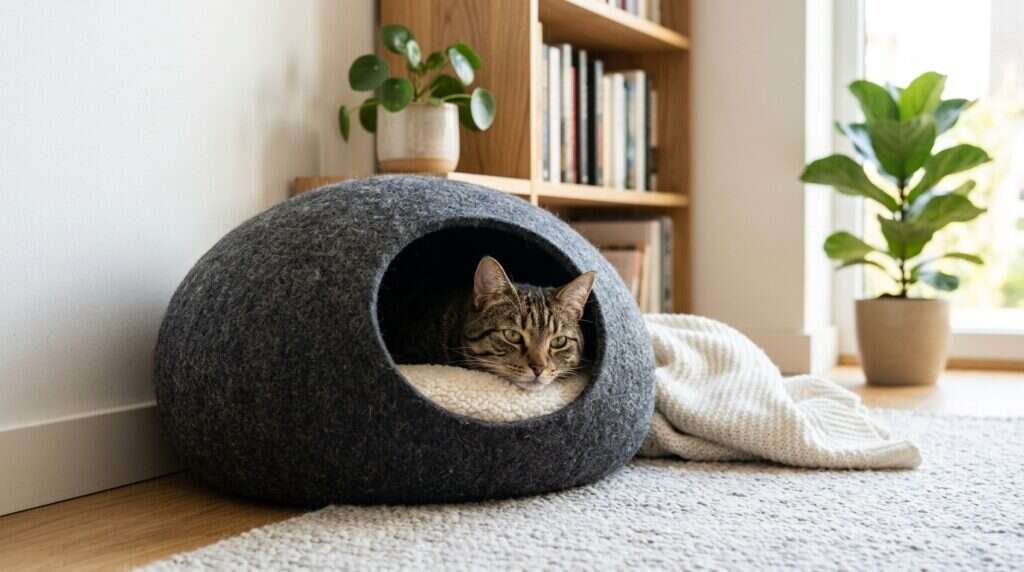
Feeling Secure
A cat house creates boundaries around the resting area, which can help cats relax.
This can be especially useful in homes with:
- Children
- Other pets
- Frequent visitors
- Loud environments
- A private space allows cats to retreat when they need quiet time.
Reducing Stress
Environmental control is important for feline wellbeing.
Cats may experience stress when they cannot find a safe resting area.
Signs of stress may include:
- Hiding more often
- Changes in appetite
- Increased scratching
- Avoiding interaction
- Litter box changes
Providing a dedicated resting place can support a more comfortable home environment.
Supporting Natural Behavior
Hiding is not always a sign of fear. For many cats, hiding is a normal and healthy behavior.
Cats use enclosed spaces for:
- Sleeping
- Observing
- Relaxing
- Feeling secure
- A cat house allows them to express these natural preferences.
Types of Indoor Cat Houses
Different designs serve different purposes. Choosing the right style depends on how your cat uses space.
1. Enclosed Soft Cat Houses
Soft cat houses are among the most common options.
They usually include:
- Fabric walls
- Cushion padding
- Small entrance openings
Best For
- Cats that enjoy cozy spaces
- Small apartments
- Quiet sleepers
Advantages
- Comfortable
- Lightweight
- Easy to move
- Often affordable
Limitations
Some fabric houses may collect fur and require regular washing.
2. Wooden Indoor Cat Houses
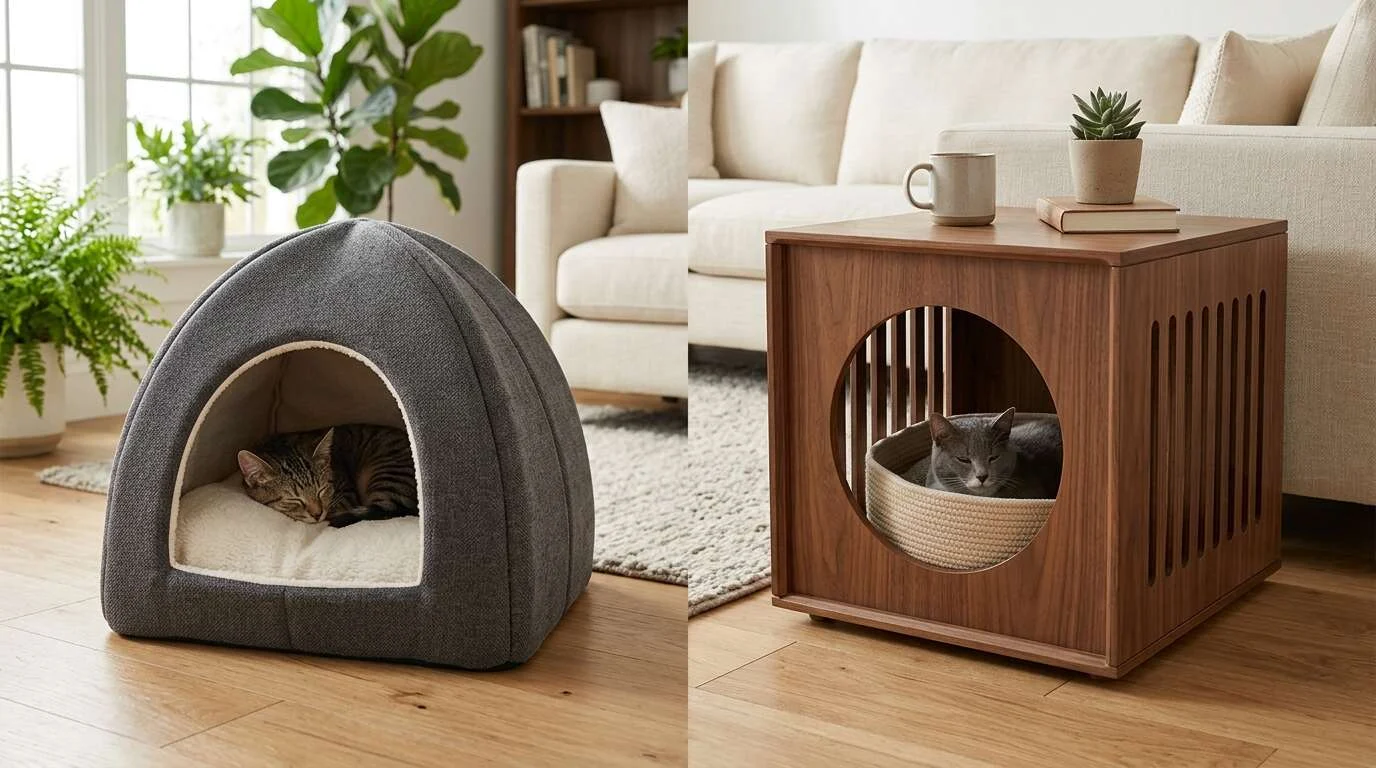
Wooden cat houses provide a stronger and more permanent structure.
They often offer:
- Durability
- Stability
- Modern appearance
Best For
- Larger cats
- Long-term use
- Owners wanting furniture-style designs
Considerations
Check that:
- Materials are cat-safe
- Edges are smooth
- Ventilation is adequate
3. Cat Houses With Scratching Areas
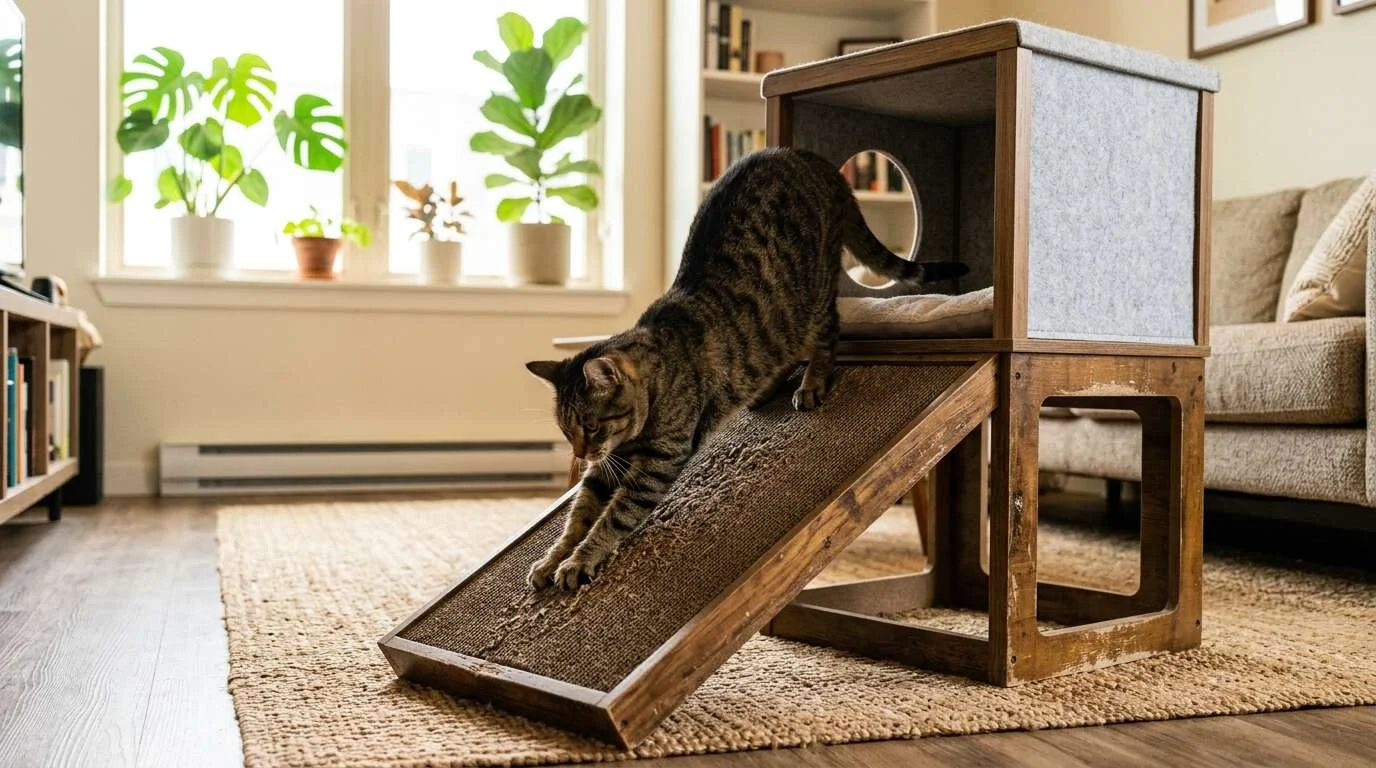
Some indoor cat houses combine resting and scratching functions.
These designs may include:
- Scratching posts
- Cardboard surfaces
- Climbing sections
Benefits
They support multiple natural behaviors:
- Sleeping
- Scratching
- Stretching
- Playing
- This can be useful in smaller homes where space is limited.
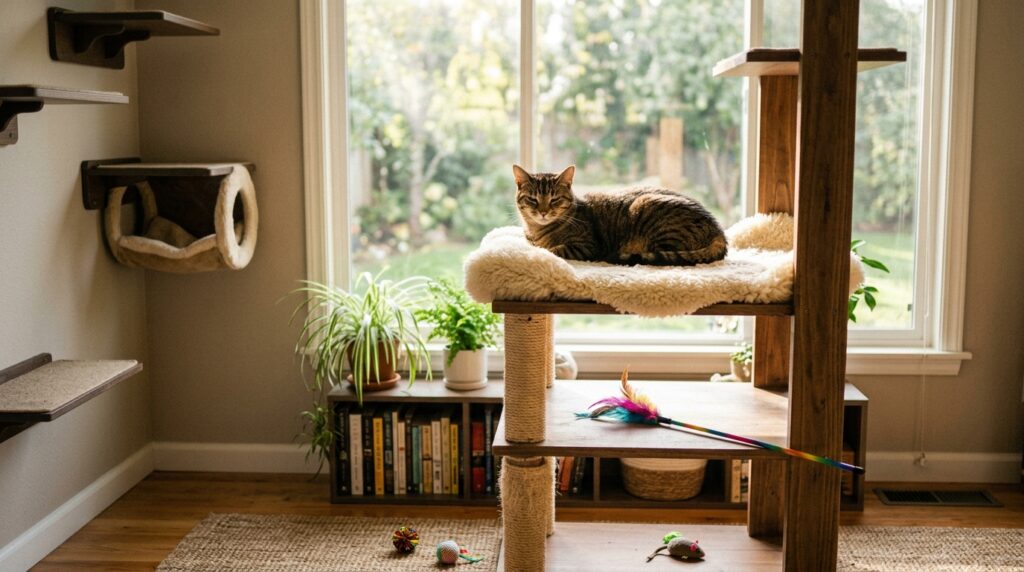
4. Elevated Cat Houses
Elevated houses provide cats with vertical space.
Cats often enjoy higher locations because they provide a sense of safety and better observation.
Examples include:
- Raised beds
- Shelf-mounted houses
- Cat tree houses
Benefits
- Uses vertical space
- Encourages movement
- Creates a secure viewpoint
5. Multi-Level Cat Houses
Multi-level designs combine:
- Sleeping areas
- Platforms
- Climbing opportunities
- Play spaces
- These are useful for active cats that enjoy exploring.
- They can help indoor cats stay physically engaged.
Choosing the Right Indoor Cat House Size

Size matters because cats need enough room to comfortably turn around, stretch, and rest.
A suitable cat house should allow your cat to:
- Enter easily
- Turn around comfortably
- Lie down naturally
- Stretch their body
- A house that is too small may feel uncomfortable and may be ignored.
A house that is extremely large may feel less secure for cats that prefer enclosed spaces.
Important Features to Look For
Comfortable Materials
Cats are sensitive to texture.
Popular materials include:
- Soft fabric
- Fleece
- Cotton
- Wood
- Felt
- The best material depends on your cat’s preferences.
Easy Cleaning
A cat house should be practical for regular maintenance.
Useful features:
- Removable cushions
- Machine-washable covers
- Accessible surfaces
- Clean sleeping areas help reduce:
- Odor
- Hair buildup
- Dirt accumulation
Good Ventilation
Even enclosed houses need airflow.
Look for:
- Proper openings
- Breathable materials
- Comfortable temperature control
Stability
A cat house should not easily collapse or move.
This is especially important for:
- Large cats
- Active cats
- Older cats with balance concerns
Best Indoor Cat House Placement
Where you place the cat house can affect whether your cat uses it.
Good locations include:
Quiet Corners
Cats often prefer areas away from heavy traffic.
Near Windows
Many cats enjoy watching outdoor activity.
Near Family Areas
Social cats may want to rest close to people.
Multiple Locations
Multi-cat homes may benefit from several resting options.
Cat House Ideas for Small Apartments
Limited space does not mean cats cannot enjoy private areas.
Useful options include:
Window Cat Houses
Provide entertainment and resting space.
Furniture-Style Cat Houses
Blend with home décor.
Wall-Mounted Houses
Use vertical space efficiently.
Foldable Houses
Useful for flexible setups.
Cat House vs Cat Bed: Which Is Better?
Both options serve different purposes.
| Feature | Cat House | Cat Bed |
|---|---|---|
| Privacy | High | Low |
| Security | Higher | Moderate |
| Visibility | Lower | Higher |
| Best For | Shy/resting cats | Social sleepers |
| Cleaning | Depends on design | Usually easier |
Many cats benefit from having both options available.
Indoor Cat Houses for Senior Cats
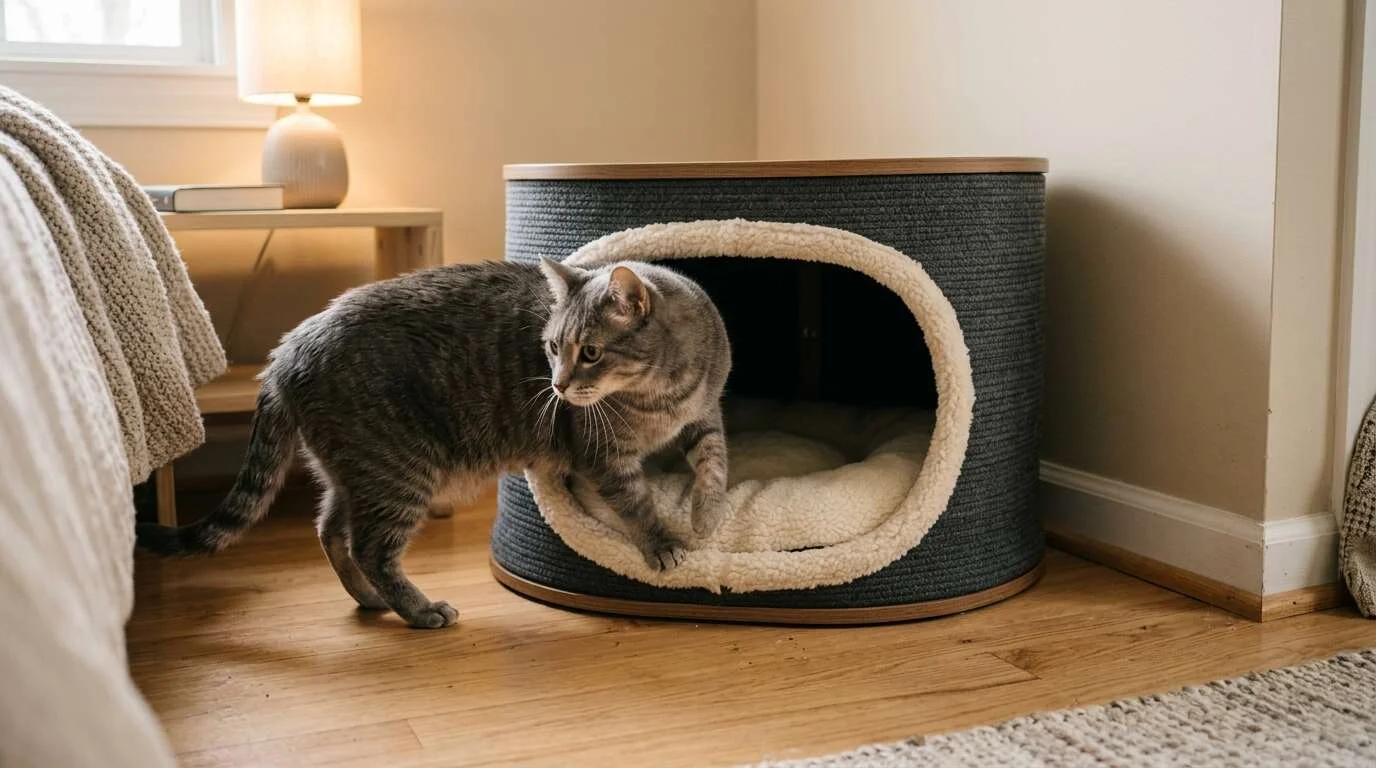
Older cats may need special considerations.
Choose houses with:
- Easy entry
- Soft surfaces
- Warm materials
- Ground-level access
- Senior cats may avoid houses that require jumping or climbing.
- Comfort becomes increasingly important as cats age.
Common Mistakes When Buying a Cat House
Choosing Style Over Function
A beautiful design is not useful if your cat does not feel comfortable inside.
Ignoring Cat Size
Large cats need appropriately sized spaces.
Placing It in a Busy Area
Cats may avoid houses located where they cannot relax.
Forgetting Cleaning Needs
A difficult-to-clean house may become unpleasant over time.
Frequently Asked Questions
Do all cats like indoor cat houses?
No. Some cats prefer open beds or elevated platforms, while others love enclosed spaces.
Where should I put my cat’s house?
Place it somewhere quiet, comfortable, and accessible. Many cats enjoy locations near windows or family areas.
Are cat houses good for anxious cats?
They can help by providing a safe retreat, although severe anxiety may require veterinary or behavior guidance.
How often should I clean a cat house?
Cleaning frequency depends on material and usage, but regular removal of fur and dirt is recommended.
What size cat house should I buy?
Choose one large enough for your cat to comfortably turn around, stretch, and rest.
Conclusion
Indoor cat houses provide more than a place to sleep. They give cats a private environment where they can feel secure, relax, and express natural behaviors.
The best cat house depends on your cat’s personality, size, age, and lifestyle. Some cats prefer soft enclosed shelters, while others enjoy elevated structures that combine resting and exploration.
A well-chosen cat house can become an important part of an indoor cat’s environment, especially when combined with play, scratching opportunities, enrichment, and social interaction.
Creating a comfortable home for your cat is not about adding more products. It is about understanding what makes cats feel safe and supported.