Direct Answer: What Is an Indoor Cat Enclosure?
An indoor cat enclosure is a secure space designed to allow indoor cats controlled access to outdoor environments without the dangers of free roaming.
A good enclosure provides:
- Fresh air and sunlight
- Safe exploration
- Exercise opportunities
- Mental stimulation
- Protection from outdoor hazards
Indoor cat enclosures can range from simple window boxes and balcony structures to large backyard catios with climbing areas, shelves, and resting spaces.
The best design depends on your home, budget, and your cat’s needs.
Quick Takeaways
Indoor cat enclosures provide outdoor enrichment while keeping cats safer.
A secure structure must prevent escapes and protect against predators.
Enclosures should include climbing areas, shade, resting spaces, and stimulation.
Small spaces can still work with thoughtful design.
Regular cleaning and inspection are important for safety.
Outdoor access should supplement, not replace, indoor enrichment.
Why Indoor Cat Enclosures Are Becoming Popular
Cats have natural behaviors that are difficult to fully satisfy inside a home.
Even comfortable indoor cats may enjoy:
- Watching birds
- Smelling outdoor scents
- Feeling sunlight
- Exploring different textures
- Observing changing environments
An enclosure allows cats to experience these benefits without the risks associated with unrestricted outdoor access.
For many owners, it offers a middle ground between two choices:
Indoor-only lifestyle
- Safer
- Controlled environment
- Requires enrichment
Free outdoor roaming
- More natural exploration
- Higher safety risks
Enclosure-based outdoor access
- Controlled safety
- Outdoor stimulation
- Reduced risks
Types of Indoor Cat Enclosures
Different homes require different solutions. There is no single perfect enclosure design.
1. Window Cat Enclosure
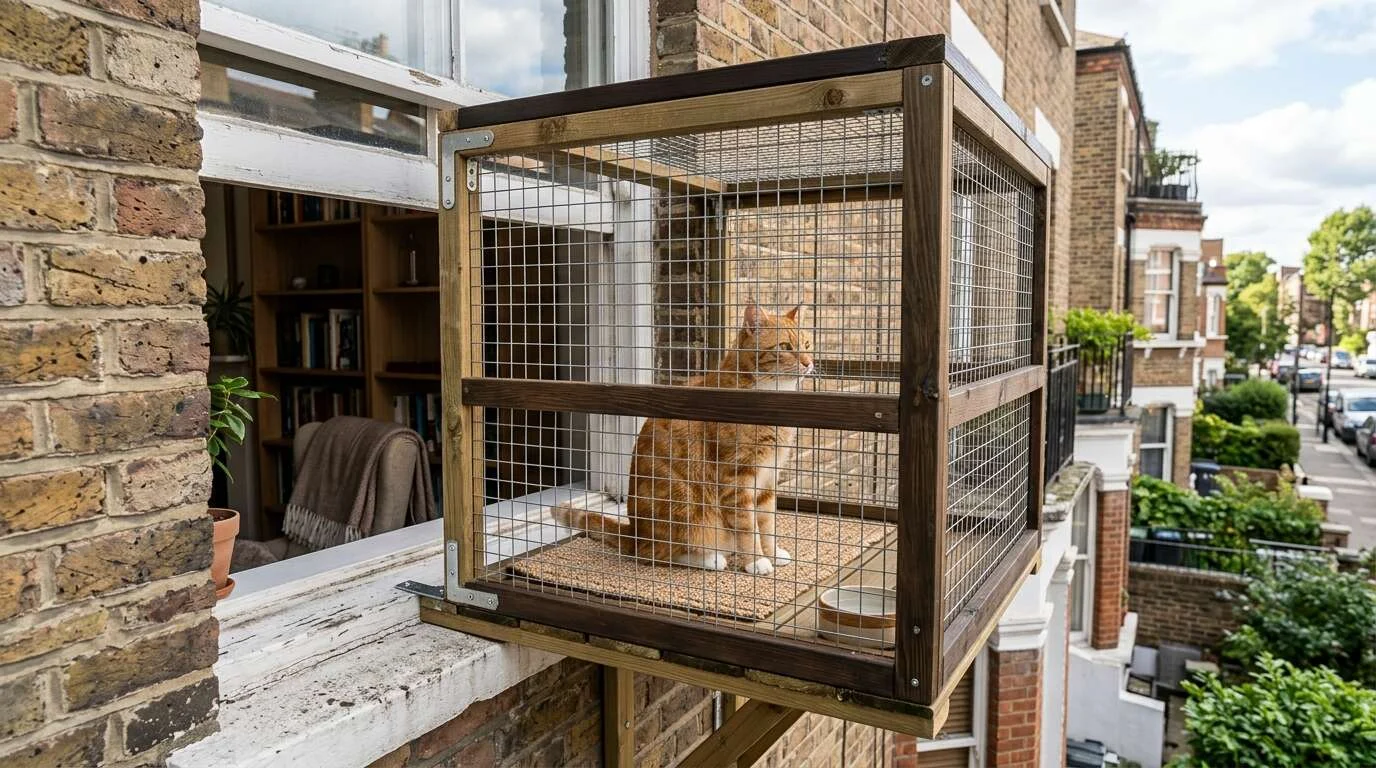
A window enclosure is one of the simplest options for indoor cats.
It extends from a window and creates a small protected outdoor area.
Benefits
- Works for apartments
- Requires limited space
- Provides fresh air and views
- Usually easier to install
Best For
- Cats that enjoy watching outside activity
- Smaller homes
- Owners with limited outdoor space
Limitations
A window enclosure usually provides less room for climbing and movement compared with larger structures.
2. Balcony Cat Enclosure
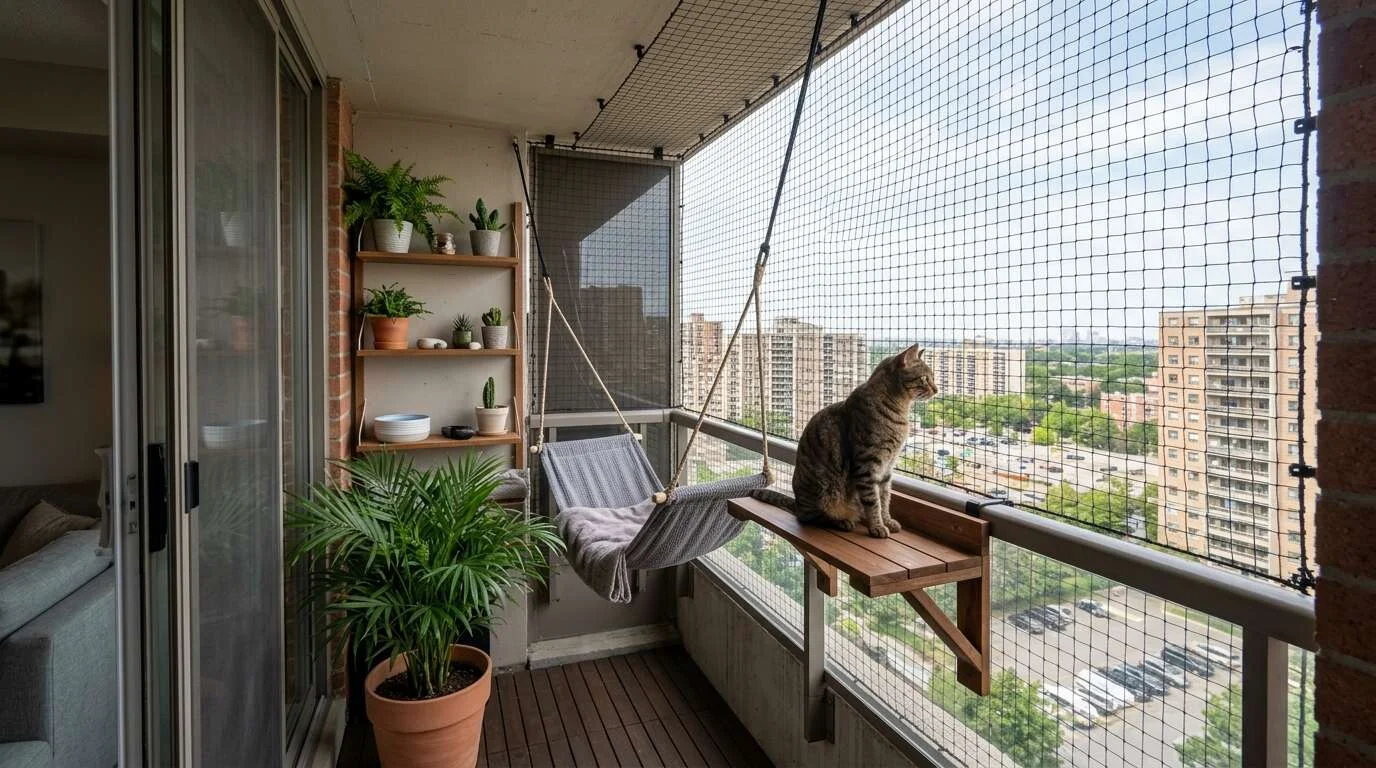
Apartment owners can create safe outdoor access by enclosing a balcony area.
A balcony cat enclosure can include:
- Protective mesh
- Cat-safe barriers
- Shelves
- Resting platforms
Important Safety Considerations
Balconies require careful planning because cats are excellent climbers and escape artists.
Check:
- Gaps between barriers
- Weak points
- Loose materials
- Height protection
- The enclosure should be fully secured before allowing cat access.
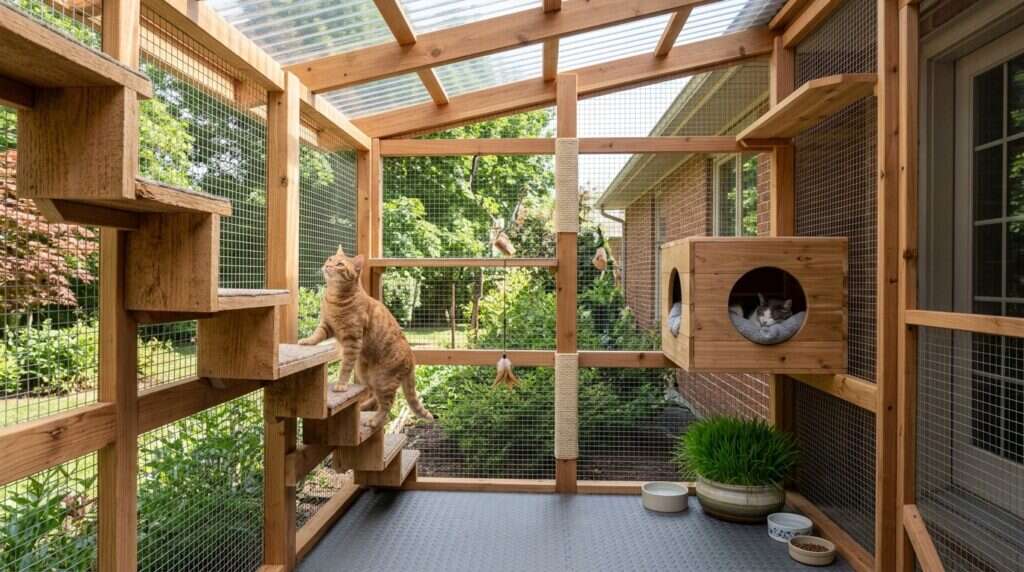
3. Outdoor Catio
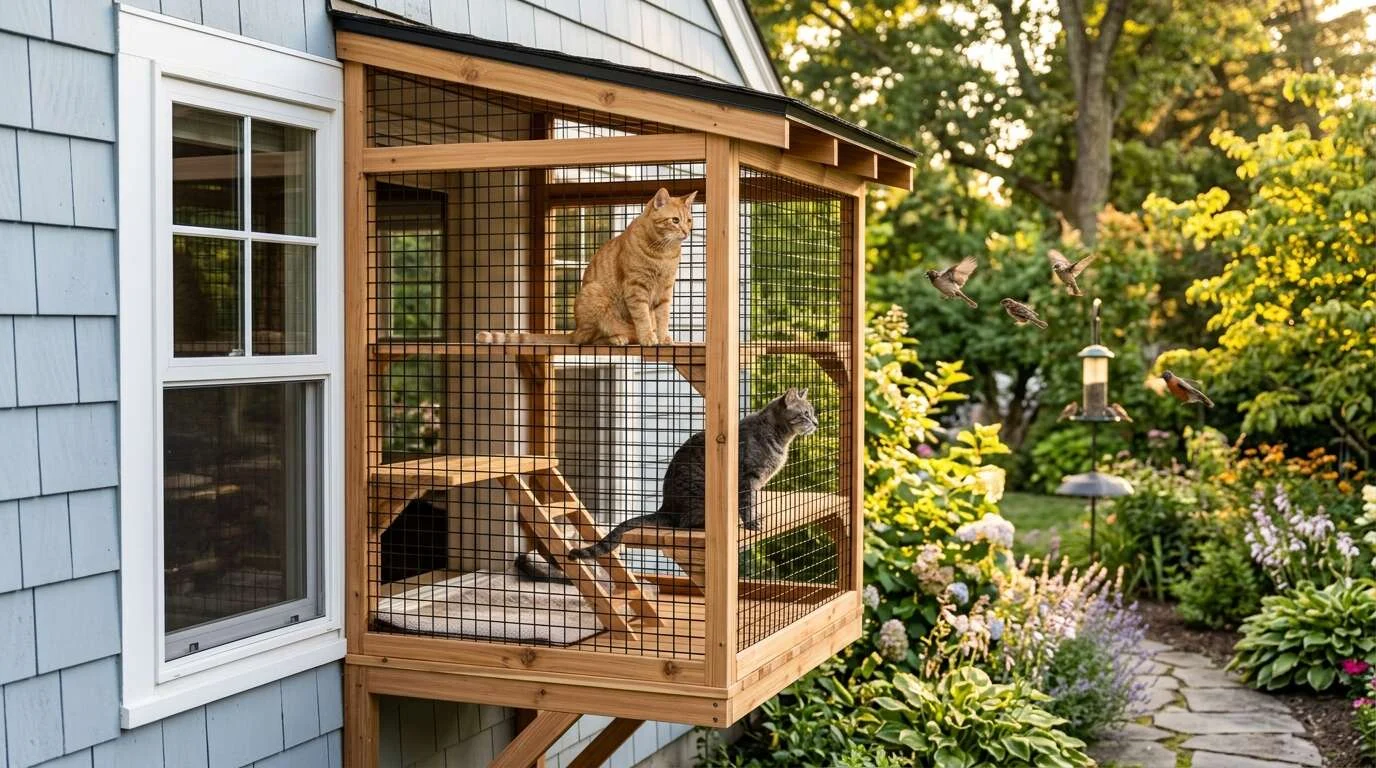
A catio is one of the most popular enclosure options.
A catio is a protected outdoor structure designed specifically for cats.
It may include:
- Multiple levels
- Climbing platforms
- Scratching surfaces
- Sheltered areas
- Sleeping spaces
Advantages
Catios provide more room for natural behaviors.
Cats can:
- Climb
- Explore
- Observe wildlife
- Rest outdoors safely
- They are especially useful for energetic cats that need more stimulation.
4. Indoor Portable Cat Enclosures
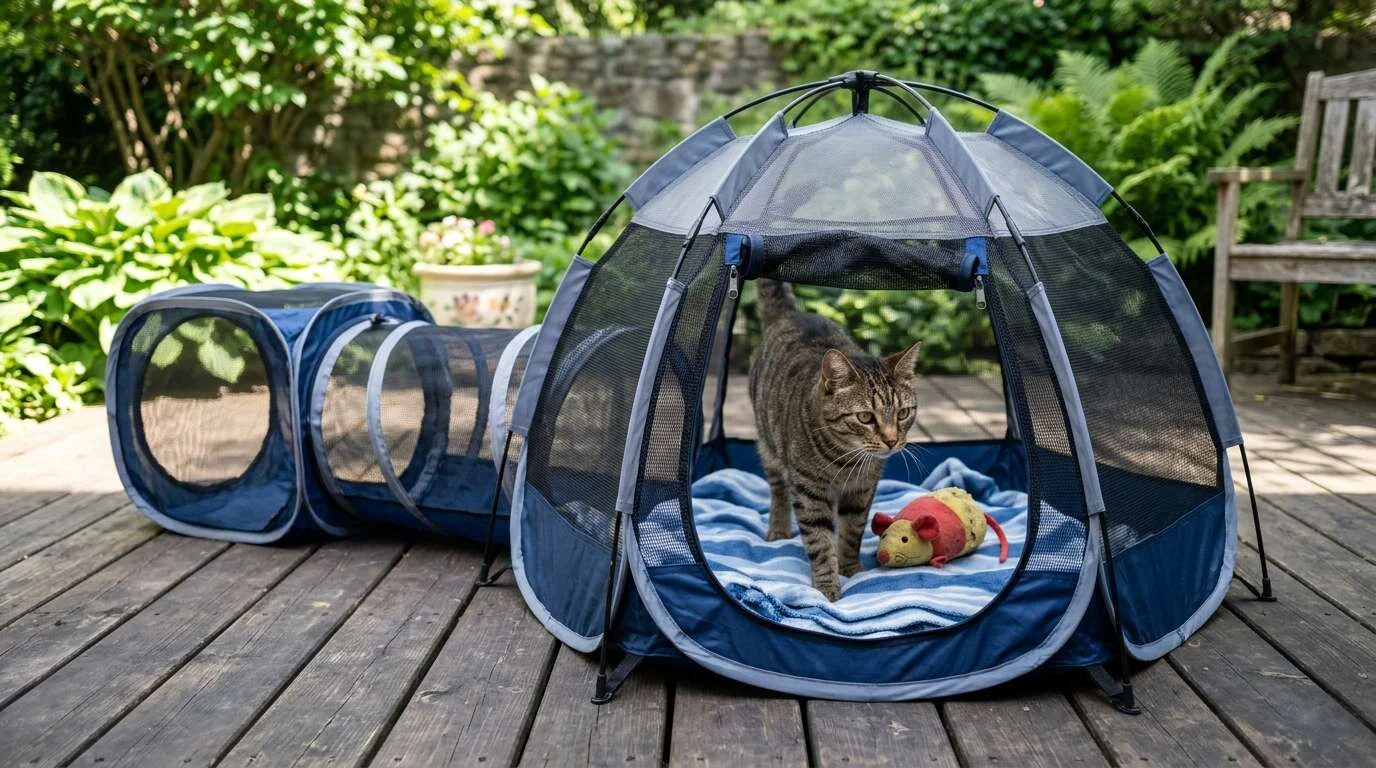
Portable enclosures can be useful for temporary outdoor experiences.
Examples include:
- Foldable mesh tents
- Playpens
- Travel-style outdoor areas
Benefits
- Affordable
- Easy to move
- Good for renters
Limitations
They may not provide the same durability or space as permanent structures.
Designing a Cat-Friendly Enclosure
A safe enclosure is not only about preventing escape. It should also encourage healthy behaviors.
Include Different Levels
Cats naturally enjoy vertical space.
Adding height helps create a more interesting environment.
Ideas include:
- Platforms
- Shelves
- Steps
- Climbing structures
- Vertical areas allow cats to:
- Observe surroundings
- Exercise
- Feel secure
Provide Comfortable Resting Areas
Cats spend many hours resting, so comfortable spaces are important.
Useful additions include:
- Covered beds
- Hammocks
- Elevated resting areas
- Shade structures
- Outdoor spaces should always include protection from direct weather exposure.
Add Natural Enrichment
Outdoor smells and sounds are naturally stimulating.
You can enhance the enclosure with:
- Cat-safe plants
- Natural scratching materials
- Different textures
- Puzzle feeders
- However, always verify that plants are safe for cats before adding them.
Include Shade and Weather Protection
Outdoor environments change throughout the day.
A good enclosure should protect cats from:
- Excessive sunlight
- Rain
- Wind
- Extreme temperatures
- Important features include:
- Covered sections
- Waterproof areas
- Insulated resting spaces when needed
Indoor Cat Enclosure Safety Checklist
Before allowing your cat into an enclosure, check:
| Safety Area | What to Check |
|---|---|
| Structure | Strong materials and secure connections |
| Escape Prevention | No gaps or weak points |
| Flooring | Safe, comfortable surface |
| Weather | Shade and protection available |
| Plants | Only cat-safe plants included |
| Cleaning | Easy access for maintenance |
| Supervision | Monitor first outdoor sessions |
Common Mistakes When Building a Cat Enclosure
Using Weak Materials
Cats can damage poor-quality mesh or barriers.
Choose durable materials designed for long-term use.
Leaving Escape Points
Cats can fit through surprisingly small spaces.
Inspect corners, doors, and connection points carefully.
Forgetting Maintenance
Outdoor areas collect:
- Dirt
- Leaves
- Insects
- Moisture
- Regular cleaning keeps the environment healthier.
Making the Space Boring
A large enclosure without stimulation may not provide much benefit.
Include:
- Climbing options
- Toys
- Rest areas
- Observation points
Indoor Cat Enclosure Ideas for Small Homes
Limited space does not mean cats cannot benefit from an enclosure.
Small-space ideas include:
Window Perch Extension
A secure window area can provide hours of entertainment.
Vertical Wall Access
Indoor shelves connected to an enclosure can increase usable space.
Balcony Conversion
A protected balcony can become a safe outdoor room.
Foldable Outdoor Play Areas
Useful for temporary access.
Do All Cats Enjoy Outdoor Enclosures?
Not every cat immediately enjoys outdoor access.
Some cats may feel uncertain because of:
- New sounds
- Different smells
- Weather changes
- Unfamiliar surroundings
- Introduce the enclosure gradually.
- Start with:
- Short supervised sessions
- Familiar bedding
- Favorite toys
- Calm interaction
- Allow the cat to decide how quickly they explore.
Indoor Cat Enclosure vs Free Outdoor Access
| Feature | Cat Enclosure | Free Roaming |
|---|---|---|
| Safety | Higher | Lower |
| Exercise | Good | High |
| Disease Exposure | Reduced | Increased |
| Predator Risk | Reduced | Increased |
| Owner Control | High | Low |
| Natural Exploration | Moderate-High | High |
An enclosure provides a balance between safety and natural stimulation.
Frequently Asked Questions
What is the safest outdoor option for indoor cats?
A secure cat enclosure or catio is generally one of the safest ways to provide outdoor access.
Can apartment cats use outdoor enclosures?
Yes. Window and balcony enclosures can work well when properly secured.
Do indoor cats need outdoor access?
No. Indoor cats can live healthy lives without outdoor access, but safe outdoor enrichment can improve stimulation for many cats.
How big should a cat enclosure be?
The ideal size depends on available space. More important than size is providing opportunities for movement, climbing, resting, and exploration.
Can cats escape from poorly built enclosures?
Yes. Cats are excellent climbers and can exploit small weaknesses. Secure construction is essential.
Conclusion
Indoor cat enclosures offer a practical way to provide outdoor experiences while maintaining the safety benefits of indoor living.
A well-designed enclosure allows cats to enjoy fresh air, sunlight, movement, and environmental stimulation without many dangers associated with free roaming.
Whether you choose a simple window enclosure, balcony setup, or full backyard catio, the most important factors are safety, comfort, enrichment, and regular maintenance.
The goal is not simply giving cats more space. It is creating a healthier environment where they can express natural behaviors while remaining protected.