Indoor Cat Door Guide Choosing a Door for Room by Room Access
Direct Answer: Are Indoor Cat Doors Good for Cats?
Yes, indoor cat doors can be useful for many cats because they provide freedom of movement, reduce dependence on owners, and allow cats to access important areas more easily.
An indoor cat door can be helpful for:
- Allowing access to litter box areas
- Creating quiet spaces for cats
- Managing multi-cat households
- Separating feeding areas
- Improving daily routines
- The best indoor cat door should be:
- Large enough for your cat
- Safe and secure
- Easy to use
- Properly installed
- Suitable for your home layout
An indoor cat door is a convenience tool, not a replacement for proper environmental enrichment or interaction.
Quick Takeaways
Indoor cat doors help cats move freely between rooms.
They are useful for litter areas, feeding spaces, and quiet retreats.
Different designs suit different home situations.
Size and installation safety are important.
Some cats need gradual training to use them.
Multi-cat homes may benefit from controlled access options.
Why Indoor Cats May Benefit From More Freedom
Cats are territorial animals. They naturally like having access to different areas where they can:
- Rest
- Observe
- Explore
- Hide
- Eat
- Use the litter box privately
- In a traditional home setup, closed doors can interrupt a cat’s routine.
- For example:
- A closed bedroom door may block access to a preferred sleeping location.
- A closed laundry room may prevent access to the litter box.
- A closed office may remove a quiet retreat.
- An indoor cat door allows cats to manage movement more independently.
Common Uses for Indoor Cat Doors
1. Litter Box Room Access
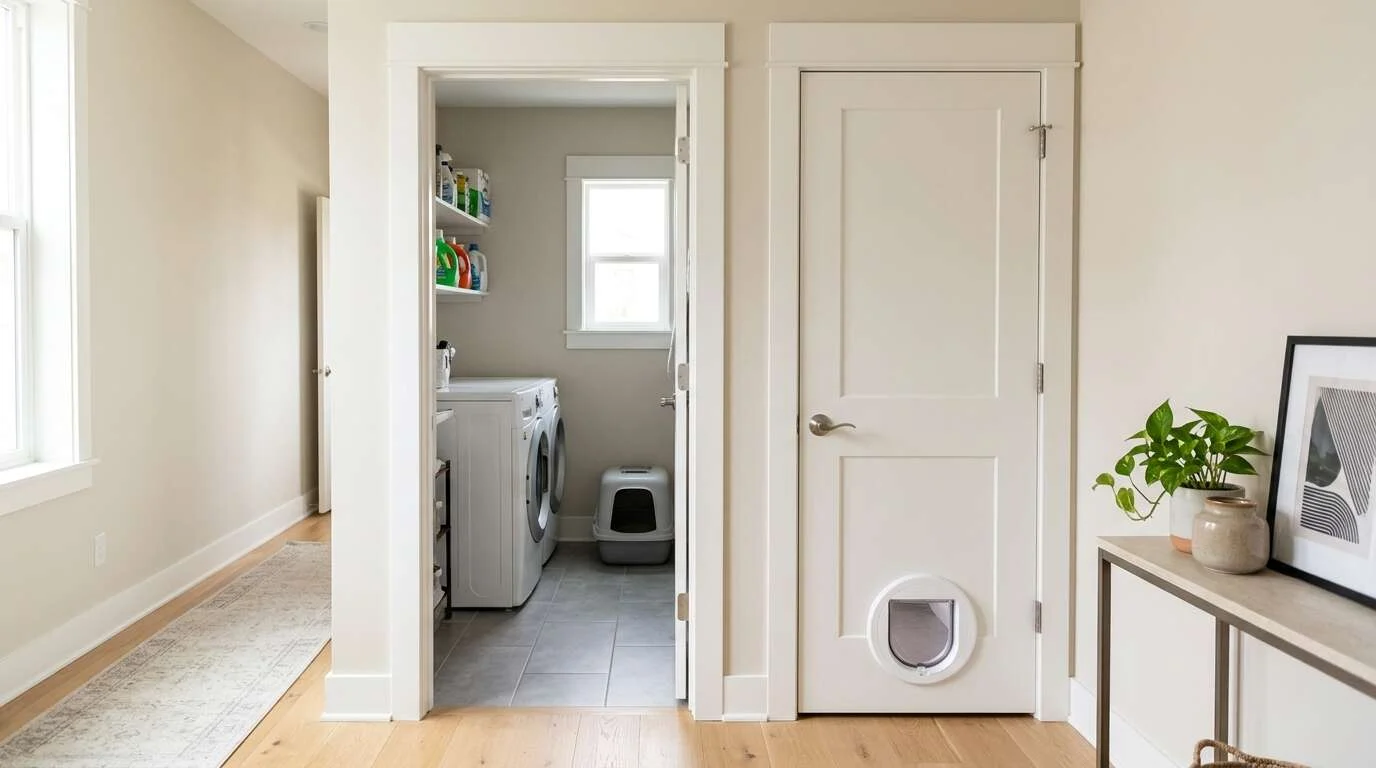
Many owners place litter boxes in laundry rooms, bathrooms, or utility spaces.
An indoor cat door can allow cats to access these areas without leaving doors open.
Benefits include:
- Better odor control
- Improved home organization
- More privacy for cats
However, the litter area should still remain clean, comfortable, and easily accessible.
2. Creating a Safe Cat Room
Some homes have a dedicated cat room containing:
- Food
- Water
- Beds
- Toys
- Scratching areas
- An indoor door allows cats to enter and leave while maintaining boundaries.
- This can be useful for:
- New cat introductions
- Temporary separation
- Quiet resting spaces
3. Multi-Cat Household Management
Multiple cats may have different preferences.
One cat may prefer social areas, while another may prefer quiet spaces.
Indoor doors can help create:
- Separate feeding zones
- Private resting areas
- Controlled introductions
- This can reduce competition and stress.
4. Protecting Certain Rooms
Some owners want cats to have access to some areas but not others.
Examples:
- Preventing access to storage rooms
- Keeping cats away from fragile items
- Separating pet areas
- Some indoor cat doors include locking features for additional control.
Types of Indoor Cat Doors
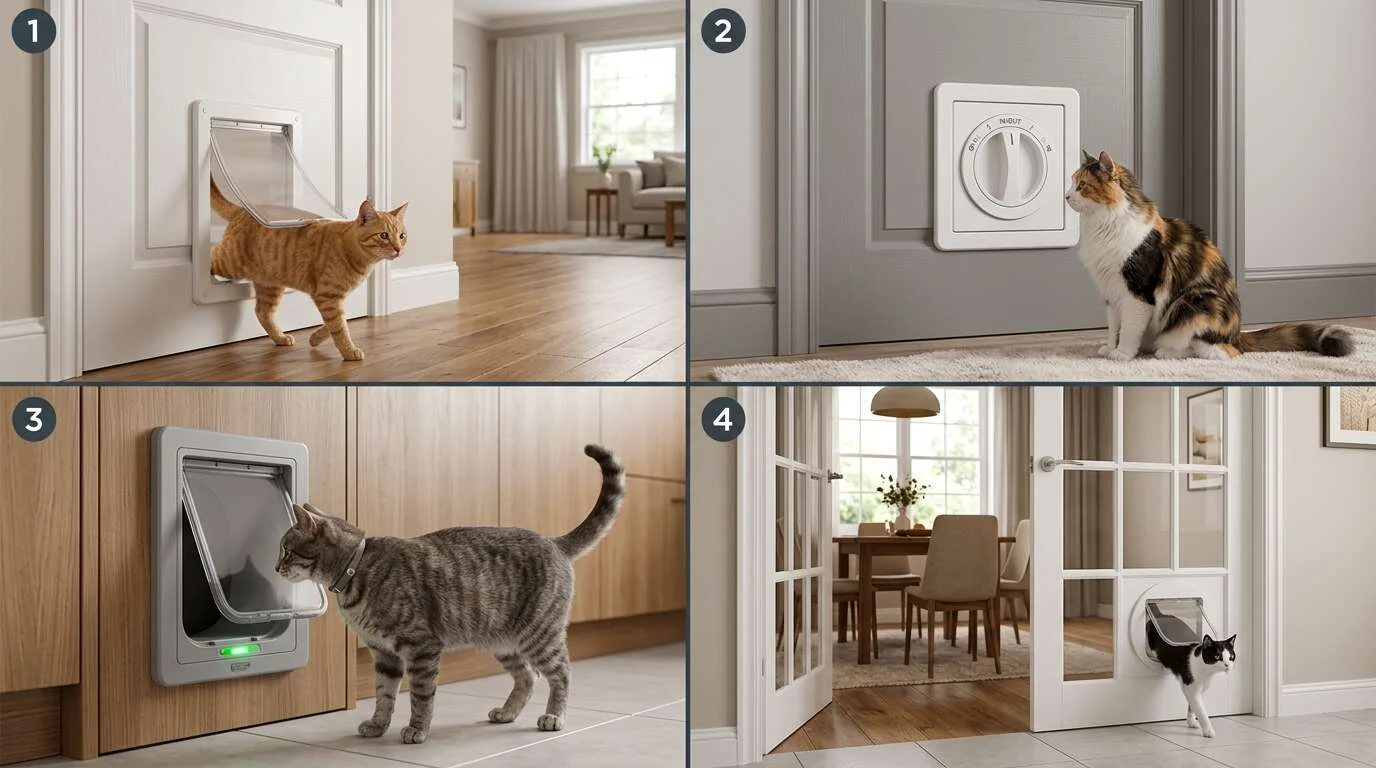
Different designs provide different levels of convenience and control.
1. Basic Flap Cat Doors
These are simple doors with a flexible flap.
Benefits
- Affordable
- Easy to use
- Simple installation
Best For
- Cats that need basic room access
- Homes without access restrictions
Limitations
They provide little control over which cats can enter.
2. Lockable Indoor Cat Doors
Lockable designs allow owners to control access.
Possible settings include:
- Fully open
- Fully closed
- One-way access
- Two-way access
Best For
- Multi-cat homes
- Feeding area control
- Specific room management
3. Magnetic or Electronic Cat Doors
Some advanced doors use identification systems.
They may respond to:
- Collar tags
- Microchip identification
Benefits
- Selective access
- Useful for multiple pets
Considerations
They are usually more expensive and require setup.
4. Glass or Window Cat Doors
These are designed for homes where traditional wall or door installation is difficult.
They may be useful for:
- Interior glass doors
- Specific room layouts
- Professional installation may be required depending on the design.
Choosing the Right Indoor Cat Door Size
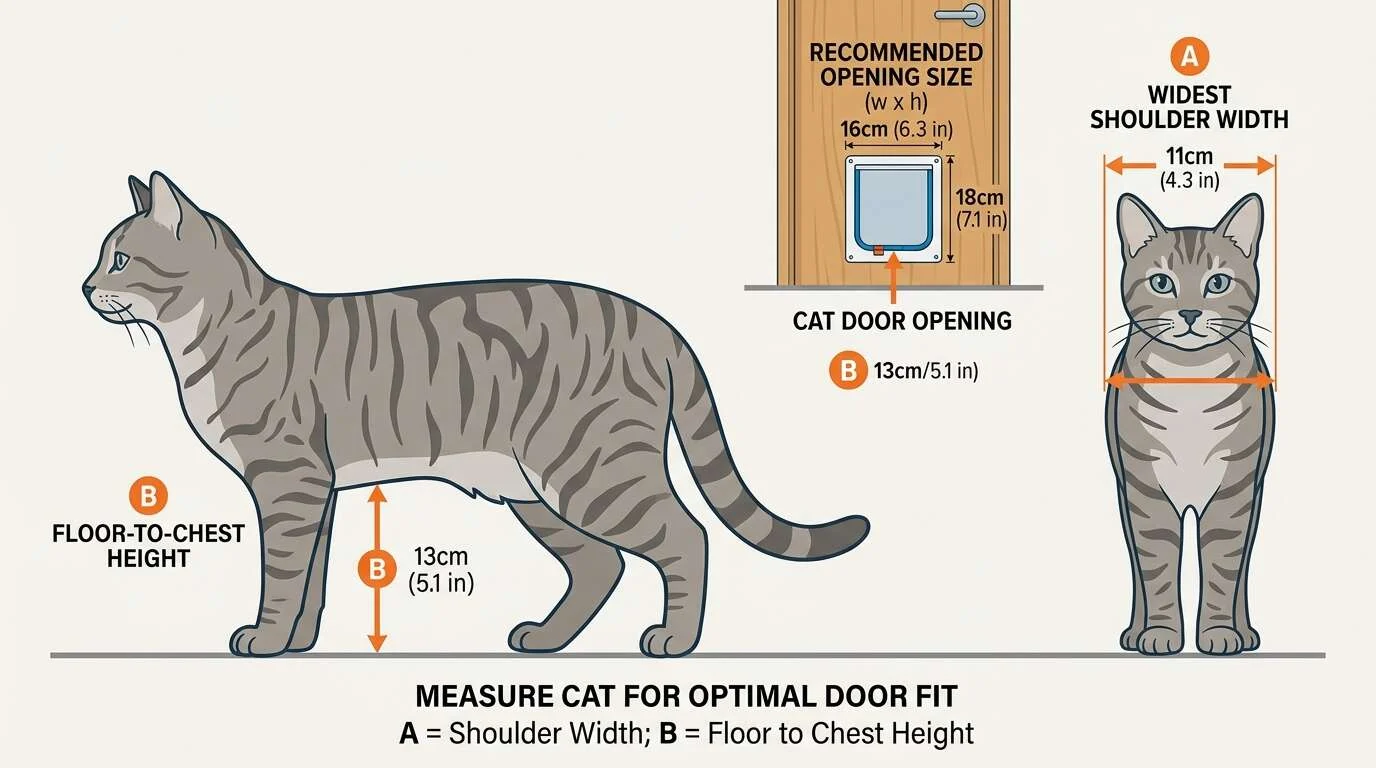
The door should comfortably fit your cat.
Consider:
- Shoulder width
- Body size
- Weight
- Future growth
- A door that is too small may discourage use.
- A cat should be able to:
- Enter comfortably
- Turn around
- Move naturally
- Large breeds may require larger openings.
Installation Considerations
Before installing an indoor cat door, consider the location carefully.
Door Material
Installation differs depending on whether the surface is:
- Hollow wood
- Solid wood
- Glass
- Metal
- Wall material
- Some installations may require tools or professional help.
Location
Choose areas where your cat already wants access.
Good locations include:
- Near litter areas
- Between common rooms
- Near cat spaces
- Avoid placing doors in stressful or noisy locations.
Training a Cat to Use an Indoor Door
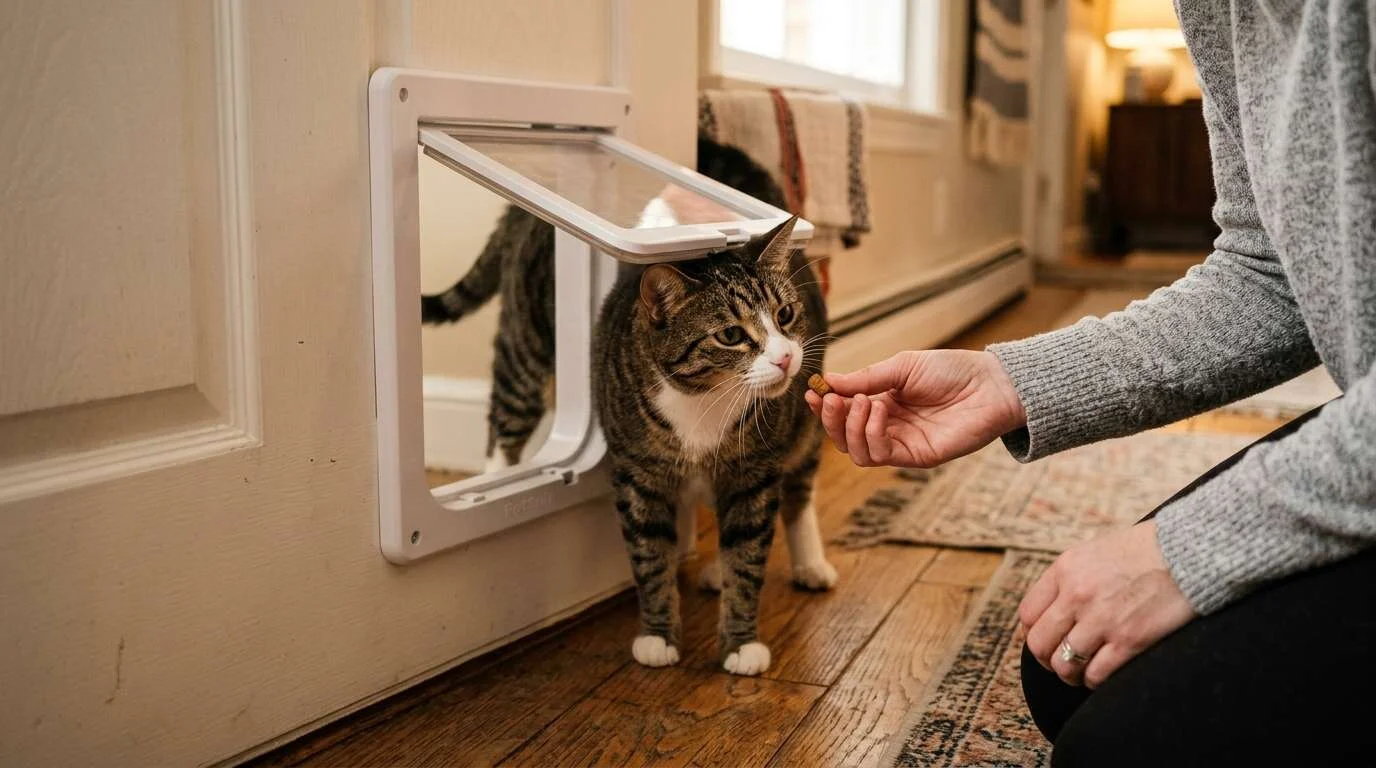
Some cats immediately understand cat doors. Others need encouragement.
A gradual approach works best.
Step 1: Keep the Door Open
Allow your cat to investigate without pressure.
Step 2: Use Positive Encouragement
Treats or toys can encourage exploration.
Step 3: Allow Natural Learning
Avoid forcing the cat through the door.
Step 4: Introduce the Flap Slowly
Some cats dislike the feeling of the flap touching them.
Patience is important.
Indoor Cat Door Safety Considerations
A safe indoor cat door should:
- Have smooth edges
- Open easily
- Avoid trapping paws or tails
- Match your cat’s size
- Be securely installed
- Check regularly for:
- Loose screws
- Damage
- Cracks
- Wear
Indoor Cat Door Pros and Cons
| Advantages | Limitations |
|---|---|
| Gives cats independence | Requires installation |
| Improves room access | Some cats need training |
| Helps manage spaces | Basic models lack control |
| Useful for routines | May not suit every home |
| Supports multi-cat setups | Requires maintenance |
Indoor Cat Door Ideas for Small Homes
Small homes can benefit greatly from efficient room management.
Useful placements include:
Bedroom Door
Allows cats access to sleeping areas.
Litter Room Door
Keeps litter areas separate.
Cat Room Entrance
Creates a dedicated pet area.
Closet or Storage Conversion
Can create a quiet hiding space.
Common Mistakes When Installing Indoor Cat Doors
Choosing the Wrong Size
A door should match your cat’s body size.
Installing Without Considering Routine
Place doors where cats naturally want access.
Ignoring Other Pets
Some households need controlled access.
Forgetting Cleaning
Flaps collect dust and fur over time.
Frequently Asked Questions
Do indoor cats need a cat door?
No, but many cats benefit from having more control over movement between rooms.
Can an indoor cat door be installed in a wall?
Yes. Some designs are suitable for wall installation, although the process depends on the structure.
Will every cat use an indoor cat door?
No. Some cats need training, and some may prefer traditional open spaces.
Are electronic cat doors worth it?
They can be useful for households needing selective access, especially with multiple pets.
Where is the best place to install an indoor cat door?
The best location depends on your goal, but common areas include litter rooms, cat rooms, and frequently used spaces.
Conclusion
An indoor cat door can improve a cat’s quality of life by giving them more independence and control over their environment.
Whether you need easier access to a litter room, a private cat space, or better management in a multi-cat household, the right door can make daily routines smoother for both cats and owners.
The best choice depends on your home design, your cat’s size, and the level of access control you need. With proper installation and gradual introduction, an indoor cat door can become a useful part of a comfortable indoor cat environment.