Indoor Cat Food How to Choose a Complete Daily Diet
Direct Answer: What Is the Best Food for Indoor Cats?
The best indoor cat food is a complete and balanced diet that provides appropriate protein, essential nutrients, sufficient hydration, and the right number of calories for your cat’s lifestyle.
There is no single food that is perfect for every indoor cat. The right choice depends on:
- Age
- Weight
- Activity level
- Health conditions
- Food preferences
- Veterinary recommendations
- Indoor cats often benefit from diets that support:
- Healthy body weight
- Muscle maintenance
- Digestive health
- Hydration
- Normal energy levels
A high-quality diet combined with proper portion control is usually more important than choosing a product based only on marketing claims.
Quick Takeaways
Indoor cats still require complete nutrition designed for feline needs.
Portion control is essential because many indoor cats are less active.
Protein is an important part of a cat’s natural diet.
Wet food can help increase water intake.
Food choices should consider age, weight, and health status.
Sudden diet changes should be introduced gradually.
Understanding Indoor Cat Nutritional Needs
Cats are obligate carnivores, meaning their bodies are adapted to obtain important nutrients from animal-based foods.
Unlike humans and many other animals, cats have specific nutritional requirements.
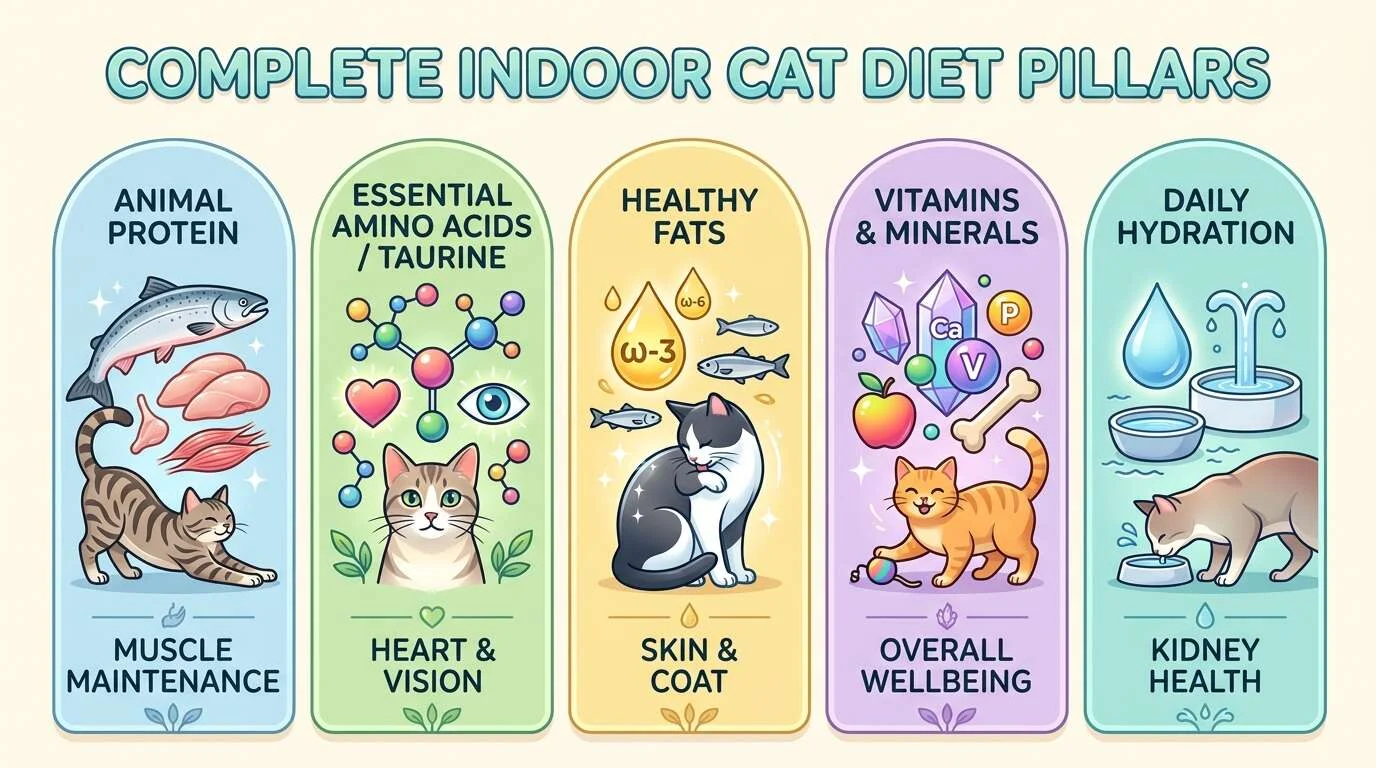
A complete diet should provide:
Protein
Protein supports:
- Muscle maintenance
- Tissue repair
- Normal body functions
Indoor cats still need adequate protein even if they have lower activity levels.
Essential Amino Acids
Cats require certain amino acids that their bodies cannot produce sufficiently.
One important example is taurine.
Taurine supports:
- Heart health
- Vision
- Normal body function
A complete commercial cat food should contain appropriate levels of essential nutrients.
Fats
Dietary fats provide:
- Energy
- Fatty acids
- Support for skin and coat health
However, calories from fat contribute to overall energy intake, so portion control matters.
Vitamins and Minerals
Balanced cat food should contain appropriate amounts of vitamins and minerals.
Excess or deficiency of certain nutrients can affect health.
This is why complete commercial diets are formulated carefully according to nutritional standards.
Why Indoor Cats May Need Different Feeding Considerations
Indoor cats often have different lifestyles from outdoor cats.
They may:
- Move less
- Sleep more
- Receive more frequent treats
- Have fewer opportunities to hunt or explore
- These differences can increase the risk of weight gain.
- A healthy indoor feeding routine should consider:
- Daily calorie intake
- Meal frequency
- Activity level
- Body condition
Wet Food vs Dry Food for Indoor Cats
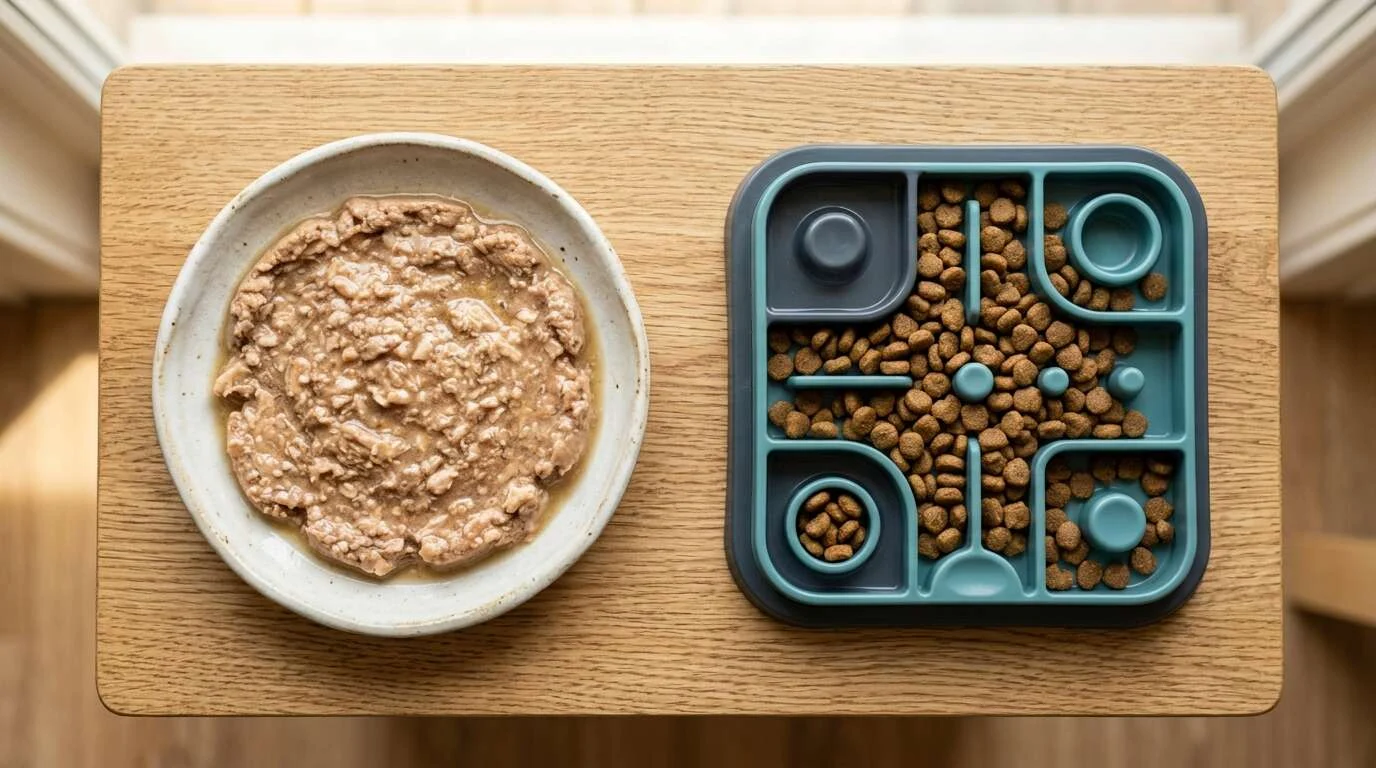
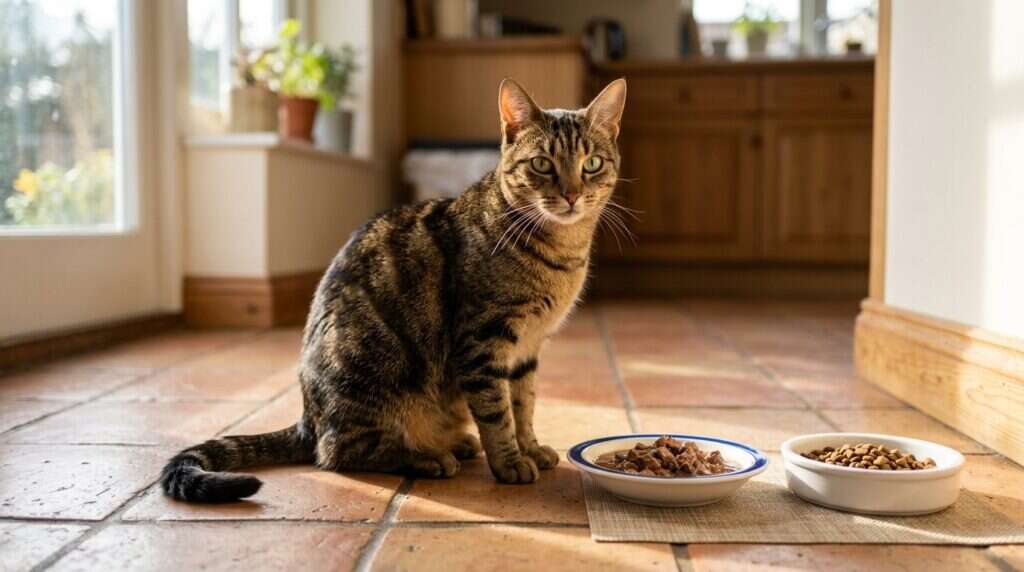
Both wet and dry foods can be part of a healthy diet when properly formulated.
The better choice depends on your cat’s needs.
| Factor | Wet Food | Dry Food |
|---|---|---|
| Water Content | Higher | Lower |
| Storage | Requires more care after opening | Easy storage |
| Convenience | Moderate | High |
| Portion Control | Often easier | Requires measurement |
| Dental Benefits | Limited evidence for broad benefits | Depends on formula |
Benefits of Wet Cat Food
Wet food contains more moisture, which can help increase total water intake.
This may be especially useful for cats that:
- Drink little water
- Prefer moist textures
- Need additional hydration support
Wet food can also be helpful for cats that need controlled calorie intake because portions can be easier to manage.
Benefits of Dry Cat Food
Dry food can be convenient because it:
- Stores easily
- Allows measured feeding
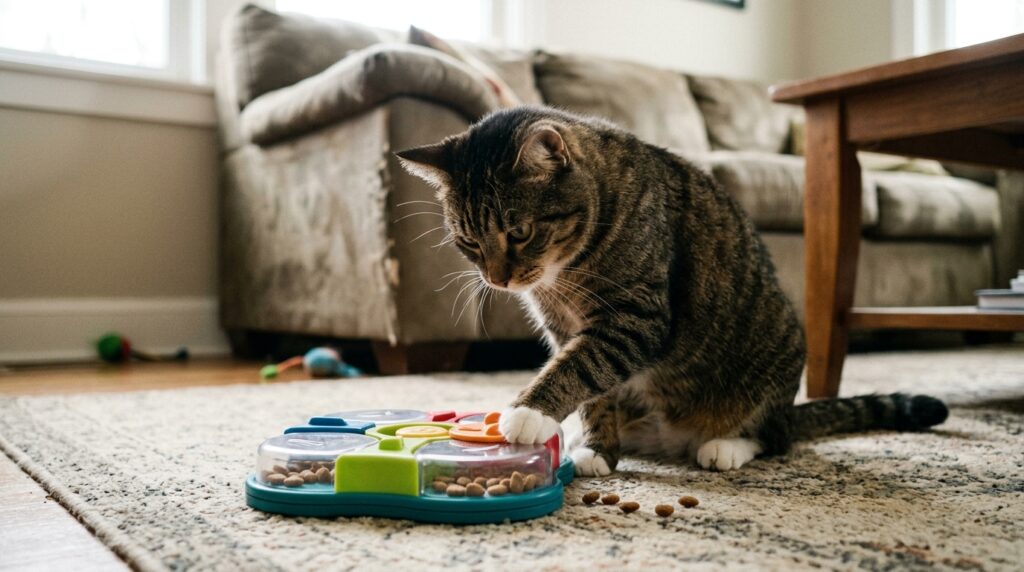
- Works well with puzzle feeders
However, leaving unlimited dry food available can contribute to overeating in some indoor cats.
How Much Should an Indoor Cat Eat?
There is no universal feeding amount because calorie needs vary between cats.
Factors affecting food requirements include:
- Body size
- Age
- Activity level
- Metabolism
- Health status
A small inactive cat may need significantly fewer calories than a large active cat.
The feeding guide on a food package is a starting point, not a guarantee.
Owners should monitor:
- Body weight
- Body condition
- Energy level
- Adjustments may be needed over time.
Signs Your Indoor Cat May Be Overweight
Weight gain can happen slowly, making it easy to miss.
Possible signs include:
- Difficulty feeling ribs
- Reduced activity
- Less jumping
- Difficulty grooming
- Visible weight increase
- Extra weight can affect mobility and overall health.
- If weight management is needed, changes should be gradual.
- Rapid food restriction can be harmful, especially for cats.
Feeding Schedules for Indoor Cats
Different cats prefer different routines.
Common feeding approaches include:
Scheduled Meals
Food is offered at specific times.
Benefits:
- Easier portion control
- Helps monitor appetite
- Supports routine
Multiple Small Meals
Cats naturally prefer eating smaller amounts throughout the day.
Benefits:
- Matches natural feeding patterns
- Can reduce boredom eating
- Puzzle feeders can combine feeding with mental stimulation.
Free Feeding
Food remains available throughout the day.
This may work for some cats but can increase overeating risk.
It is generally less suitable for cats prone to weight gain.
Indoor Cat Food and Hydration
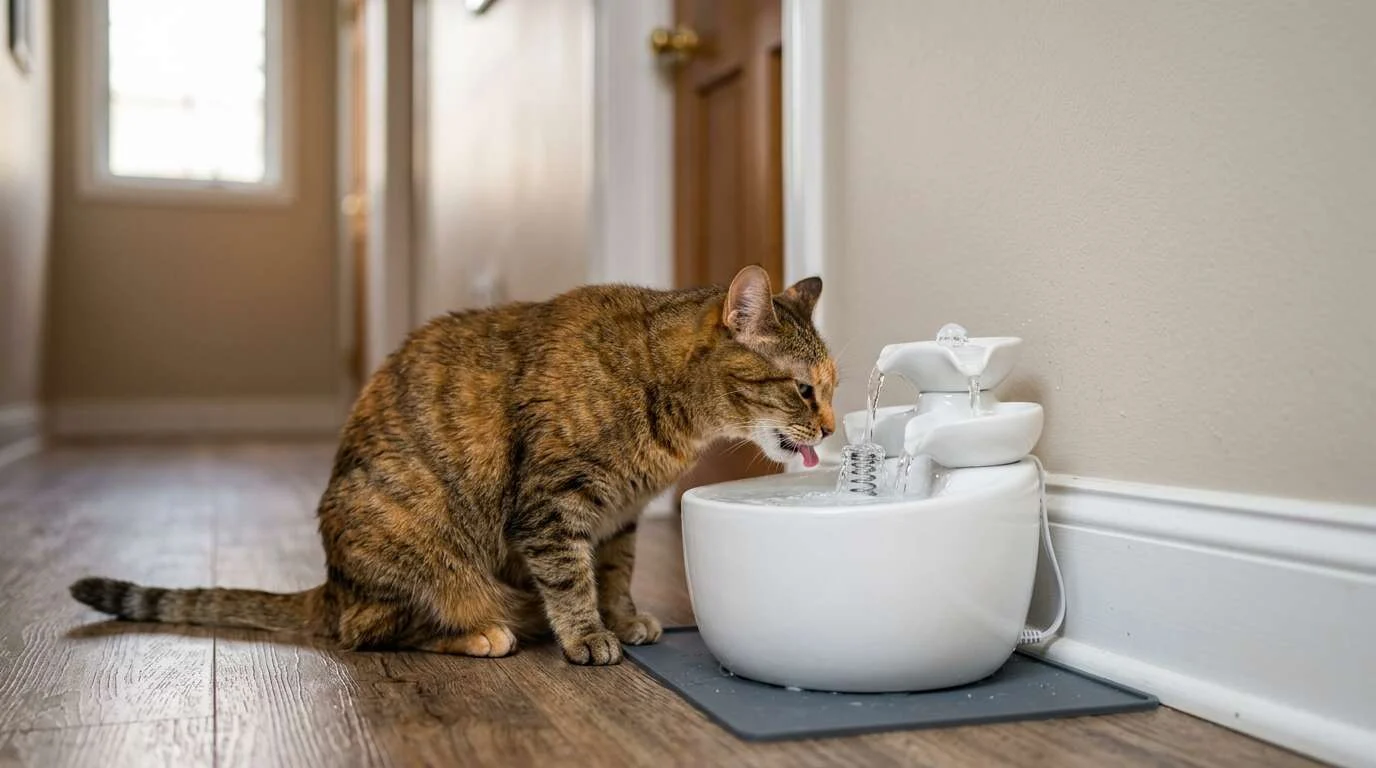
Hydration is an important part of feline health.
Cats naturally have a lower thirst drive compared with some animals, which means many cats may not drink large amounts.
Ways to encourage hydration include:
- Providing fresh water daily
- Using multiple water locations
- Offering wet food
- Keeping water bowls clean
- Considering water fountains
- Water intake varies between cats, so owners should pay attention to changes.
Choosing Food Based on Life Stage
Kitten Food
Growing kittens need diets designed for development.
They require appropriate:
- Calories
- Protein
- Nutrients
Adult Cat Food
Adult formulas focus on maintaining health.
Important goals include:
- Healthy weight
- Muscle maintenance
- Balanced nutrition
Senior Cat Food
Older cats may have changing nutritional needs.
Senior diets may consider:
- Lower activity
- Mobility support
- Health monitoring
- However, every senior cat is different.
Common Indoor Cat Food Mistakes
Choosing Food Only Because of Marketing
Words like “premium” or “natural” do not automatically mean a food is appropriate.
Overfeeding Healthy Food
Even high-quality food can contribute to weight gain if portions are too large.
Changing Food Too Quickly
Sudden changes may cause digestive upset.
Gradual transitions are usually better.
Ignoring Treat Calories
Treats should be included in total daily intake.
How to Transition to New Indoor Cat Food
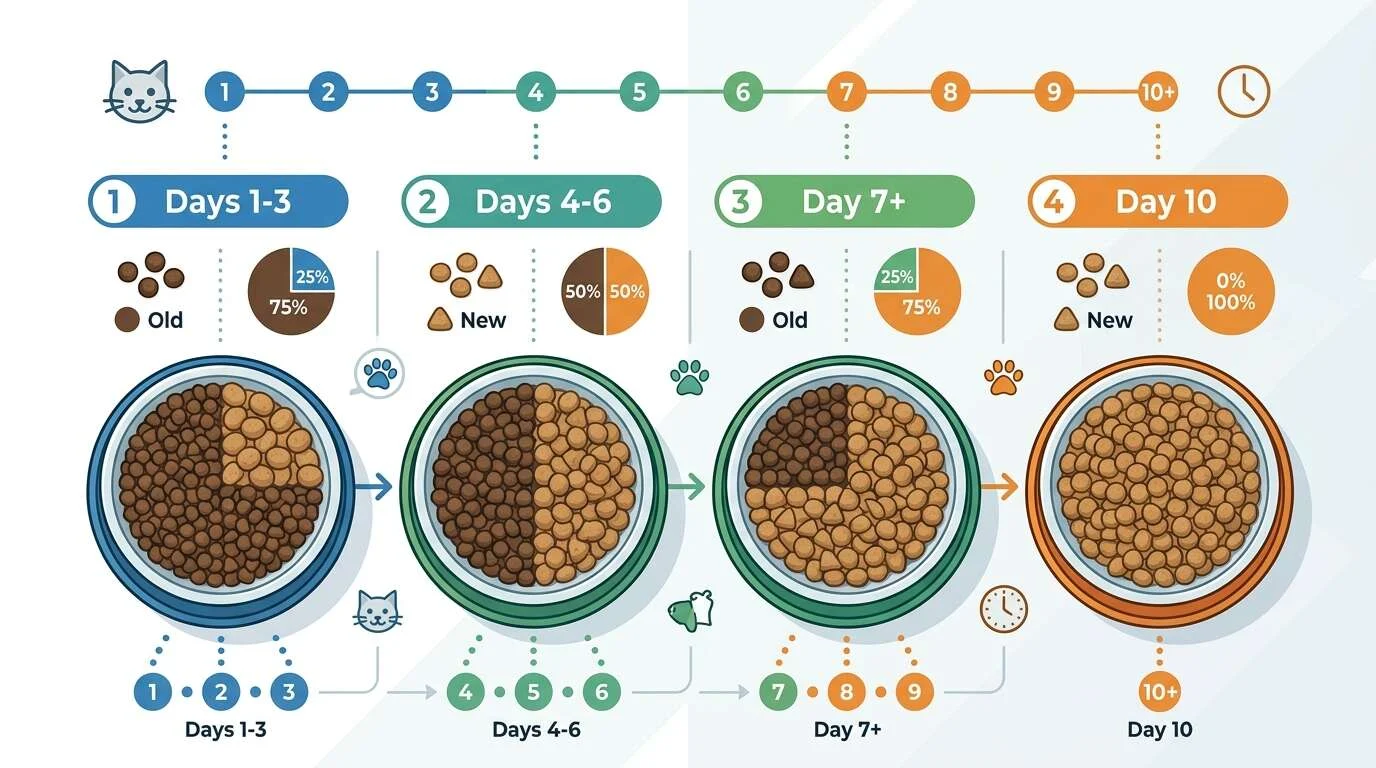
A gradual change helps reduce digestive problems.
A common approach:
| Period | Old Food | New Food |
|---|---|---|
| Days 1–3 | Mostly old food | Small amount new food |
| Days 4–6 | Half old food | Half new food |
| Days 7+ | Mostly new food | Small amount old food |
Some cats may need slower transitions.
Frequently Asked Questions
Is indoor cat food different from regular cat food?
Some foods marketed for indoor cats are formulated with calorie control or specific features, but the most important factor is complete nutrition suited to the individual cat.
Should indoor cats eat wet food?
Wet food can be beneficial because of its higher moisture content, but the best choice depends on the cat’s needs.
How often should I feed my indoor cat?
Many cats do well with measured meals once or multiple times daily. The ideal schedule depends on the cat and household routine.
Can indoor cats eat regular cat food?
Yes, as long as the food is complete and balanced and appropriate for the cat’s age and health needs.
How do I know if my indoor cat is eating too much?
Monitor body condition, weight changes, and activity level rather than relying only on appetite.
Conclusion
Choosing the right indoor cat food is about understanding your cat’s individual needs rather than following marketing labels.
A healthy diet should provide complete nutrition, support a healthy weight, encourage proper hydration, and match your cat’s age and lifestyle.
Indoor cats may have fewer environmental challenges than outdoor cats, but their nutrition and feeding habits remain important parts of long-term health.
With balanced food choices, appropriate portions, and regular monitoring, owners can support their cats’ wellbeing throughout every stage of life.