By Emma Hartley | Last updated August 2026 | Reviewed by IndoorCatWell Editorial Team
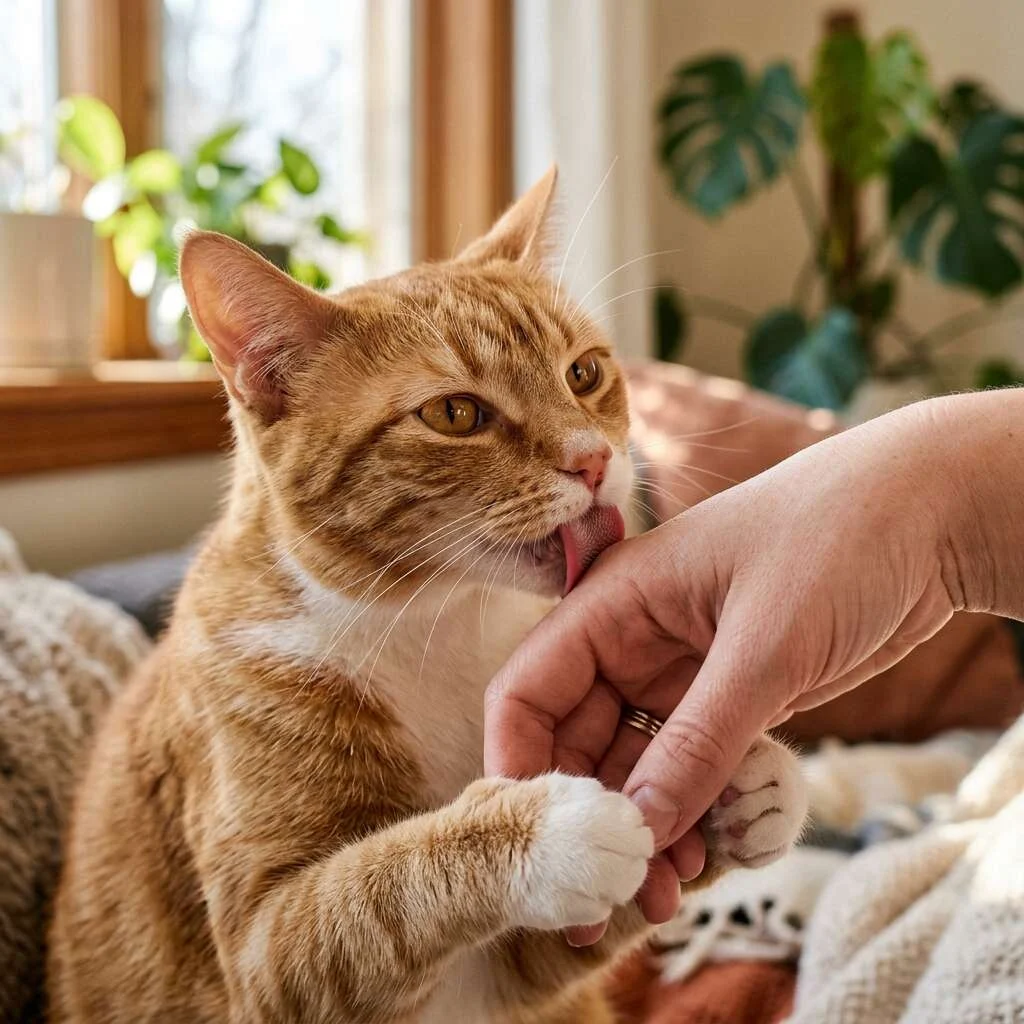
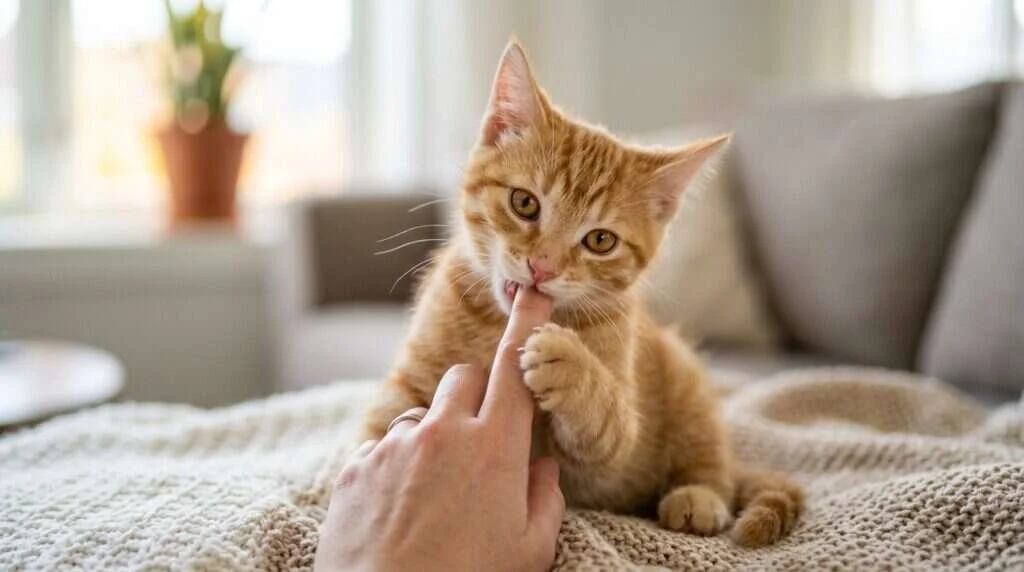
The bite-then-lick combo is rarely true aggression. In most cases, it is a combination of natural social grooming (“allogrooming”) and an overstimulation release valve when physical touch reaches sensory capacity.
Beans does this constantly. He’ll be grooming my hand, gentle little licks, and then out of nowhere — a nip. Not hard, not angry, just a quick bite, and then right back to licking like nothing happened. The first few times it startled me. Now I know it’s basically his signature move.
This combo has a name in cat behavior circles: love bites, or sometimes “nibble grooming.” It’s not a mixed signal. It’s one behavior with two parts, and once you understand why cats do it, it stops feeling confusing.
It's Usually Affection, Overstimulation, or Both at Once
Cats groom each other as a bonding behavior — it’s called allogrooming. When your cat licks your hand, you’re being treated like part of the social group, the same way they’d groom a littermate or a cat they trust. The bite that follows is often just the natural end of that grooming sequence. Mother cats nip kittens gently during grooming sessions too. It’s not aggression, it’s punctuation.
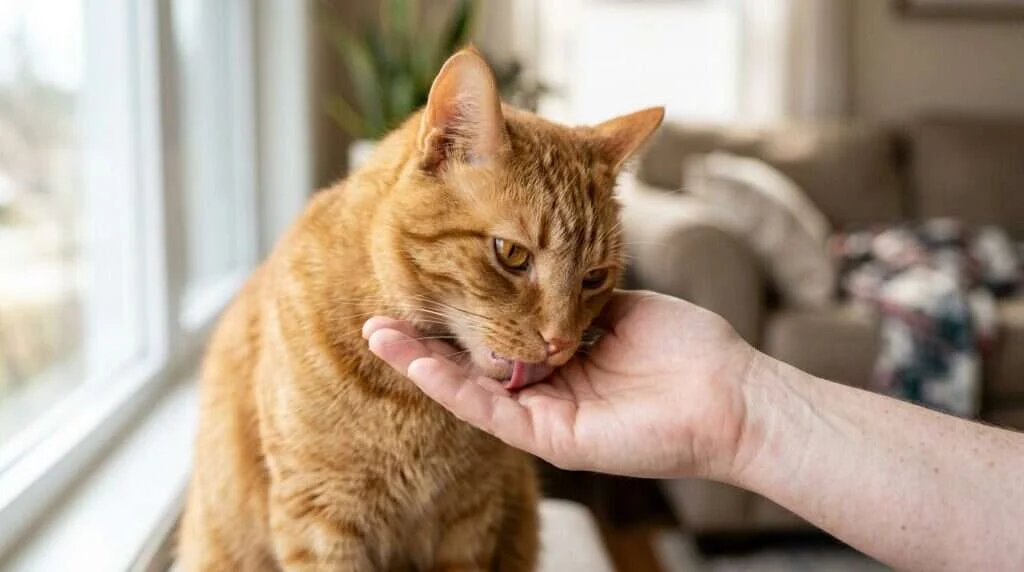
The other piece is overstimulation. Petting and grooming feel good up to a point, and then a cat’s nervous system hits a threshold where the same sensation stops feeling good and starts feeling like sensory overload. The bite acts as a release valve. According to veterinary behavior experts at the Cornell Feline Health Center on petting-induced aggression, feline hair follicles are surrounded by sensitive nerve receptors that become easily hyper-stimulated with repetitive touch.
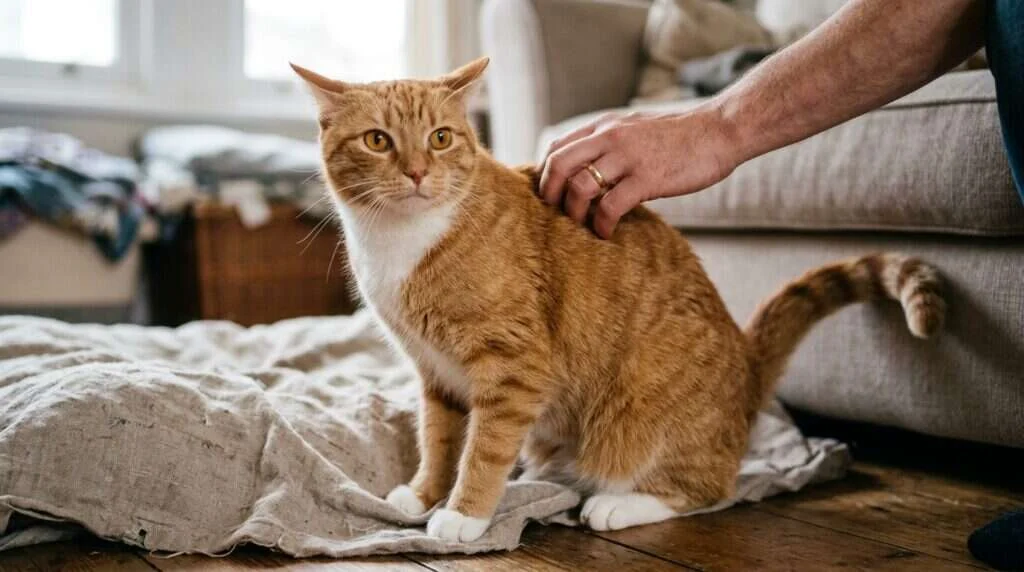
This is the same mechanism behind cats who seem to enjoy being pet and then suddenly swat. The difference is a love bite is soft and controlled, while an overstimulation bite can be firmer and accompanied by flattened ears or a tense body. Learn more about subtle warning signs in our Cat Body Language Guide.
How to Tell the Difference
A Love Bite:
- Doesn’t break skin, or barely exerts pressure
- Happens during or right after affectionate contact (licking, headbutting, kneading)
- The body stays relaxed — no flattened ears, no stiff or lashing tail
- Your cat often goes right back to being affectionate afterward
An Overstimulation Bite:
- Comes with a body that has gone suddenly rigid or tense
- Tail may start thumping or flicking beforehand — that’s your cue to pause
- Often follows a longer petting session than the cat wanted
- Your cat may turn or move away after, rather than seeking more contact
If you’re consistently getting the second kind, the fix isn’t punishment — it’s shorter petting sessions and paying attention to the tail before it happens. Most cats give a two- or three-second window between the first tail flick and the bite. That’s your cue to stop.
Why Some Cats Do This More Than Others
Kittens who were separated from their litter early sometimes never learned proper bite inhibition — the developmental process where littermates teach each other how hard is too hard by yelping and disengaging from play.
Cats who played a lot of hand-based games as kittens (using fingers as prey instead of a wand toy) can also end up associating human hands with mouthing behavior into adulthood. If you have a young cat doing this frequently, redirecting play onto structured wand toys rather than bare hands makes a massive difference.
Should You Worry About It?
Generally no, especially if it fits the “love bite” pattern above — soft, brief, paired with continued affection. It’s a normal part of how many cats demonstrate attachment, and Beans has been doing it since the day he decided I was worth grooming.
Where you should pay closer attention: if the bites are getting harder over time, if they’re happening without any grooming or affection around them, or if your cat seems distressed rather than relaxed during the interaction. That pattern shift is worth mentioning to your vet, since it can occasionally point to underlying localized pain (such as arthritis or dental issues) that makes physical contact uncomfortable. Review what questions to prepare in our Indoor Cat Annual Vet Checklist.
Frequently Asked Questions
Is it normal for cats to bite while grooming you?
Yes. Cats groom people as a bonding behavior (allogrooming), and a gentle nip is often a natural part of that sequence, mirroring how cats groom each other. It’s usually not aggression if the bite is soft and your cat stays relaxed afterward.
How do I get my cat to stop biting after licking me?
Watch for early warning signs like tail flicking or skin twitching, and pull your hand away before the bite happens rather than after. Shortening petting sessions and redirecting mouthy behavior onto toys instead of hands also reduces the habit over time.
Why does my cat lick me then bite me harder than usual?
A harder-than-usual bite paired with tense body language often signals overstimulation rather than affection — the grooming session went on longer than your cat wanted. If this is a new pattern, it’s also worth ruling out pain or discomfort with a vet visit.
Do kittens grow out of biting during affection?
Many do as they mature and learn better bite inhibition, especially if playtime is redirected to toys rather than hands early on. Some adult cats keep a gentle love-bite habit permanently — it’s not always something to train away, just something to read correctly.
What's the difference between a love bite and a warning bite?
A love bite is soft, brief, and paired with a relaxed body and continued affection afterward. A warning bite tends to be harder, comes with flattened ears or a tense tail, and your cat usually moves away rather than staying close after.
🐾 Solve Cat Behavior & Play Problems
Need interactive toys, scratching posts, or puzzle feeders to redirect mouthy or bored feline behavior? Explore our hands-on reviews and product tests.