This post contains affiliate links. If you buy through them I may earn a commission, at no extra cost to you. It does not change what I recommend.
An indoor kitten grows as fast as any other kitten, so the best food for one is a food made for growth. The word "indoor" on the bag matters much less than the nutritional adequacy statement printed near the ingredient list. This guide covers what to check on that label, how wet and dry kitten food compare, how to switch foods without upsetting a small stomach, and when to move to adult food.
Short answer
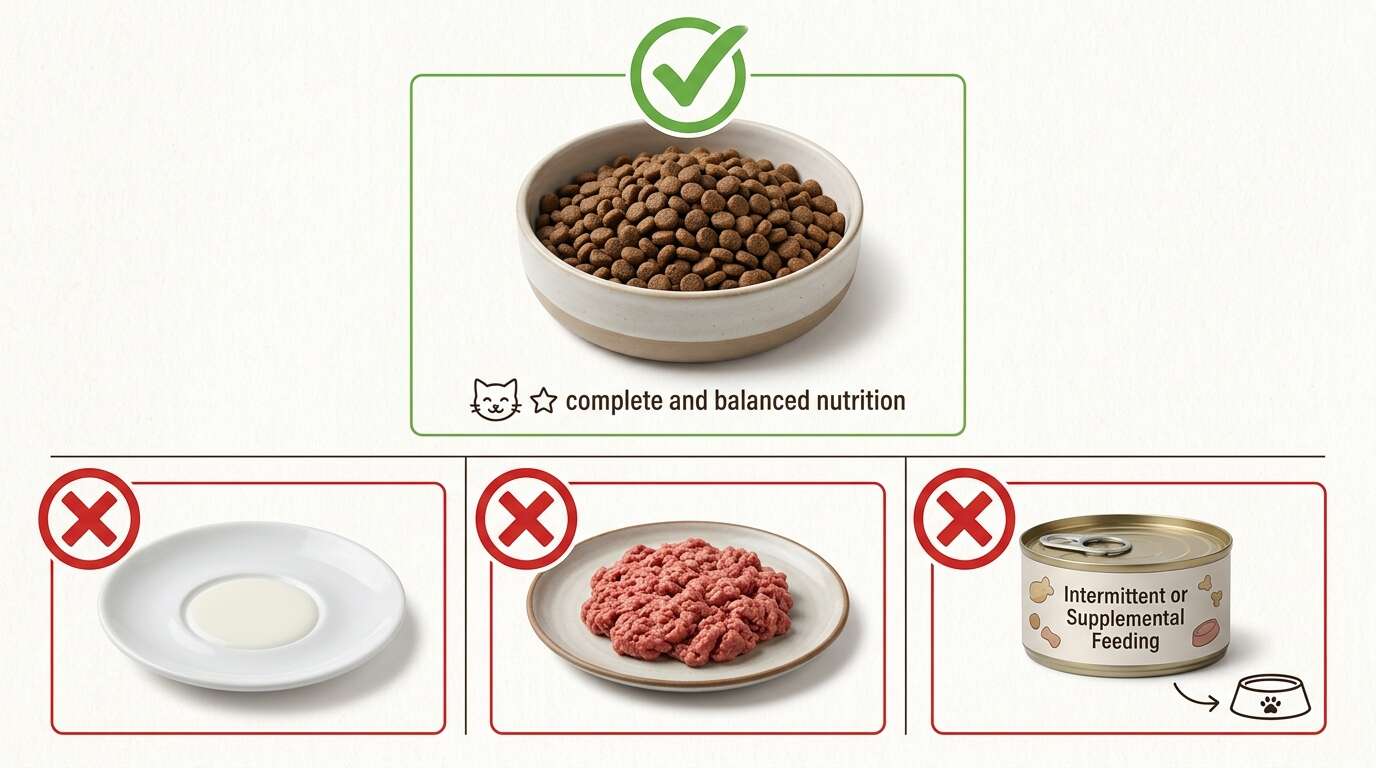
Choose a food whose label says it is complete and balanced for growth, or for all life stages. Skip anything labeled for adult maintenance only, and anything labeled for "intermittent or supplemental feeding." Beyond that, the best food is one your kitten eats well, grows steadily on, and your vet is comfortable with.
In this guide:
Why kittens need a different food from adult cats
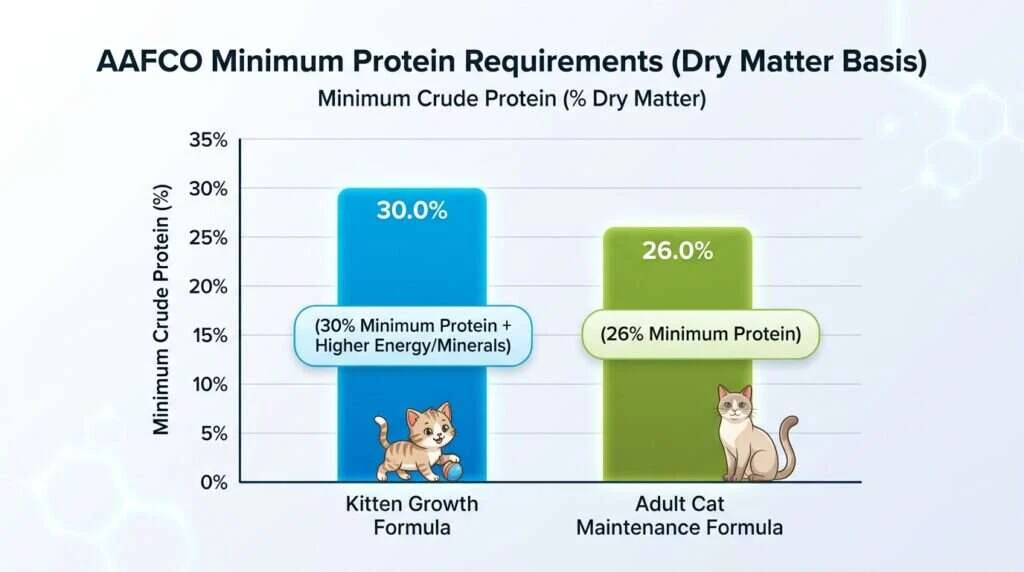
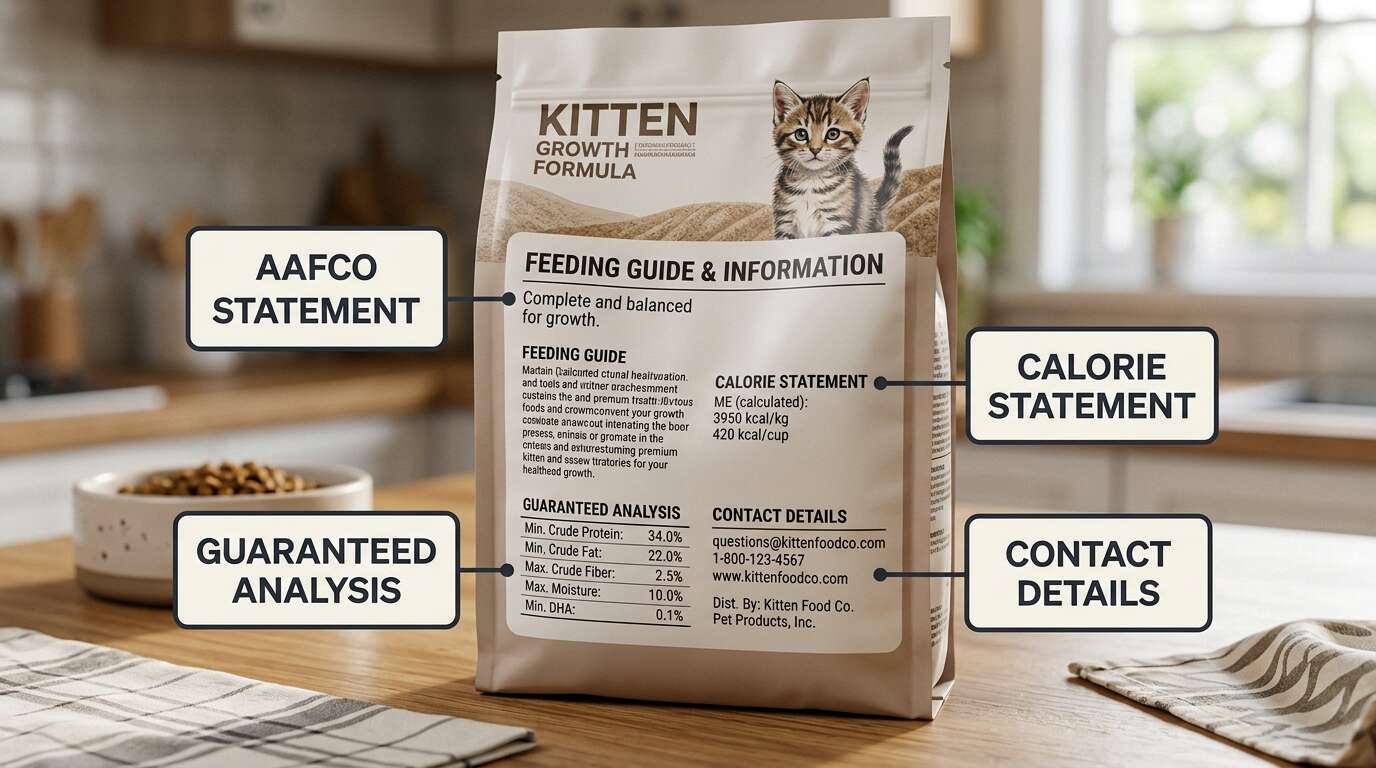
Kittens put on weight quickly and build bones, muscle, and organs at the same time. The AAFCO nutrient profiles in the United States set higher minimums for growth than for adult maintenance. Minimum protein is 30% on a dry matter basis for growth and 26% for adult cats, and growth foods are also formulated to give enough energy and minerals for a body that is still building itself.
Feeding adult food to a kitten can leave gaps. Feeding kitten food to an adult for years can add calories the adult doesn't need, which matters for indoor cats because they tend to move less.
Does "indoor" on a kitten food label mean anything?
Not much. AAFCO has no "indoor" life stage. Foods marketed to indoor cats are usually adult formulas with fewer calories, extra fiber, or a hairball claim. Those features are aimed at a neutered adult who spends most of the day on a couch. A kitten has the opposite problem: it needs enough energy to grow.
Indoor lifestyle becomes relevant later, once your cat is an adult and weight control starts to matter. For now, look for "growth."
The label checks that matter
The World Small Animal Veterinary Association publishes questions worth asking a manufacturer: whether it employs a qualified nutritionist, who formulates its diets, and what quality control it runs. A company that answers plainly is a better bet than one that points you to its marketing page.
A note on marketing nutrients. Taurine is essential for cats, and a complete and balanced food already has to supply it. Extra callouts for DHA, probiotics, or "immune support" are not by themselves a reason to prefer one growth food over another. I would rather you check the adequacy statement and the manufacturer than pay extra for a banner on the front of the bag.
Wet, dry, or both
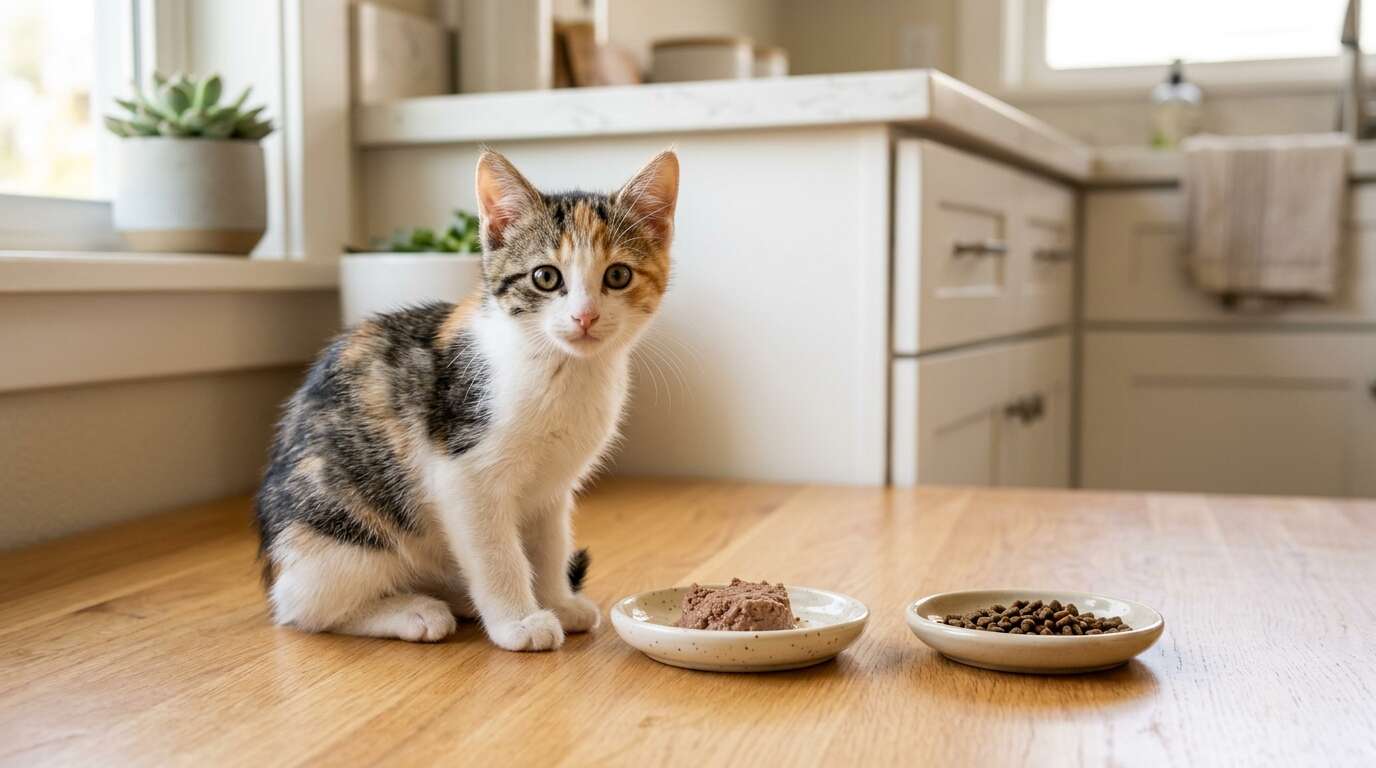
Wet food contains much more water than dry, and kittens often find it easier to chew. Dry food is convenient, stays fresh longer in a bowl, and costs less per day in most cases. Many vets suggest a mix, and a kitten that learns to eat both textures is easier to manage later if a health problem calls for a specific diet.
Whichever you choose, the product still needs the growth or all-life-stages statement. A wet "topper" or "complement" labeled for supplemental feeding is not a kitten's main food.
How much and how often
Start with the feeding chart on the package, then adjust to your kitten's weight and body condition with your vet. Young kittens usually eat several small meals a day. Many owners feed three or four meals for young kittens and cut back as they approach adulthood, but your vet can tell you what fits your kitten.
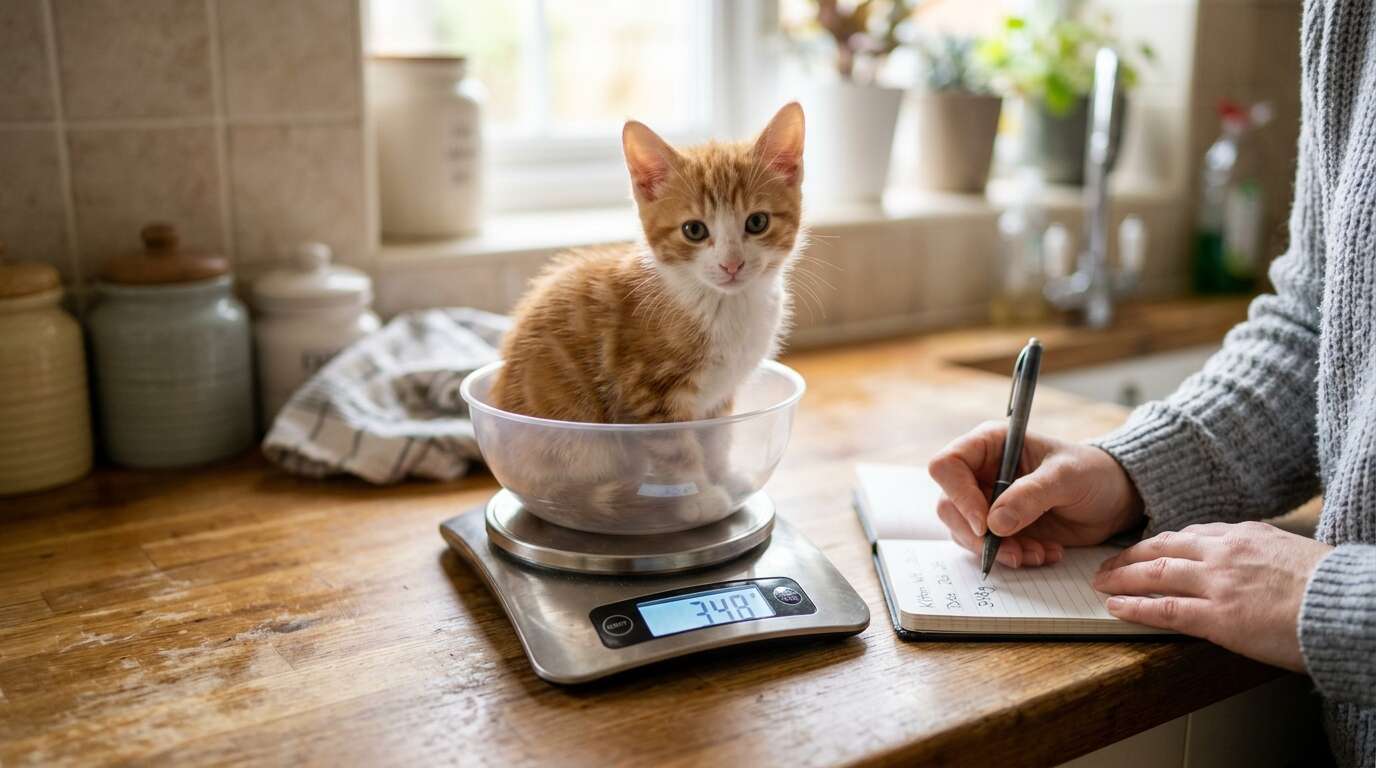
Weigh your kitten at home on a kitchen scale or a baby scale at regular intervals, and write the numbers down. Steady gain matters more than any single reading. If a neutered or spayed kitten gains weight faster than the vet expects, the portions are the first thing to review, because energy needs drop after the surgery.
Switching foods without causing diarrhea
Change over about seven to ten days. Start with a small amount of the new food mixed into the old, then increase the share every day or two. If your kitten has vomiting or loose stools that persist or seem severe, pause and call your vet. Small kittens dehydrate faster than adults.
When to move to adult food
Many kittens switch to adult food at around twelve months. Larger, slower-maturing breeds such as the Maine Coon may stay on a growth diet longer. Ask your vet to confirm the timing based on your kitten's weight and development, and switch gradually, as above.
What to avoid
Homemade or raw diets that were not formulated by a veterinary nutritionist. Calcium, phosphorus, and vitamin balance are easy to get wrong in a growing animal.
Cow's milk. Many cats cannot digest lactose well.
Vitamin or mineral supplements added to a complete kitten food without a vet's advice.
Foods with no nutritional adequacy statement.
My shortlist
When to call the vet
Call promptly if a kitten refuses food, seems unusually tired, has repeated vomiting, or has diarrhea. Kittens can become dehydrated and develop low blood sugar quickly, so waiting several days is a bad idea.
Frequently Asked Questions
Can a kitten eat adult cat food?
Occasional nibbles from another cat's bowl are not an emergency. As a main diet, adult food may not supply enough for growth unless it is also labeled for all life stages.
Is grain-free kitten food better?
There is no label claim that makes grain-free better for a healthy kitten. Check the adequacy statement and the manufacturer, and ask your vet before choosing a diet on this basis.
How long should I feed kitten food?
Usually until around a year of age, with a longer period for some large breeds. Your vet will advise.
Related reading
References
AAFCO, pet food label and nutrient profile information (aafco.org)
WSAVA Global Nutrition Committee, nutrition assessment guidelines and selecting pet foods (wsava.org)
Your own vet's feeding plan for your kitten
Healthiest Cat Food for Indoor Cats: How to Judge the Evidence