This post may contain affiliate links. If you buy through them I may earn a commission, at no extra cost to you. I don't recommend specific brands here, because what works depends on why your cat is refusing food.
A cat who turns her nose up at dinner is hard to live with and easy to misdiagnose. Sometimes she's just particular. But a cat that suddenly eats less, or refuses a food she liked, may be sick, in pain, or stressed. Cats also can't safely go without food for long, so waiting it out isn't an option the way it can be with a dog. This guide helps you work out whether it's a medical problem or a habit problem, shows safe ways to improve acceptance of food, explains how to change diets without making things worse, and lists the signs that mean you should call your vet.
Short answer
First rule out illness, especially if the change is recent. Then try small, safe changes: warm the food slightly, try a different texture, offer smaller fresh portions at set times, reduce treats and grazing, and transition foods slowly over seven to ten days. Don't withhold food to "make her hungry." A cat that eats very little or nothing for a day or two needs a vet visit.
In this guide:
- Medical reasons
- Stress and environment
- Habit and learned preferences
- Step 1: check for a medical cause
- Step 2: if she's healthy, try these safe changes
- Warm the food
- Try different textures
- Offer smaller portions, more often
- Keep meals consistent
- Cut back on treats and extras
- Make mealtime calm
- Try a different bowl
- Add a little interest, safely
- Hand feeding or sitting nearby
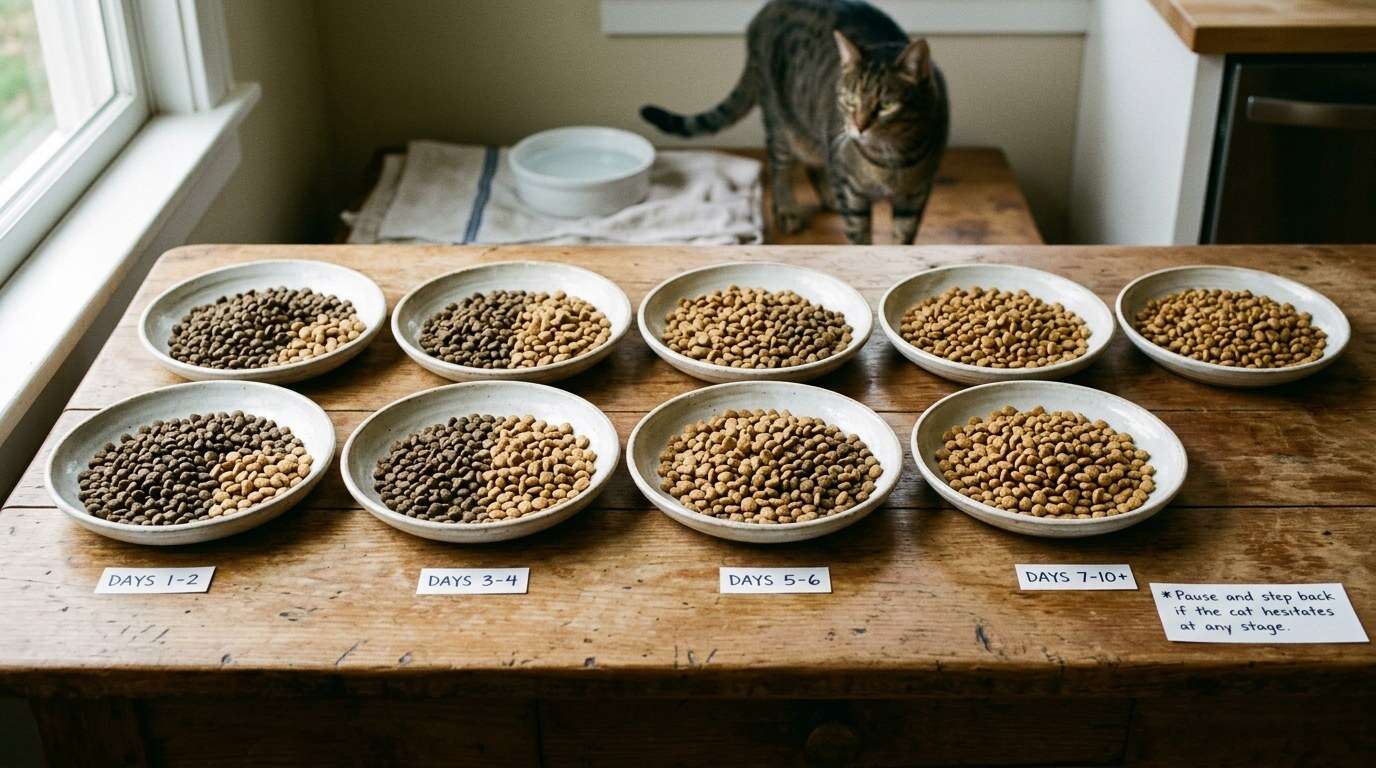
- Step 3: switch foods the right way
- Choosing a food for a picky indoor cat
- What not to do
- Picky or sick? A quick guide
- Special situations
- Frequently asked questions
Why cats stop eating or get picky
Medical reasons
Many cats described as picky have a health problem.
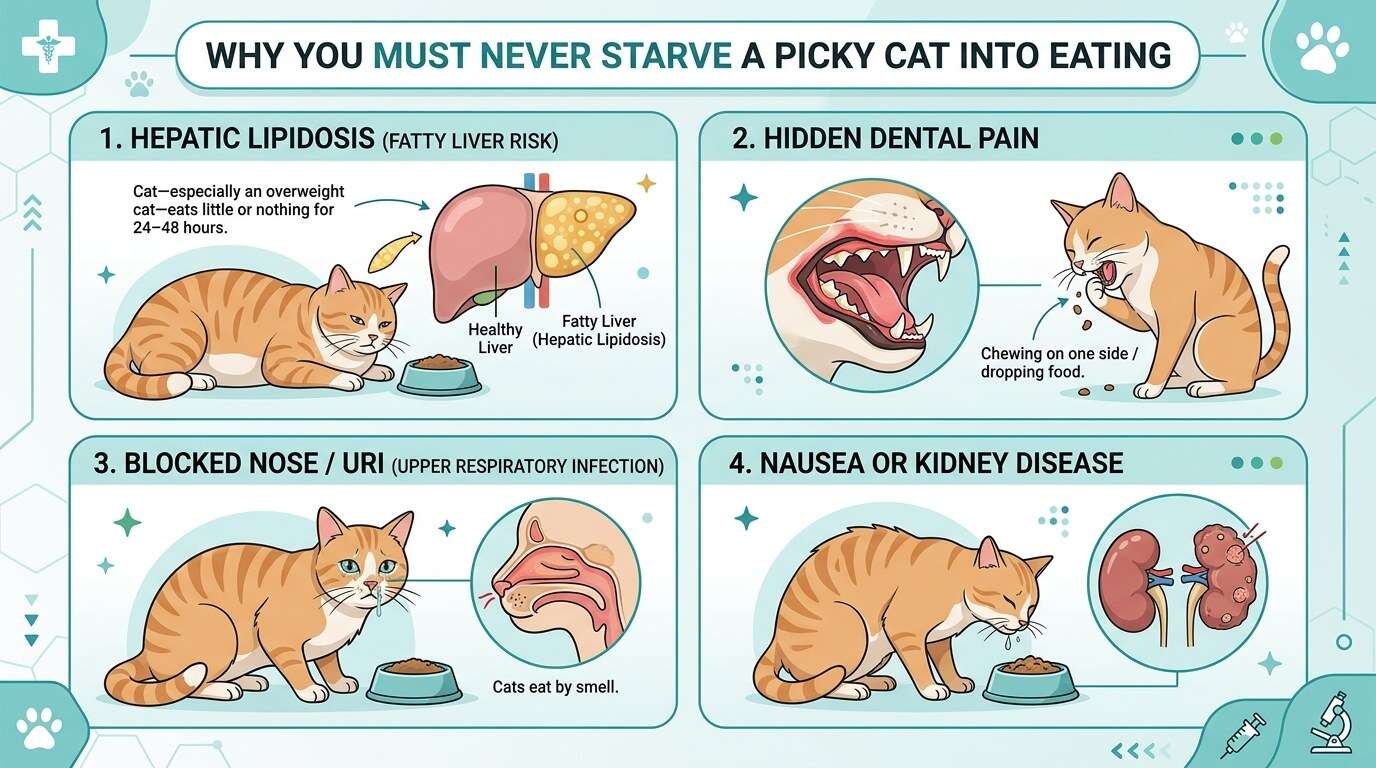
Dental pain or mouth disease. She wants the food but it hurts to chew.
Nausea or digestive upset. Pancreatitis, gastrointestinal disease, and constipation can cut appetite.
Kidney disease, especially in older cats.
Hyperthyroidism or diabetes, which can change appetite either way.
A blocked nose from a respiratory infection. Cats eat by smell, and a stuffy nose can kill their interest in food.
Pain from arthritis or injury.
Medication side effects.
Hairballs or something stuck in the digestive tract.
Stress and environment
A move, a new pet, a new baby, or a change in routine
A bowl in a noisy or busy place
Competition at the food station in a multi-cat home
A dirty bowl, or a bowl next to the litter box
A food bowl she dislikes. Some owners think narrow bowls bother whiskers, but the evidence is limited. Try a wide, shallow dish if you suspect it.
Habit and learned preferences
Free-feeding. Food that is always available can reduce interest in meals.
Too many treats. A cat holding out for something better.
Constant food changes. A cat that's offered something new each time can become hard to please.
Early experiences. Kittens often prefer the textures and flavors they ate during weaning.
Rewarding refusal. If she refuses her food and you immediately offer something tastier, she learns that holding out pays.
Step 1: check for a medical cause
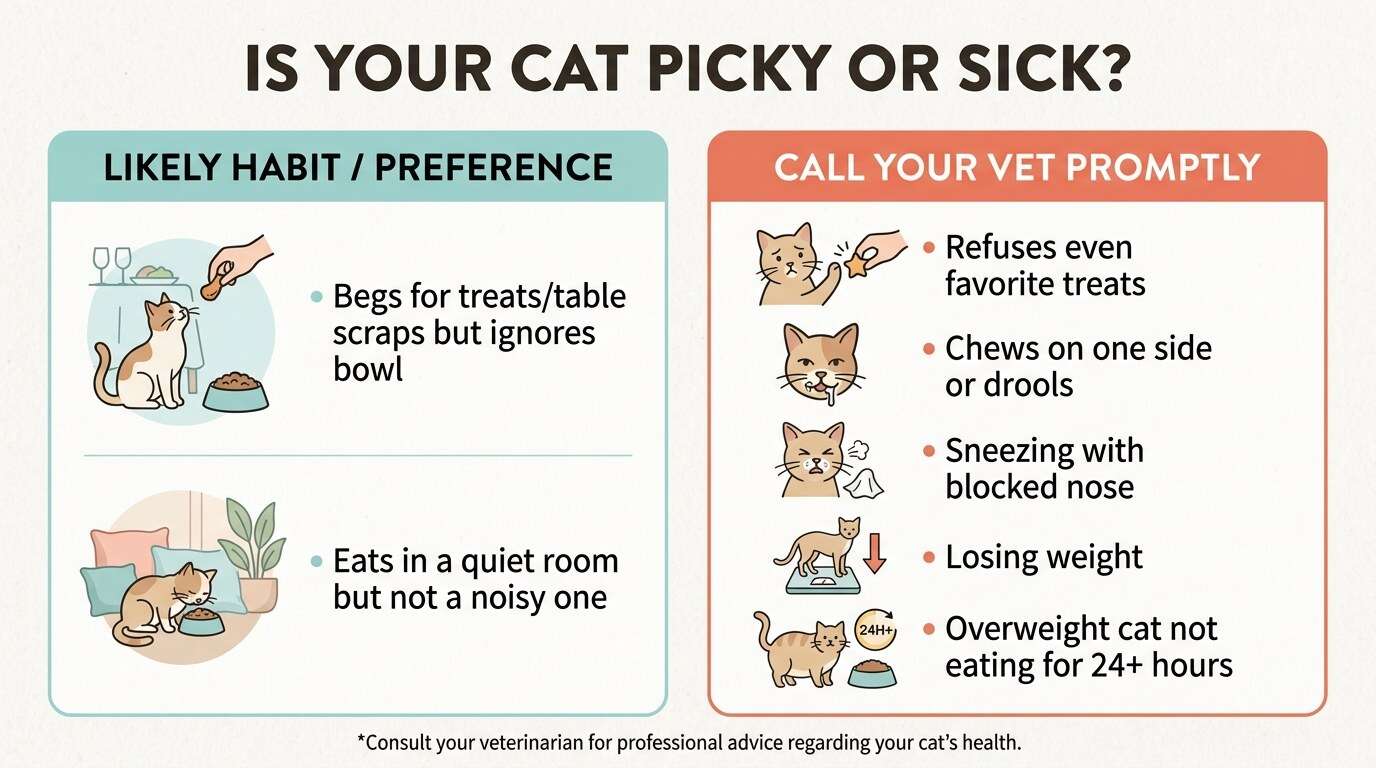
Call your vet if:
- She has stopped eating or is eating much less than usual
- Her appetite change is sudden, or a food she liked is now refused
- She is losing weight
- She has vomiting, diarrhea, drooling, bad breath, or difficulty chewing
- She is drinking or urinating more
- She is lethargic or hiding
- She is a kitten, a senior, or has a health condition
A cat that stops eating is at risk of a liver condition called hepatic lipidosis, particularly if she is overweight. For this reason, vets generally advise not waiting more than a day or two with a cat who is eating little or nothing, and sooner for kittens and cats with existing illness. Ask your vet about their threshold for your cat.
Some cats need medication to stimulate appetite or control nausea. Only a vet can prescribe it.
Step 2: if she's healthy, try these safe changes
Warm the food
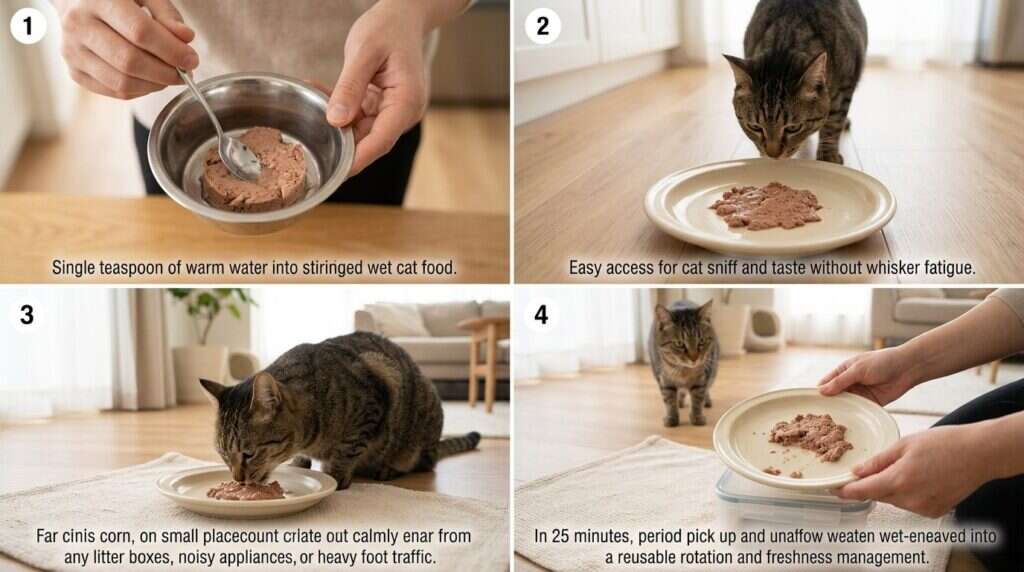
Cats prefer food around body temperature, which brings out the smell. Warm wet food briefly, stir, and check there are no hot spots. Don't serve it hot.
Try different textures
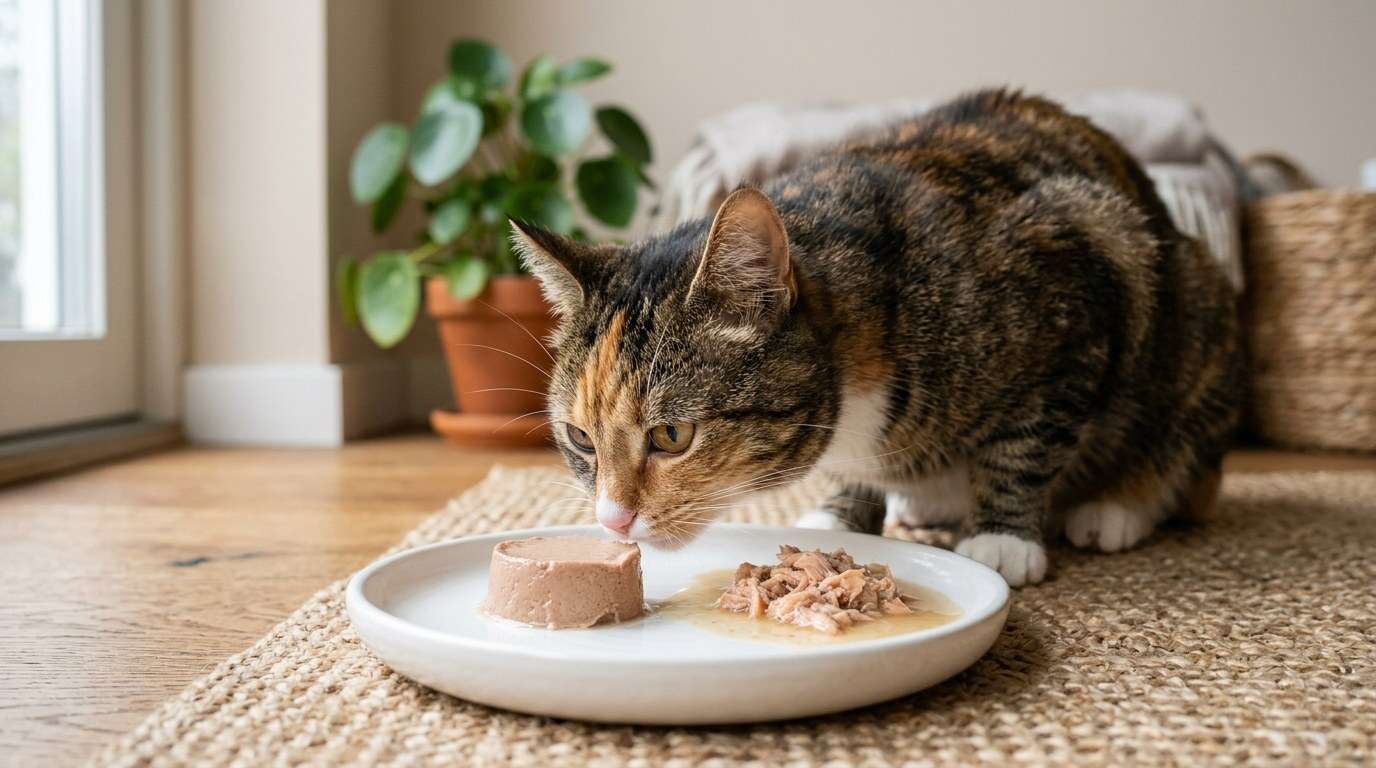
Cats often have strong texture preferences: pate, minced, chunks in gravy, flakes, or dry kibble in different shapes. Offer a small amount of one new texture next to her usual one and see which she picks. Note what she chooses.
Offer smaller portions, more often
A big bowl that sits out for hours loses its smell and gets stale. Offer a portion she can finish, and take away what's left after about twenty to thirty minutes. For wet food, don't leave it out for hours.
Keep meals consistent
Feed at set times, so she gets hungry at predictable times. If she has been free-feeding, move to scheduled meals gradually.
Cut back on treats and extras
Count treats and table scraps. If she's filling up on them, she won't be hungry at meals. Treats should be a small portion of her daily calories.
Make mealtime calm
Feed in a quiet place away from the litter box, appliances, and other pets. In a multi-cat home, feed cats separately. Wash bowls daily.
Try a different bowl
A wide, shallow plate or a clean ceramic or stainless steel dish. Plastic can hold odors for some cats.
Add a little interest, safely
A teaspoon of warm water mixed into wet food can bring out the smell and help hydration.
A small amount of the water from canned tuna in water or unsalted, plain cooked chicken, in tiny amounts, may tempt some cats. Don't use broths with onion or garlic, since they are toxic to cats.
A small sprinkle of her own treats on top.
Keep additions small. Too many extras can unbalance her diet or teach her to wait for them. Ask your vet what is suitable.
Hand feeding or sitting nearby
Some cats eat better with company. Don't force her, though.
Step 3: switch foods the right way
If you're changing her food, whether because she dislikes the current one or for other reasons, do it gradually. A sudden change can upset her stomach and make her more suspicious of food.
Stretch this to ten days or longer if she is hesitant. If she refuses the mix, go back a step and move more slowly. If she vomits or has diarrhea, pause and contact your vet.
Don't switch back and forth between many different foods. A rotation of a few accepted foods is fine, but constant novelty can reinforce pickiness.
Choosing a food for a picky indoor cat
Here are things to check.
A complete and balanced statement for her life stage. See our label guide.
Calories. Check kcal per gram so you can portion correctly. See our calorie guide.
A texture and flavor she likes. Buy a small amount first, so you don't waste a whole bag.
Appropriate for any medical condition. If she has a condition, your vet may recommend a specific diet.
Moisture. Wet food can be appealing, and gives extra water.
Your budget. Choose something you can keep buying, since sudden changes in her food can cause trouble.
I don't list brands here because I haven't tested them. If you want specific recommendations, ask your vet, who can match a food to her needs.
What not to do
Don't starve her into eating. Cats can become seriously ill from not eating.
Don't offer a new treat every time she refuses.
Don't force-feed unless your vet shows you how.
Don't use human foods that are harmful, such as onions, garlic, chocolate, grapes, and raisins.
Don't add supplements without checking with your vet.
Don't switch food abruptly.
Don't ignore weight loss. Weigh her regularly.
Don't leave wet food out for hours.
Don't change the diet of a cat with a medical condition without your vet's advice.
Picky or sick? A quick guide
Special situations
Seniors. Appetite often drops with age. Ask your vet to check for dental and kidney issues, and ask about suitable diets.
Kittens. Don't wait. A kitten that won't eat can decline quickly.
Cats on medication. Some drugs affect appetite. Ask your vet.
Cats with a medical diet. Prescription diets can be unappetizing. Your vet may offer options or tips.
Multi-cat homes. Watch who eats what. A cat that seems picky might be getting bullied off the food.
When to call your vet
She is not eating, or eating very little, for a day or two, or sooner if she's a kitten or has health problems
- Weight loss
- Vomiting, diarrhea, or drooling
- Drinking or urinating more
- Lethargy or hiding
- Bad breath or difficulty chewing
No improvement after a few days of the changes above
Frequently Asked Questions
Why is my cat suddenly picky?
A sudden change often has a medical or stress cause. See your vet.
How long can a cat go without eating?
Not long. Contact your vet if she isn't eating for a day or two, or sooner for kittens or sick cats.
Should I try a new brand every time she refuses?
No. Constant changes can make pickiness worse.
Is wet food better for picky cats?
Many cats find it more appealing, but it depends on the cat.
Can I mix wet and dry food?
Yes, if both are complete and balanced and you count the calories.
Is it normal for cats to be fussy?
Some are, but fussiness is also a sign of illness, so don't dismiss changes.
Related reading
References
Cornell Feline Health Center, appetite loss and hepatic lipidosis (vet.cornell.edu)
International Cat Care, feeding and appetite resources (icatcare.org)
AAHA/AAFP, feline nutrition and feeding guidelines
Verify the claim about whisker fatigue before stating it. I've written it as unproven.
Check the safety of any specific food additive with your vet before recommending it