Best Cat Breeds for Indoor Living Temperament Activity and Care
Choosing a cat for an indoor lifestyle is about much more than appearance. While many people choose breeds based on looks, the most suitable indoor cat is usually one whose temperament, activity level, social needs, and care requirements match the owner’s lifestyle.
Some cats naturally adapt well to apartment living because they are calm, affectionate, and comfortable spending time indoors. Others may require more stimulation, climbing opportunities, or daily interaction to stay happy.
The best indoor cat breed is not always the quietest or the smallest. A successful match depends on understanding what a cat needs to feel secure, active, and mentally satisfied inside a home.
This guide explores some of the best cat breeds for indoor living, what makes them suitable, and what potential owners should consider before bringing a cat home.
Direct Answer: What Are the Best Cat Breeds for Indoor Living?
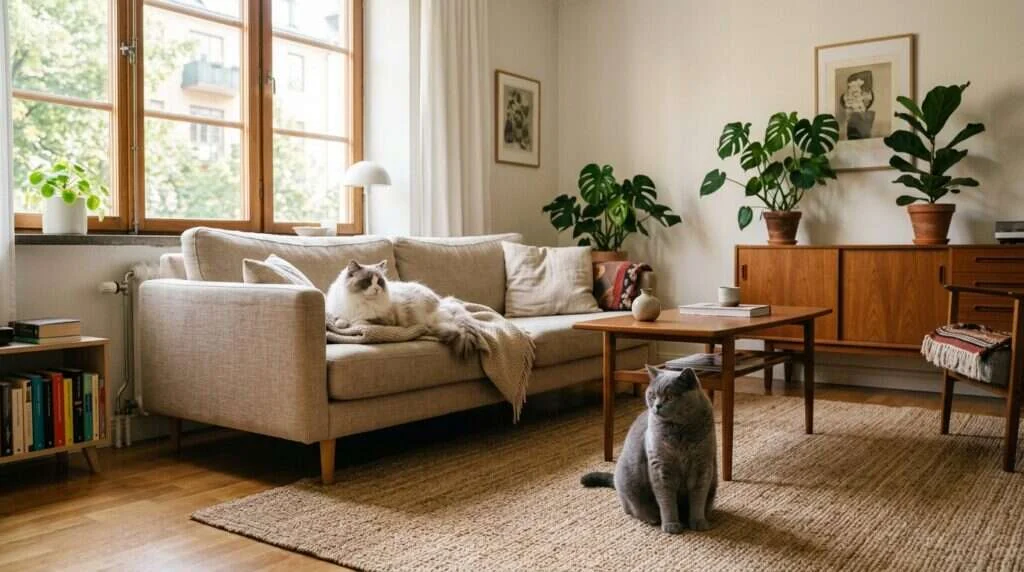
The best cat breeds for indoor living are those with temperaments and energy levels that fit an indoor environment. Popular choices include the Ragdoll, British Shorthair, Persian, Maine Coon, Scottish Fold, Russian Blue, and American Shorthair, although individual personality is often more important than breed alone.
A calm breed may adapt well to smaller homes, while an active breed can also thrive indoors if provided with enough enrichment, climbing space, and play opportunities.
The most important factors when choosing an indoor cat include:
- Personality
- Activity level
- Social needs
- Grooming requirements
- Health considerations
- Owner lifestyle
Quick Takeaways
Breed does not determine personality completely; individual cats vary.
- Calm breeds often adapt easily to indoor environments.
- Active breeds can live indoors successfully with proper enrichment.
- Every indoor cat needs exercise, mental stimulation, and social interaction.
- Consider grooming and health needs before choosing a breed.
Adoption can be a great option because adult cats often have established personalities.
What Makes a Cat Breed Good for Indoor Living?
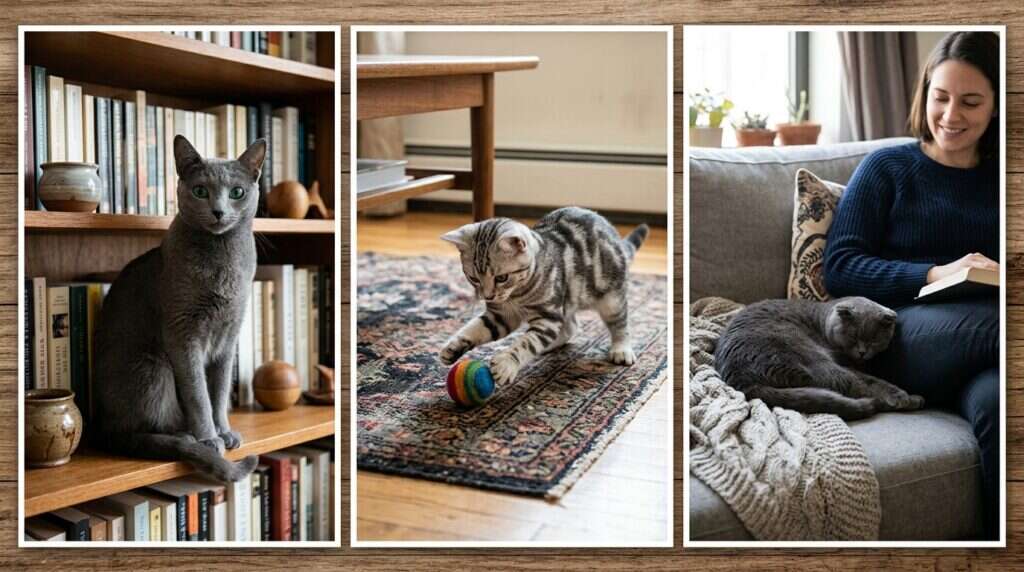
A suitable indoor cat usually has a combination of traits that make home life comfortable.
Important characteristics include:
Adaptable Temperament
Cats that adjust well to household routines often handle indoor living more easily.
Adaptable cats may:
- Relax comfortably at home
- Accept changes gradually
- Enjoy human interaction
- Create predictable routines
Moderate Energy Level
Indoor cats still need activity, but extremely high-energy cats may require more effort from owners.
A balanced energy level allows cats to:
Play regularly
Rest comfortably
Explore their environment
Maintain healthy weight
Social Compatibility
Some cats prefer constant companionship, while others enjoy more independence.
Owners should consider whether they want:
- A lap cat
- A playful companion
- A quiet independent pet
- A family-friendly cat
Best Indoor Cat Breeds
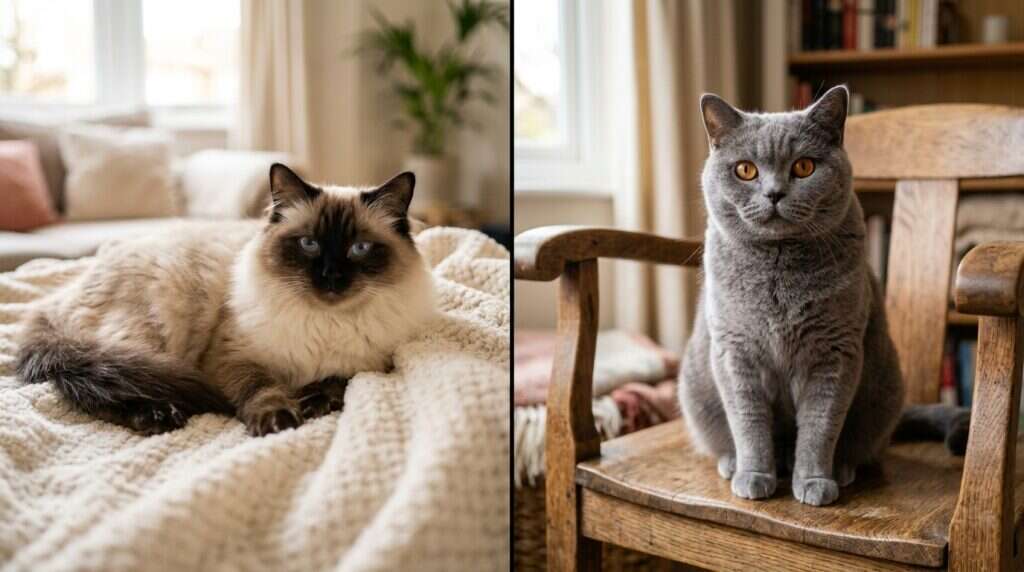
1. Ragdoll
Temperament
Ragdolls are known for their gentle and affectionate personalities. They often enjoy human companionship and are frequently described as relaxed and people-oriented.
Their calm nature makes them popular among families and people looking for a companion cat.
Why Ragdolls Suit Indoor Living
Ragdolls often adapt well indoors because they typically enjoy:
- Spending time with owners
- Relaxing in comfortable spaces
- Gentle play
- Predictable routines
They are usually not considered highly demanding cats, although they still require attention and enrichment.
Care Needs
Ragdolls have semi-long fur and need regular grooming.
Owners should provide:
- Weekly brushing
- Interactive play
- Comfortable resting areas
- Regular health monitoring
2. British Shorthair
Temperament
British Shorthairs are known for being calm, independent, and easygoing.
They often enjoy companionship without requiring constant attention.
Why They Suit Indoor Homes
This breed commonly adapts well to:
- Apartments
- Quiet households
- Structured routines
Their relaxed personality makes them suitable for owners who want a lower-maintenance companion.
Care Needs
British Shorthairs have dense coats that require occasional brushing.
Important considerations:
- Monitor weight carefully
- Provide exercise opportunities
- Avoid overfeeding
Their calm nature can sometimes contribute to reduced activity and weight gain.
3. Persian Cat
Temperament
Persians are known for their gentle and quiet personalities.
They often prefer peaceful environments and comfortable indoor spaces.
Why They Suit Indoor Living
Persians typically enjoy:
- Relaxed routines
- Calm households
- Comfortable resting areas
They are not usually high-energy cats, making them suitable for indoor lifestyles.
Care Needs
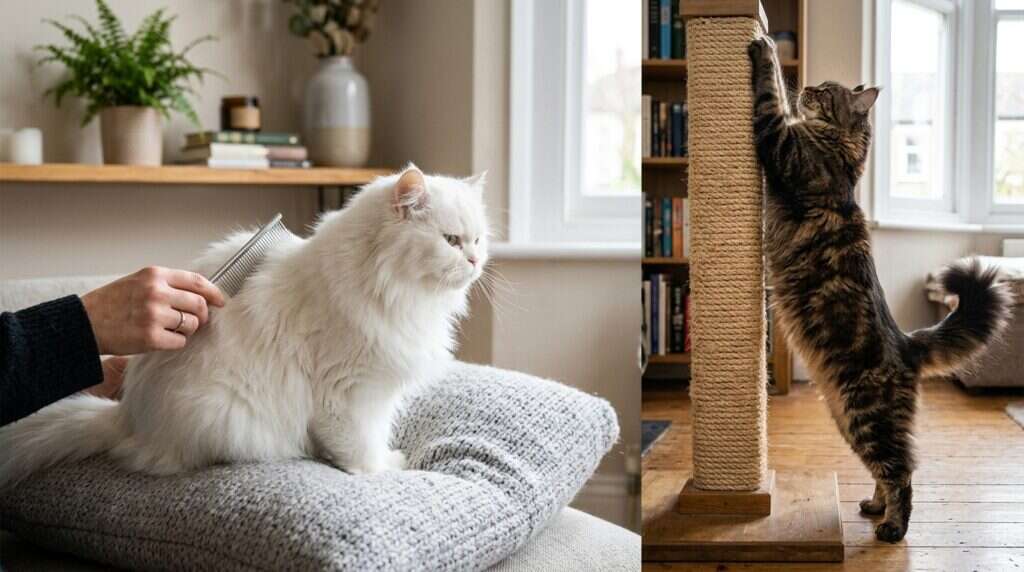
Persians require more grooming than many other breeds.
Owners should consider:
- Daily coat care
- Eye cleaning
- Regular grooming appointments
- Their long coat requires commitment.
4. Maine Coon
Temperament
Maine Coons are large cats known for their friendly and social personalities.
Despite their size, many Maine Coons adapt well to indoor living.
Why They Suit Indoor Homes
They often enjoy:
- Family interaction
- Play sessions
- Exploring indoor spaces
- They are intelligent cats that benefit from enrichment.
Care Needs
Because of their size, Maine Coons need:
- Strong scratching posts
- Large litter boxes
- Durable cat furniture
- Regular grooming
A small home can work if the environment is designed properly.
5. Russian Blue
Temperament
Russian Blues are often described as intelligent, gentle, and somewhat reserved.
They may take time to trust new people but can form strong bonds with their owners.
Why They Suit Indoor Living
They often appreciate:
- Calm environments
- Consistent routines
- Quiet companionship
They can be good choices for people who prefer a less demanding cat.
Care Needs
Russian Blues have short coats that are relatively easy to maintain.
They still require:
- Mental stimulation
- Play opportunities
- Social interaction
6. American Shorthair
Temperament
American Shorthairs are adaptable, friendly, and generally easygoing.
They are often considered practical family cats because they can adjust to different households.
Why They Suit Indoor Living
They often do well with:
- Families
- Apartments
- Multi-person households
Their balanced personality makes them flexible companions.
Care Needs
They usually require:
- Regular play
- Weight management
- Basic grooming
7. Scottish Fold
Temperament
Scottish Folds are often known for their sweet and affectionate personalities.
Many enjoy staying close to their owners.
Why They Suit Indoor Homes
Their calmer nature can make them suitable for indoor environments.
They often enjoy:
- Companionship
- Comfortable spaces
- Gentle play
Health Considerations
Potential owners should research breed-specific health concerns before choosing this breed.
Responsible breeding practices are important because certain inherited traits can be associated with health issues.
Comparing Popular Indoor Cat Breeds
| Breed | Activity Level | Grooming | Social Needs | Indoor Suitability |
|---|---|---|---|---|
| Ragdoll | Moderate | Medium | High | Excellent |
| British Shorthair | Low-Moderate | Low | Medium | Excellent |
| Persian | Low | High | Medium | Good |
| Maine Coon | Moderate-High | Medium-High | High | Good with enrichment |
| Russian Blue | Moderate | Low | Medium | Excellent |
| American Shorthair | Moderate | Low | Medium | Excellent |
| Scottish Fold | Low-Moderate | Medium | High | Good |
Choosing Between a Kitten and Adult Cat
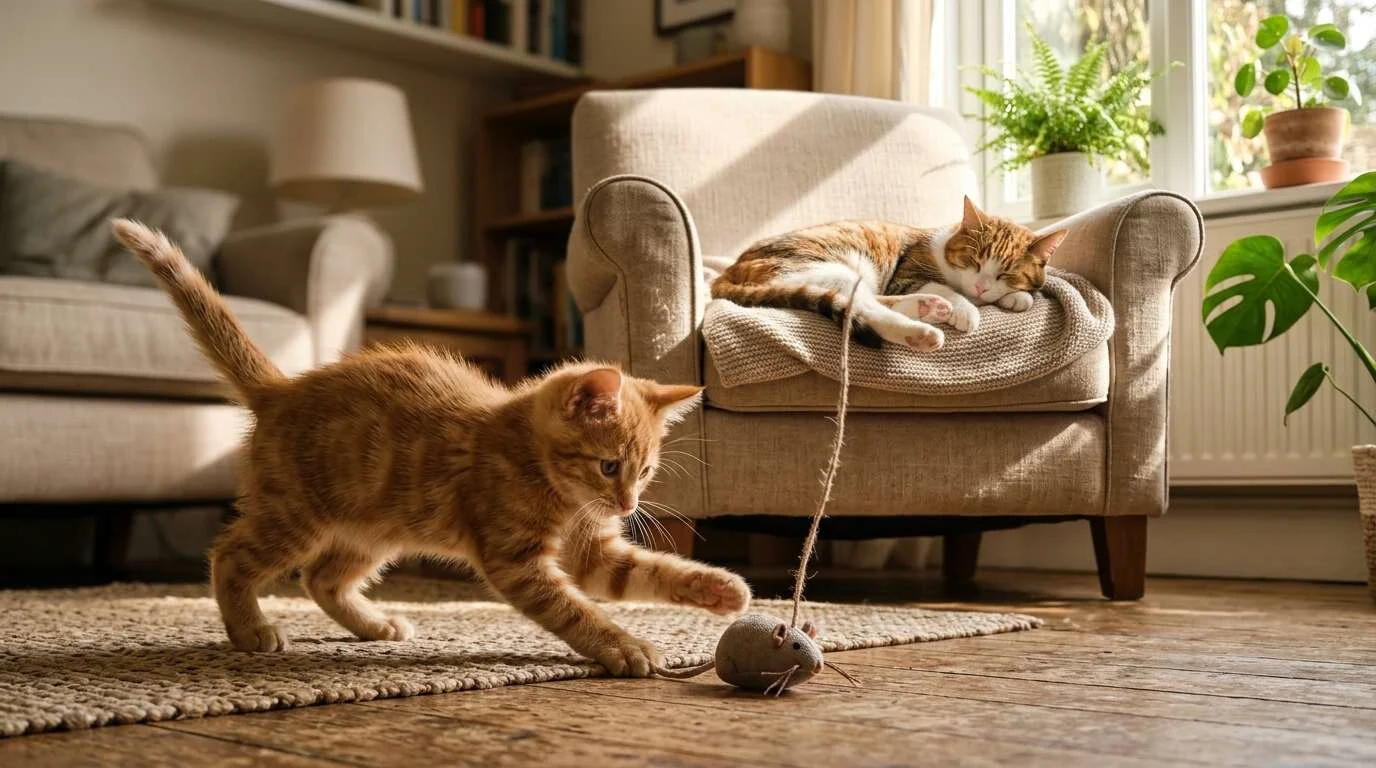
Many people assume kittens are easier, but this is not always true.
Kittens
Advantages:
- Adapt early to routines
- Grow with families
- Develop bonds from a young age
Challenges:
- Require training
- Need more supervision
- Have higher energy
Adult Cats
Advantages:
- Personality is already visible
- Energy level is easier to understand
- Often settle faster
For many indoor households, an adult cat can be an excellent choice because owners know what temperament they are bringing home.
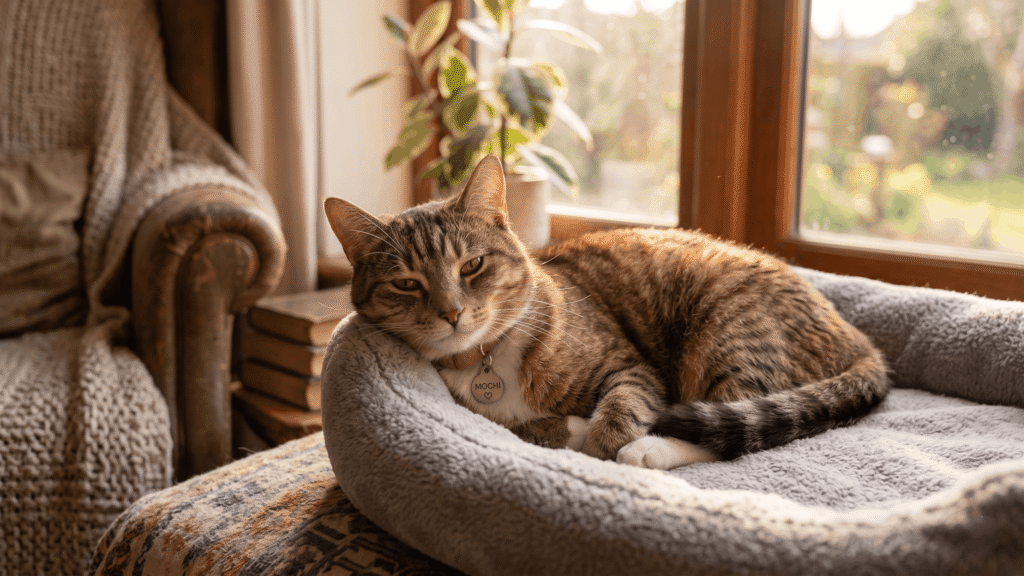
Indoor Cat Needs Regardless of Breed
Even the calmest cat breed needs proper care.
Every indoor cat benefits from:
Environmental Enrichment
Provide:
- Scratching surfaces
- Toys
- Climbing areas
- Hiding spaces
Regular Exercise
Daily activity helps prevent:
- Obesity
- Boredom
- Behavioral problems
Social Interaction
Cats differ in social needs, but all cats benefit from positive interaction.
Common Mistakes When Choosing an Indoor Cat Breed
Choosing Only Based on Appearance
A beautiful cat may not match your lifestyle.
Ignoring Grooming Needs
Long-haired breeds require more maintenance.
Assuming Indoor Means Low Maintenance
Indoor cats still require exercise and stimulation.
Not Researching Health Issues
Some breeds have higher risks for certain inherited conditions.

Frequently Asked Questions
What is the calmest indoor cat breed?
Breeds such as British Shorthairs, Ragdolls, and Persians are often considered calmer, although individual personality varies.
Are Maine Coons good indoor cats?
Yes. Maine Coons can live happily indoors when they have enough space, enrichment, and appropriate furniture.
What cat breed is best for apartments?
British Shorthairs, Ragdolls, Russian Blues, and American Shorthairs often adapt well to apartment living.
Are mixed-breed cats good indoor pets?
Yes. Many mixed-breed cats make excellent indoor companions. Personality and compatibility are often more important than breed.
Do indoor cats need a lot of attention?
The amount varies by cat. Some enjoy constant companionship, while others prefer independence with regular interaction.
Conclusion
The best cat breed for indoor living is the one that matches your lifestyle, home environment, and ability to provide care.
Calm breeds such as British Shorthairs and Ragdolls may suit owners looking for relaxed companions, while intelligent and active breeds such as Maine Coons can thrive indoors with proper enrichment.
However, breed alone does not determine whether a cat will be happy indoors. A safe environment, appropriate nutrition, regular play, healthcare, and human interaction are the foundation of a healthy indoor life.
Choosing a cat is not only about finding a breed you love. It is about creating a long-term relationship where both the owner and cat can thrive.