This post contains affiliate links. If you buy through them I may earn a commission, at no extra cost to you.
A condo marked "for multiple cats" is often a larger version of a single-cat condo, and two cats don't use space the way one does. Cats that live together may share a bed, or they may need distance and escape routes, and many condos fail at the second. The mistakes are predictable: compartments too small for two, a single entrance, dead-end cubbies where one cat can corner another, and a structure that wobbles under two jumpers. This guide explains what a two-cat condo needs and how to check it.
Short answer
Choose a condo with at least two separate sleeping spaces, more than one entrance or exit, no dead ends on the main route, compartments large enough for a cat to turn around, and a wide, heavy base. If your cats don't get along, buy two smaller condos or add a separate perch, and place them in different spots.
In this guide:
- What a two-cat condo needs
- Separate spaces
- More than one exit
- Compartment size
- Platform and perch space
- Stability
- Height and route design
- Resource access
- Placement
- Introducing it
- Signs it's not working
- Safety and cleaning
- Layout examples for two cats
- Special cases
- When to separate them
- Frequently asked questions
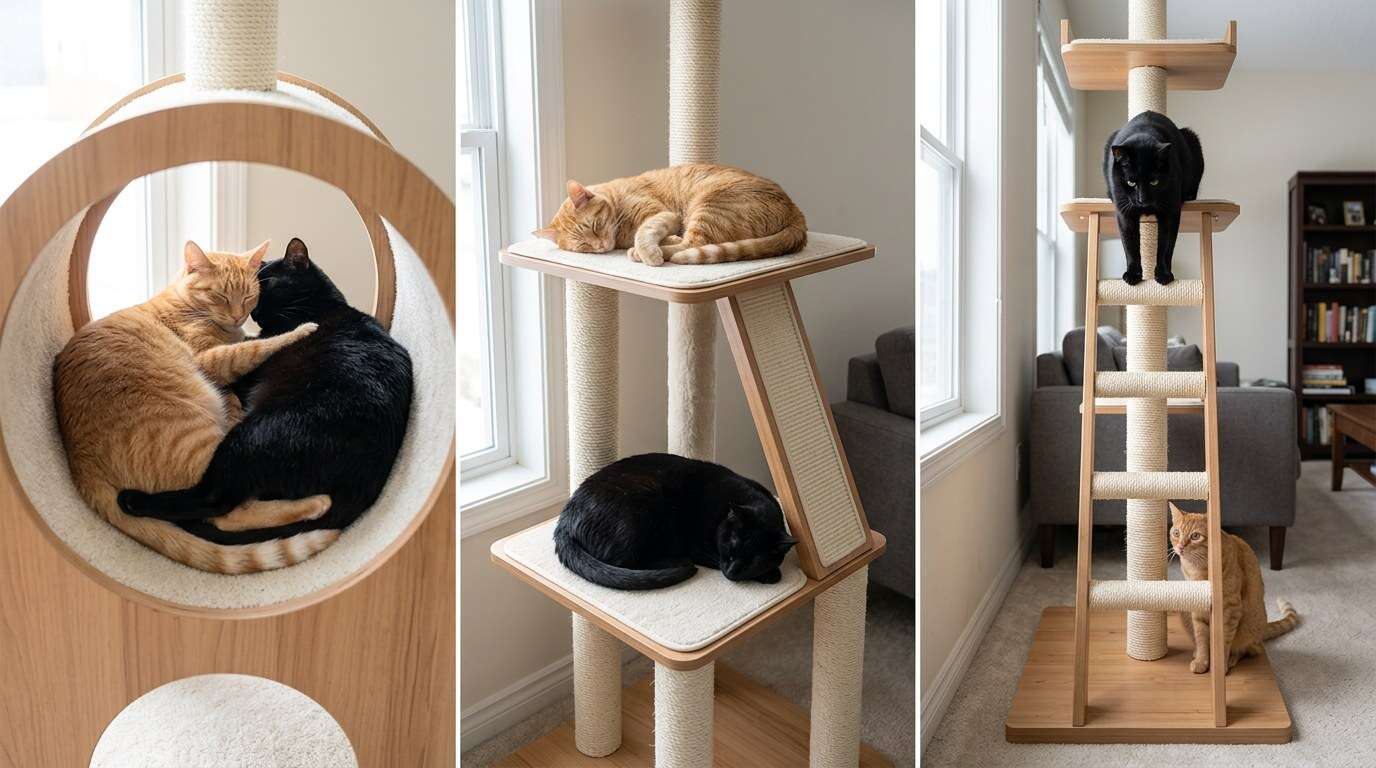
First, what kind of pair are they?
Cats vary in how they share.
Bonded pairs sleep together, groom each other, and may happily share a compartment.
Tolerant housemates share a home without conflict but prefer their own space.
Cats with tension avoid each other, and may guard resting spots, food, or routes.
Watch yours for a week. Do they nap in contact? Does one block the other from a perch? Does one hide when the other approaches? The answer decides what you buy.
What a two-cat condo needs
Separate spaces
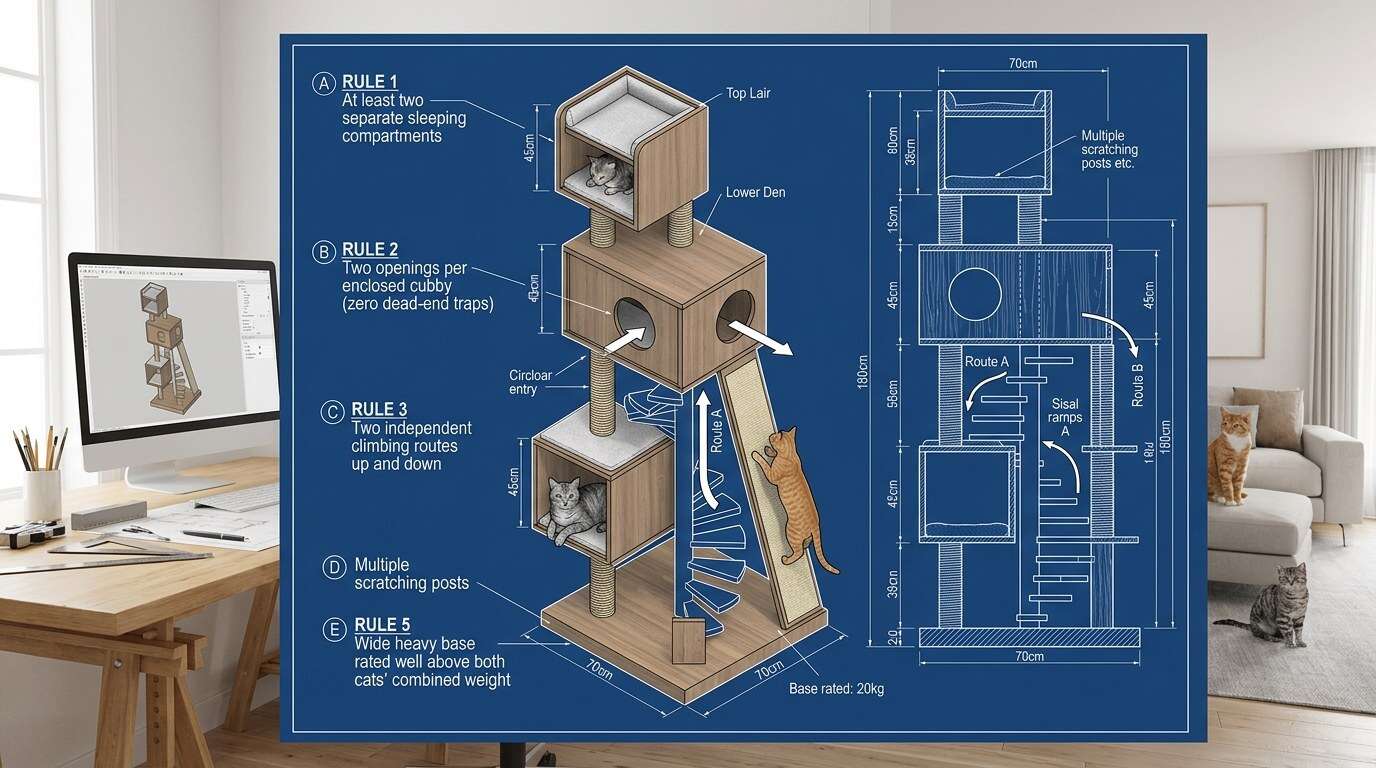
At least two sleeping areas that aren't connected by a single narrow route. If one cat is in the top cubby and the other has to pass through it to get down, that's a trap.
More than one exit
A cat that feels cornered may fight or freeze. Look for designs where each compartment has at least two openings, or where the structure has more than one route up and down.
Compartment size
Each cubby should be large enough for the cat to enter, turn, and lie down comfortably. If you want two cats to share one compartment, it must fit both with room to spare. Many condos listed as "for two cats" are a single compartment barely big enough for one.
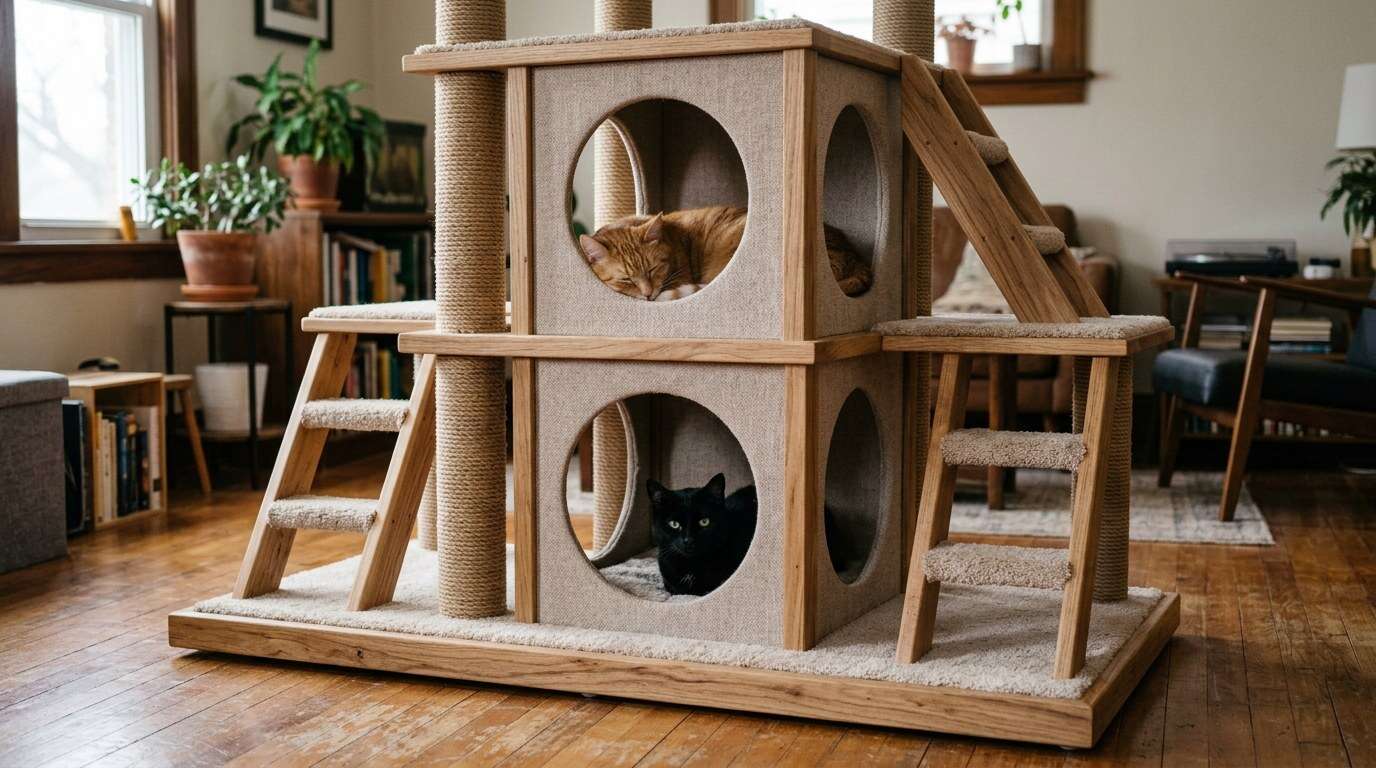
Platform and perch space
Include open perches as well as enclosed spaces. Some cats prefer to see out.
Stability
Two cats jumping onto the structure load it more than one. Look for a wide, heavy base, thick posts, and a stated weight rating that exceeds their combined weight with a margin. Anchor tall structures. See our stability guide.
Height and route design
Spread levels so a cat can move between them without passing through another cat's space.
Avoid a design with a single long ladder or a single entrance leading to the top.
Provide low and high options, so a senior or a kitten can use it.
Resource access
A condo is one resource among several. Cats compete over resting places, food, water, litter, and scratching posts. In a two-cat home, provide:
- At least two of each key resource, in different places
- More than one scratching post
- Water away from food
- A litter box per cat plus one extra, in separate spots
- Multiple resting spots outside the condo
If one cat blocks the other from the condo, a second structure in another room can solve it. See our multi-cat household guide.
One large condo or two smaller ones?
If you aren't sure how your cats will behave, a flexible setup with two smaller items is lower risk than one big purchase.
Placement
Put it in an area where both cats spend time, not in a corner where one could be trapped.
Keep two exits from the room clear, so a cat can leave.
Don't place it next to the litter box or food.
Provide a second resting place elsewhere.
Leave space around it so cats can pass each other.
Introducing it
Let the cats explore on their own.
Don't place them inside.
Put a familiar blanket in each compartment.
Watch for guarding, hissing, or blocking.
If one cat claims it, add a second option instead of removing the first.
Give it a few weeks.
Signs it's not working
- One cat always blocks the way
- One cat avoids it
- Hissing or swatting around it
- A cat sleeping elsewhere to avoid a rival
- Fights over the same perch
Increased hiding, spraying, or litter box changes
These can also come from other stresses. If tension is serious, ask your vet or a behaviorist, and check for medical causes.
Safety and cleaning
Choose a design that doesn't collapse.
Check for sharp staples and loose fabric.
Use washable covers, and wash them regularly.
Check ventilation in enclosed compartments.
Look at weight ratings.
Check for small parts.
Picks
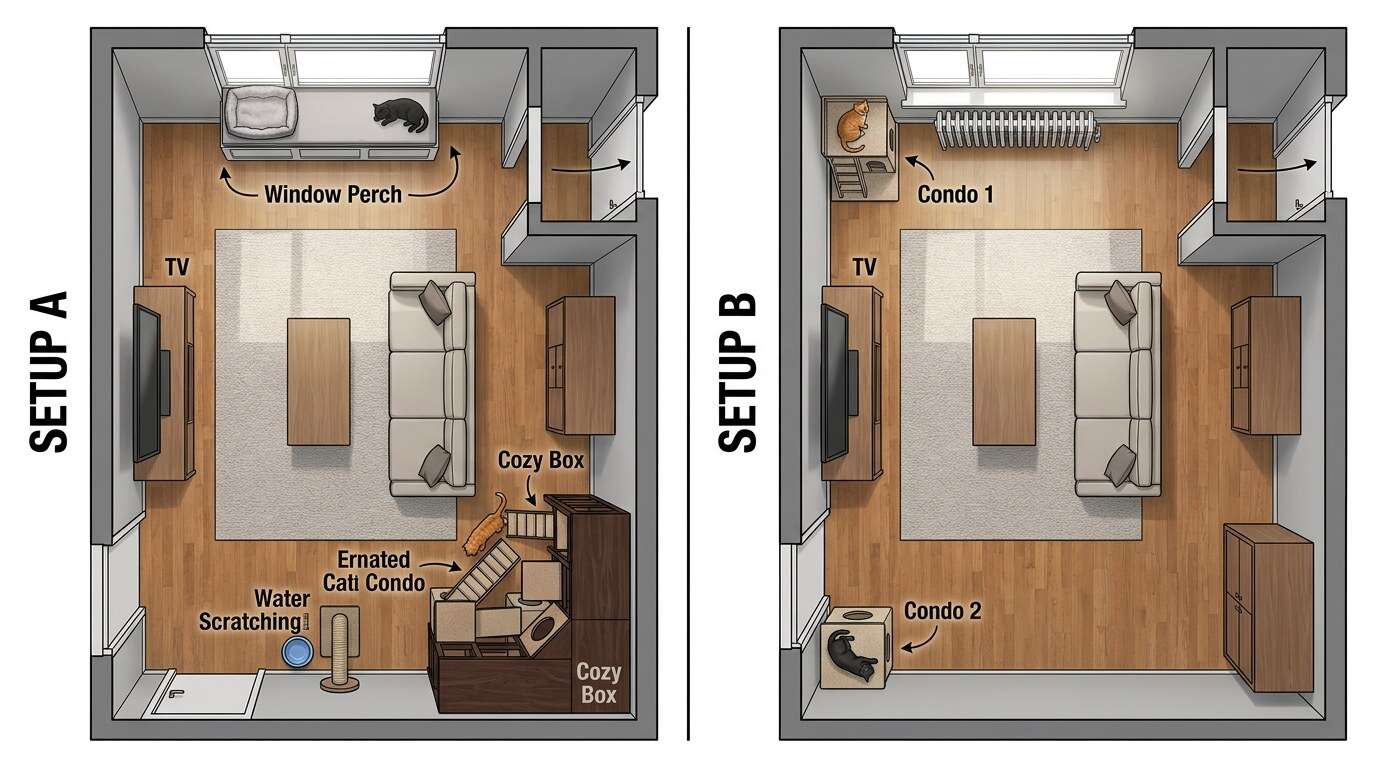
Layout examples for two cats
These are sketches to adapt, not measured plans.
Living room corner. A multi-level condo with two exits on the main side, placed so that both cats can reach it from two directions, plus a separate window perch across the room.
Small apartment. One compact condo, one tall, narrow tree with open platforms, and a shelf-height bed. Place them in different parts of the room so neither cat controls the whole space.
Two rooms. One condo in the living room and a second hideaway in a bedroom, so the cats can separate if they need to.
Special cases
A kitten and an older cat. The kitten will climb to the top and the senior may not follow. Offer a low, easy bed for the older cat that isn't reached through the kitten's route. Don't let the kitten ambush from the only exit.
A bonded pair. They may want to share. Offer a large compartment that fits both, and a second option in case they want space.
Cats with a bully and a target. Give the target cat multiple escape routes and a safe place the other cat can't reach, such as a shelf with a single access point that she can see from. Ask your vet or a behaviorist about the tension.
A very large cat with a small one. Check the compartment size and weight rating for the larger cat, and make sure the smaller one isn't cornered.
When to separate them
If cats fight around the condo, or one stops using it and hides, add more resources before removing anything. If conflict continues, ask your vet or a behaviorist. Fighting and tension can come from many sources, and a condo is rarely the whole cause.
- When to talk to your vet
- Aggression between cats
- Spraying or litter changes
- A cat that hides more than usual
- Signs of pain or illness
Frequently Asked Questions
Can two cats share a cat condo?
Many can, if the condo is big enough and has more than one exit. Some prefer separate spaces.
How big should a condo for two cats be?
Each compartment should fit a cat comfortably, and a shared one should fit both with room to spare.
Should I buy one or two?
If you're unsure how they'll behave, two smaller ones or a flexible setup is safer.
Why does one cat guard the condo?
It may be a prized resting spot. Add more options and resources.
Do I need to anchor a condo?
Taller structures benefit from it.
Related reading
References
International Cat Care, multi-cat household resources (icatcare.org)
AAFP and ISFM, Feline Environmental Needs Guidelines (catvets.com)
Manufacturer specifications for any condo you name