This post contains affiliate links. If you buy through them I may earn a commission, at no extra cost to you. I don't rank products here, because I haven't tested them, and models and software change.
An interior cat door solves one of the most common multi-cat problems: one cat needs something the others shouldn't have. It might be a prescription food, a litter box that a dog keeps raiding, a quiet room where a nervous cat can eat in peace, or a safe room for a new arrival. The right door depends on how selective it needs to be. Some let any cat through, some let only one, and each has failure points that owners find out about too late. This guide explains the types, matches them to common situations, covers installation in a rental, and points out the welfare issues that come with controlling a cat's access.
Short answer
Use a plain flap or open doorway if you only need to keep a dog out. Use a microchip or collar-tag door if you need to let one specific cat through and keep another out. Make sure the cat that is restricted still has food, water, litter, and rest in the space she can reach. Train gradually, and don't rely on a door to solve a problem that a feeding schedule or a second feeding station would solve more simply.
In this guide:
What problem are you solving?
Be precise, because the answer decides the door.
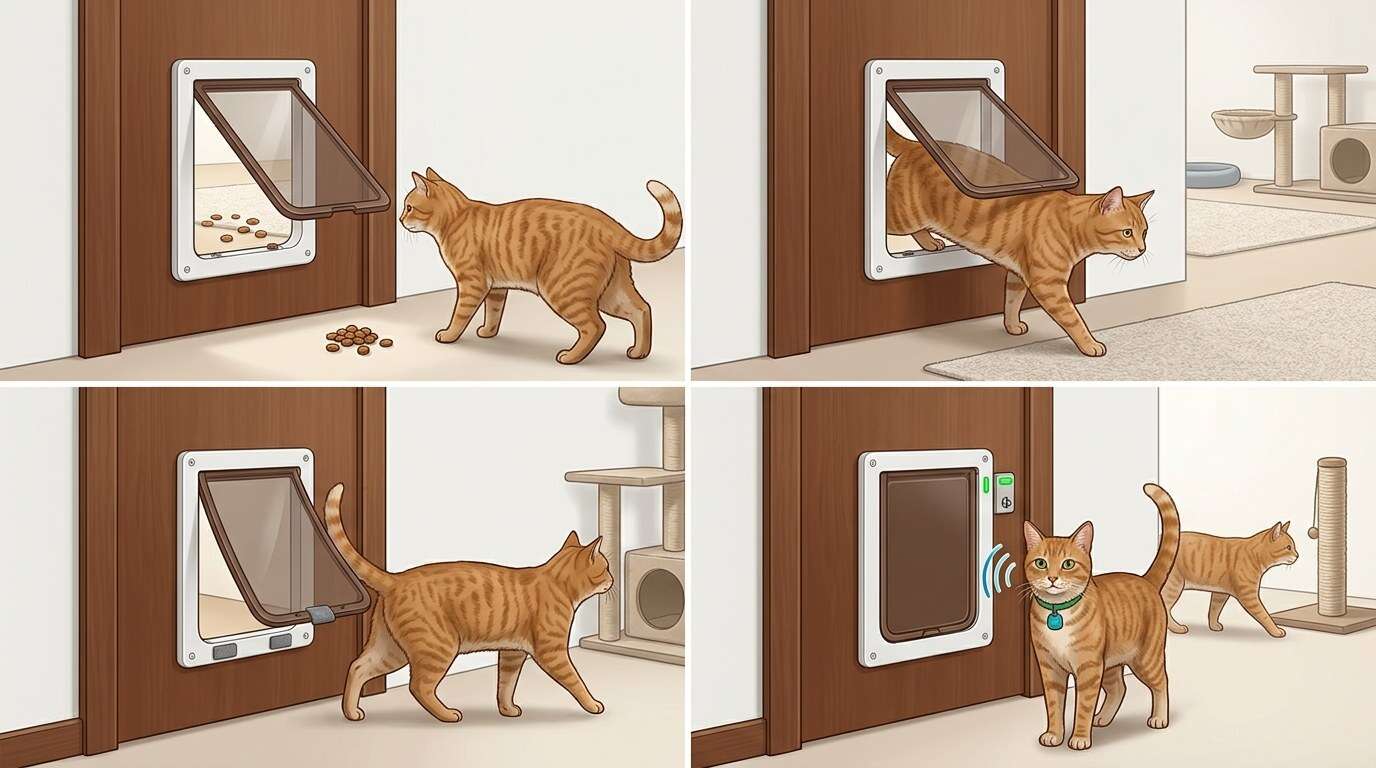
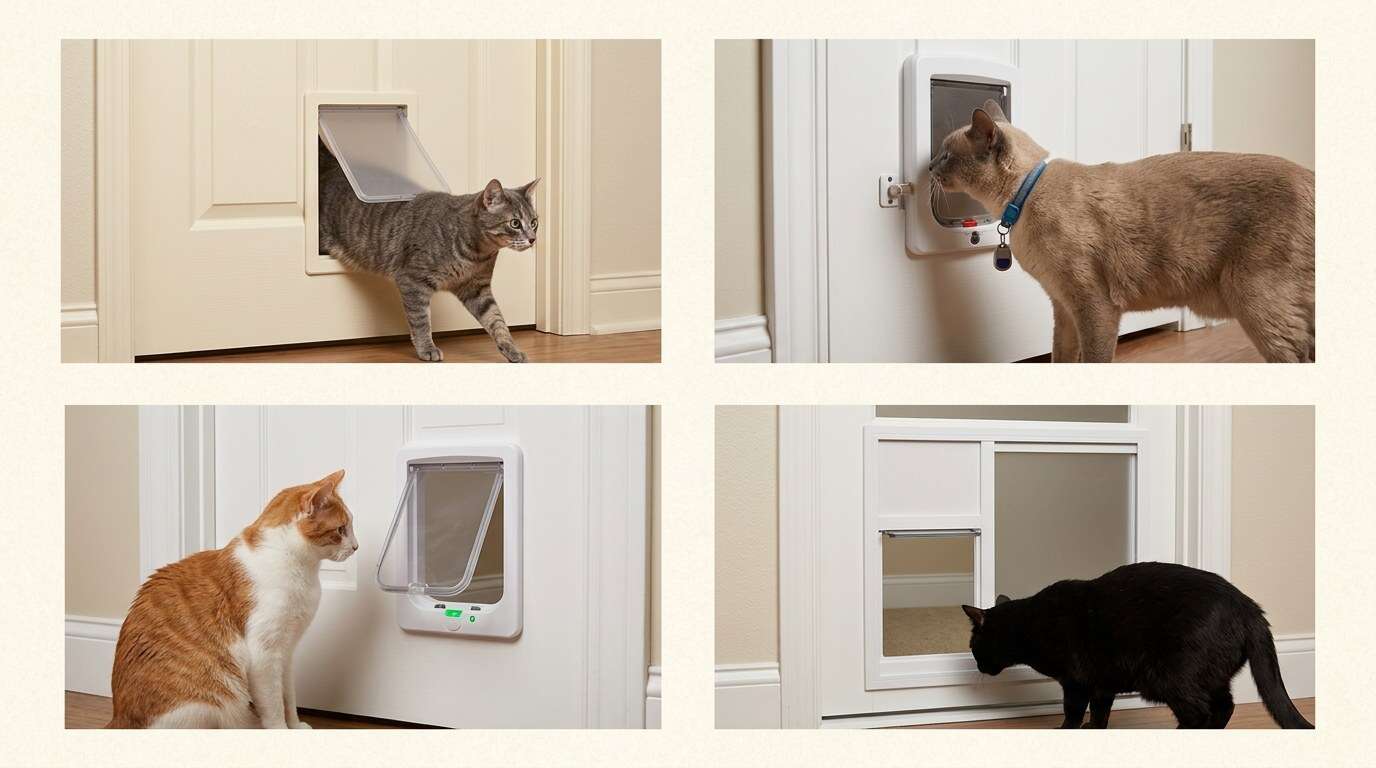
The main types
Brand and model names change quickly, and I haven't tested any, so check current specifications and reviews for any product you consider.
Using a door to protect a prescription diet
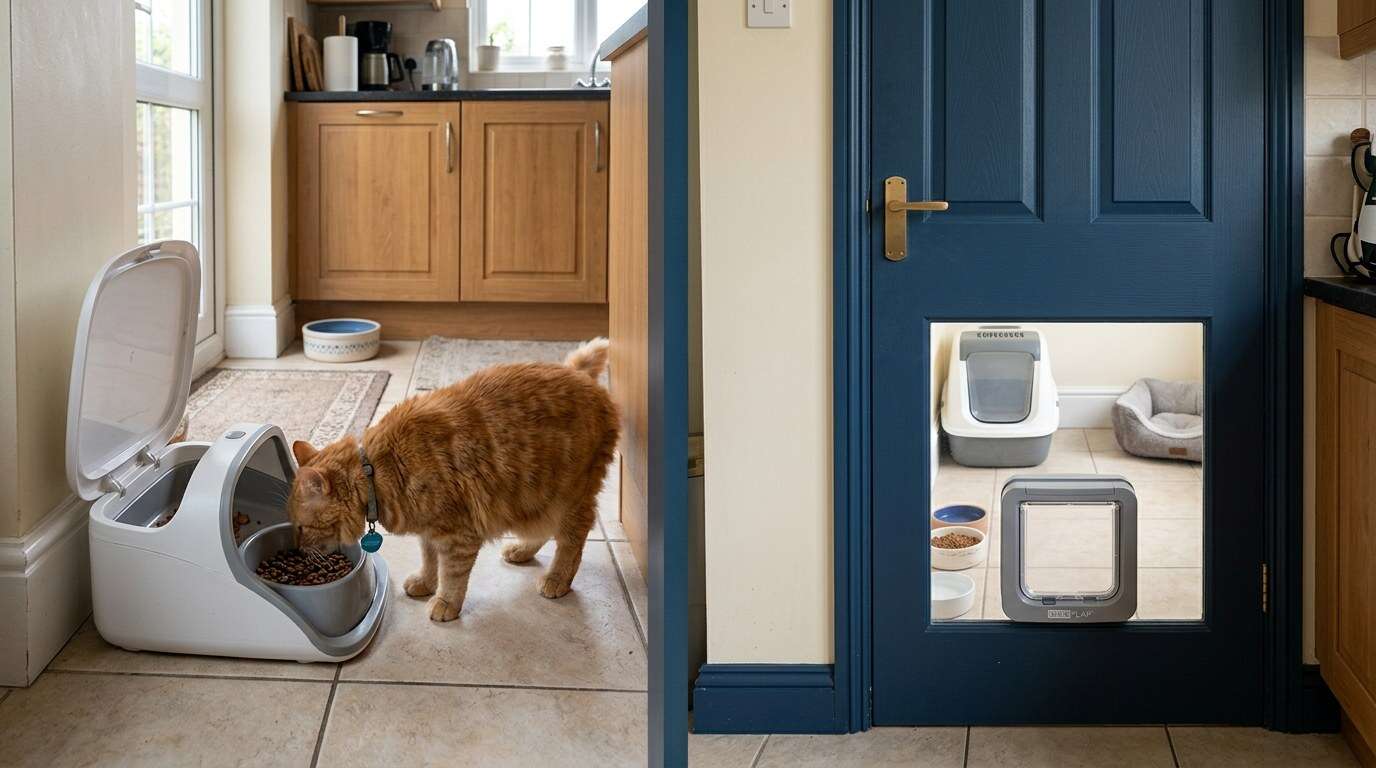
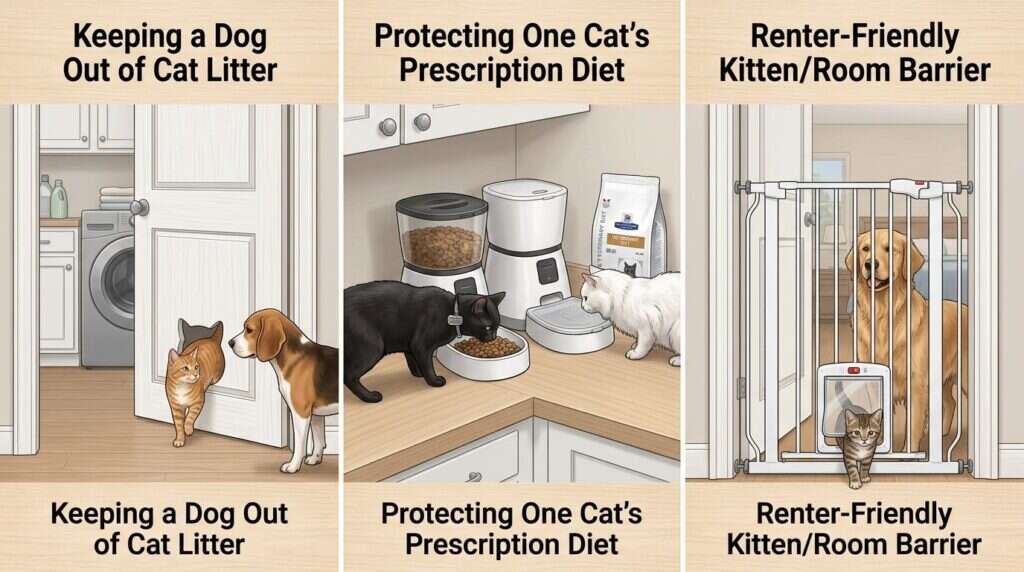
If one cat has been prescribed a special diet, for example for kidney disease, urinary problems, or allergies, she needs to eat it and only it, and the other cats need not eat it. The options:
Scheduled meals in separate rooms. Feed each cat in a different room with the door closed, pick up the bowls after twenty to thirty minutes, and let everyone out. This is simple, cheap, and works for many households.
A microchip feeder. This is a feeder rather than a door. It opens only for a registered cat. It can be a good alternative to a room-based setup.
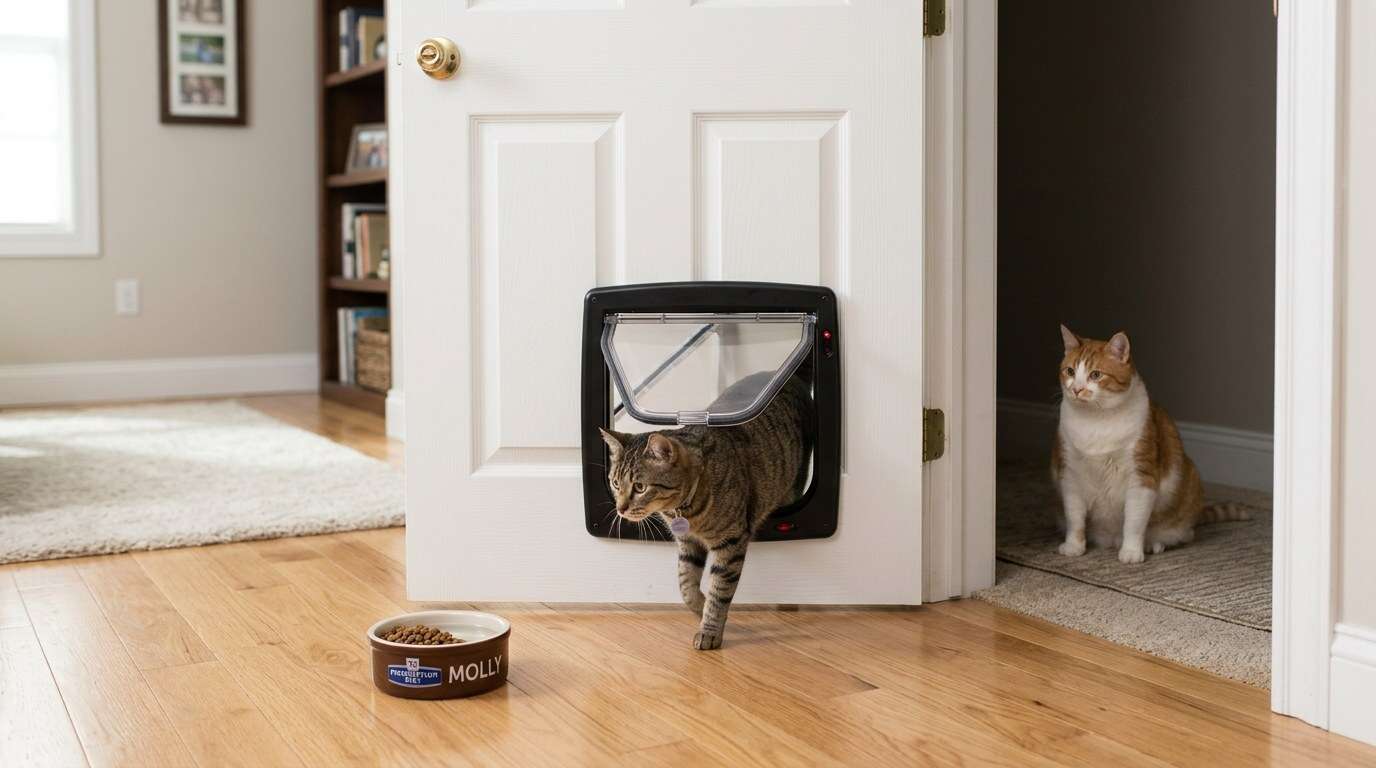
A cat door to a feeding room. Only the restricted cat can get in, and the others can't. This works if the cat reliably uses the door, and the other cats can't follow.
A raised feeding station for a cat who jumps, if others can't.
Whichever you choose, ask your vet how strictly the diet must be followed, and whether other cats can safely eat a small amount if they steal some. Some prescription diets aren't suitable for healthy cats long-term. Don't leave a cat without food if the door fails.
Using a door to protect the litter box from a dog
A dog that raids the litter box is a health and hygiene problem. Put the litter in a room or area with an opening sized for the cat, and block the dog with a barrier or a small flap. Check that the opening is large enough that your cat can enter comfortably, and that she doesn't have to squeeze. Cats dislike entering a box that feels like a trap, so avoid a dead-end location with a single entrance in a multi-cat home, where another cat could ambush her. See our litter box guidance.
Using a door for a bullied cat
If one cat blocks another from food or the litter box, a restricted-access room can give the target cat a safe place. This isn't a long-term fix for the conflict, and it can add stress if the rest of the home becomes a place she can't go. Talk to your vet or a behaviorist if there's persistent aggression.
Welfare rules for controlling access
Every cat needs access to food, water, litter, and rest. If you restrict one cat to a room, put all of these inside.
Don't isolate a cat for long periods without a reason. Social and environmental needs matter.
Check that the door doesn't trap her. A cat shouldn't be locked in or out of the litter area by a malfunctioning door.
Plan for failure. Batteries die, chips misread, collars come off. Check the door daily, and have a backup, such as a manual lock.
Watch her stress. A cat that avoids the door, or the room beyond, may be frightened.
Training your cat to use it
Remove or prop open the flap. Let her walk through the opening freely.
Reward her with a treat on the other side.
Lower the flap gradually, keeping it partly open.
Close it fully once she is comfortable.
Add the collar tag or confirm the microchip only after she is used to the flap.
Take your time. Some cats learn in a day and others take weeks. Don't push her through.
Be patient with cats who dislike the sound of a clicking flap. A quiet model, or padding on the frame, can help.
Measuring and fitting
Measure your cat at the widest point of her chest and shoulders, and her height to the top of her back. The opening must be large enough that she doesn't squeeze. Check the product's opening size in its specifications.
Check the step height. A high threshold is hard for kittens and seniors.
Consider the thickness of the door and the product's fit range.
Make sure the door can't be pushed open by a larger cat or a dog, if you need to exclude them.
Installing in a rental
Ask your landlord before cutting or drilling any door.
Choose a panel insert, a baby gate with a cat door, or a freestanding screen, which can be removed without damage.
Take photos before and after installation.
If you cut a hollow door, check how it should be framed, and whether you can replace it when you leave.
Safety
Collars. If a collar is needed, choose a breakaway design, and check it regularly. A cat can get caught on a collar, so never use a rigid collar.
Entrapment. Make sure the cat can't get her head, paw, or tail stuck in the flap or gap.
Electric parts. Use manufacturer-approved batteries. Don't leave a damaged door in use.
Heat and noise. An exterior-style flap in an interior door is not required, but a noisy one can frighten cats.
When to talk to your vet
Before restricting a cat's food for medical reasons
If a cat on a prescription diet isn't eating
If one cat bullies another or there's aggression
If a cat avoids the litter area
Frequently Asked Questions
What is the best interior cat door for a multi-cat home?
It depends on what you want to control. Microchip doors discriminate between cats, and plain flaps keep dogs out.
Do microchip cat doors work with any chip?
Check the specifications for the chip types supported. Cats must be microchipped.
Can I use a cat door to keep one cat out of a room?
Yes, with a selective door, but make sure she still has access to what she needs.
Will another cat follow through?
Some do. Watch, and consider a different setup if tailgating happens.
Can I install one in a rented door?
Ask your landlord. A panel insert or gate may avoid damage.
Related reading
References
International Cat Care, multi-cat household and feeding resources (icatcare.org)
Your vet's guidance on any prescription diet
Manufacturer specifications and independent reviews for any door or feeder you name
63. Houseplant safety (merged into row 64, no separate page)
Your sheet's note is right: this overlaps your existing safe-plants article, and rows 63 and 64 are the same topic. The next article (64) covers buying, and I've added a section to it on keeping cats safe around plants you already own, which was this row's angle. Don't publish a separate page. Redirect any draft for 63 to the page you create for 64, and keep article 17 (the setup guide) and article 18 (the poisoning guide) as supporting pages that link to it.