This post contains affiliate links. If you buy through them I may earn a commission, at no extra cost to you.
There is no regulated definition of "healthiest" on a cat food label, so any bag using the word is making a marketing claim, not a measured one. What you can do is check whether a food is complete and balanced for your cat's life stage, whether the company can show who formulated and tested it, and whether it keeps your cat at a healthy weight. This post walks through those checks and where individual cats need a vet's input.
Short answer
The healthiest food for your indoor cat is a complete and balanced diet, from a manufacturer that can back up its quality control, that your cat will eat and stay lean on. For a healthy adult that can be wet, dry, or a mix. A cat with kidney disease, diabetes, urinary problems, or food allergies may need a specific veterinary diet, and that decision belongs to your vet.
In this guide:
- Why "healthiest" is hard to prove
- Four things you can actually check
- Wet, dry, or mixed
- Ingredients: what the list can and can't tell you
- Grain-free, raw, and "human grade"
- When your cat is not a typical healthy adult
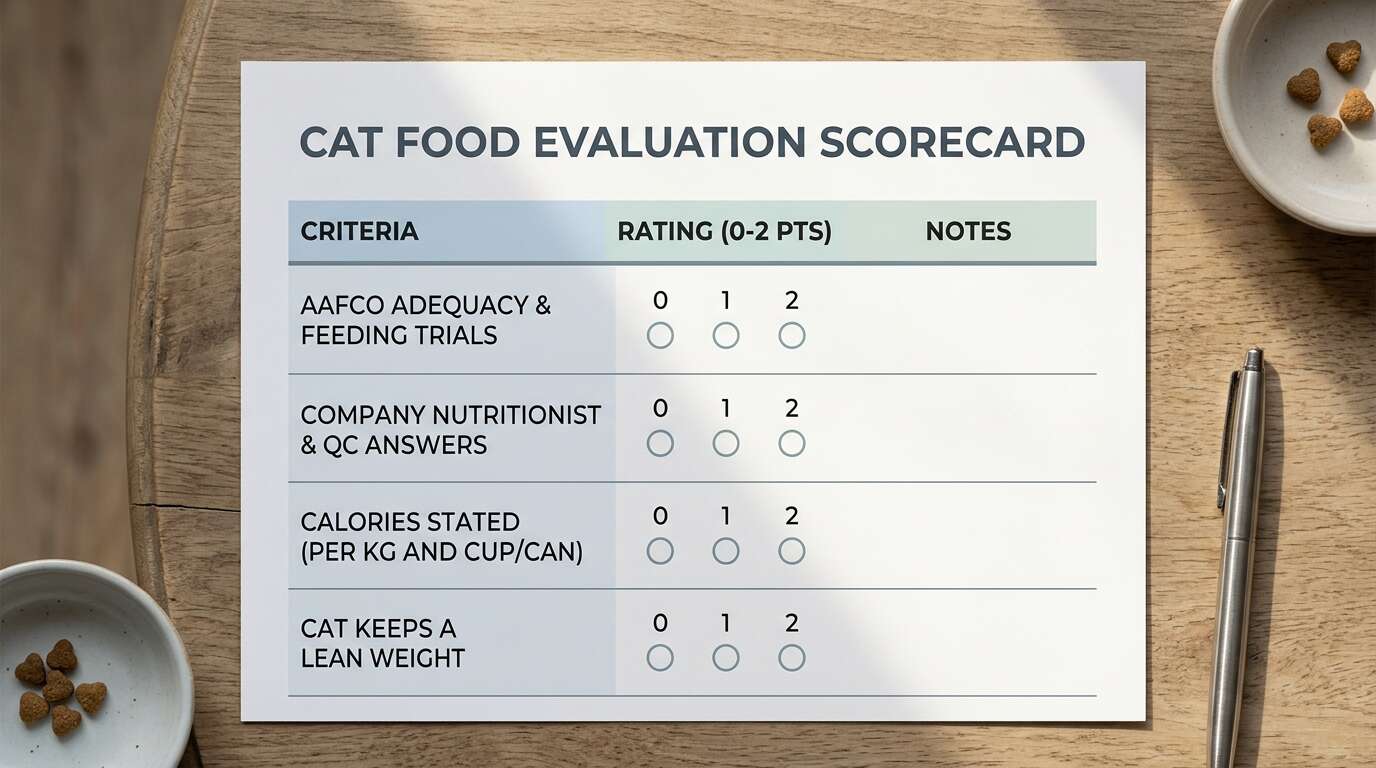
- A simple scoring method you can use
- My picks
- When to call the vet
- Frequently asked questions
Why "healthiest" is hard to prove
Few cat foods have been compared head to head in long studies that track health outcomes in healthy adult cats. What exists is mostly manufacturer research, small studies, and nutritional standards that define minimums. That's why claims such as "ancestral," "biologically appropriate," or "premium" tell you very little by themselves. They describe a marketing position, not a result.
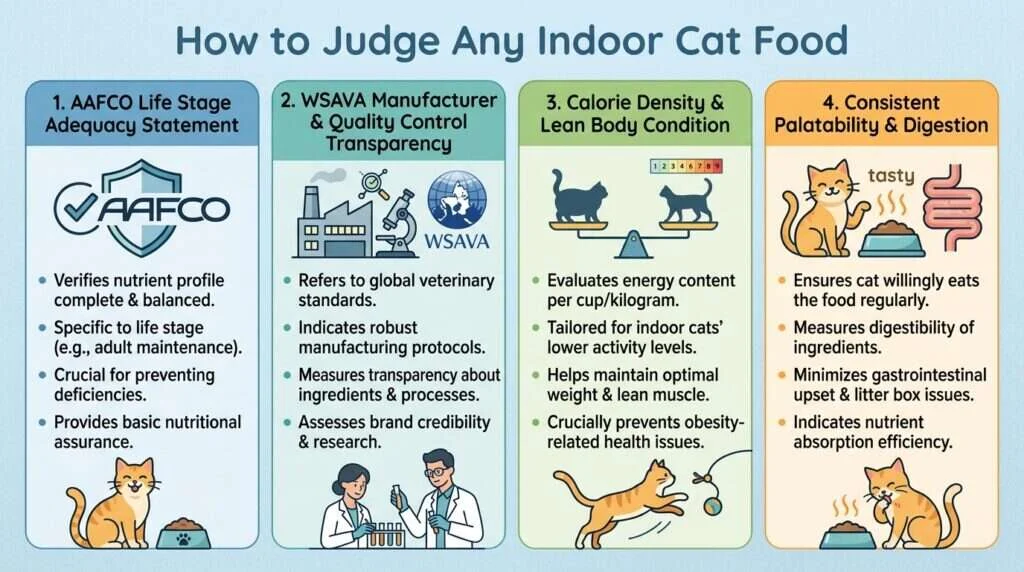
Four things you can actually check
Does the label say it is complete and balanced for your cat's life stage? Look for the AAFCO nutritional adequacy statement. "Adult maintenance" or "all life stages" fits a healthy adult. Anything marked for intermittent or supplemental feeding is not a main diet.
Can the company answer basic questions? The WSAVA Global Nutrition Committee suggests asking whether the company employs a full-time qualified nutritionist, who formulates the diets, what quality control it runs, and whether it can give you the energy and nutrient values on request. A company that avoids answering is telling you something.
Does the food keep your cat lean? Obesity is common in indoor cats, and extra weight raises the risk of problems such as diabetes and joint strain. A food that looks perfect on paper but is easy to overfeed is not healthy for a cat that gains. Compare foods by calories, not cups. The calorie guide linked below shows how.
Will your cat eat it consistently? A theoretically excellent food that your cat refuses is not doing anything for her. Pick among acceptable foods by what she accepts and tolerates well.
Wet, dry, or mixed
Wet food contains much more water and usually fewer calories by weight. Dry food is convenient and cheaper per day for many households. Neither format is healthy or unhealthy by itself. A mix works well for a lot of indoor cats, and some vets like to have wet food in the routine in case a urinary or kidney issue appears later. If your cat has had urinary trouble, ask your vet which format they want.

Ingredients: what the list can and can't tell you
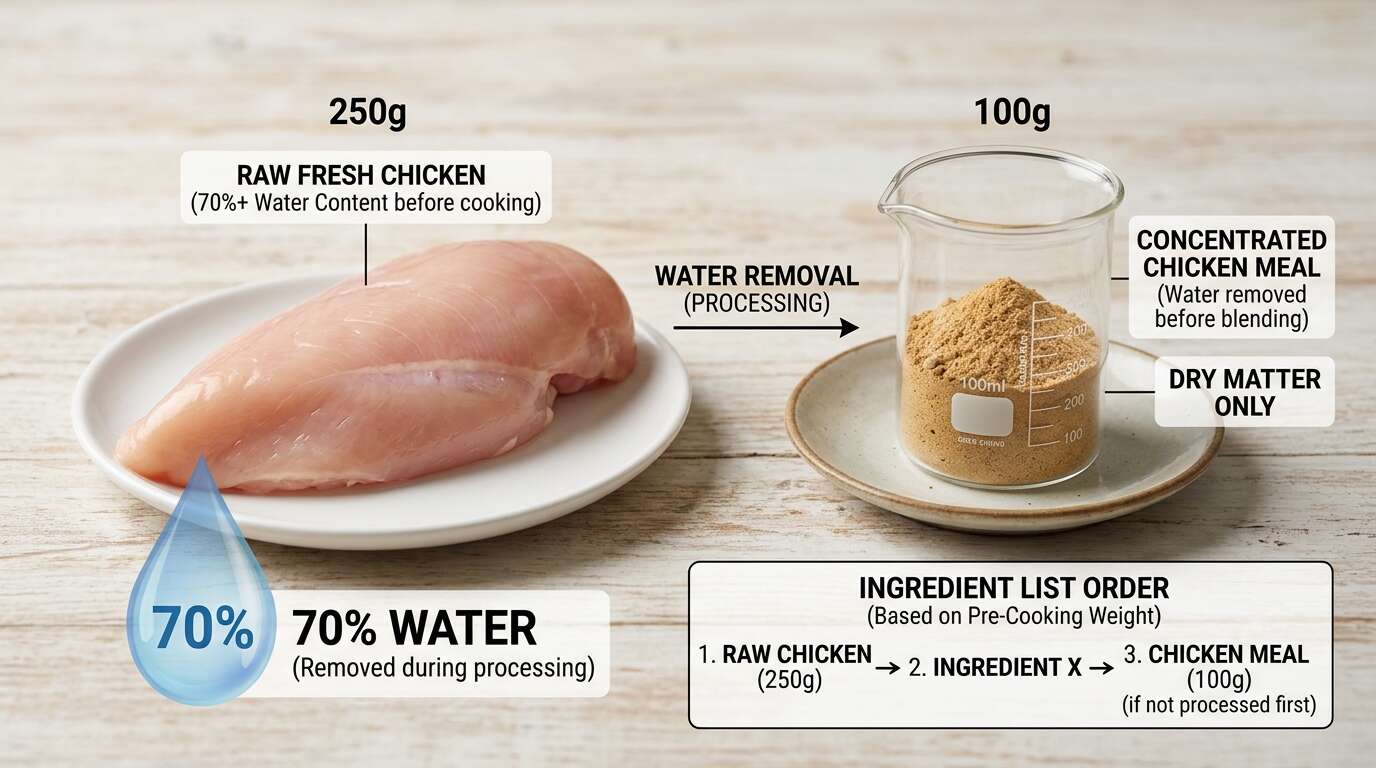
Ingredients are listed by weight before cooking. A fresh meat ingredient contains a lot of water, so it can appear first on the list and still contribute less protein than a dried meat meal further down. The list helps you spot named animal proteins and find ingredients your cat reacts to. It does not tell you the diet's quality on its own.
Terms such as "by-products," "meal," and "natural" are not automatically good or bad. Judge the finished food by its adequacy statement, the company's quality control, and how your cat does on it.
Grain-free, raw, and "human grade"
Grain-free. The FDA investigated reports of heart disease (dilated cardiomyopathy) in dogs eating certain grain-free diets. Evidence in cats is much more limited, and grain-free is not a proven benefit for healthy cats. Cats with a confirmed grain allergy are rare.
Raw diets. Raw meat can carry bacteria such as Salmonella and Listeria that can sicken cats and the people who handle the food. Veterinary organizations including the AVMA discourage feeding raw animal-source protein that hasn't been treated to reduce pathogens. If you are drawn to raw feeding, talk to your vet first.
"Human grade." This is a marketing term unless the whole product and manufacturing process meets the legal definition. It says little about whether the diet suits a cat.
When your cat is not a typical healthy adult
Kittens, pregnant cats, seniors, and cats with medical conditions have different needs. A food that is excellent for a healthy five-year-old can be wrong for a cat with chronic kidney disease. If your cat drinks or urinates much more than usual, is losing weight, or has recurring digestive or urinary signs, see a vet before changing diets.
A simple scoring method you can use
Score any food you are considering from 0 to 2 on each question, then compare totals:
This is a decision aid I made for this post. It is not a validated scoring system.
My picks
When to call the vet
Ask your vet before switching diets if your cat has a health condition, is on medication, or has changed in appetite, thirst, weight, or litter box habits.
Frequently Asked Questions
Is wet food healthier than dry?
Wet food has more moisture, and many vets like it in the mix. Dry food that is complete and balanced can still be a sound main diet for a healthy cat.
Are by-products bad?
Not automatically. The finished diet's adequacy and the company's quality control matter more.
Should I feed a different food because my cat is indoor only?
Indoor cats burn fewer calories on average, so portion control matters more. A lower calorie food may help some cats, but check the calorie numbers rather than the word "indoor."
Related reading
References
WSAVA Global Nutrition Committee, selecting the best food for your pet (wsava.org)
AAFCO, pet food label information (aafco.org)
FDA, investigation into diet and canine dilated cardiomyopathy (fda.gov)
AVMA, policy on raw or undercooked animal-source protein in cat and dog diets (avma.org)
Indoor Cat Food Calories: Compare Foods by Energy Density