By Emma Hartley | Last updated August 16, 2026 | Reviewed by IndoorCatWell Editorial Team
This guide provides compassionate, science-backed behavioral solutions. If you buy through our links, we may earn an affiliate commission at no extra cost to you. Read our full Affiliate Disclosure.
⚡ Quick Answer: Why Do Cats Scratch Couches & Furniture?
Cats scratch furniture because of hardwired biological instincts: shedding the dead outer claw sheath, stretching spinal and shoulder musculature, and depositing scent pheromones from interdigital glands in their paw pads. Furniture is targeted because it is sturdy, prominent, and centrally located. The solution is never punishment or declawing; it is providing superior, rock-solid vertical and horizontal scratching surfaces placed directly adjacent to target furniture.
📌 Table of Contents
- Key Takeaways
- At a Glance: Scratching Behavior Quick Guide
- The 3 Core Biological Reasons Cats Must Scratch
- Why Sofas and Carpets Make Ideal Targets
- What Doesn’t Work (Why Spray Bottles & Punishment Backfire)
- The Truth About Declawing (And Why Vets Oppose It)
- The 6-Step Scratching Redirection Protocol That Works
- Materials & Orientation: Sisal vs. Cardboard & Vertical vs. Horizontal
- Location Strategy: Where to Position Scratchers for 100% Success
- Regular Nail Trimming as a Damage-Reduction Habit
- When Scratching Spikes Suddenly: Stress & Multi-Cat Dynamics
- Common Mistakes Cat Owners Make
- Frequently Asked Questions
Key Takeaways
- Triple Biological Function: Scratching removes dull claw sheaths, stretches the full back and shoulder kinetic chain, and deposits territorial pheromones.
- Paw Pad Scent Glands: Scratching leaves invisible pheromone markers from interdigital glands that signal safety and claim territory.
- Punishment Increases Anxiety: Squirt bottles and yelling do not stop scratching; they erode trust and cause cats to scratch when you leave the room.
- Stability Is Mandatory: Cats will reject lightweight, wobbly posts in favor of heavy, immovable couch corners.
- Placement Beats Aesthetics: Tucking scratchers into distant corners ensures your furniture will be scratched; place posts right in central living areas.
- Declawing Is Amputation: Declawing removes the terminal phalange bone of each toe, causing chronic pain, nerve damage, and litter box avoidance.
At a Glance: Scratching Behavior Quick Guide
| Question | Short Answer |
|---|---|
| Is scratching furniture a behavior problem? | No — it is an instinctive biological need, not malice or spite. |
| Do spray bottles work to stop scratching? | No — punishment damages the human-cat bond without eliminating the underlying urge. |
| What is the most effective scratcher material? | Woven natural sisal fabric and corrugated dense cardboard. |
| Where should a scratching post be located? | Directly adjacent to the scratched sofa corner and near primary sleeping areas. |
| Is declawing an acceptable solution? | No — the AVMA and AAFP strongly oppose declawing due to severe anatomical harm. |
The 3 Core Biological Reasons Cats Must Scratch

1. Claw Husk Shedding & Grooming
Unlike human nails that grow continuously at the edge, feline claws grow in concentric onion-like keratin sheaths. Scratching against textured surfaces pulls away the worn, dried outer husk, exposing a sharp, healthy new claw underneath. Without scratching, overgrown husks can curl into the paw pads.
2. Musculoskeletal Stretching
Watch a cat scratch a tall post: they anchor their front claws high up and lean back with their full body weight. This stretches the spine, shoulder girdle, hamstrings, and forelimbs. It is feline yoga — essential for maintaining predatory mobility and flexibility after waking from long naps.
3. Visual & Pheromonal Territorial Marking
Cats possess specialized scent glands (interdigital glands) located between the digital pads of their paws. When a cat scratches, the downward pressure secretes semiochemical pheromones into the shredded fibers while leaving visible claw gouges. To other cats, this visual and olfactory billboard says: “This central territory is occupied and secure.”
Why Sofas and Carpets Make Ideal Targets
Your living room couch is an irresistible scratching magnet because it checks every feline box:
- Zero Wobble: A 100-pound sofa never moves or tips over when an 11-pound cat pulls against it with full body weight.
- Coarse Woven Fabric: Upholstery weaves (tweed, linen, microfiber) provide satisfying claw resistance similar to natural tree bark.
- Central Social Hub: Sofas sit directly in main living pathways where family scent gathers, making it the primary territory to mark.
- Established Scent Memory: Once shredded, the scent pheromones draw the cat back to the exact same corner daily.
What Doesn’t Work (Why Spray Bottles & Punishment Backfire)
Using spray bottles, clapping loudly, or yelling causes severe collateral damage to your relationship with your cat. Punishment does not teach a cat that scratching is wrong; it teaches them that you are unpredictable and threatening. Consequently, the cat simply waits until you leave the room or go to sleep before returning to scratch the sofa in peace.
The Truth About Declawing (And Why Vets Oppose It)
Declawing (onychectomy) is not a harmless manicure. It is a major surgical procedure involving the surgical amputation of the distal phalanx (the entire last bone of all 10 front toes), comparable to amputating human fingers at the top knuckle.
According to the American Veterinary Medical Association (AVMA) and AAFP, declawed cats suffer chronic neuropathic phantom pain, altered weight-bearing biomechanics, early-onset arthritis, litter box avoidance (due to pain from gravel litter on amputated toes), and increased defensive biting. Declawing is illegal in dozens of countries and numerous US cities.
The 6-Step Scratching Redirection Protocol That Works
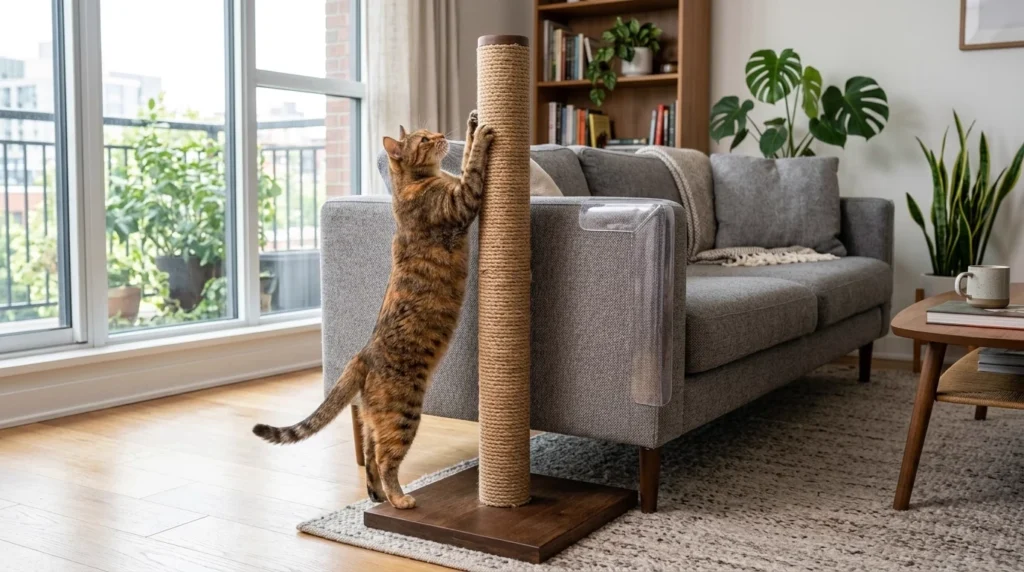
- Place Heavy Posts Directly at the Target: Place a 32+ inch tall, solid wooden sisal post directly in front of the scratched sofa corner.
- Temporarily Deter the Old Target: Cover the scratched upholstery corner with clear double-sided sticky tape sheets or smooth plastic guards. Cats dislike tacky textures on paw pads.
- Infuse the New Post with High-Value Scents: Rub dried organic catnip or spray silvervine extract onto the sisal fibers to immediately invite investigation.
- Incorporate Play Triggers: Dangling a feather wand across the new post encourages claws to catch in the sisal naturally. Check our Hands-On Cat Product Reviews for tested durable scratchers.
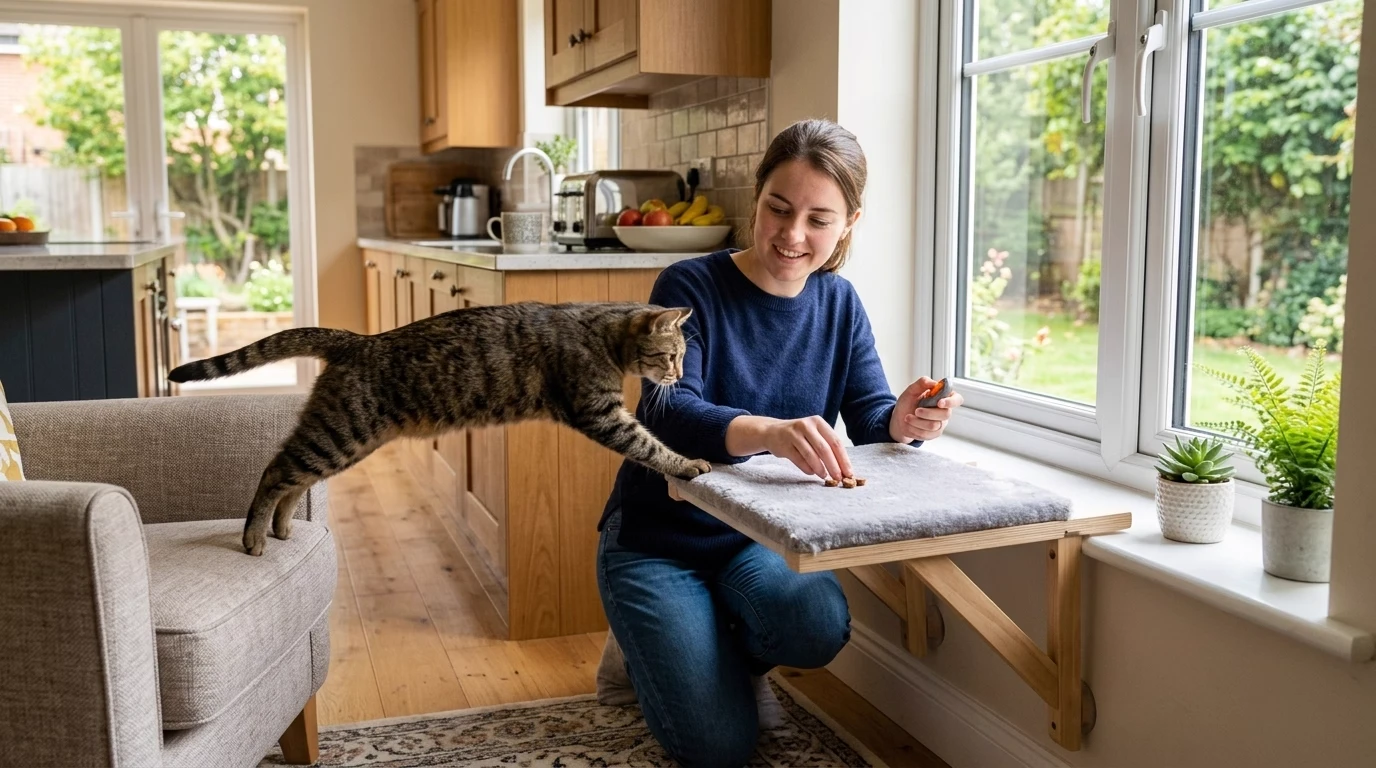
- Reward Every Use with Positive Reinforcement: When your cat scratches the post, immediately offer a high-value treat, verbal praise, or a head scratch.
- Gradual Relocation (Optional): Once the cat uses the post exclusively for 3–4 weeks, you can slowly nudge the post a few inches per day toward your preferred corner.
Materials & Orientation: Sisal vs. Cardboard & Vertical vs. Horizontal

| Scratcher Type | Key Advantages | Best For |
|---|---|---|
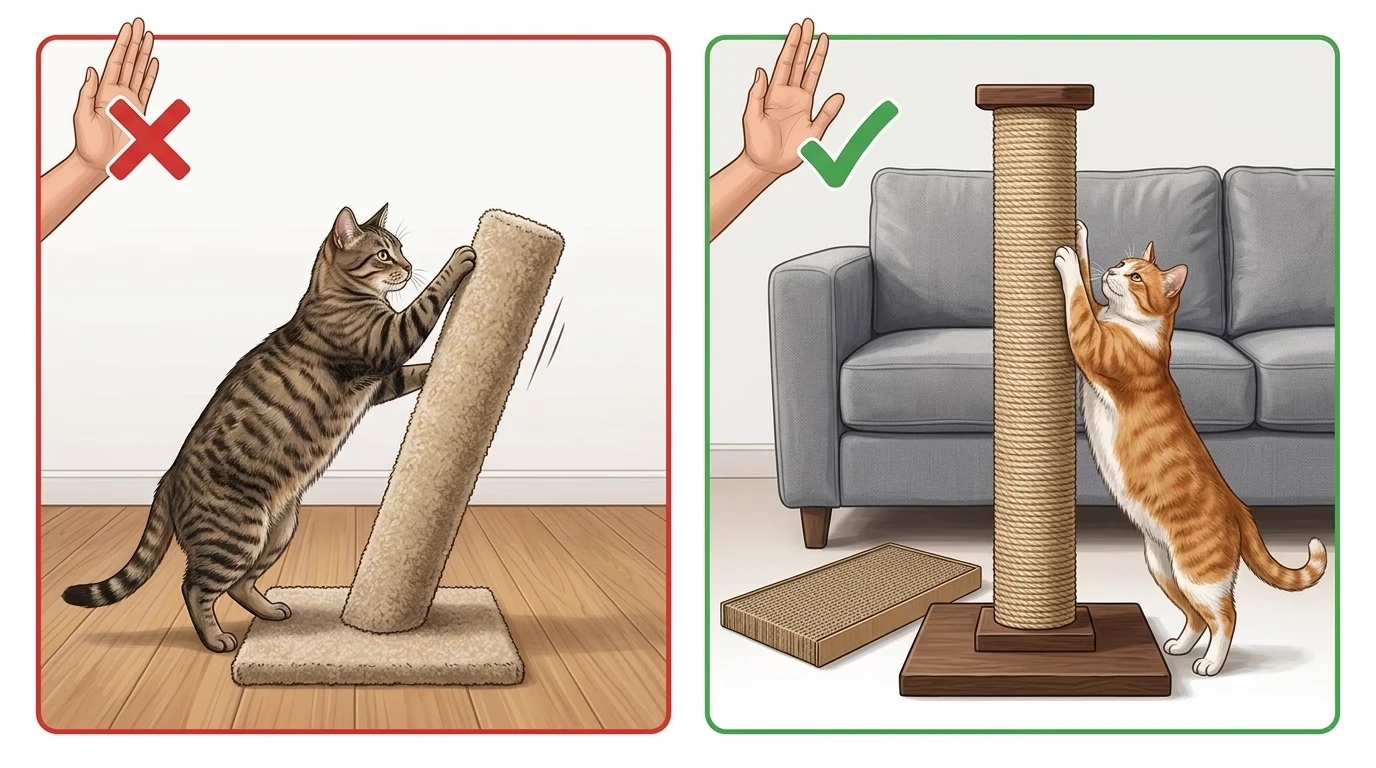
| Woven Sisal Fabric / Rope | Durable, shred-resistant, mimics natural tree bark resistance. | Couch-scratchers, vertical stretchers. |
| Corrugated Cardboard | Inexpensive, replaceable, produces satisfying tactile crunch. | Carpet scratchers, horizontal floor loungers. |
| Solid Wood / Cedar Post | Heavyweight, natural scent, authentic outdoor feel. | Large breeds (Maine Coons), heavy scratchers. |
| Carpet-Covered Posts | Soft, matches home decor. | Not recommended: Teaches cats that household rugs are fair game. |
Location Strategy: Where to Position Scratchers for 100% Success
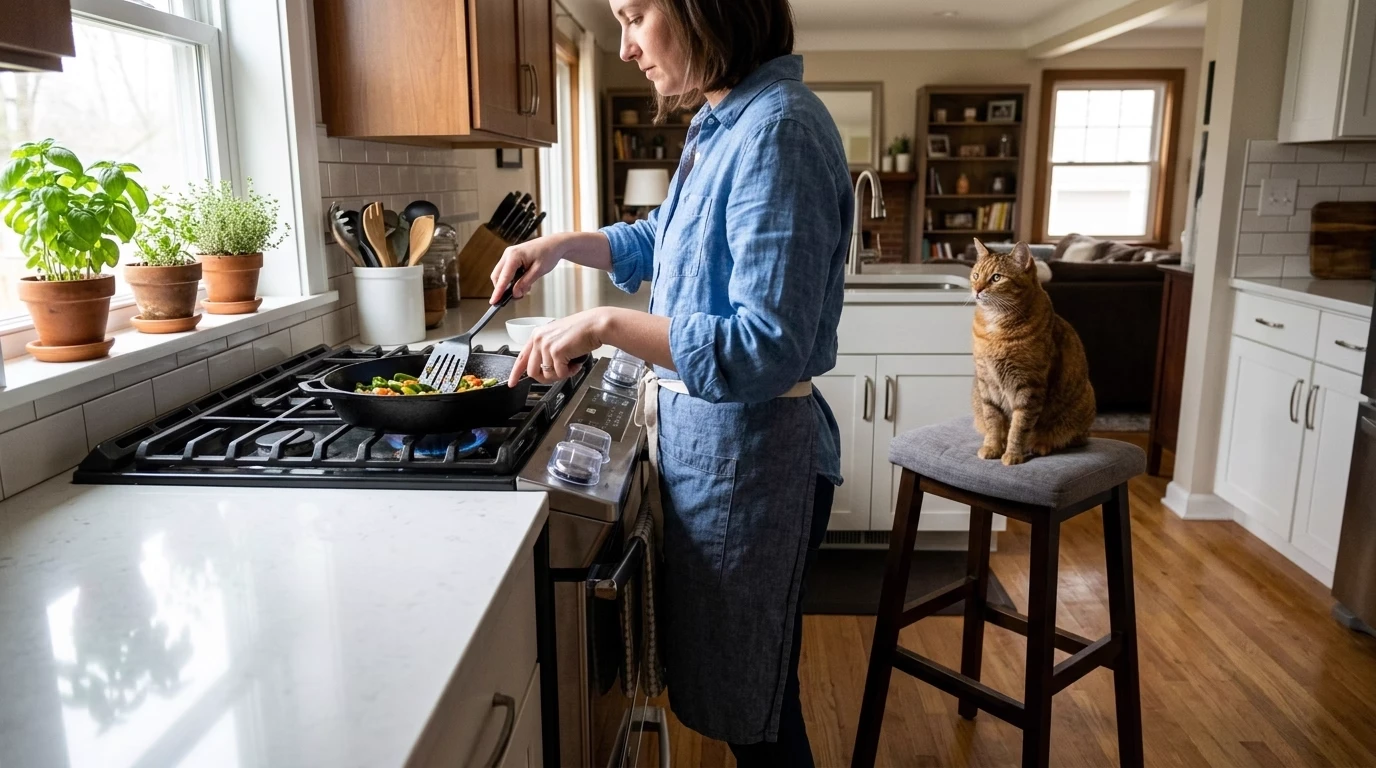
- Beside Sleep Stations: Place a scratcher within 3 feet of cat beds. Cats instinctively scratch to stretch immediately upon waking.
- Main Territorial Gateways: Entryway halls and living room centerpieces serve as feline communication intersections.
- Multi-Cat Distribution: In multi-cat homes, maintain an N+1 scratcher rule (e.g., 3 scratchers for 2 cats) to prevent resource guarding.
Regular Nail Trimming as a Damage-Reduction Habit
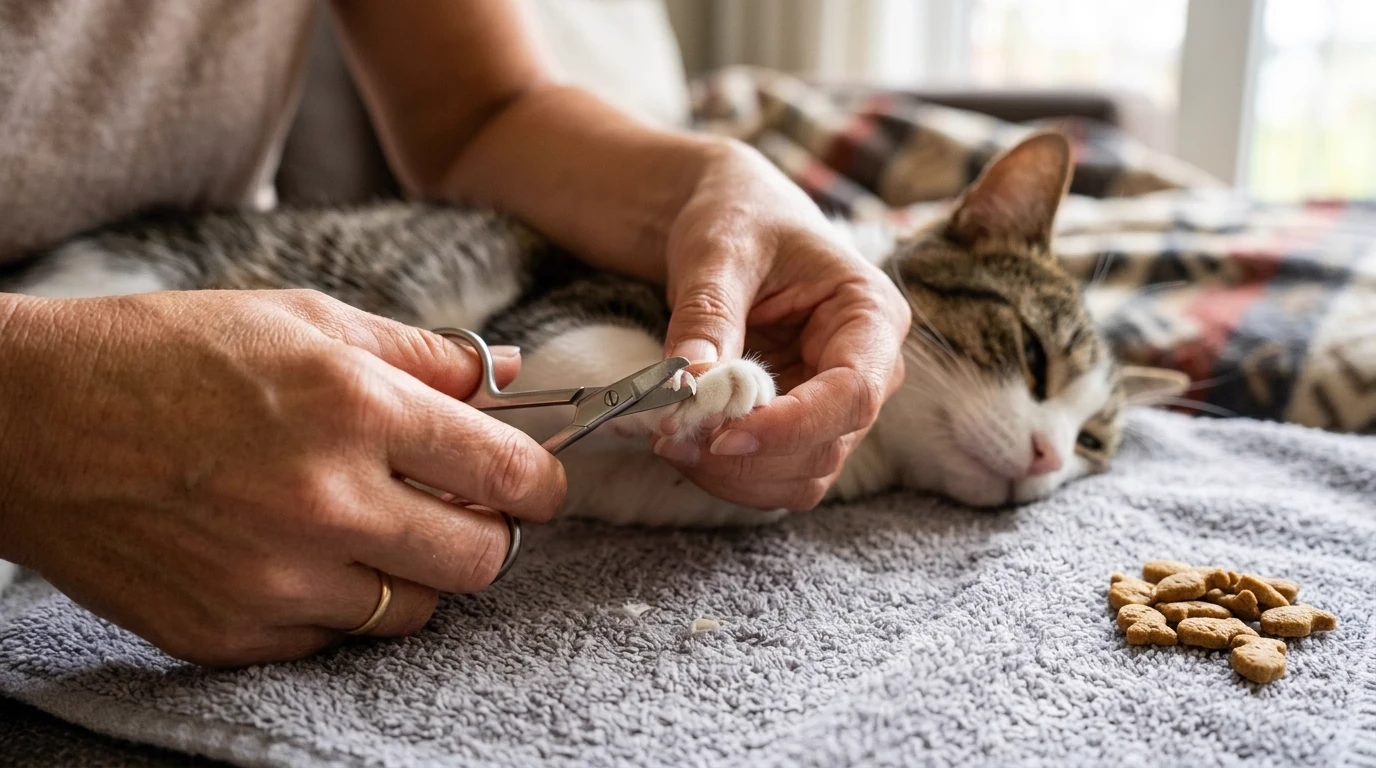
Trimming your cat’s claws every 2 to 3 weeks blunts the razor tips without compromising claw anatomy. For complete step-by-step instructions on safe trimming without nicking the quick, follow our Complete Cat Grooming Guide.
When Scratching Spikes Suddenly: Stress & Multi-Cat Dynamics
A sudden escalation in destructive scratching often indicates emotional distress or perceived territorial threats — such as seeing neighborhood feral cats through windows, moving to a new home, or inter-cat household tension. In these cases, scratching is an anxiety-relieving coping mechanism. Diffusing synthetic feline facial pheromones (Feliway) and providing elevated perches will calm territorial anxiety.
Common Mistakes Cat Owners Make
- Buying Short, Flimsy Posts: A 20-inch post that wobbles prevents full spinal extension and will be abandoned instantly for the couch.
- Hiding Scratchers in Hidden Closets: Tucking posts out of sight completely ignores feline territorial communication instincts.
- Throwing Away Well-Used Scratchers: Discarding a frayed scratcher removes your cat’s familiar scent markers; wait until it is structurally compromised before replacing it.

Frequently Asked Questions
Is my cat scratching furniture out of spite or anger?
No. Cats do not possess the cognitive spite concept. Scratching is driven exclusively by physical stretching, claw shedding, and territorial scent marking.
How long does it take to redirect a cat to a new post?
Most cats redirect within 7 to 14 days when provided with a tall, stable post placed directly beside the scratched furniture and paired with positive treat reinforcement.
Will nail caps (Soft Claws) stop furniture damage?
Vinyl nail caps glued over claw tips provide effective temporary protection for 4 to 6 weeks, though teaching redirection to appropriate scratchers remains the best long-term solution.
🐾 Explore More Cat Behavior & Care Resources
Discover more tested behavior solutions and home enrichment strategies for your indoor cat: