Cats hide illness well, and an indoor cat in a calm home can look fine until a problem is advanced. A short, regular routine gives you a baseline, so you notice a change when it’s small. This isn’t a substitute for a veterinary exam. It’s a way to spot differences between yesterday and today, to give your vet better information, and to decide when a call can’t wait. This guide gives you a five-minute weekly routine, what normal looks like, what to log, and what the warning signs are.
Short answer
Once a week, weigh your cat, look at her eyes, nose, ears, mouth, coat, and body, count her breathing while she rests, check the litter box, and watch how she moves. Write down what you see. If anything is different from her normal, especially if it lasts more than a day or two, call your vet. Home checks complement yearly or twice-yearly exams, they don’t replace them.
In this guide:
What you need
A kitchen scale or a baby scale, or a bathroom scale
- A phone timer
- A flashlight or a bright phone light
- A notebook or a phone note
Treats, so the routine is a good experience for her
Five minutes when she is calm
Do it at the same time of week. If she dislikes handling, do a little at a time, or do it while she is eating or sleepy.
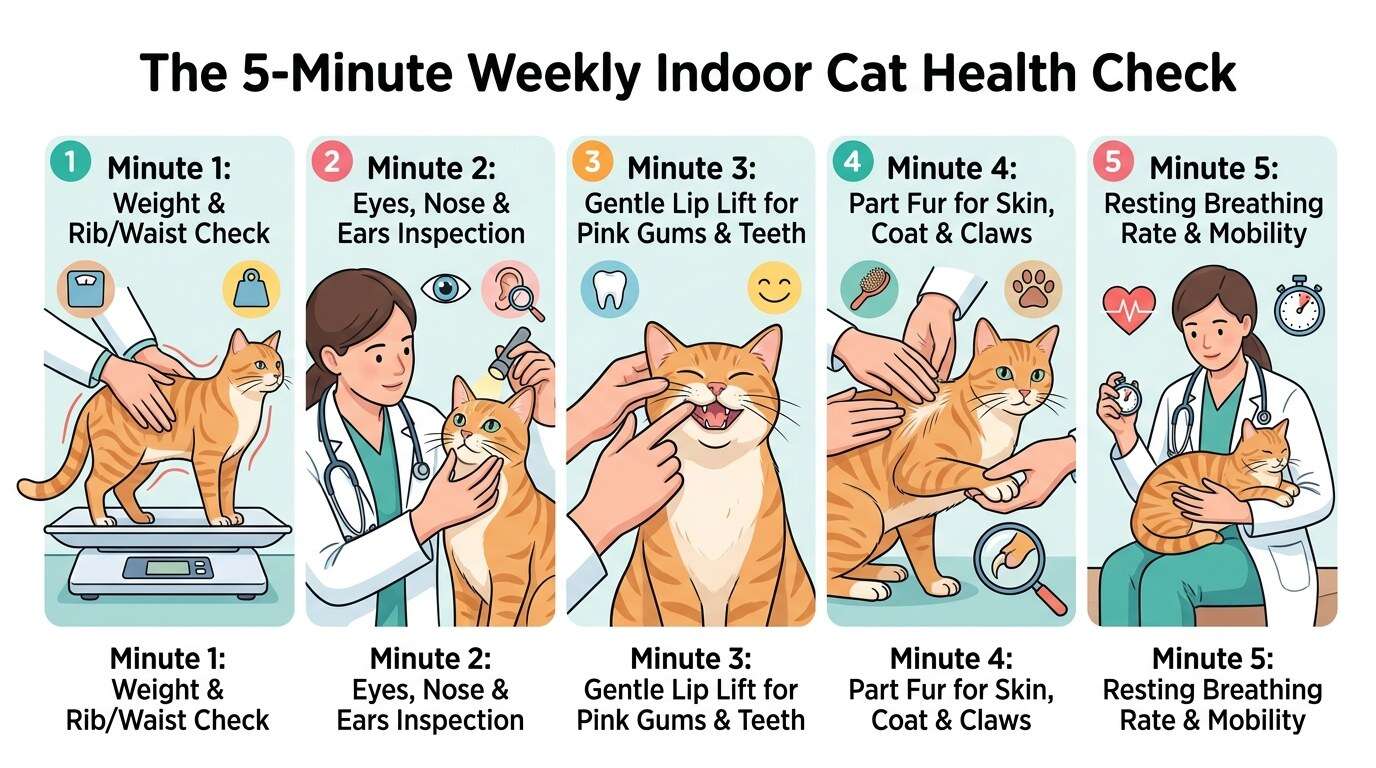
The five-minute routine
1. Weight and body shape (one minute)
Weigh her. With a baby scale, place her on it. With a bathroom scale, weigh yourself holding her, then weigh yourself alone, and subtract.
Look from above for a waist and from the side for a slight belly tuck.
Run your hands along her ribs. You should feel them under a thin layer of fat, without pressing hard. A cat whose ribs are hard to feel may be overweight, and a cat whose bones stand out may be underweight. Ask your vet to show you a body condition score.
Note any lumps, swellings, or tender spots.
A steady weight is normal. A change of about five to ten percent over a few weeks is worth mentioning to your vet. Unexplained weight loss can be a sign of serious illness, even if she is eating well.
2. Eyes, nose, and ears (one minute)
Eyes: bright and clear, both the same size, with no squinting, redness, cloudiness, or discharge. A little dried matter in the corner is common.
Nose: no ongoing discharge, crusting, or sneezing.
Ears: clean, with no strong smell, black debris, redness, or head shaking.
Take a flashlight look at her eyes. Cloudiness, a third eyelid showing, or uneven pupils deserves a call.
3. Mouth and teeth (one minute)
Gently lift her lip and look at the gums and teeth.
Gums are usually pink. Pale, white, blue, gray, yellow, or bright red gums need a call to the vet. Ask your vet to show you how to check.
Look for red lines along the gum edge, brown tartar, broken teeth, or swelling.
Note bad breath, drooling, dropping food, or chewing on one side.
Dental disease is very common in cats and often missed. Many cats show little sign of mouth pain.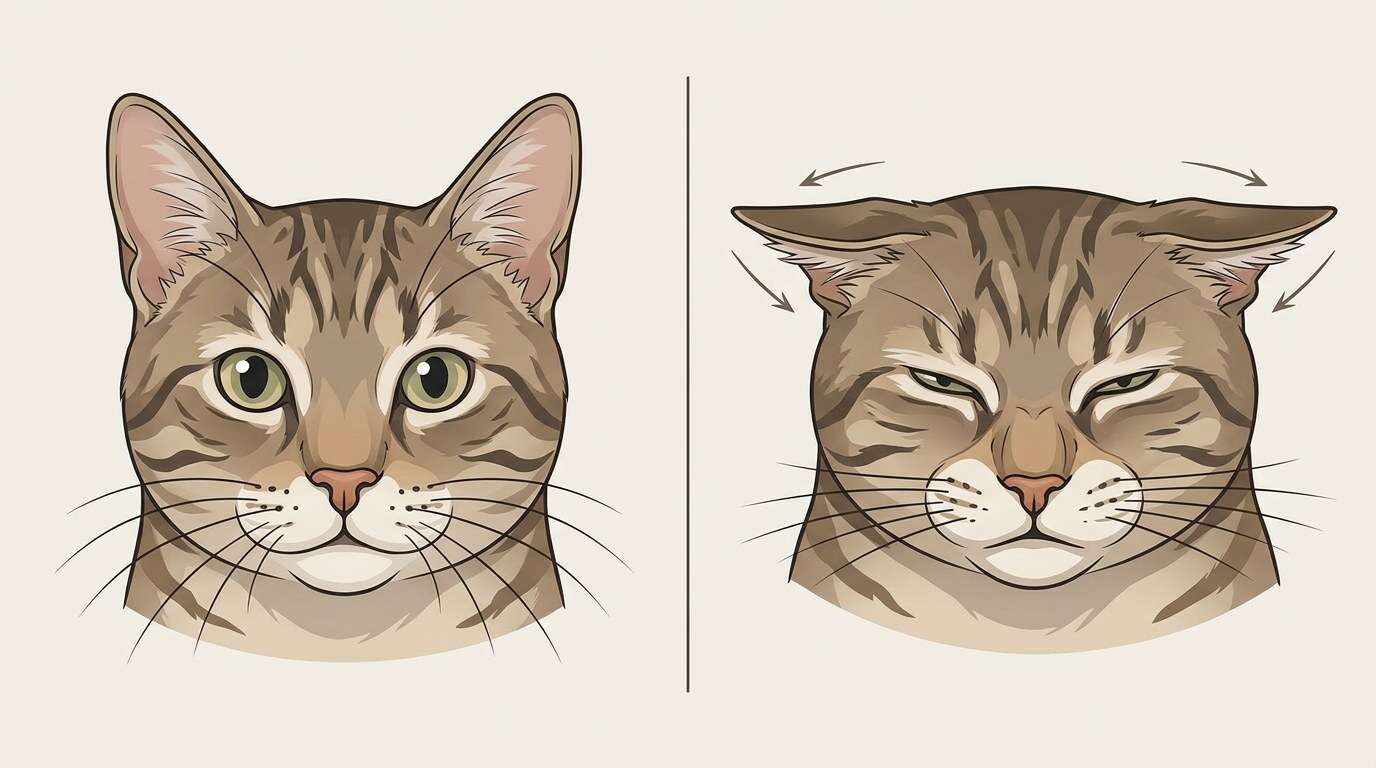
4. Coat, skin, and claws (one minute)
Part the fur and look at the skin on the back, belly, and base of the tail. Check for scabs, hair loss, redness, flea dirt, or lumps.
Check the coat. A dull, greasy, or matted coat can mean she isn’t grooming well, which can come from pain, obesity, or illness.
Look at her claws and paw pads. Claws can overgrow and curl into the pad in older cats.
5. Breathing, movement, and behavior (one minute)
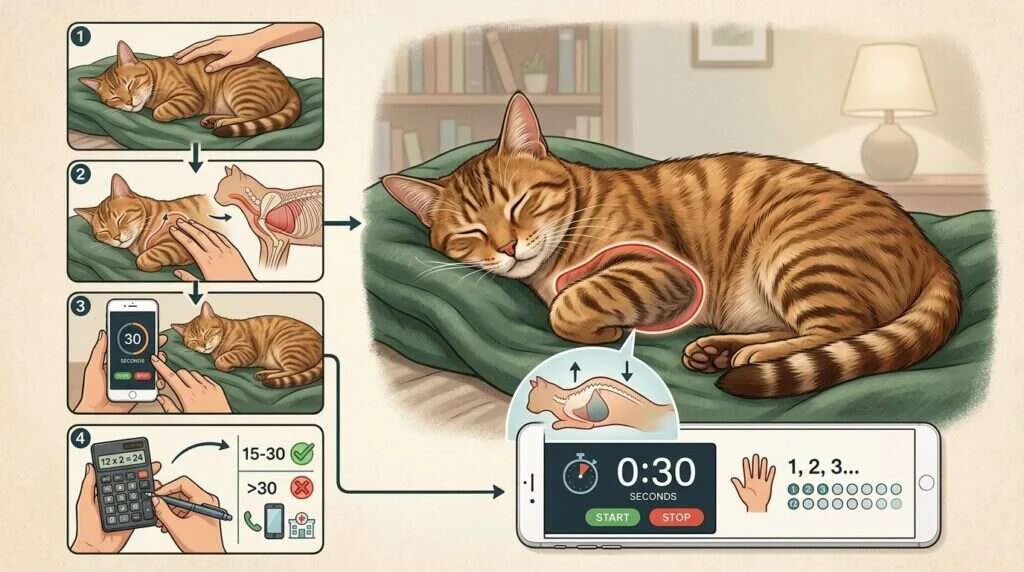
Resting breathing rate. While she sleeps or rests calmly, count her breaths for 30 seconds and double the number. A breath is one rise and fall of the chest. Many vets use about 30 breaths per minute as a threshold: a resting rate that is persistently above it, or any labored breathing, is a reason to call your vet. Write down her usual rate when she is well, so you have a comparison.
Movement. Does she jump, climb, and use the litter box normally? Stiffness, limping, or reluctance to jump can mean pain.
Behavior. Is she playful, social, and interested in food? Hiding, aggression, or a change in vocalizing can signal discomfort or stress.
The litter box check
Do this daily as you scoop, and note anything unusual in your weekly log.
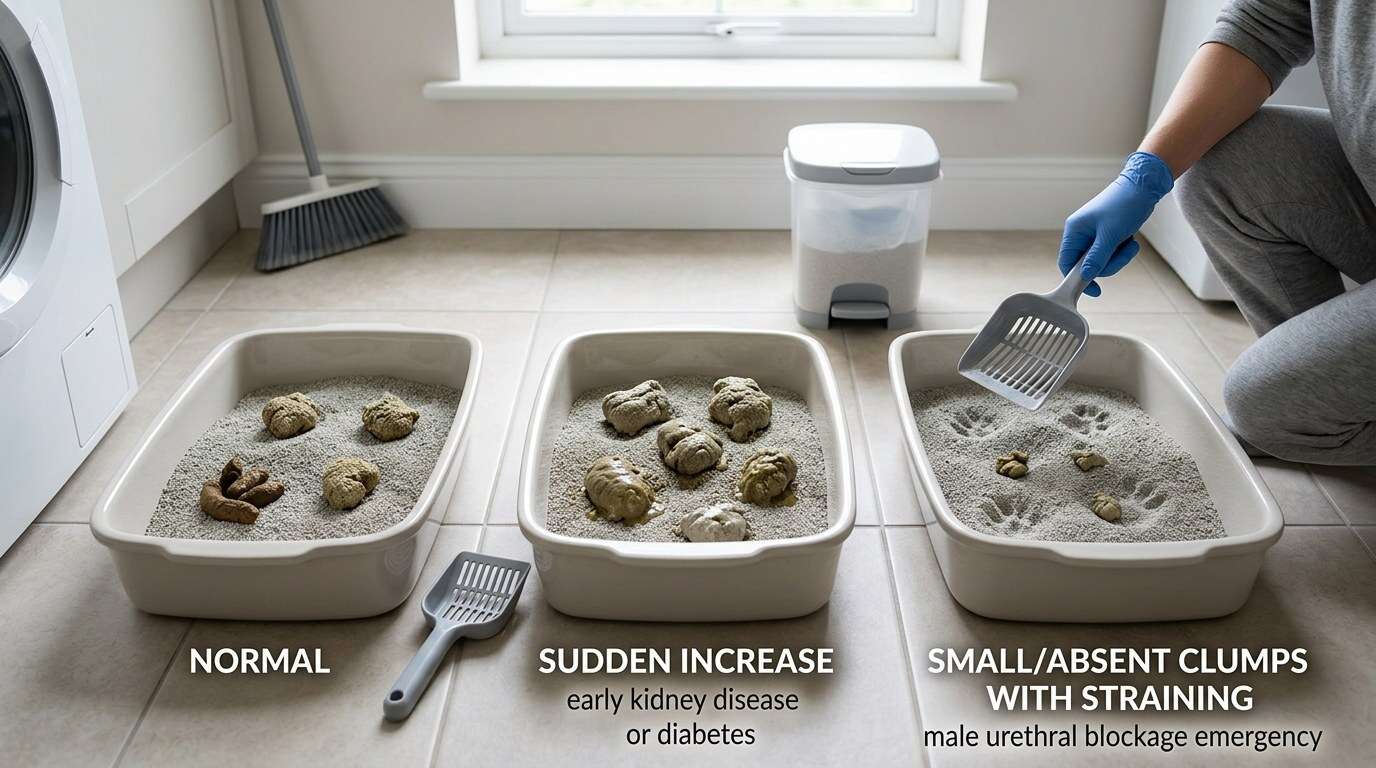
Urine clumps: a sudden increase or decrease in the number or size of clumps can mean she is drinking and urinating more or less. Increased urination is a sign to ask about kidney disease, diabetes, and other conditions.
Blood in urine, straining, frequent trips with little output, or crying in the box need urgent attention, especially in male cats.
Stool: consistency, color, and frequency. Diarrhea, constipation, blood, or visible worms deserve a call.
Accidents outside the box: can be behavioral or medical.
Appetite and water
Is she eating her normal amount?
Is she drinking more or less than usual? A noticeable increase in thirst is a reason to call your vet.
Is she vomiting? Occasional hairballs happen, but frequent vomiting does not count as normal.
Pain signs to know
Cats rarely cry when they hurt. Instead, look for changes in face and behavior. The Feline Grimace Scale, developed by researchers at the University of Montreal, describes features of the face: ears flattened or rotated outward, eyes narrowed or squinting, a tense muzzle, whiskers pulled forward or flattened, and the head held low. Other signs include hiding, reduced grooming, reluctance to jump, a hunched posture, and changes in litter box use. If you suspect pain, call your vet. Never give human pain medicine.
What to log
Keep a simple table.
A phone note works too. Take a photo of anything odd, so you can show your vet.
When to call your vet
Call the same day, or go to an emergency clinic, for:
Open-mouth breathing, labored breathing, or a resting rate persistently above about 30 per minute
Blue, gray, or very pale gums
Straining to urinate or no urine, especially in a male cat
Repeated vomiting, or vomiting with lethargy
Not eating for a day or so, or sooner in a kitten or a sick cat
- Collapse, seizures, or sudden weakness
- A sudden inability to use the back legs
Signs of poisoning, such as drooling and tremors
Call within a few days for:
- Weight change of more than a few percent without explanation
- Increased thirst or urination
- New lumps, or lumps that grow
- Persistent diarrhea or constipation
- Bad breath, drooling, or reluctance to chew
- Reduced jumping or stiffness
- Eye discharge or squinting that doesn’t clear
- Changes in behavior that last more than a few days
What this routine can’t do
It can’t diagnose anything.
It can’t detect many conditions that show no outward sign, such as early kidney disease, thyroid
Can I leave my cat in a portable enclosure alone? Not until you’re confident it’s escape-proof, and not for long periods.
What if my building bans enclosures? Look at indoor options, a harness, or a secure window perch.
Related reading
References
American Heartworm Society, feline heartworm guidelines (heartwormsociety.org)
International Cat Care and AAFP environmental guidelines
Local tenancy rules and fire code, if you give legal advice
Manufacturer specifications for any product you name