By Emma Hartley | Reviewed by IndoorCatWell Editorial Team | Last updated August 2026
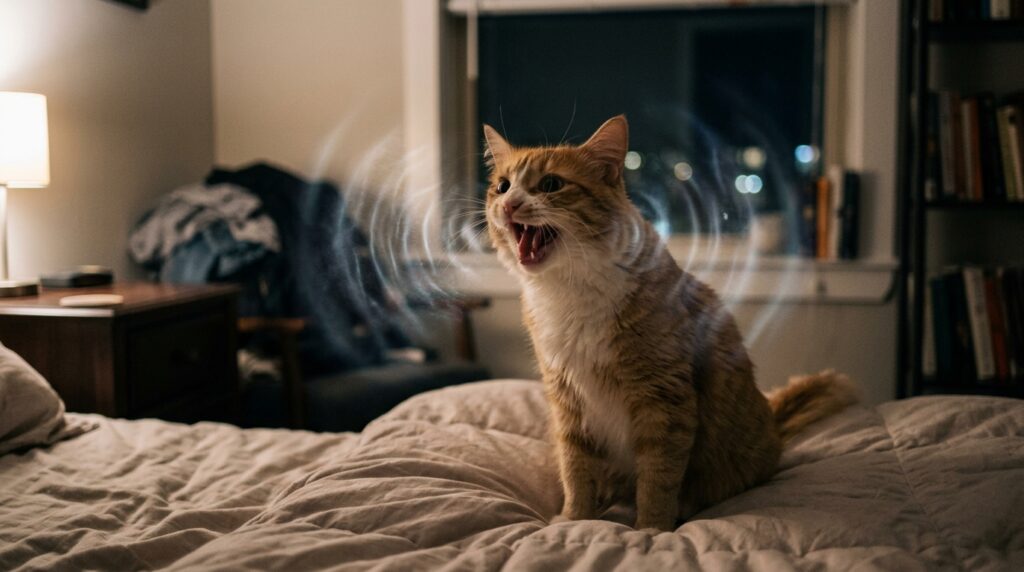
If your cat suddenly starts meowing far more than usual, the cause is often something ordinary — hunger, boredom, attention, or a litter box that needs cleaning — but a real change in vocalizing can also point to pain or illness. The way to tell the difference isn’t the meow itself. It’s what changed, when it happens, and what your cat does right before and right after.
Quick Answer: Why Does My Cat Meow So Much?
Cats primarily use meowing to communicate with people. Kittens meow to their mothers, while adult cats generally rely more on other vocalizations and body-language signals when communicating with other cats. Frequent meowing usually stems from attention-seeking, hunger, boredom, stress, mating behavior, or an environmental shift. However, if the increase is sudden, or accompanied by changes in appetite, weight, litter box habits, or mobility, call your veterinarian promptly rather than waiting it out.
At a Glance: Common Meowing Patterns
| What You’re Noticing | Possible Reason | What to Check |
|---|---|---|
| Meows near the food bowl | Hunger or learned habit | Feeding schedule and portion size |
| Meows mainly at night | Boredom, attention, or age-related changes | Cat’s age, daytime activity level |
| Meows at or near the litter box | Discomfort or urinary blockage | Urination and defecation straining |
| Sudden, louder meowing | Pain, acute stress, or illness | Any secondary behavioral changes |
| Meows while carrying a toy | Play or social prey display | Enrichment and playtime satisfaction |
Why Does My Cat Meow So Much?
Meowing is a feline communication tool tailored almost exclusively for humans. According to the ASPCA guide on why cats meow, kittens vocalize to direct their mother’s care, but adult felines largely abandon cat-to-cat meowing in favor of scent marking, ear postures, and tail signals.
So when your cat starts meowing more than usual, something in your relationship, daily routine, or their physical comfort has shifted. It could be as simple as a late feeding or as significant as a thyroid imbalance. Below are the 9 most common reasons, organized by how frequently they occur.
9 Reasons Your Cat May Be Meowing So Much
1. Wants Attention
If meowing reliably gets you to look over, speak back, or get up from the sofa, your cat has learned that vocalizing delivers results. Cats repeat what gets reinforced.
- Signs: Meowing ceases the moment you engage, then restarts when you turn away.
- What to do: Offer affection and play on your schedule, rewarding calm silence rather than meowing demands.
- When it’s not just this: If attention-seeking meowing turns frantic or cannot be redirected, investigate further.
2. Wants Food
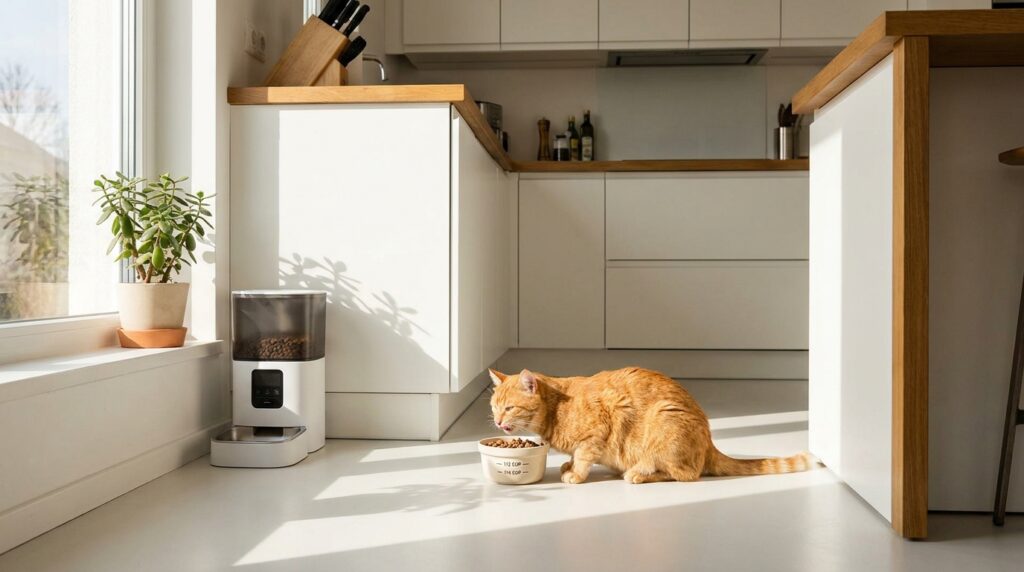
The classic feline trigger. Cats have precise internal biological clocks and will meow ahead of schedule if they anticipate a meal.
- Signs: Meowing is clustered around the kitchen or feeding station, timed close to standard meal hours.
- What to do: Maintain a strict feeding routine so vocalizing does not get reinforced with early food.
- When it’s not just this: If a normally food-driven cat meows beside the bowl but refuses to eat, seek veterinary care immediately.
3. Wants to Play
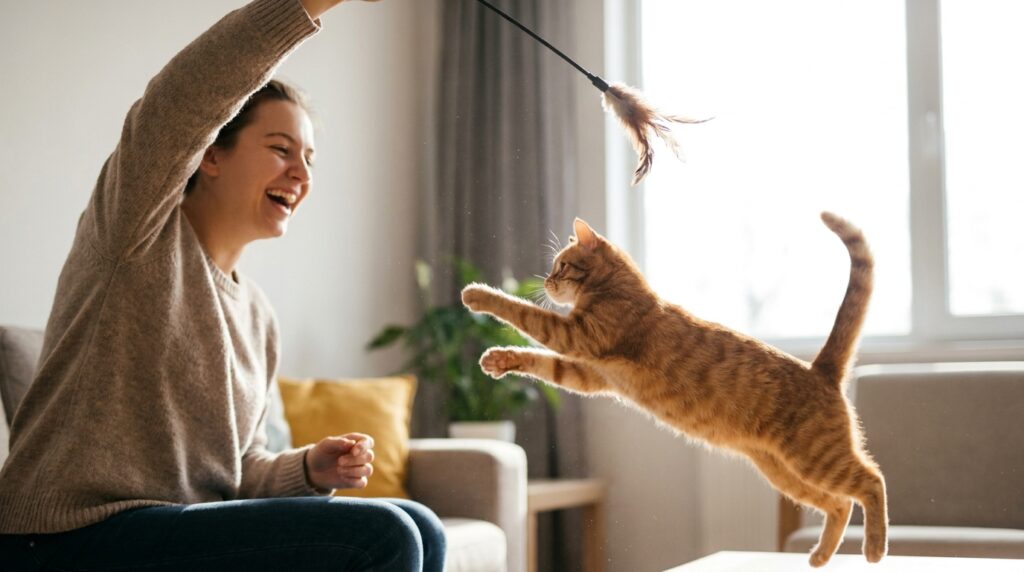
Energetic cats meow when they are keyed up and searching for an outlet to stalk and pounce. Knowing how to mentally stimulate an indoor cat through interactive play is essential.
- Signs: Meowing paired with pacing, twitching tail tips, or carrying stuffed toys to your feet.
- What to do: A dedicated 10-minute wand-toy session before meals drains hunting energy.
- When it’s not just this: Persistent agitation that vigorous play fails to resolve often indicates under-enrichment.
4. Boredom
Indoor cats without enough physical and mental engagement vocalize to pass the time, especially when left alone for long stretches. Look out for the classic signs your indoor cat is bored.
- Signs: Aimless meowing that escalates on low-activity days or when the home is quiet.
- What to do: Rotate puzzle feeders, install a sunny window perch, and set up daily enrichment routines.
- When it’s not just this: If vocalizing fails to improve after adding environmental enrichment, rule out anxiety or physical discomfort.

5. Stress or Environmental Change
Cats thrive on environmental stability. A new pet, recent move, renovation noise, or rearranged furniture can induce distress that manifests as vocalizing.
- Signs: Meowing starts immediately following a household change, accompanied by hiding or appetite fluctuations.
- What to do: Establish a quiet, secure base camp with their familiar bedding and litter box; never force interactions.
- When it’s not just this: Stress vocalization lasting beyond two weeks requires behavioral or veterinary intervention.

6. Learned Habit
Whenever meowing has successfully achieved a desired outcome in the past — opening doors, offering treats, or bedside waking — cats cement it into an ingrained habit.
- Signs: Rhythmic, repeated vocalizations that occur at specific thresholds regardless of real physical need.
- What to do: Cease acknowledging the demand vocalization entirely; consistently redirect and reward calm behavior.
7. Mating or Hormonal Drive
Intact female cats in heat and unneutered males vocalize with intense, drawn-out yowls to advertise availability.
- Signs: Loud, low-pitched caterwauling paired with restless pacing, territorial marking, and door darting.
- What to do: Spaying and neutering resolves hormone-driven vocalization in the vast majority of felines.
8. Age-Related Cognitive Changes
Senior felines frequently experience sensory loss or feline cognitive dysfunction (feline dementia). This disorientation commonly causes nighttime vocalizing, confusion, and altered sleep-wake cycles. To understand this specific timing, explore our comprehensive guide on why your cat meows at night.
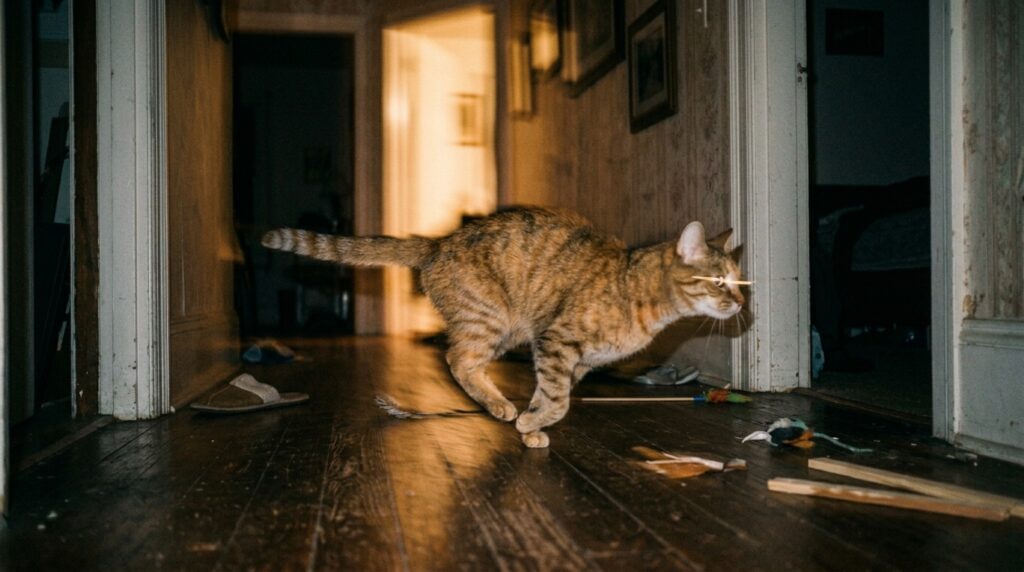
- Signs: Sudden, loud nocturnal yowling in a cat over 10 years old, often looking disoriented in hallways.
- What to do: Consult your vet for cognitive support therapies and place nightlights in dark hallways.
9. Pain or Underlying Illness
Cats instinctively conceal vulnerability, but discomfort can break through as persistent meowing. Multiple systemic conditions trigger vocal changes:
- Hyperthyroidism: Feline hyperthyroidism elevates metabolic rate, producing ravenous appetite, rapid weight loss, hyperactivity, and loud vocalizations.
- Urinary Blockage / FLUTD: Straining and crying inside or near the litter box signals a life-threatening urinary obstruction requiring emergency care.
- Hypertension & Renal Disease: High blood pressure and kidney decline generate chronic discomfort and sensory confusion.
- Dental Disease & Arthritis: VCA Animal Hospitals lists increased meowing among primary signs of pain in cats.
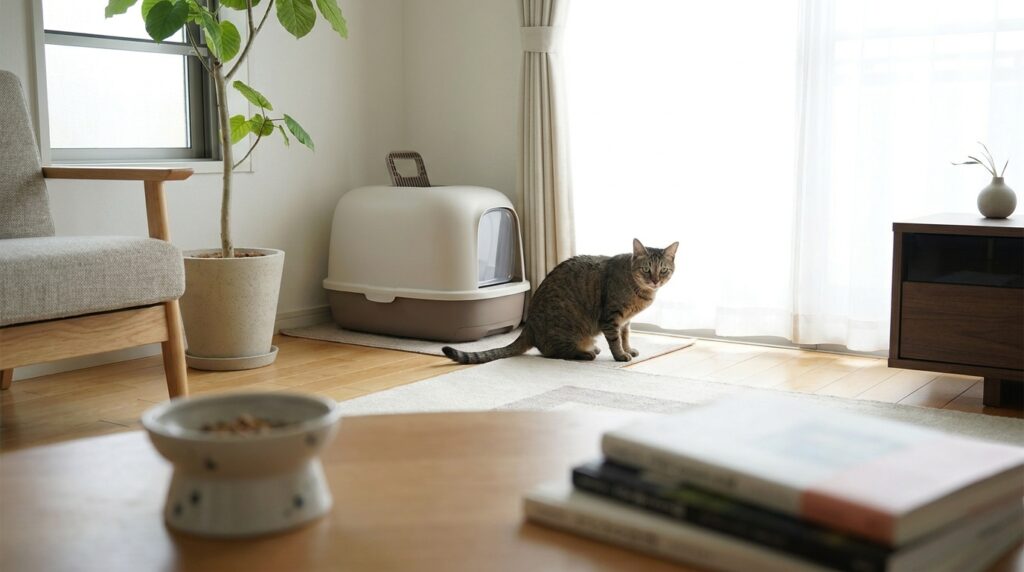
Beans went quiet for a while and then wouldn’t stop meowing near his water fountain for about two weeks last spring. I checked the food first, out of habit, and it wasn’t that — the fountain’s submersible pump had burned out and the standing water underneath had gone stale. He wasn’t demanding unearned attention; he was thirsty and telling me the only way he knew how. Replacing the pump resolved the meowing within a single afternoon.
How to Tell Which Reason Applies to Your Cat
To identify the root cause, cross-reference your cat’s vocal behavior against posture and timing. Learning to read your cat’s body language unlocks crucial context for vocalization patterns. VCA Animal Hospitals highlights that excessive vocalization in cats stems from distinct combinations of motivation and physical comfort.
| Your Cat Does This | More Likely Explanation |
|---|---|
| Meowing happens right before meals | Food anticipation / learned schedule |
| Meowing starts when you get up to leave the room | Attention-seeking / social attachment |
| Meowing happens mainly at night, cat is older | Cognitive dysfunction or underlying systemic disease |
| Meowing started suddenly with no clear trigger | Pain, acute illness, or subtle environmental change |
| Meowing comes with hiding or appetite loss | Stress, nausea, or systemic infection |
| Meowing happens during or right after petting | Tactile overstimulation (not hunger or pain) |
| Meowing is constant regardless of context | Ingrained habit or medical cause requiring veterinary exam |
When Is This Behavior Normal?
Certain cats are naturally talkative. Breeds like the Siamese, Oriental Shorthair, and Tonkinese are famed for vocal commentary, and plenty of domestic shorthairs express themselves freely throughout the day. Normal meowing tends to be situational — tied to greetings at the door, meal prep, or play invitations — and subsides once the need is fulfilled.
When Should You Be Concerned?
Contact your veterinarian if:
- The increase in meowing was sudden with no clear environmental trigger
- It is accompanied by changes in water consumption, appetite, or weight loss
- Your senior cat exhibits new, disoriented nocturnal vocalizing
- There is any change in litter box frequency, volume, or straining
- The vocalization sounds altered — hoarse, strained, raspy, or urgent
What You Can Do (And What NOT to Do)
Actionable Solutions:
- Rule Out Essentials: Verify clean water, food freshness, and pristine litter box cleanliness first.
- Maintain Structure: Establishing a consistent daily routine for your indoor cat reduces anxiety-based demand vocalizing.
- Keep a 3-Day Behavior Log: Record times, rooms, triggers, and reactions to spot subtle trends.
- Reward Quiet Moments: Lavish affection and treats only when your cat is relaxed and silent.

What NOT to Do:
- Never Scold or Yell: Cats do not connect yelling with their vocal behavior; it solely elevates fear and insecurity.
- Avoid Immediate Compliance: Don’t sprint to dispense kibble or pet them the second they meow, which reinforces the cycle.
- Don’t Dismiss Sudden Changes: Never write off an abrupt spike in meowing as mere “moodiness” or personality.
Frequently Asked Questions
Can a cat lose its voice from meowing too much?
Why does my cat meow when I sneeze?
Do cats meow more as they get older?
Why does my cat only meow at certain times of day?
Should I ignore all meowing?
Final Takeaway: Most excessive meowing has an identifiable, solvable cause — hunger, boredom, attention-seeking, or an accidentally reinforced habit. The critical exception is any abrupt vocal shift with no clear trigger, especially paired with physical changes, which warrants clinical veterinary evaluation. For a broader holistic overview of feline wellness, visit our complete indoor cat care guide.
🐾 Discover Tested Cat Behavior & Enrichment Solutions
Explore our hands-on reviews of interactive toys, calming diffusers, window perches, and puzzle feeders tested with real indoor cats.