By Emma Hartley | Reviewed by IndoorCatWell Editorial Team | Last updated August 2026
This article provides practical, veterinary-supported cat behavior guidance. If you buy through our links, we may earn an affiliate commission at no extra cost to you. Read our full Affiliate Disclosure.
Cats bite for different reasons, and the meaning depends heavily on what happens immediately before the bite. A gentle nip during cuddling is very different from a bite when a cat feels trapped, overstimulated, frightened, or in pain.
Cats bite for a handful of distinct reasons — affectionate affiliative nips, sensory overstimulation during petting, active play that has escalated, defensive fear, or hidden physical pain. Deciphering the behavior requires looking past the teeth to evaluate the preceding situation. Just like learning why cats lick their owners, discovering why cats knead, or deciphering why cats purr, understanding cat biting depends entirely on posture, environment, and tactile thresholds.
⚡ Quick Answer: Why Does Your Cat Bite You?
Cats may bite because they’re playing, overstimulated, frightened, protecting something valuable, reacting to another animal, or experiencing pain. The safest way to understand the behavior is to look at the context and body language around the bite rather than assuming every bite means aggression.
At a Glance: Cat Biting Scenarios
| What You’re Noticing | Possible Reason | What to Check |
|---|---|---|
| Gentle controlled nip during cuddling | Affiliative nipping (“love bite”) | Cat remains relaxed, soft eyes, purring |
| Bite after several minutes of petting | Petting-induced overstimulation | Tail swishing, skin rippling, ear rotation |
| Bite during active play with hands/feet | Play aggression / predatory reflex | Redirect immediately to wand or kicker toys |
| Bite when cornered or approached suddenly | Fear or defensive biting | Flattened ears, crouched body, dilated pupils |
| Bite right after seeing an animal outside | Redirected aggression | Do not touch; allow cat 30–60 minutes to decompress |
| Bite when touching a specific body spot | Pain, injury, or joint discomfort | Schedule prompt veterinary examination |
8 Reasons Cats Bite Their Owners
Rather than cataloging bites alphabetically, feline behaviorists categorize biting by search intent and underlying motivation. Below are the 8 primary reasons cats bite people, ordered from the most frequent everyday scenarios to critical medical signals:
1. Overstimulation During Petting
This is by far the most common reason cats bite people who love them. A cat may actively solicit affection, jump onto your lap, purr, and enjoy being stroked for several minutes, only to deliver a sharp bite without warning. According to clinical veterinary resources from VCA Animal Hospitals, this occurs because repetitive tactile friction excites feline hair follicles and dermal nerve receptors until pleasant sensory input crosses an internal tolerance threshold into neurological irritation.
- Signs: Tail tip flicking, skin twitching along the back, ears angling sideways into “airplane ears,” and body muscles stiffening.
- What to do: Keep petting sessions brief, focus exclusively on facial scent zones (cheeks and chin), and stop touching the instant you notice nervous body language.

2. Play Biting
Play biting is particularly common in kittens and young cats as they develop hunting and social skills. Cats learn through play how hard they can bite, which is why using bare hands and feet as toys can create persistent biting problems later in life. When an owner uses wiggling fingers to wrestle with a kitten, the kitten naturally treats fingers as prey. This instinctive predatory drive is closely linked to how felines interact with real prey; see our guide on why cats bring dead animals to understand how prey retrieval and hunting behavior operate.
Wrestling with your kitten using your bare fingers may seem harmless when they are small, but you are teaching the exact predatory behavior you’ll later want them to stop when their adult canine teeth come in.

3. Gentle or Affiliative Nipping (“Love Bites”)
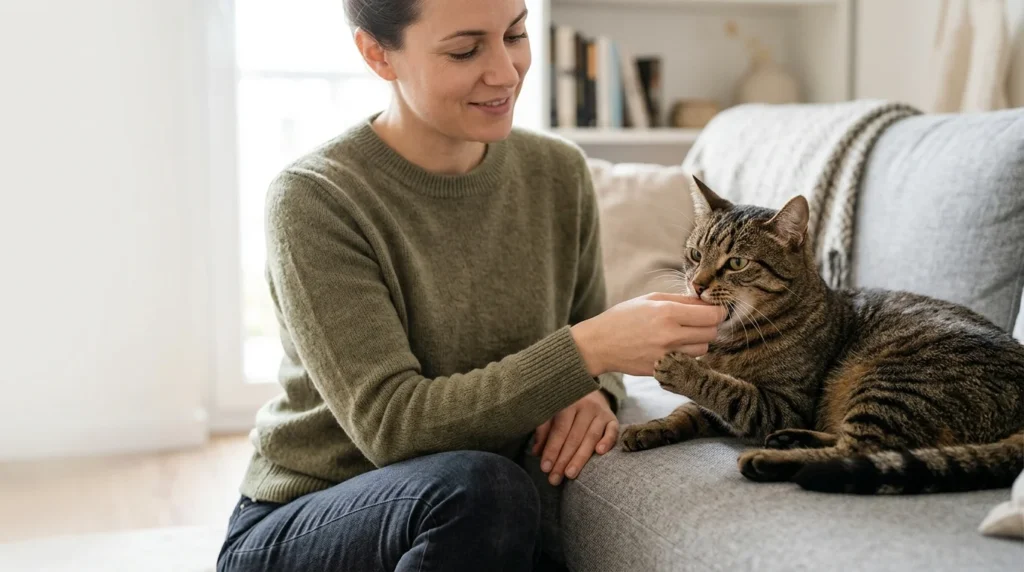
Cats do not have a formal, scientifically established “love bite” taxonomy, but feline behaviorists recognize gentle, affiliative nipping. During calm cuddling, a cat may softly grasp your finger, hand, or nose with their incisors without exerting crushing force or breaking skin. In feline allogrooming, bonded cats frequently use their teeth to gently pull loose debris from a companion’s coat.
Cats communicate through a combination of behaviors, including licking, kneading, purring, and choosing where to sit or sleep. If your cat alternates between cuddling, love bites, and sleeping on you, reading their overall body language helps you understand their emotional boundaries.

4. Fear or Defensive Biting
A frightened cat that feels trapped, cornered, or unable to retreat will bite as a desperate defensive mechanism. Felines strongly prefer flight over fight; they only strike when their perceived exit routes are blocked. Common triggers include forced restraint (such as struggling into a travel carrier or clinic hold), bath time, or cornering a hiding cat under furniture.

5. Pain or Physical Discomfort
A cat experiencing acute or chronic physical pain will bite defensively when an inflamed or tender area is touched. As documented in our guide to signs of pain in cats, felines are masters at concealing illness until touch directly inflames an injury. Common pain sources that trigger sudden biting include osteoarthritis in the hips or spine, dental disease, abdominal tenderness from urinary blockages, or impacted anal glands.
6. Redirected Aggression
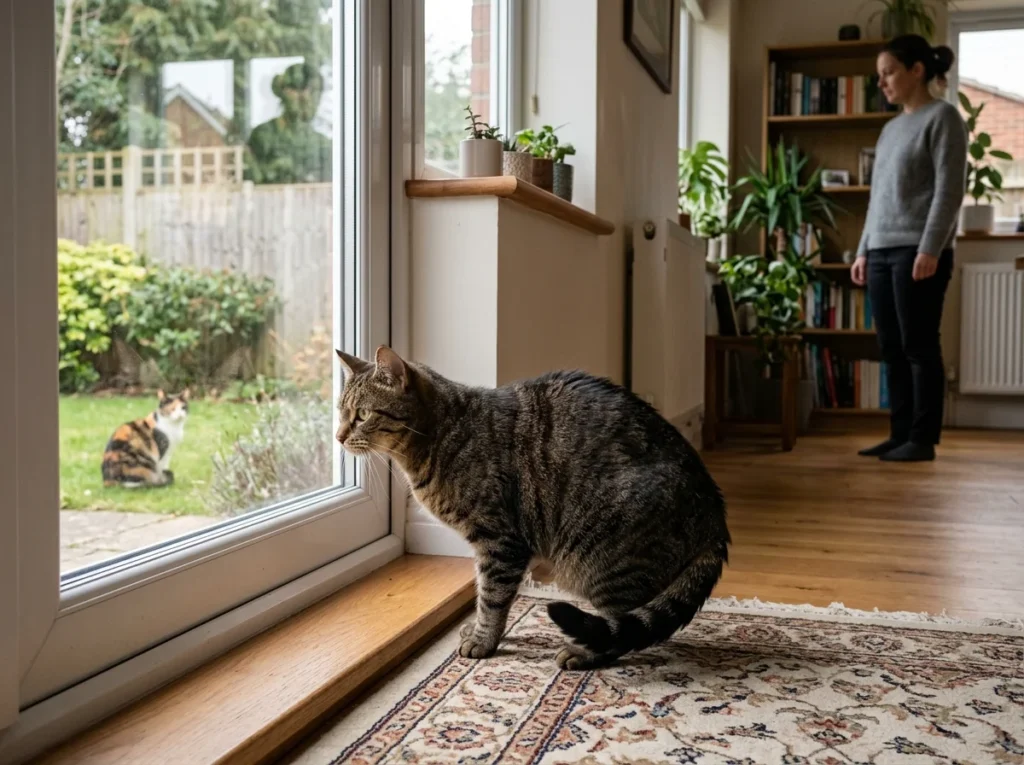
Redirected aggression is one of the most misunderstood and dangerous forms of feline biting. It occurs when a cat is highly stimulated by an external threat they cannot access — such as seeing an unfamiliar stray cat roaming outside the patio window, hearing a barking dog in the hallway, or being startled by a violent household crash.
In this state of autonomic fight-or-flight arousal, the cat cannot reach the true target. If a well-meaning owner steps in to pet, soothe, or pick up the cat, the pent-up arousal is explosively redirected onto the nearest person. These bites are often severe and deep.
7. Resource Guarding
While more commonly recognized in canines, some cats display resource guarding. A cat may growl, swat, or bite if approached while eating high-value wet food, hoarding a fresh mouse toy, or occupying a highly prized sunny perch. Give feeding stations ample space and avoid taking items directly from a cat’s mouth.
8. Learned Behavior and Attention-Seeking
Some cats learn that nipping an owner’s ankles, fingers, or calves produces instant attention. If a quick bite reliably causes you to jump up from your desk, shout, or feed the cat early just to get peace, the cat recognizes the bite as an effective lever. Respond with calm disengagement rather than rewarding the outburst.
Why Does My Cat Bite Me When I Pet Him?
Biting during petting is almost always rooted in sensory overstimulation. A cat may genuinely enjoy being touched initially and then reach a point where continued mechanical contact becomes uncomfortable or electrically irritating to their sensitive skin.
The solution is prevention rather than punishment. Learn which anatomical zones your cat actually welcomes: most cats prefer strokes around the temporal scent glands, under the chin, and along the jawline, while disliking long strokes down the lower spine or near the tail base.
A vital behavioral rule: The belly is particularly treacherous. A cat rolling onto its back and exposing its fluffy belly is often showing relaxation, trust, or a defensive readiness to use all four claws — it does not mean your cat is asking for dog-style belly rubs. Reaching for an exposed feline belly frequently results in a four-paw grab and bite.
Warning Signs: Body Language Before a Bite
Some bites are preceded by subtle warning signals, but not every bite gives an obvious warning. Pain, sudden startle responses, and redirected aggression can produce a rapid bite with little visible buildup. However, for petting-induced and play bites, mastering cat body language allows you to step away before teeth make contact:
- Tail tip flicking, swishing, or thumping heavily against the cushion
- Ears rotating backward or flattening sideways into “airplane mode”
- Skin twitching or rippling along the spine
- Pupils suddenly dilating into wide black circles
- Muscles stiffening or the cat freezing mid-motion
- Sudden cessation of purring and turning the head sharply toward your hand

Why Does My Cat Bite Me Then Lick Me?
A cat that bites you and then licks you may be combining different social behaviors, but the sequence doesn’t have one universal meaning. A gentle nip during a relaxed interaction may simply be part of the cat’s social grooming repertoire, while a harder bite following prolonged petting may signal that an overstimulation threshold was crossed before the cat returned to grooming.
Look at the cat’s body language before and after the bite. Relaxed posture, soft blinking, and gentle contact suggest social closeness, whereas flattened ears, tail lashing, tension, or attempts to bolt indicate conflicted arousal or boundary setting. For a deeper look at the licking component, read our breakdown on why cats lick their owners.
Why Does My Cat Bite Me for No Reason?
To humans, a bite can feel sudden and unprovoked. But from a feline sensory perspective, there is virtually always a trigger — even when it isn’t obvious to us. It might be micro-overstimulation, an unseen stray cat outside a window, an ultrasonic sound, or internal physical twinges from arthritis.
Keep track of what happened in the few seconds before the bite. Where were you touching your cat? Had the cat just awakened from a nap? Was there a sudden noise? If aggressive biting is genuinely new or dramatically out of character, don’t assume it’s simply a training flaw; a comprehensive veterinary examination is vital to rule out hidden medical pain.
What to Do If a Cat Bite Breaks the Skin
Wash a cat bite promptly with soap and warm running water for several minutes. Cat bites can introduce bacteria deep into subcutaneous tissue because their slender, needle-like canine teeth act like hypodermic syringes, depositing oral bacteria into deep, narrow puncture wounds that seal over quickly on the surface.
According to clinical guidance from the CDC on healthy pets, cat-associated bacteria — most notably Pasteurella multocida — can cause rapid, aggressive bacterial infections. Seek medical advice promptly for deep punctures, bites to the hand, wrist, or face, significant swelling, redness, worsening throbbing pain, pus drainage, or fever. If you’re unsure how serious the wound is, contacting an urgent care healthcare professional is the safer choice.
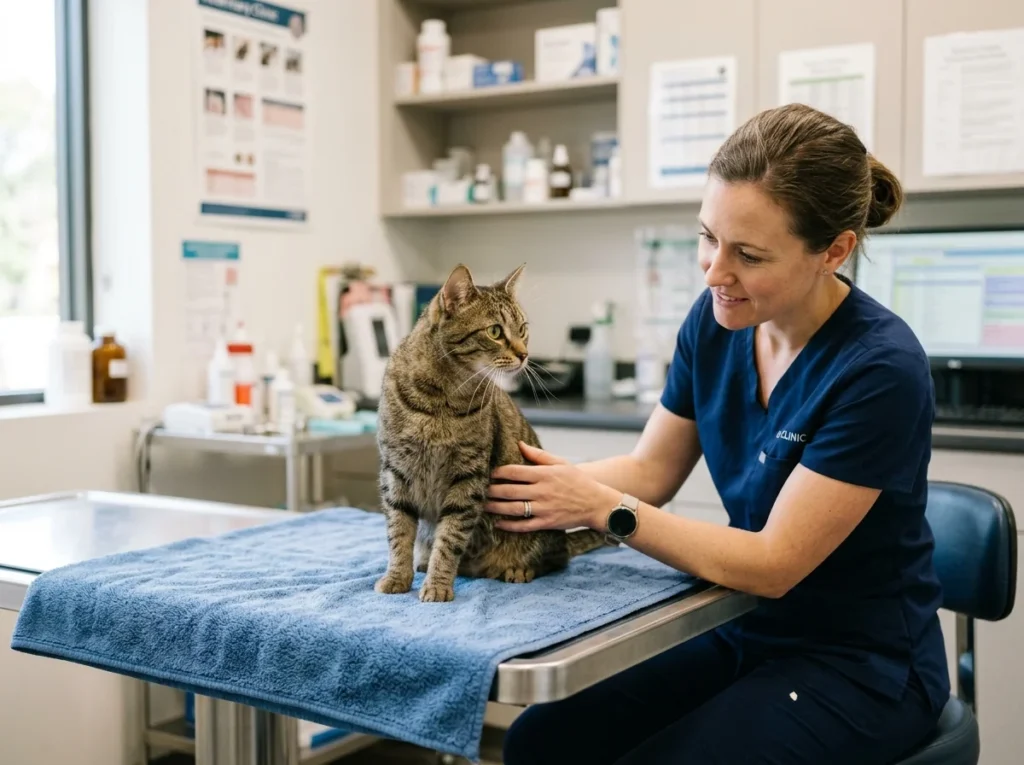
When a Cat Bite Means You Should Call the Vet
Contact your veterinarian promptly if biting is:
- A sudden, dramatic change from your cat’s normal affectionate behavior
- Triggered specifically by touching a particular area (spine, hips, ears, or mouth)
- Accompanied by hiding, withdrawal, or reduced daily activity
- Associated with changes in appetite, weight loss, or difficulty chewing
- Happening alongside limping, hesitation before jumping, or stiff posture
- Becoming increasingly frequent, unpredictable, or intense without an obvious behavioral trigger
What NOT to Do When a Cat Bites
- Never tap your cat on the nose or use physical punishment: Physical correction does not teach bite inhibition; it destroys feline trust and transforms minor overstimulation into defensive aggression.
- Don’t shout or scream: Loud shouting elevates arousal and reinforces the cycle of fear and stress.
- Don’t yank your hand away during a play bite: Sudden jerk movements mirror fleeing prey, which reflexively triggers stronger jaw clamping. Instead, freeze, gently push into the bite slightly to release the latch, and calmly disengage.
- Don’t punish fear-based biting: When a cat bites from fear, the solution is removing the trigger and creating space, not punishing emotional terror.
Frequently Asked Questions
Why does my cat bite me gently?
Gentle, controlled nips without skin damage are often affiliative behaviors rooted in social allogrooming or controlled play. Many cats maintain excellent bite inhibition and use gentle mouth contact as a tactile form of social connection.
Why does my cat bite me when I pet him?
This is petting-induced overstimulation. Repetitive stroking overexcites hair follicles and cutaneous nerve endings until the pleasant sensation becomes irritating. Stop petting when you notice tail flicking, skin twitching, or flattened ears.
Why does my cat bite me then lick me?
A cat that bites and then licks may be transitioning between different social behaviors. A controlled nip during grooming is common, while licking after a bite can also serve as an appeasement or self-soothing gesture following brief arousal.
Why does my cat suddenly bite me?
Bites that seem sudden are often preceded by subtle physical signals that owners miss, such as pupil dilation or a stiffening spine. However, acute pain twinges or sudden redirected fright from a nearby noise can produce an immediate bite with little warning.
Why does my cat bite my hand?
Hands are the primary point of physical contact and play. If a cat was allowed to wrestle hands as a kitten, they view fingers as prey targets. If biting occurs during quiet stroking, hands are simply receiving the overstimulation stop-signal.
Why do kittens bite so much?
Kittens explore their world orally and undergo teething. They also practice predatory hunting instincts and rely on littermate feedback to calibrate bite strength. Consistently redirecting kittens to toys ensures they learn proper bite inhibition.
Should I punish my cat for biting?
No. Punishing a cat through yelling, hitting, or nose tapping causes fear and defensive aggression, worsening the biting problem. The effective method is calm disengagement, redirection to toys, and stopping petting at early warning signs.
What should I do if a cat bite breaks the skin?
Thoroughly wash the wound immediately with warm water and antibacterial soap. Because cat teeth create deep punctures that can seal in bacteria like Pasteurella, seek medical attention promptly for deep bites, bites near joints or hands, or if redness and swelling develop.
Final Takeaway
Most cat bites fall into clear behavioral categories, and reading the subtle body language signals beforehand is the most reliable way to prevent the next one. A bite that breaks skin is worth prompt medical attention regardless of the trigger. Continue exploring our feline communication and wellness guides to build a peaceful household:
- Why Does My Cat Lick Me? 7 Reasons Cats Lick Their Owners
- Cat Body Language Guide: What Your Cat Is Actually Telling You
- Why Does My Cat Purr? What Different Purrs Mean
- Why Does My Cat Sleep on Me? 5 Reasons & What It Means
- Why Does My Cat Sit on My Chest? What It Means
- Why Does My Cat Bring Me Dead Animals? What It Means
- Why Does My Cat Knead Me? Causes & Behavioral Meaning
- How to Tell If Your Cat Is in Pain: Subtle Signs Owners Miss
- Why Is My Cat Hiding? Normal vs. Concerning Reasons
🐾 Explore More Cat Behavior & Care Guides
Help your feline thrive with our hands-on tested guides and behavioral solutions: